Earth ChangesS


Arrow Up

Soaring food prices push India's inflation higher

The grim inflation numbers increase the likelihood that India's central bank will raise interest rates.

Onions
© The Economic Times
India's worrisome core inflation rose to 7.52 percent in November, driven by soaring food and fuel prices, government data showed Monday. The highest level in more than a year increases pressure on the central bank to raise interest rates once again this week.

The wholesale price index was up from 7 percent in October. The sharp increase was the highest since September 2012 and was led by food prices jumping by 19.9 percent over the previous November, dashing hopes that favorable monsoon rains would slow the runaway food inflation. Prices for fuel were also up 11.1 percent. Higher prices for food and fuel hit the hundreds of millions of poor Indians living on $2 per day particularly hard because they spend roughly half of their income on the staple items.

Question

Mysterious disease kills 100 goats in Nepal

Rajbiraj: The death of scores of goats in the past two weeks in Rajbiraj has got farmers of Saptari worried.

The goats have suddenly started dying one after another in Sitapur, Tairahauta, Prasabanni, and Pato among other VDCs in the district.

According to Dik Bahadur Moktan, a farmer of Tairahauta-5, the goats die within two to three days after they start a fever.

"Their chins are swollen, they salivate excessively, and accumulate water in their lungs before they die," he added. Though we have informed the livestock service centre, they have not taken any initiative so far, he said.

Moktan, who has lost three dozen goats within a fortnight, said his family depended on the income from goats. "I don't know how to pay back the loan and feed my children now."

Likewise, Bishwonath Mandal has lost more than half-a-dozen goats in two days. "When we reported to the Livestock Service Sub-Centre Pato, they said there was no medicine available," he said. About 100 goats have died in the past two days in Pato VDC.

Rajlal Pandit, a technician at the centre, said the situation would not have gotten so bad if the goats had received timely treatment. He suspects the cattle might be suffering from PPR.

Igloo

Cold wave grips Mumbai for 2nd day

Mumbai
© OLA Cabs
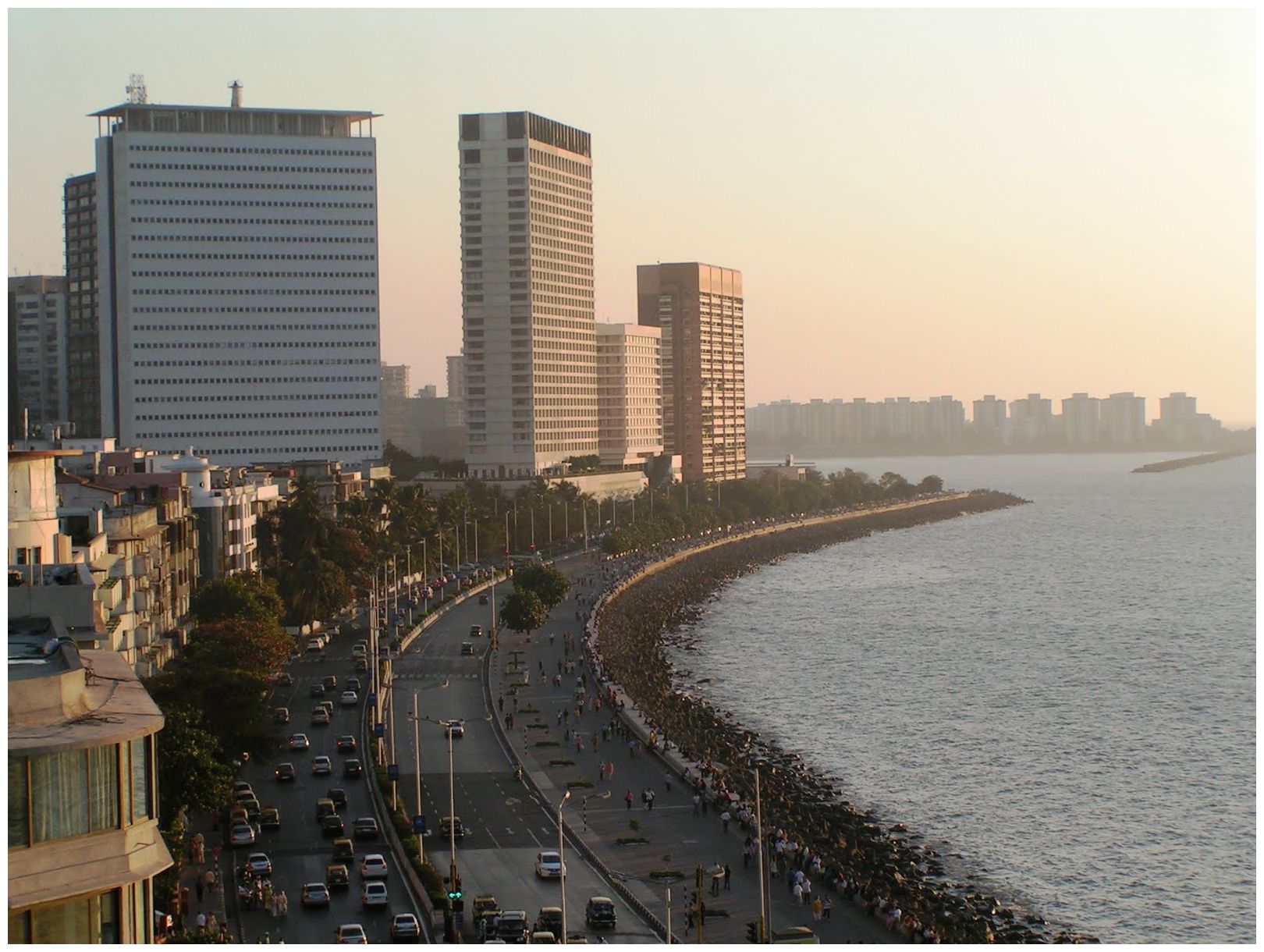
Mumbai: A cold wave continued to grip Mumbai for the second consecutive day with Santa Cruz recording a minimum temperature of 15.6 degrees Celsius on Monday.

On Sunday, Mumbai had recorded the first coldest day of this season with a minimum temperature of 15.7 degrees C. This sudden drop in temperature is due to the northerly cold winds, said V K Rajeev, director, India Meteor-ological Department (IMD), Mumbai. The temperature is currently 2-3 degrees below normal, and would continue for the next two-three days. "After that, the city might witness a slight rise in temperature."

IMD officials said that as the northern parts of the country cool further, the temperature in the city might drop a bit more towards the end of the year or early in January. "The temperature is likely to stay between 15 and 16 degrees C for the next few days," said an official.

If other parts of the country get even cooler, Mumbai might see some drop in the maximum temperature in the coming few days," said an official from the India Meteorological Department (IMD).

Officials said that last December, the maximum temperature in the city had dropped to about 30 degrees C around this time of the year giving Mumbaikars a respite from the heat during the day. Currently, the maximum temperature is a little above 32 degrees C. "Other parts of Maharashtra are already much cooler. Bur Mumbai's proximity to the coast adds to the humidity and keeps the maximum temperature high," said an official.

IMD officials said morning haze will be a fixture till the end of January adding to the coolness. "Earlier, the haze would lift by 7am. Now, it stays till about 8.30am. In December, more than 75% of the days witness a visible haze," the IMD official added.


Ice Cube

Ice Age Cometh: Unprecedented influx of Arctic Ivory Gulls into UK

Image
On par with a mammoth influx of juvenile Snowy Owls in North America (involving at least 750 so far), the UK has experienced its largest-ever influx of first-year Ivory Gulls from the Arctic ice-shelf.


Following the first off Seaburn (County Durham) on 30th November, an unprecedented five more have been discovered since......

Comment: See also: Ice Age Cometh: Snowy Owl invasion coming in North America?

Maine experiencing a Canadian owl invasion

Incredible Hawk Owl invasion in Estonia!

Huge Snowy Owl invasion becomes official in Canada and U.S.

Thousands of Hawk Owls descend on Finland as food in northern Russia runs out


Snowflake Cold

Heavy snowfall causes damage in Lao Cai, Vietnam

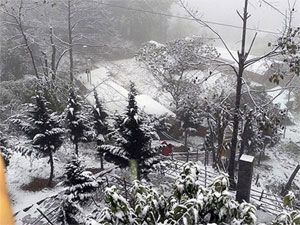
Heavy snow has damaged large areas of crops while stopping traffic on many roads in Sa Pa district, the northwestern mountainous province of Lao Cai.

Image
thanhnien.com.vn
According to the Department of Agriculture and Rural Development of Sa Pa, more than 100 hectares of chayote and another 100 hectares of flowers were buried under snow.

Thick ice also blocked about 10 kilometres of Highway 4D linking Lao Cai and Lai Chau provinces. Efforts have been made by local authorities to clear the roads.

Freezing temperatures have also forced more than 8,500 pre-school and primary school students to cease their schooling.

According to the Lai Chau Department of Education and Training, thousands of students in the hard-hit districts of Sin Ho, Phong Tho and Tam Duong have had to stay at home. Students in 63 schools in Sa Pa, including 20 nursery, 22 primary and 21 secondary schools, have been allowed to stay at home on December 16 and 17.

Info

Mt. Etna eruption shuts local airport

Image
© BBC
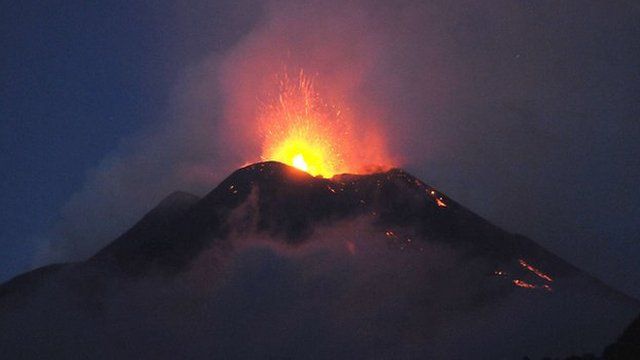
A local airport in Italy remained closed after Mount Etna's latest eruption.

The volcano shot lava and ash into the sky throughout the weekend.

Catania's airport, located in eastern Sicily, shut down on Monday -- a number of flight departures and arrivals canceled.

At least two flights were diverted to the airport in Palermo, located in the western part of Sicily.

Arrow Down

World's banana supply at risk from increasing number of bugs and spread of fungal disease

  • 'National emergency' declared in Costa Rica, one of the biggest suppliers
  • Country produces 1.2 million tons of bananas each year - one in five could be ruined by plagues of mealybugs and scale insects
  • Elsewhere, banana-eating fungus from Asia and Australia is spreading
Image
Costa Rica, one of the world's biggest suppliers of bananas, has declared a state of 'national emergency' following estimates suggesting one in five bananas could have been destroyed this year by insects
Plagues of insects and a spreading fungus are threatening the world's supply of bananas, researchers have warned.

A state of 'national emergency' has been declared in Costa Rica, one of the world's biggest suppliers, while separately a banana-eating fungus from Asia is believed to be spreading.

Officials in the Central American country of Costa Rica fear that one in five bananas could have been ruined by insects this year. The country last year supplied 1.2 million tons of the fruit worldwide.

Extinguisher

California wildfire grows to 500 acres

big sur wildfire
Big Sur fire burned at least 15 homes by Monday evening and forced dozens of others to evacuate.
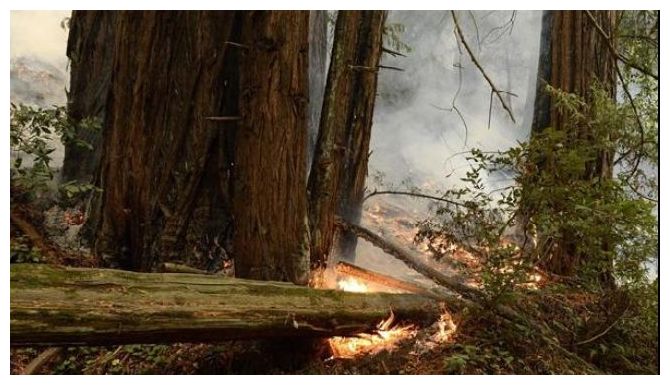
A wildfire that broke out late Sunday night along the Big Sur coast, California, burned at least 15 homes by Monday evening and forced dozens of others to evacuate, fire officials said.

The 500-acre blaze, which started near Pfeiffer Ridge Road in the Los Padres National Forest, was fueled by strong winds and was not at all contained by nightfall Monday. But fire crews were hopeful that calmer conditions could help them make progress overnight.

"Right now, the winds have died down; they were really gusting overnight and this morning," said Los Padres National Forest spokesman Andrew Madsten on Monday afternoon. "Hopefully they will get some containment lines cut now."

Smoke could be seen as far away as Monterey Bay. No injuries have been reported, and fire officials said between 50 and 100 homes were evacuated by Monday evening. The Red Cross set up an evacuation center at the Big Sur Grange.

Ice Cube

Best of the Web: How the global warming whopper is being buried under a jillion pounds of Arctic ice

Image

It was only five years ago in December that Al Gore claimed that the polar ice caps would be completely melted by now. But he might be surprised to find out that Arctic ice coverage is up 50 percent this year from 2012 levels.

"Some of the models suggest that there is a 75 percent chance that the entire north polar ice cap, during some of the summer months, could be completely ice-free within the next five to seven years," Gore said in 2008.

The North Pole is still there, and growing. BBC News reports that data from Europe's Cryosat spacecraft shows that Arctic sea ice coverage was nearly 9,000 cubic kilometers (2,100 cubic miles) by the end of this year's melting season, up from about 6,000 cubic kilometers (1,400 cubic miles) during the same time last year.

Snowflake Cold

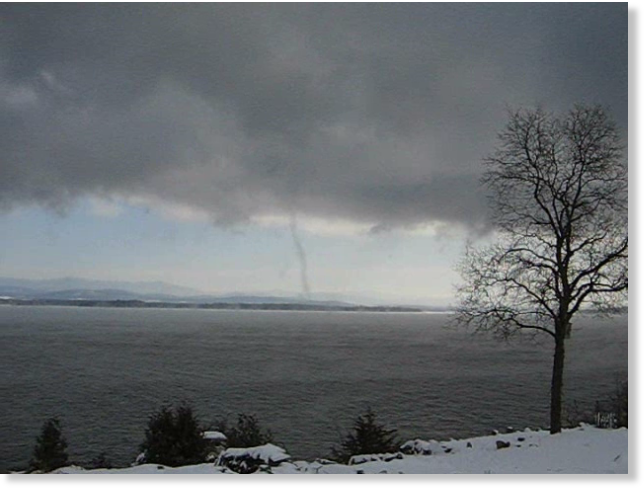
Rare 'snow-nado' observed on Lake Superior, Minnesota

Image
© Andy MacDougal via Burlington, Vt., NWSWinter waterspout over Lake Champlain on Jan. 15, 2009.
According to the Weather Channel, there are only six known photographs of winter waterspouts in existence. Then, last week, Jordan Detters captured a good minute and a half of video, showing winter waterspouts dancing along the waves of Lake Superior near Knife River, Minnesota.


While water spouts are relatively common in warm months, producing one in the winter requires a pretty specific set of meteorological circumstances, writes Minnesota Public Radio's chief meteorologist Paul Huttner. Thus, the dearth of images. In fact, for one to form at all you need a temperature difference between the water and the air of 19 degrees C.
Winter waterspouts occur when meteorological conditions are just right. You need a bitter arctic air mass passing over relatively warm lake water, and just enough light, low level wind shear to get the rapidly rising air currents spinning nicely.

Saturday's contrast between bitter arctic air (air temp was about -7 degrees at Two Harbors nearby) and relatively warmer lake water (offshore surface water temps were around 40 degrees) create an "enhanced lapse rate" as temps cooled rapidly with height above the water. That produces rising air, and the lift needed to generate strong updrafts. Slight wind shear gets the air spinning, and small vortexes can form into waterspouts over the lake.