Earth ChangesS


Snowflake Cold

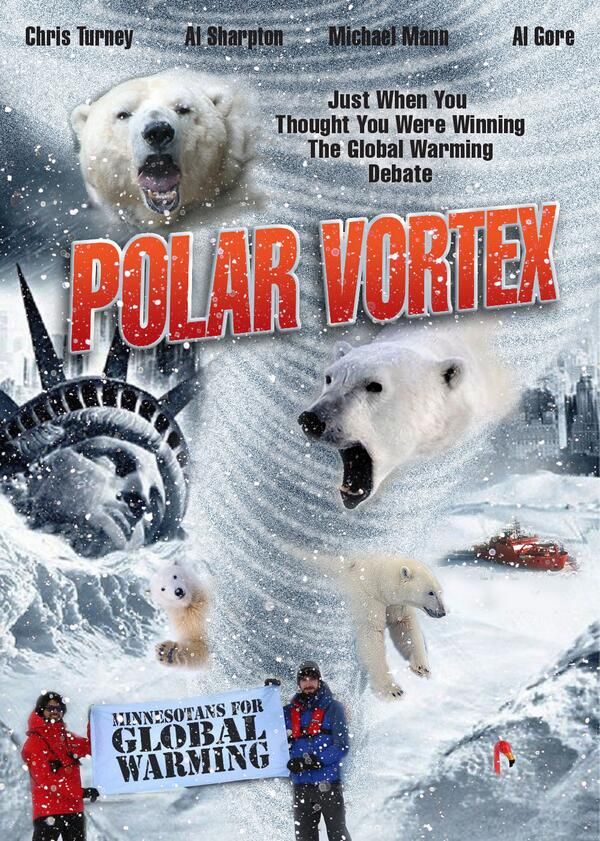
Time Mag. blamed 'polar vortex' on 'global cooling' in 1974

Image
© Climate Depot
Global warming activists in academia and the media are now seeking to link record-breaking cold to man-made "global warming." The problem is, the science is failing to support their claims.

Time Magazine was one of the first media outlets out of the gate with an article by senior writer Bryan Walsh blaming the "historic cold snap" on "climate change" and warning readers that global warming will bring more record cold! "This week's events show that climate change is almost certainly screwing with weather patterns ways that go beyond mere increases in temperature - meaning that you'd be smart to hold onto those winter coats for a while longer," Walsh wrote. See: Polar Vortex: Climate Change Could Be the Cause of Record Cold Weather TIME.com

Walsh went on to refer to the ubiquitous phrase "polar vortex" to attempt to explain how carbon dioxide emissions have essentially made the polar vortex "wobble like a drunk on his 4th martini."

The only problem for Time Magazine is the publication is on record in 1974 blaming the same phenomenon on - global cooling! See: Time Magazine Goes Both Ways On The Polar Vortex: 'In 1974, Time Mag blamed the cold polar vortex on global cooling' - In 2014: 'Time Magazine blames the cold polar vortex on global warming' (via Real Science)

Other warmists have joined in blaming record cold on "global warming." Meteorologist Eric Holthaus, who announced in 2013 that he was going to have a vasectomy to help save the planet, boldly proclaimed on Twitter "Yes, you can thank global warming for this taste of the 'polar vortex'."

Cloud Precipitation

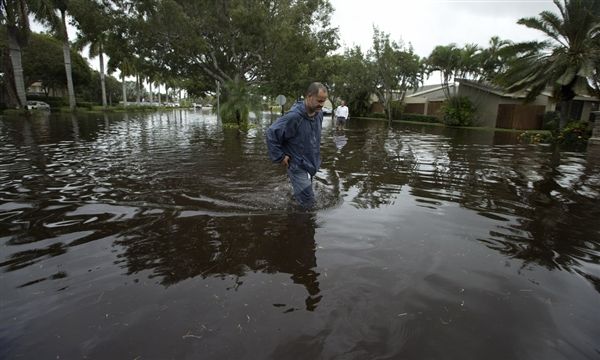
Nearly 2 feet of rain in 24 hours hits Florida's Palm Beach County

Image
© J Pat Carter / APAndre Francois wades through knee deep flood water in Boynton Beach, Fla., on Friday to get back to his house.
A torrential downpour lashed Florida's Palm Beach County before dawn Friday, shuttering schools, flooding an interstate and causing at least two deaths.

More than 22 inches of rain fell on Boynton Beach over a 24-hour period, according to the National Weather Service. The Sun Sentinel newspaper said the most rain was around Interstate 95 and Gateway Boulevard, while between 12 and 18 inches fell over just a few hours in Lantana and Delray Beach.

"An incredible rainfall rate," said Robert Molleda, a meteorologist with the NWS. "There is no way we could forecast that much rain in that short a time."

The first of the two deaths occurred just after 7 a.m. Friday in West Delray: Elsa Marquez, 56, steered her Toyota Rav 4 through a flooded intersection at Heritage Park and Via Flora into a lake, and her vehicle quickly sank.

Elsewhere in Delray Beach, a man died after drowning in a flooded ditch, according to NBC affiliate WPTV in West Palm Beach.

Several roads were closed and water gushed into homes and businesses, according to the National Weather Service in Miami. The rushing floodwater also forced the closure of Palm Beach County schools Friday, the Weather Channel reported.

Camcorder

Earth changes in Philippines: Waterspout, 7.1 magnitude earthquake, 100 sinkholes all struck within a day

Image
Video taken October 14, 2013 at 10am, BArangay San Isidiro (Poblacion), Philippines.


Comment: Oct. 15, 2013: Philippines earthquake kills 32, injures 100s

100 sinkholes found in Philippines Bohol province after quake


Bizarro Earth

USGS: Earthquake Magnitude 5.1 - 24km NNW of Corralillo, Cuba

Image
© USGS
Event Time:
2014-01-09 20:57:43 UTC
2014-01-09 15:57:43 UTC-05:00 at epicenter

Location:
23.189°N 80.677°W depth=10.0km (6.2mi)

Nearby Cities:
24km (15mi) NNW of Corralillo, Cuba
36km (22mi) NE of Marti, Cuba
51km (32mi) N of Los Arabos, Cuba
56km (35mi) ENE of Cardenas, Cuba
174km (108mi) E of Havana, Cuba

Technical data

Snowflake Cold

German global analysis: 2013 was a debacle for the cult of anthropogenic global warming

frozen chicago
© Scott Olson/Getty Images
Veteran German journalist Ulli Kulke of Die Welt writes a summary of 2013 in terms of the global warming debate at his blog donnerunddoria.welt.de. He concludes: "Once again evidence has mounted that we are slowly but surely departing from the view of a global apocalypse."

On 2013 global temperature, Kulke writes:
We will hear that 2013 was one of the ten warmest years of recent history (probably one of the seven warmest). And with great certainty the following will be concluded from all this: This is proof that global warming is galloping unhindered, if not accelerating. But according to the statistics this is not the case at all, especially the latter. It cannot be emphasized enough: One of the 'ten warmist' or 'seven warmest' in fact shows that global warming has reached a relatively high level, but also that the dynamic for a further warming has halted, at least for the time being. [...]

In the meantime there's another observation that has been officially recognized. Even the IPCC confirmed in its fifth assessmernt report from last September: There has been no statistically significant warming in the last one and half decades. [...]

Thus global warming has stopped - and has done so even while CO2 emissions have increased unhindered."

Snowflake Cold

Big freeze: Arctic winds expected in UK as blanket of snow follows devastating floods

snow plough
© PAA snow plough at work on the A66 in County Durham yesterday

Snow left parts of Britain under a carpet of white yesterday with the country braced for a Big Freeze.

Just as the devastating floods of recent weeks start to recede Arctic winds threaten to sweep in next week bringing ice, harsh frosts and wintry showers.

The mercury is expected to plunge below freezing across the UK with regions left sodden after the relentless rain now facing new misery.

Bitterly cold winds threaten to send temperatures plunging to -10C (14F) in the North while the South will shiver in lows of -4C (25F).

Snowflake Cold

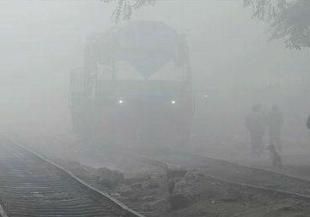
No respite from cold wave in North India, 3 die in Uttar Pradesh

india cold
© Unknown
Three persons died due to severe cold in north India where icy winds swept through most parts and mercury plummeted by several notches.

Delhiites also witnessed a cold and chilly day with the mercury settling at 5 degree Celsius, two notches below normal and the maximum temperature also showed a similar trend settling at 20.4 degrees Celcius.

Three persons died due to severe cold in Uttar Pradesh, including two in Ghazipur district and one in Barabanki district, as night temperatures fell in different parts of the state, MeT officials said.

Snowflake Cold

Snowy owls leave Arctic to invade frozen North America

In normal times, the arctic bird of prey known as the Snowy Owl stays up north, feasting upon the flesh of lemmings. But these are not normal times, so the owls have come south with the terrible arctic weather. "They are just absolutely everywhere and there's a lot more coming," says an expert who knows about the owls.


Question

Bird deaths hit Newcastle centre in new year - yet again, Australia

Image
GP Training education support assistant Emily Exon with the dead birds she found in the centre’s gardens.
Authorities are scratching for answers following the bizarre deaths of dozens of birds in a Mayfield West garden in the first week of January for the second year running.

Staff at GP Training in Frith Street found 14 rainbow lorikeets, two myna birds and a magpie in the centre's gardens last week.

They were confronted with the sight of 27 birds when they returned from last year's New Year break.

None of the birds had obvious injuries.

''It was a horrible sight,'' education support assistant Emily Exon said.

''It's very sad that's it has happened again this year.''

The centre is located in a residential area, a short distance from OneSteel's Maud Street plant.

''It's a quiet area compared to central Mayfield and we see a lot of local flora and fauna,'' Ms Exon said.

Office of Environment and Heritage spokesman Lawrence Orel agreed the deaths were highly unusual.

Ice Cube

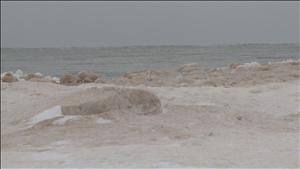
More ice on Lake Michigan than seen in decades

Image
Lake Michigan water levels hit historical lows last year, but this cold winter may be helping in the Great Lakes' recovery.

According to Environment Canada, the Great Lakes haven't had this much ice so early in the season since the late 1980s. reat Lakes ice can be a bad thing, especially for shipping: a week before Christmas, a freighter carrying 17,000 tons of coal got stuck on thick ice on Muskegon Lake. This meant Consumers Energy had to cancel its last two coal shipments of the winter.

On the plus side, ice has the benefit of raising water levels in the Great Lakes. Alan Steinman of the Annis Water Resources Institute explains, "When you have more ice formation, you have less direct contact with the atmosphere, less opportunity for evaporation and that keeps the water levels up."

For the last 20 years with lower ice coverage, more water had evaporated, contributing to the low water levels seen last year. "We were setting records for the lowest water level in recorded history," explains Steinman. Another benefit to more ice coverage and less evaporation is less cloud cover and less lake effect snow. In other words, you will see the sun more.