Earth ChangesS


Alarm Clock

Gulf World treating some 50 endangered sea turtles stranded by cold weather in Florida

Image
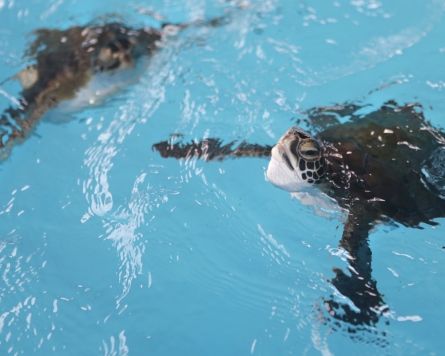
© Heather Leiphart | The News HeraldA sea turtle comes up for a gulp of air while recovering with 61 others at Gulf World Marine Park on Thursday. “We were expecting 100 to 300 turtles and are preparing for more,” said Secret Holmes-Douglas, director of animal care. The turtles will be tagged and released into a warmer area of the gulf
Almost 50 endangered sea turtles have arrived at Gulf World Marine Institute in Panama City Beach.

Officials say the turtles were found stranded in shallow bay waters due to frigid temperatures over the past few days.

The News Herald of Panama City (http://bit.ly/1cU4ZVK ) reports the turtles went into a hypothermic state and became very weak because of the cold weather. Many now have developed a secondary illness.

Officials from Gulf World, the Florida Fish and Wildlife Conservation Commission, the Gulf Island National Seashore and University of Florida volunteers have found the turtles and brought them to the marine center for rehabilitation.

Gulf World officials say the turtles are in intensive care. Their body temperatures will be slowly warmed and they'll receive any necessary medicine.

Source: AP

Question

23 Olive Ridleys turtles washed ashore in two days, Napier Bridge, India

Image
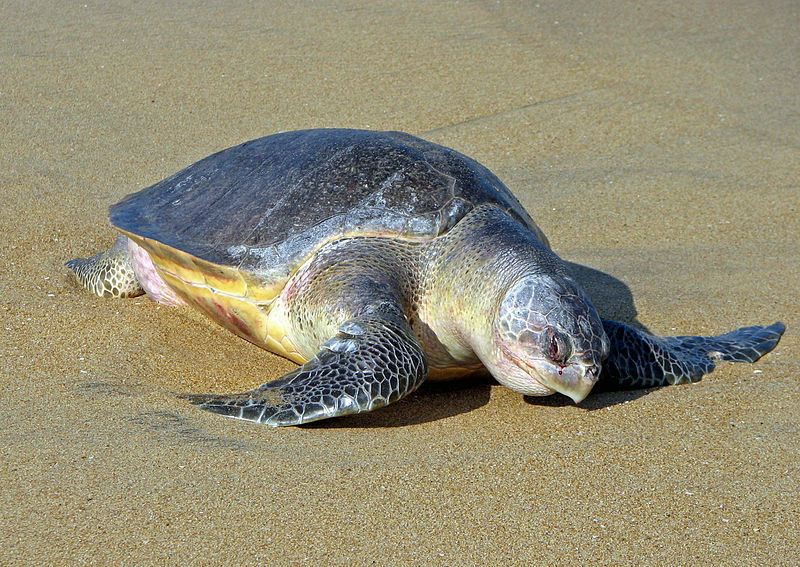
© Bernard Gagnon, Wikimedia Commons. Olive Ridley turtle, near Mahabalipuram, Tamil Nadu, India
For turtle enthusiasts, 2014 began on a tragic note with 23 dead Olive Ridleys being washed ashore between Napier Bridge and Neelankarai in the last two days.
In the last week, 35 dead turtles were found on the same stretch and this is just the tip of the iceberg. "Studies show that only 5% to 7% of the carcasses wash ashore," said Akila Balu, convener of Students' Sea Turtle Conservation Network (SSTCN).

Olive Ridleys are protected under Schedule 1 of the Wildlife Protection Act and are considered keystone species, which means they play a critical role in the health of their environment. They keep the population of jelly fish in check and by feeding on sponges, they let coral reefs flourish. "It was very depressing to see so many turtles bloated and bleeding on the beach," said R Nishant, a volunteer from SSTCN who scouted the beach on Monday night between Srinivasapuram and Napier Bridge. The female turtles come ashore to lay their eggs on the beach.

The biggest threat to turtles is the uncontrolled number of fishing trawlers. Olive Ridleys get caught in their nets and fishermen cut off the turtles' flippers and throw them back into the sea. Since they have to swim to the surface to breathe, without flippers they drown. "The local artisan fishermen treat them as god and do not harm turtles. They have been helpful in conservation activities over the last 25 years," said Balu. So many carcasses washing ashore also indicate that the nesting turtles are near the coast.

Ice Cube

Risking lives to promote climate change hype

Yet another global warming expedition gets trapped in icebound ideology

Image
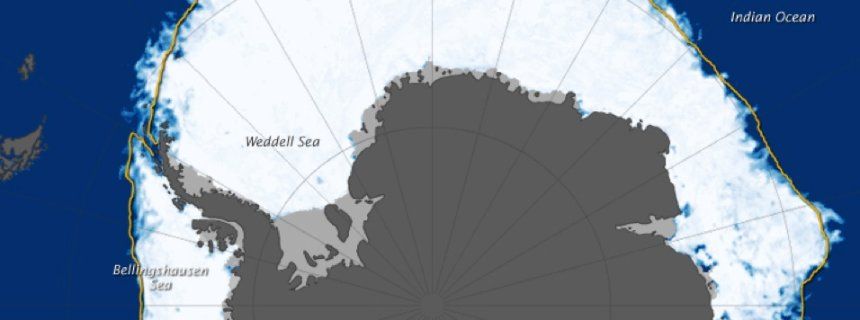
Antarctica: The extent of sea ice (white) reached a record on 22 September, 2013. The yellow line shows the median of 1981 to 2000. Ice shelf is shown in gray.
Will global warming alarmists ever set aside their hypotheses, hyperbole, models and ideologies long enough to acknowledge what is actually happening in the real world outside their windows? Will they at least do so before setting off on another misguided adventure? Before persuading like-minded or naïve people to join them? Before forcing others to risk life and limb to transport - and rescue - them? If history is any guide, the answer is: Not likely.

The absurd misadventures of University of New South Wales climate professor Chris Turney is but the latest example. He and 51 co-believers set out on the (diesel-powered) Russian charter ship Akademik Shokalskiy to prove manmade global warming is destroying the East Antarctic ice sheet. Perhaps they'd been reading Dr. Turney's website, which claims "an increasing body of evidence" shows "melting and collapse" across the area. (It is, after all, summer in Antarctica, albeit a rather cold, icy one thus far.)

Instead of finding open water, they wound up trapped in record volumes of unforgiving ice, from Christmas Eve until January 2 - ensnared by Mother Nature's sense of humor and their own hubris. The 52 climate tourists were finally rescued by a helicopter sent from Chinese icebreaker Xue Long, which itself became locked in the ice. The misadventurers were transferred to Australian icebreaker Aurora Australis, but the Shokalskiy remains entombed, awaiting the arrival of US Coast Guard icebreaker Polar Star. (Meanwhile, Tourney hopes to get more grants to study manmade global warming, to help him make more money from his Carbonscape company, which makes "green" products from CO2 recovered from the atmosphere.)

Ice Cube

No more dead parrots - Global-warming fans spent frozen Christmas in Antarctica

Image
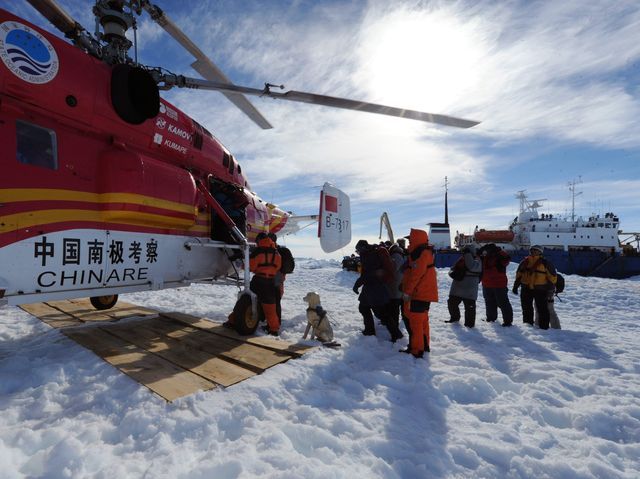
© AP Photo/Xinhua, Zhang JiansongIn this photo provided China's official Xinhnua News Agency, passengers from the trapped Russian vessel MV Akademik Shokalskiy, seen at right, prepare to board the Chinese helicopter Xueying 12 in the Antarctic Thursday, Jan. 2, 2014.
Australian global-warming enthusiasts, enthralled by their own hype, expected their summertime trip to the South Pole to be a breeze. They've been insisting for years that man is overheating the planet, the polar ice caps are melting, and penguins in the south and polar bears in the north would soon die of heat prostration. What a Christmas Eve surprise for the 52 passengers aboard the MV Akademik Shokalskiy. Their ship became trapped by ice that clearly wasn't melting. The ship remains stuck, perhaps permanently, but a rescue helicopter carried the researchers to safety.

Chris Turney, a professor at the University of New South Wales, organized this Antarctic excursion to "investigate the impact of changing climate." The group set sail, but never got close to the South Pole. Two weeks into what was supposed to be a five-week journey, the ship entered a thick patch of ice that didn't just show up overnight. "The thick chaotic surface we see around the Shokalskiy," Mr. Turney explained on his blog, "is consistent with the idea that this ice is several years old and is considerably more difficult to break through by icebreaker than single-year ice." Large Chinese and French icebreakers gave up early rescue attempts when they were unable to get within several miles of the frozen boat.

Attention

Rare 5.1 magnitude earthquake rattles Cuba and Florida Keys

Image
© Courtesy USGS.
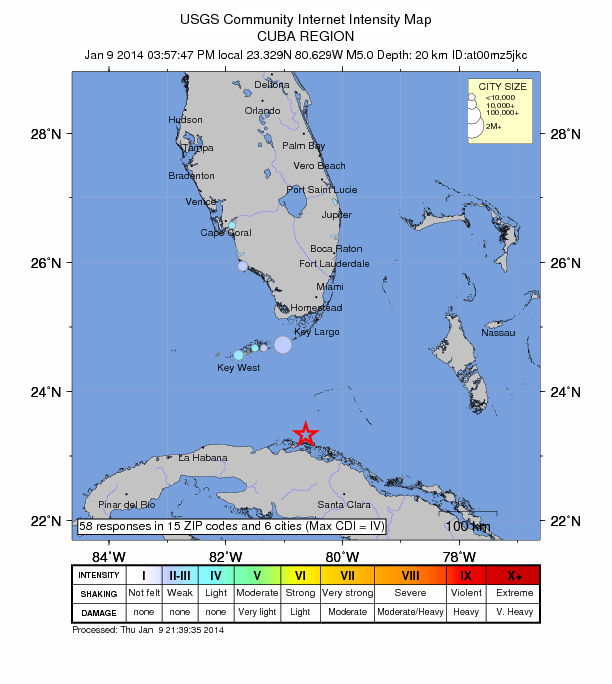
A 5.1-magnitude earthquake struck in the Straits of Florida off Cuba on Thursday, startling office workers in medium-rise buildings set swaying in Havana. There was no word of any damage or injuries.

The temblor occurred just before 4 p.m. about 106 miles (172 kilometers) east of Havana, according to the U.S. Geological Survey. The closest city to the epicenter was Corralillo, 17 miles (28 kilometers) to the southwest.

In Old Havana, the quake was felt clearly by workers in two 6-floor buildings that were temporarily evacuated. It appeared to last around 30 seconds.

Sandor Polo, a 31-year-old waiter, said he was delivering food to a third-floor office when boxes suddenly began to move and workers started yelling.

"I got dizzy," Polo said, adding that he's never felt anything like it in his life.

"Everything was moving," said Nuria Oquendo, a 44-year-old office assistant who was on the sixth floor of a neighboring building when it began to move back and forth. "You could really feel it, very clear, very defined."

Like Polo, she had never been in an earthquake before. She called the experience unsettling, but said she wasn't scared.

"Not frightened, but a sensation that something strange is going on," Oquendo said.

The USGS initially reported a magnitude of 5.0, and later upgraded it to 5.1. The quake struck at a depth of six miles (10 kilometers).

The U.S. National Weather Service said there was no tsunami danger.

Locally, the NWS reported that the quake had been felt in the Davis Islands area. Others reported feeling it in the Carillon area.

Cuba is not as known for seismic activity as other parts of Latin America, especially countries along the Pacific Rim of Fire.

But a number of significant quakes have hit the island over the years, including one in 1932 that killed eight people and damaged 80 percent of the buildings in the eastern city of Santiago, according to U.S. National Geophysical Data Center records.

Source: AP

Cloud Precipitation

Cold, wet weather may help spread deadly pig virus: USDA

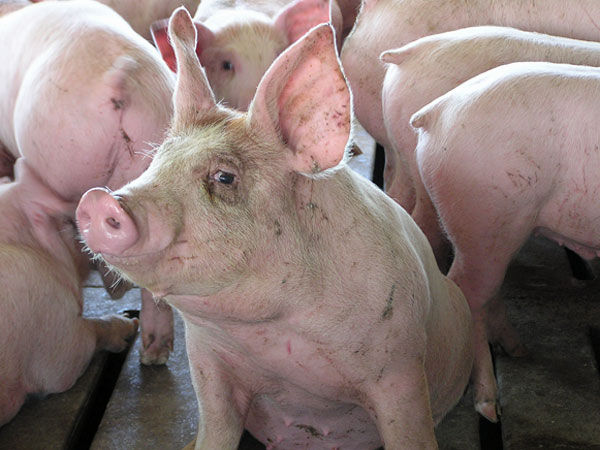
Frigid temperatures across a large swath of the United States this week followed by warmer conditions could aid the spread of a fatal pig disease now in 22 states, affecting hundreds of thousands of pigs, a swine veterinarian said on Thursday.

"The virus likes cold, wet and cloudy days," said Rodney Baker, a swine veterinarian at Iowa State University at Ames, Iowa, the top pork producing state in the United States.

Image
At this time of year the virus gets frozen on clothes and shoes, making it easy to track around and spread, Baker added.

Porcine Epidemic Diarrhea virus (PEDv), which causes diarrhea, vomiting and severe dehydration in hogs, has spread quickly across the U.S. hog belt since its discovery in the United States in April 2013.

California and Wyoming are the latest states to report confirmed cases of the deadly pig virus, bringing the number of states affected to 22, the U.S. Department of Agriculture said on Thursday.

The number of new cases increased by 134 for the week of December 29, bringing total reported cases to 2,084, according to the USDA's National Animal Health Laboratory Network (NAHLN)

Wolf

Environment Wildlife 'Carnivore cleansing' is damaging ecosystems, scientists warn

Extermination of large predators such as wolves and bears has a cascading effect on delicate ecological balance

Image
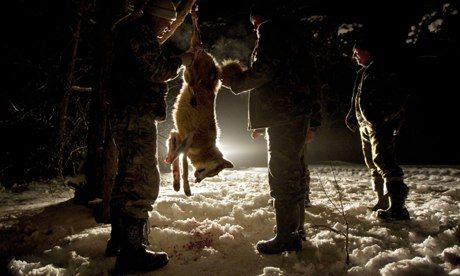
© Vasily Fedosenko/ReutersHunters skin a wolf killed in a forest in the Ukraine. Humans have waged a long-standing war with large carnivores that kill livestock and threaten rural communities.
A plea to restore populations of some of the world's most dangerous animals has been made by scientists who claim the loss of large carnivores is damaging ecosystems.

More than three-quarters of the 31 species of large land predators, such as lions and wolves, are in decline, according to a new study. Of these, 17 species are now restricted to less than half the territory they once occupied.

Large carnivores have already been exterminated in many developed regions, including western Europe and eastern United States - and the same pattern of "carnivore cleansing" is being repeated throughout the world, said scientists.

Yet evidence suggests carnivores play a vital role in maintaining the delicate balance of ecosystems which cannot be replaced by humans hunting the animals they normally prey on.

Ice Cube

Global Cooling: Is an Ice Age coming?

Image

The climate is changing, but it's not changing the way the climate change crowd predicted it would. Nature has made a mockery of global warming, so who are the real climate deniers?


Eagle

Number of dead Bald eagles in Utah now at 40

Image
Utah wildlife officials say the number of bald eagles that appear to have died from West Nile Virus has climbed to 40.

Leslie McFarlane, a wildlife disease coordinator with Utah Division of Wildlife Resources, reports say that besides the 40 dead birds, there are five others in rehabilitation centers.

McFarlane says the number of dead eagles should start to drop off as the spread of infection appears to have slowed.

Wildlife officials first started finding the birds on Dec. 1 with head tremors and signs of weakness and paralysis.

They were not sure what was killing the animals until last week, when they received test results.

They suspect the animals contracted West Nile by eating dead aquatic birds that were infected with the disease.

Source: AP

Ice Cube

Lake Michigan turns into a sea of ice balls

The deep freeze in the US causes an unusual sight on the shores of Lake Michigan as huge ice boulders wash onto beaches

Image
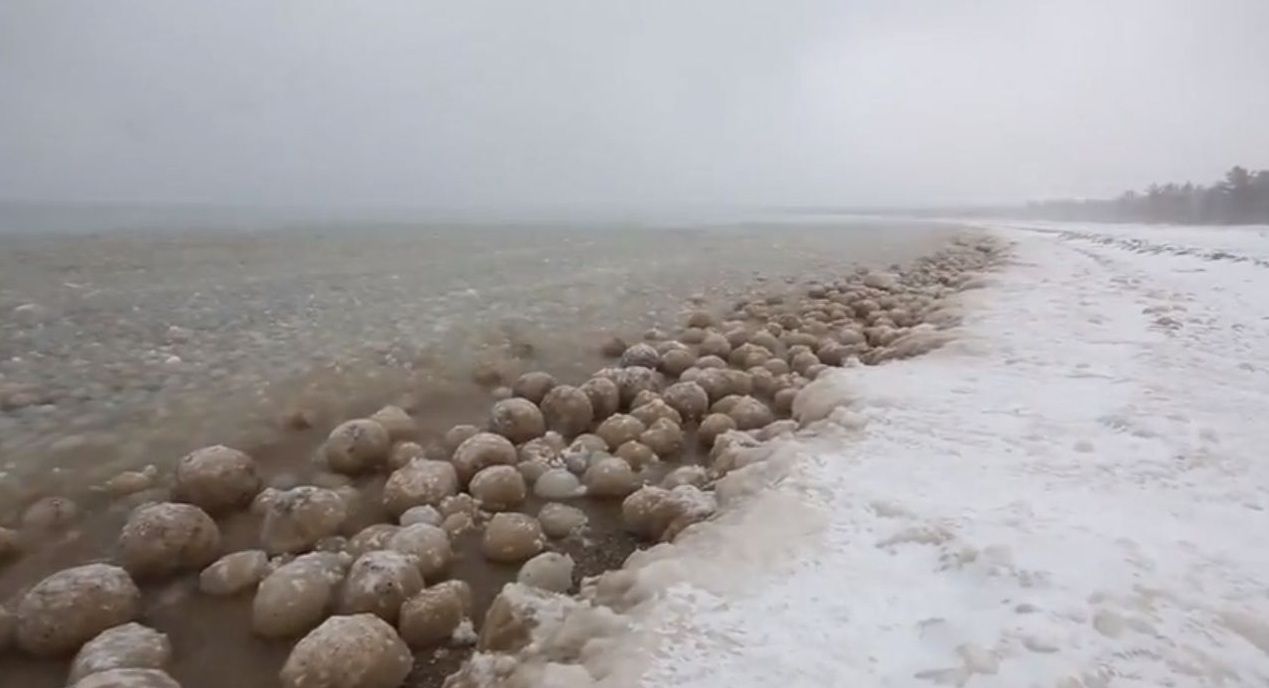
The polar vortex which has gripped North America in sub-zero temperatures has brought with it a natural phenomenon on the shores of Lake Michigan.

Huge, basketball-sized balls of ice have been washing up by the lakeside town of Glen Arbor in Michigan.

Meteorologist Joe Charlevoix explains that they are formed when "the water temperature on the Lake Michigan is just a little bit below freezing, so you get a small piece of ice that forms in the water and as waves move back and forth it adds additional water and freezes in layers.

"It gets bigger and bigger, and eventually you get big balls of ice, that are pushed to the shore by the wind."

Locals call them "ice balls" or "ice boulders" and they are a regular feature of Winter in the Great Lakes.