Earth ChangesS


Attention

Dead dwarf sperm whale found at Pine Knoll Shores, North Carolina

Image
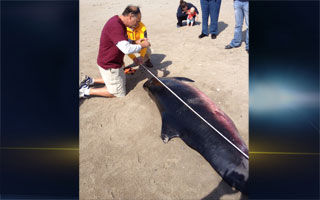
A whale that washed up onshore in Pine Knoll Shores has been identified as a Dwarf Sperm Whale. This is the smallest species of whale in the world and rarely spotted at sea.

Scientist Keith Rittmaster of the North Carolina Maritime Museum in Beaufort says most everything scientists know about the Dwarf Sperm Whale has been found out by studying ones that have washed ashore, like the one from this past weekend.

Rittmaster says it is hard to even determine how many Dwarf Sperms there are in the world, since they are hard to spot and definitively identify at sea. Dwarf Sperm Whales look very similar to Pygmy Sperm Whales, which are more common.

Radar

Mystery plume on New Mexico radar near 1945 nuclear bomb test site

A mystery 'storm cloud' caught on weather radar after erupting off a U.S. military missile testing ground in New Mexico has left weather experts baffled.

Conspiracy theorists have speculated that the plume-like cloud, which seems to appear out of nowhere, could have been kicked up by the explosion from an unreported weapons test.

Deepening the mystery, U.S. National Weather Service offices in Albuquerque and El Paso have confirmed the reading, but say they have no idea where it could have come from.
Image

Stock Up

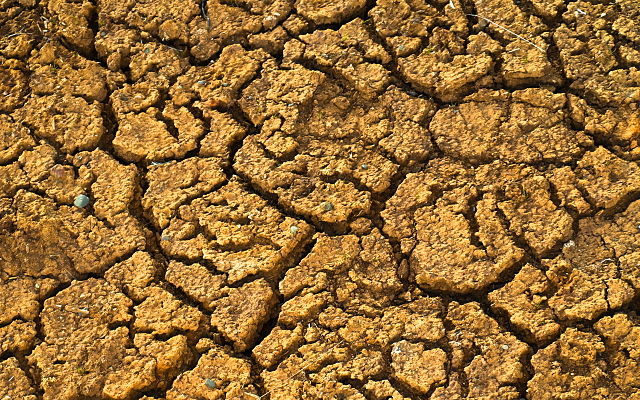
Expect sky high food prices ahead due to California mega drought

Image
California is in the midst of what experts are calling a "mega-drought" which could lead to sky high grocery prices and even food shortages this year, experts say.

The farms that supply much of the nation's produce are literally running out of water.

Maps indicate that the areas of California hardest hit by the mega-drought are those that grow a large percentage of America's food. Those regions include Monterey County, which produced nearly half of the lettuce and broccoli grown in the United States in 2012.

It's not just vegetables that will be affected; nuts and fruits will be hit just as hard or harder.

"There will be thousands of acres of fruit and nut trees that will die this year because of lack of water," David Sunding, a professor of natural resources at the University of California at Berkley, told the San Jose Mercury News. "The reduction in yield will drive up prices."

Ice Cube

Death toll of waterbirds on frozen Lake Erie likely to number tens of thousands

Image
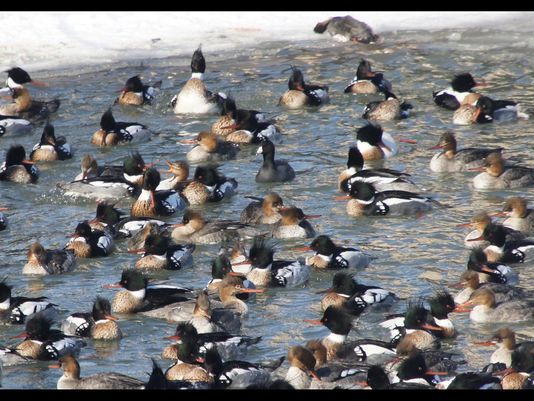
© WKYCRed breasted mergansers and coot on Lake Erie.

The Great Lakes are the winter home to millions of sea birds and waterfowl that need open water to survive. The frigid weather of the past few months left 92 percent of the lakes covered in ice, and that left diver ducks out in the cold.

Jen Brumfield, a naturalist for the Cleveland Metroparks explains, "With the freeze-over, all of these birds are piling into very, very small, open-water outlets where they become stressed. There is limited food for them there, so they starve and die."

The death toll on Lake Erie could run in the tens of thousands.

As the frozen lake thaws, carcasses of the deceased ducks are washing up along the shore by the hundreds. The waterfowl are mostly diver ducks, like greater and lesser scaup, redheads, canvasbacks, and red-breasted mergansers.

Ice Cube

10 Fold increase in the number of dying water birds rescued in Toronto due to extreme cold

Image
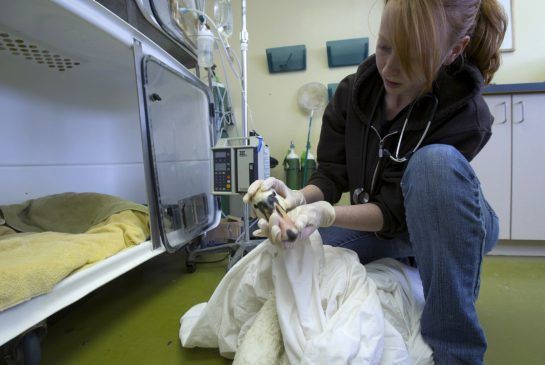
© Torstar News ServiceCalls about dead birds to Toronto Animal Services went up 66 per cent between Jan. 1 and Mar. 12, compared to the same period last year.
Toronto's ducks and geese are among the hardest-hit victims of this year's brutal winter weather.

Calls about dead birds - found stuck in the ice or floating lifeless in the water - shot up 66 per cent between Jan. 1 and Mar. 12 compared to the same period last year, according to Toronto Animal Services.

Meanwhile, the city's only wildlife rescue charity has been overwhelmed with dozens of fragile, injured and dying birds, making this the worst winter it has seen in 21 years of operation.

"They're weak and they're starving," said Nathalie Karvonen, executive director of the Toronto Wildlife Centre. "Some of the birds are having traumatic injuries as well because they're in a weakened state."

The centre has rescued about 10 times as many water birds as it does during a normal winter, more than 130 since December. Admissions of wildlife are up 50 per cent overall, said Karvonen.

Many water birds spend the winter on Georgian Bay, which has frozen solid for the first time in 20 years. The mass migration led to an intense food competition this year, as thousands of fish-eating birds compete for a few small pools of water.

Arrow Down

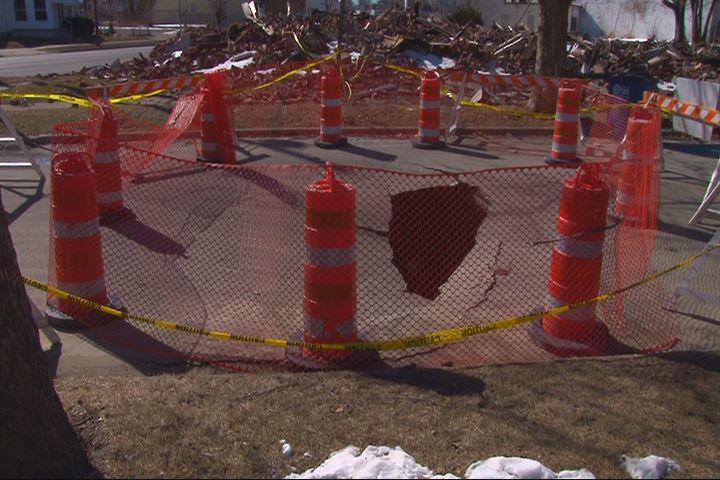
Large sinkhole growing on Alexandrine Street, Detroit

Image
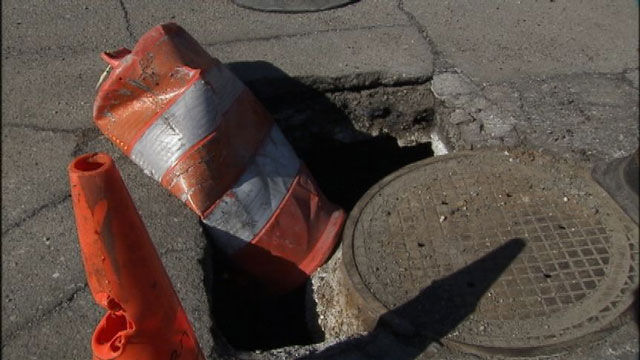
Those who pass by a growing sinkhole on Alexandrine Street in Detroit are becoming concerned about the condition and safety of the street.

Chris Estham lives nearby and says, at first, he thought the hole was a pothole, but then noticed it was about six feet deep and 20 feet wide when he got a closer look.

The sinkhole is also becoming hazardous for nearby businesses. The parking lot of Slows To Go, a popular restaurant, is right next to the sinkhole, and Ladder 20 uses the alley to back up its trucks into their garage.

Estham says he called the city weeks ago about the problem but has not seen any action, and since then the problem has worsened.

FOX 2 has learned the abandoned manhole was not backfilled, and the cavity beneath it create the sinkhole.

Arrow Down

Road closed by sinkhole at intersection in central Toledo

Image
This sinkhole by Fernwood and Detroit has caused traffic to reroute.
A sinkhole has closed an intersection in central Toledo until repairs can be made.

The opening was reported Monday near the intersection of Fernwood and Detroit Avenues.

The city says the hole is too deep to be repaired by city crews, so a contractor has been called in. That contractor is expected to begin work on the hole Tuesday. The hole could take a day or two to repair, according to the city.

Toledo is no stranger to sinkholes. Last July, a water main break caused a sinkhole to open near the intersection of Detroit and Bancroft. A car fell in, but the driver made it out alive.

Arrow Down

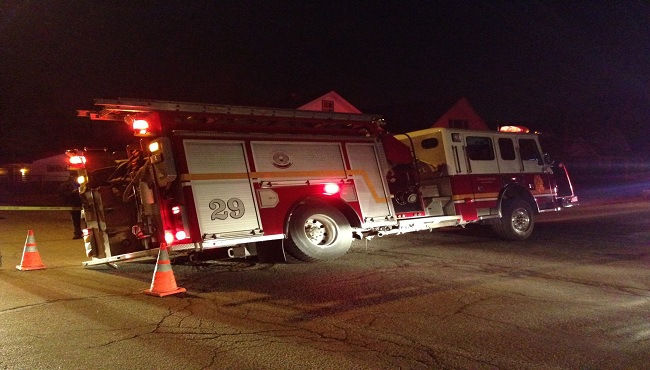
Fire engine gets stuck in 8 feet deep sinkhole in Indianapolis

Image
© Indianapolis Fire Department
An Indianapolis Fire Department engine got stuck in a sinkhole on the city's south side on Monday night.

It happened at Boyd and Finley avenues, near East Raymond Street and Interstate 65.

According to a tweet from IFD, the engine was on its way to a fire when the incident happened. The fire was minimal in an unoccupied residence.

Officials say the sinkhole is 4 feet x 8 feet deep. No one was hurt.

According to IFD, the engine was not damaged. It was taken to the IFD Shops and found to be OK and has remained in service.

Ice Cube

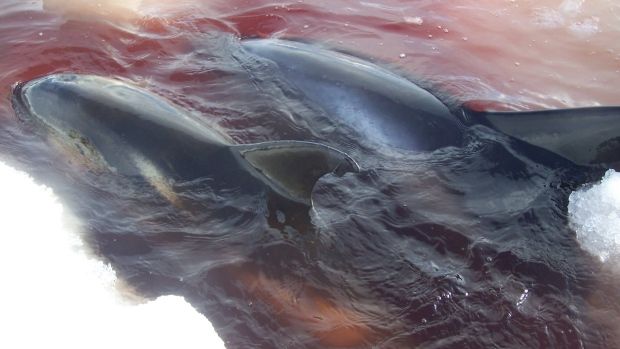
Pod of over 30 dolphins die after being trapped by ice, Cape Ray, Newfoundland

Image
Dolphins stuck in ice
Most of a pod of white-beaked dolphins have already succumbed after becoming trapped by ice off the southwest coast. The pod of about 30 to 40 dophins became encircled by ice near Cape Ray on the weekend and were driven close to the shoreline. The animals' plight has caught the attention of local residents, but officials say there's little that can be done because of the dangerous weather and ice conditions.

As of this morning just three animals were left alive, and they were in bad shape. Wayne Ledwell of the Whale Release and Strandings Group says human safety is paramount when considering whether or not to save the animals. He says conditions in the area are so bad, people would be risking their lives to try to intervene.

Ledwell says white-beaked dolphins are one of a couple of species that stay in Newfoundland waters year-round, and ice strandings are not uncommon. He says in many cases the animals usually die, but he can remember saving some animals in an area where it was safe to do so, and transporting them to open water via snowmobile.

Cloud Precipitation

Sheets of rain: Torrential rains kill 32 in South Africa

Rain in South Africa
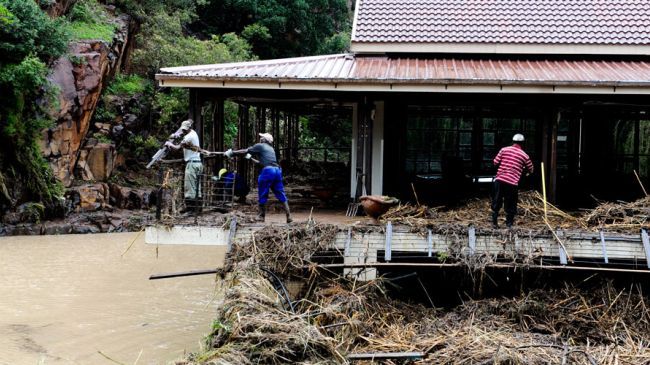
© UnknownThree men clean up a lodge after the building was gutted by flooding following a dam burst caused by heavy raining in Limpopo, South Africa.
Floods caused by torrential rains have killed at least 32 people and displaced thousands of others in South Africa.

Andries Nel, South African deputy minister of cooperative governance and traditional affairs, said on Monday that the heavy raining had displaced 3,000 people from their homes in the Lephalale Local Municipality in the northern part of the country.

"Regrettably, the present disaster events have resulted in 32 fatalities. These include 25 drownings. Six fatalities were also caused by lightning and one person died due to a collapsed wall," Nel stated.

The South African official also said rescue operations were underway as a number of people were still trapped in their homes due to flooding. In addition, search efforts have begun to find people reported missing.

Over the past two weeks, torrential and persistent rains have pounded most parts of South Africa. The most affected areas are in the north and eastern parts of the country.