Earth ChangesS


Arrow Down

Man rescued from sinkhole in Apollo Beach, Florida

Image
A man had to be hospitalized after he was freed from a giant hole filled with water and mud.

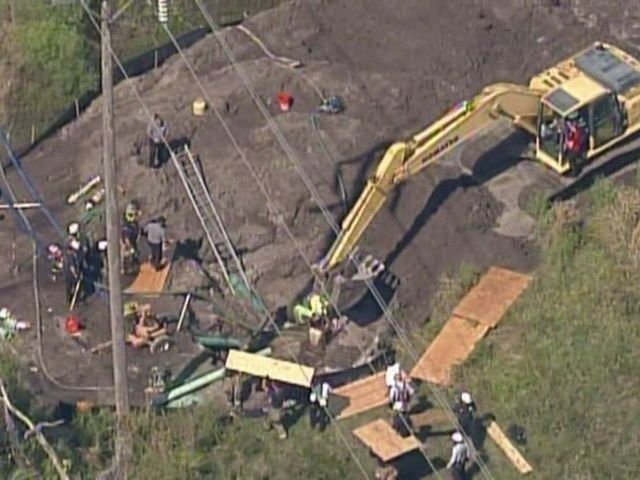
Rescue crews had to race against time to recover that man who was stuck in the muddy, water-filled hole for almost three hours. According to authorities, the man was working when the ground suddenly collapsed around him in Apollo Beach, near Tampa, Thursday, at around 3 p.m.

In video from the scene, you could see the man stuck in mud up to his waist as rescue crews worked to free him. Reports indicated the hole is approximately 30 feet deep by 30 feet wide.

Rescuers at the scene tried to keep his head above water as the worker used his free hand to push mud and water away. Paramedics put an IV in his arm, giving him water to drink while they worked to get him out.

Two other co-workers tried to free him earlier, but they wound up in the hospital for exhaustion. The local fire chief spoke to media about their valiant rescue efforts. "The workers who were with him had fashioned an apparatus to try to secure him and that apparatus-- actually secured to a 4x4-- actually sunk down deeper into the mud. Now what we were trying to do was get him free from that wood, initially. Once we did, we were able to get his right leg out. For the last probably half-hour we've been working here. He's been out with the exception of his lower left leg, which we were finally able to get out."

Officials also noted hypothermia was a concern, despite the warm Florida temperatures.

Officials said the location is a site for the construction of new homes. Crews had to call in a specialized rescue team to help remove the man.

The worker was taken to the hospital where his condition remains unknown. We will bring more information on his condition as it becomes available to us.

Image

Apple Red

Rare apple mutation found in Tasmania

Apple
© Mel StaplesAn apple that was grown in Kingston, southern Tasmania.
Kingston - When Mel Staples asked her eight-year-old son to pick apples from a tree on their property she was baffled at the small harvest he returned with.

"I picked up one and it was a like a granny smith apple and a red delicious apple had both been cut in half and then joined together.

"It was just this perfect line right through the middle of the apple and it was just the weirdest thing," says Ms Staples.

The apple was grown on Ms Staples' property in Kingston, southern Tasmania, and after posting the photo to social media she says her friends simply couldn't believe it.

"They thought that I'd been having them all on and painted this apple and put it on Facebook as a joke," she says.

Former specialist apple grower Bob Magnus says until now he'd never seen an apple like the one found by Ms Staples.

Bizarro Earth

After several near misses, experts warn the next Carrington Event will plunge us back into The Dark Ages

EMP Event
© The Truth Wins
Most people have absolutely no idea that the Earth barely missed being fried by a massive EMP burst from the sun in 2012, in 2013 and just last month. If any of those storms would have directly hit us, the result would have been catastrophic. Electrical transformers would have burst into flames, power grids would have gone down and much of our technology would have been fried.

In essence, life as we know it would have ceased to exist - at least for a time. These kinds of solar storms have hit the Earth many times before, and experts tell us that it is inevitable that it will happen again. The most famous one happened in 1859, and was known as the Carrington Event. But other than the telegraph, humanity had very little dependence on technology at the time. If another Carrington Event happened today, it would be a complete and utter nightmare.

A study by Lloyd's of London has concluded that it would have taken a $2,600,000,000,000 chunk out of the global economy, and it would take up to a decade to repair the damage. Unfortunately, scientists insist that it is going to happen at some point. The only question is when.

Attention

Dead Grey whale washes ashore near Long Beach, Washington state

Image
A dead grey whale washed ashore on the Long Beach Peninsula and was observed at about 189th Street in Klipsan Beach on Thursday morning. This is near the start of the grey whales' annual northward migration in the Pacific Ocean. The whale has a visible wound in it abdomen, but this may have been post-mortem.

Attention

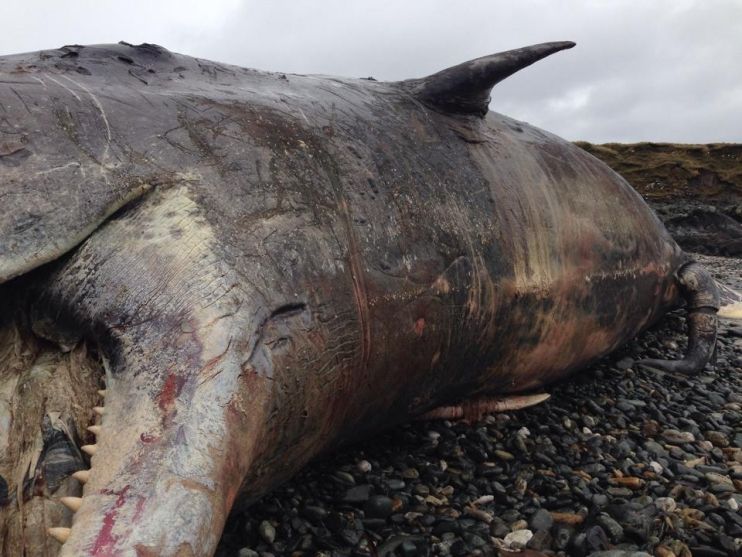
2 Dead sperm whales wash up on a beach in Shetland, Scotland

Image
© Siobhan PirieOne of the Unst sperm whales
Scottish Natural Heritage has confirmed that the lower jaw of one of the two dead sperm whales that washed up on a beach in Shetland earlier this month has been sawn off .

The environmental agency has been in discussion with local police about what potentially could be a wildlife crime.

However, they have not officially reported it and police confirmed on Wednesday afternoon that they are not investigating.

SNH advised that it was a crime to possess any artefact from a protected animal be it a sperm whale or a Siberian tiger.

Meanwhile, the council environmental health department is warning people to stay away from the carcasses while plans are being put in place to dispose the two whales, possibly at the weekend.

Ideally, the two 40-tonne carcasses will be towed off Scolla Wick, near Muness, and taken to nearby Sandwick beach where they could be buried.

Snowflake Cold

The winter that never ends: More cold and snow coming to U.S. Midwest, East next week

Image
Despite the change in seasons, more cold air and potential snow are in the offing next week for parts of the Midwest and East.

The recurring cold weather is likely to persist into the first part of April and will cause difficulties for collegiate and high school baseball games, soccer, golf, lacrosse, track and field and other outdoor sporting activities.

Cold air is again building up over the Arctic and is forecast to push southeastward across the Canada Prairies late this week. The new surge of cold air will enter the Upper Midwest early this weekend and is projected to reach the interior South and East Coast by early next week.

A second push of cold air will push southeastward during the middle part of next week.

According to AccuWeather.com Long Range Weather Expert Mark Paquette, "It is almost unthinkable, but it appears that a flow of air straight from the Arctic will develop again."

Attention

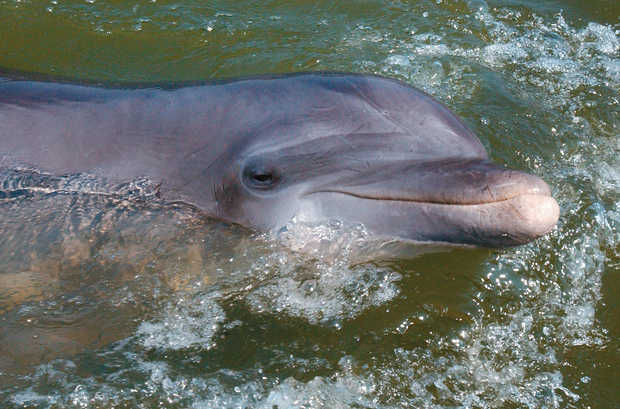
26th Dolphin found stranded along South Carolina's coast this year

Image
© (Hilton Head) Island Packet Dolphin in Broad Creek
A dying bottlenose dolphin washed ashore Monday morning on a southern Hilton Head Island beach, the 26th dolphin stranded along South Carolina's coast this year, according to a National Oceanic and Atmospheric Administration marine biologist.

The dolphin was found alive on the beach between Sea Pines and Marriott's Grande Ocean Resort at about 8 a.m., but it died before marine biologists could reach it, said marine mammal stranding program scientist Wayne McFee.

McFee said no cause of death has been determined, but a necropsy would be performed Tuesday in Charleston.

A likely cause is the morbillivirus strain that has ravaged dolphin populations along the East Coast. McFee said 95 percent of the dolphins tested for the virus have tested positive.

Info

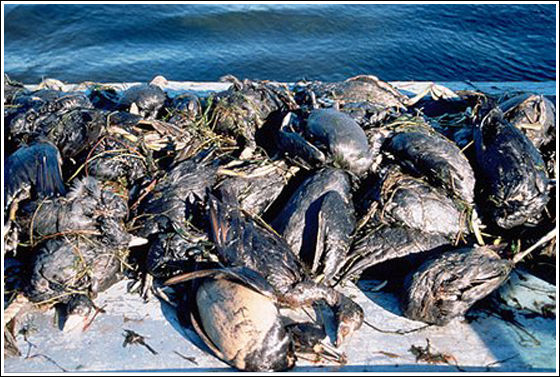
Suspected avian botulism killing thousands of water birds in Waikato, New Zealand

Image


A suspected outbreak of avian botulism is killing thousands of birds in Waikato.

The disease, which causes paralysis in birds, has been recorded in Matamata-Piako District, Waipa District and Waikato District this summer.

There have also unconfirmed reports of bird deaths in the Hauraki District.

About 3000 birds are estimated to have died from the disease in the Waikato region, Fish & Game gamebird manager David Klee said. Along with game ducks, the bacteria was killing black swans, grey teals and the New Zealand dabchick, among others, he said. "It's pretty indiscriminate, anything that sits on those ponds, seems to be affected." Although blood samples had not been taken, Mr Klee said the bird deaths all showed "clinical symptoms" of botulism.

Affected birds were showing signs of paralysis, they were flightless and, in the critical stage, had "lolling" and "drooping" heads.

Most outbreaks were occurring at municipal wastewater treatment plants - and in particular older, less used, oxidation ponds.

Attention

60 Dolphins wash up dead on Lambayeque Beaches, Peru

Image
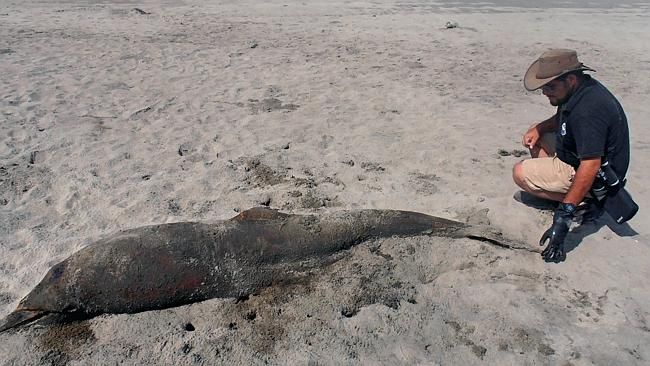
© AFPMystery...A scientist inspects the remains of a dolphin washed ashore in Lambayeque, Peru. About 400 dolphins were found dead in a wide extension of beaches during the month of January.
Artisanal fishermen found 60 dead dolphins between the ports of Puerto Eten and Pimentel in Lambayeque, most of them decomposing so strong odors emanating.

The leader of the fishermen, inique Francisco, said that is everyday and find some dead dolphins stranded on the beaches and saw the mouth of the drains would be the cause of marine pollution affecting marine life.

In the place were also some dead sea turtles, plus some runners dying birds. The fishermen expressed their complaint because the authorities do not raise the corpses of animals for burial

Comment: Possibly related to this earthquake reported closeby 3 days earlier? An under the ocean outgassing event maybe?


Bizarro Earth

Raging wildfire in Himalayas torches hundreds of acres in Nepal

Image
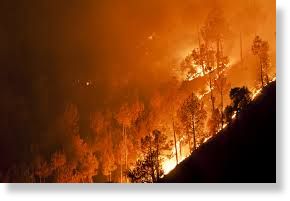
Authorities in Khotang are yet to tame a wildfire that has been raging in Kalika Bhagawati Community Forest in Dumre, Dharapani, for the past three days, much to the chagrin of people living near the forest.

According to locals, the wildfire had begun from Dumre Dharapani-5 and 7-based jungle on Monday afternoon. It had spread to wards 6, 8 and 9 of the forest area by Wednesday.

The community forest is spread over 409 hectares and according to inspector Ramesh Dev of Khotang district police office.

Virtually the entire forest has been engulfed by the fire, putting nearby settlements like Magargaun of Dumre Dharapani and others at risk.

Though the locals and the police are attempting to stop the fire from spreading, their attempts have failed so far, said a local.

"Locals and a team led by Dumre Dharapani's Assistant Sub-inspector Dhanlal Shrestha have been trying to control the fire for the past three days but to no avail," said local Ganesh Ghimire.