Earth ChangesS


Attention

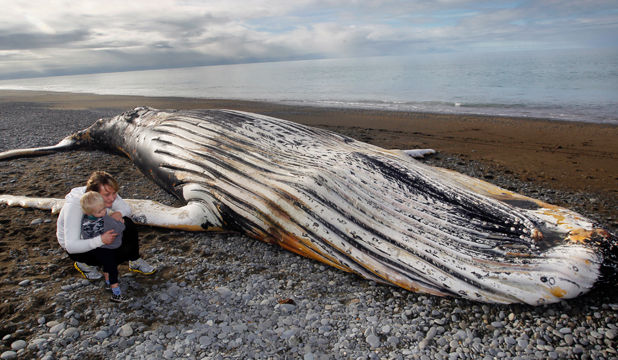
Dead humpback whale found at Pareora Beach, New Zealand

Image
© MYTCHALL BRANSGROVE/Fairfax NZWASHED UP: Nikita Reid and her son Tyler, 1, check out the dead humpback whale that washed up on Pareora Beach.
Humpback's death remains a mystery

The dead humpback whale discovered at Pareora Beach on Wednesday has received a traditional Maori blessing.

Two Department of Conservation (DOC) workers went to the site yesterday to try to learn more about the reasons for the whale's death. DOC senior ranger for biodiversity Paul Gasson said they took photos and measurements of the whale and would be liaising with a marine mammal expert in Wellington.

He said it was not unusual for a humpback whale to be in the region right now, as they are migrating north, with the southern winter approaching.

"There is no obvious cause why it turned up dead," Gasson said.

DOC science advisor Laura Boren said death was part of the process of migration.

"They go south in the summer to feed and north in the winter to breed," she said.

Cloud Lightning

Serbian village experiences a sequence of tornado, hail and snow

Image
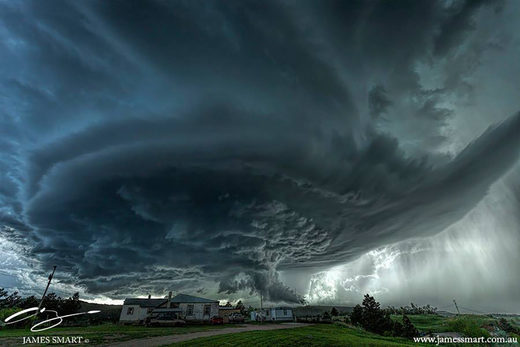
A strong storm described as "tornado-like" on Wednesday hit the village of Mlačište near the municipality of Crna Trava in southern Serbia.

It heavily damaged some 20 homes and other facilities and ripped large beech trees from their roots, the locals reported.

Crna Trava Emergency Situations Sector chief eMile Mladenović told Beta that the storm affected a very small area, completely destroying one house, and blowing off roofs from 20 others - and "covering the structures in broken tree trunks."

According to reports, the area that the storm affected was 500 meters wide and 2 kilometers long.

"Nobody knowns what happened during those several minutes. People were in a terrible panic. Some say darkness descended and they heard a dull rumbling sound, others said they saw a vortex that looked like a tornado. This is truly a mystery to all of us," Mladenović said.

Once this was over, a hailstorm hit the village, followed by snowfall.

"There is 20 centimeters of snow now in Mlačiste and Bainci (villages)," the news agency quoted Mladenović as saying.

Comment: The narrow area of impact along with the (lack of) light phenomena might be another example of climatical electrical discharge? Something which the standard meteorological model does not accommodate: Cyclones, Earthquakes, Volcanoes And Other Electrical Phenomena


Attention

Atlantic current strength decline explained as natural variation, but threat of 'tipping point' looms

Atlantic current
© Nature magazine
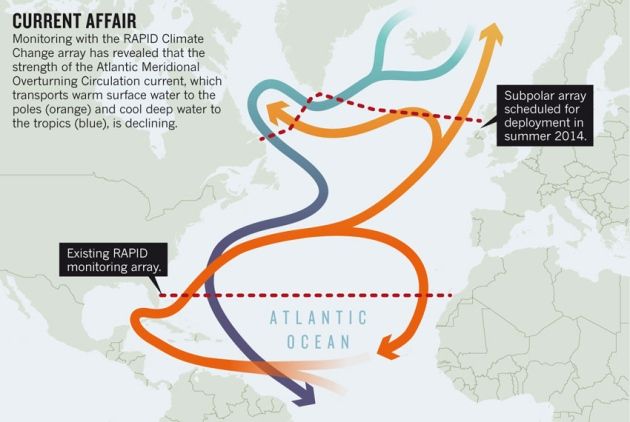
The marked slowdown in the past decade of the warm Atlantic Ocean currents that bring mild weather to northwestern Europe may be caused by natural variation and not anthropogenic climate change, as has been previously suggested.

The Atlantic Meridional Overturning Circulation (AMOC) is part of the great ocean 'conveyor belt' that ceaselessly circulates sea water, heat and nutrients around the globe. In particular, it transports large amounts of warm water from the tropics to the poles, warming the British Isles and maritime northern Europe along the way (see 'Current affair'). But since 2004, ocean sensors have detected a significant decline in the strength of the currents and a cooling of the subtropical Atlantic as a result. From mid-2009 to mid-2010, for example, the circulation slowed to two-thirds of its usual strength - and some oceanographers suggested that the drop caused the harsh weather in the United Kingdom and western Europe that winter (see Nature 497, 167 - 168; 2013).

Comment: While the scientists say that there is nothing to worry about right now, if the tipping point described in the article is reached, then the climate of the earth could rapidly change, such as an ice age whether mini or not. To say the least this would drastically impact humanity. If they haven't been able to accurately predict the current strength previously with their models and seem to only have a small clue of what caused a drastic slow down only a few years ago, then we can have little to no confidence in their pronouncement that all is going to be fine in the near term. One positive note about the article is they didn't bring out the normal 'humanity is at fault' spiel.

Britain faces big freeze as Gulf Stream loses strength
Life on this Earth Just Changed: The North Atlantic Current is Gone
Failing ocean current raises fears of mini ice age
Climate change: The great Atlantic shutdown and the Coming Ice Age


Ambulance

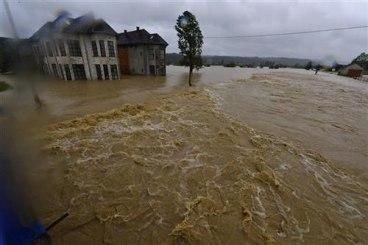
Russia sends rescuers to flood-hit Serbia at Serbian request

Serbian floods
© EPA/DRAGAN KARADAREVIC
The Russian Emergencies Ministry has sent rescuers to flood-hit Serbia, the ministry's spokesman Alexander Drobyshevsky told ITAR-TASS.

At the request of Serbia's authorities, the Russian Emergencies Ministry was sending rescuers of the Tsentrospas airmobile team and the Leader special risk rescue operations center, he said.

An Il-76 plane had already flown out for Serbia, he said. Aboard were more than 70 skilled specialists and high-technological equipment, including diving and other special equipment and motor boats.

The Russian team was equipped with everything necessary for operation in flooded areas and ready to work for more than 15 days, the official noted.

Specialists from the Russian-Serb humanitarian centre in Serbia were also participating in work dealing with flood consequences. Mobile power stations and motor pumps from the centre were provided for flood-hit areas, Drobyshevsky said.

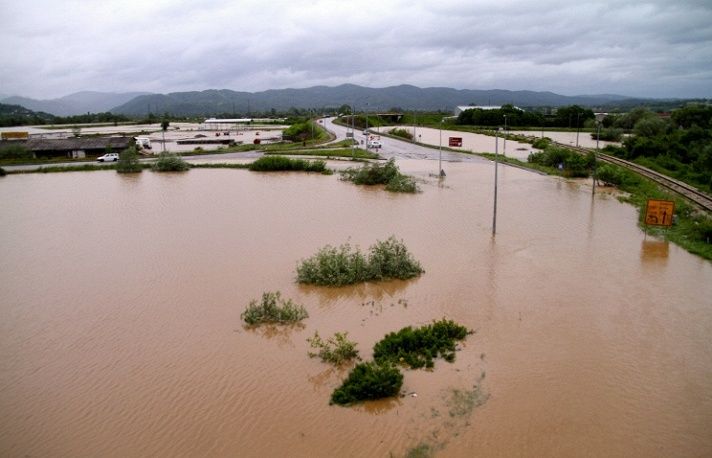
Serbian authorities declared a state of emergency in the country on Thursday in connection with the flood caused by continuing heavy rains. The emergency team is headed by Prime Minister Alexander Vucic, who has described the situation as a disaster.

Overflowing rivers have flooded houses and farming fields, destroyed roads and caused landslides. The flood has killed two people, and two are missing. Weather forecasters say it will continue raining for at least a day longer.

Cloud Precipitation

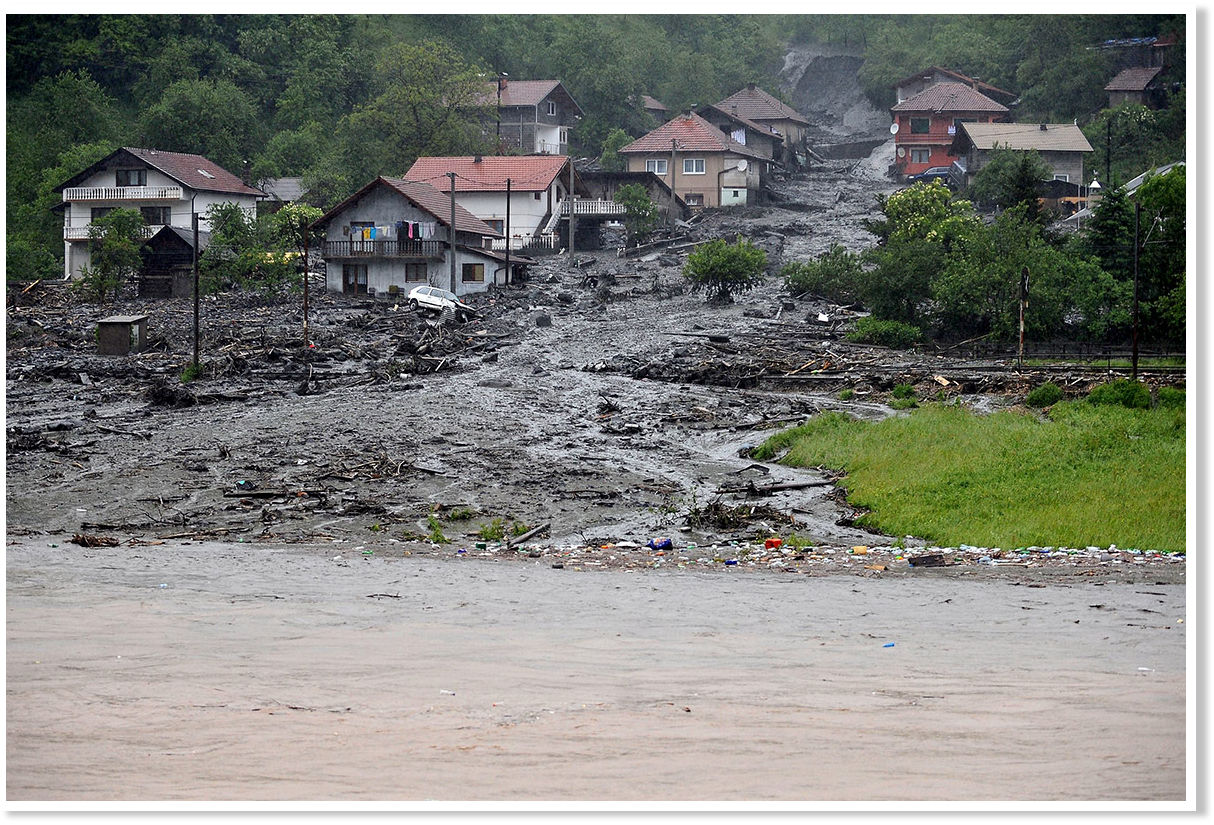
Balkans floods: heavy rain causes landslides in Bosnia and Serbia

A woman and a firefighter have drowned and hundreds of people in the Balkans have been evacuated from their homes as rain-swollen rivers flooded roads, bridges and railways, closed schools and cut off power and phone services.
Image
© Associated France PresseA view of a landslide and floodwaters around houses in the village of Topcic Polje, near the town of Zenica in Bosnia

Extinguisher

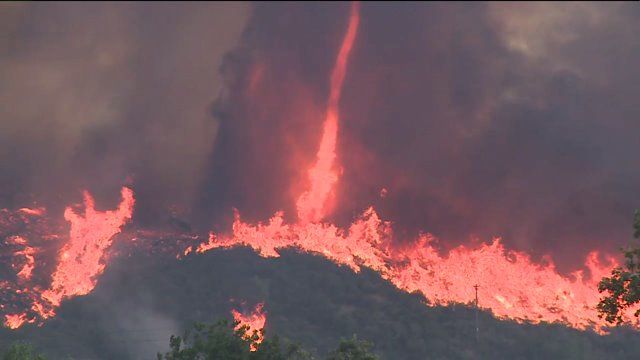
10 wildfires erupt in San Diego area spawning several Fire tornadoes [videos]

Image
More than 10,000 acres have been charred by 10 wildfires in Southern California flaring Thursday afternoon. The extremely dry conditions, of drought-ridden California with it's recent record breaking heat wave in SoCal, have set the stage for an extreme fire hazardous environment. Investigations are looking into what could have set the sparks: Teenage arson and truck fires spread by extreme wind conditions, have been aired as possible causes.

One death has been reported in the "400-acre Poinsettia Fire in Carlsbad on Thursday, officials said". A state of emergency has been declared by Gov. Jerry Brown and 20,000 evacuation notices have been sent out, including shutting down a university campus of 10,000 students in the middle of final exams.

Several Fire tornadoes were captured on video:


Comment: Recent Fire tornadoes


Cloud Lightning

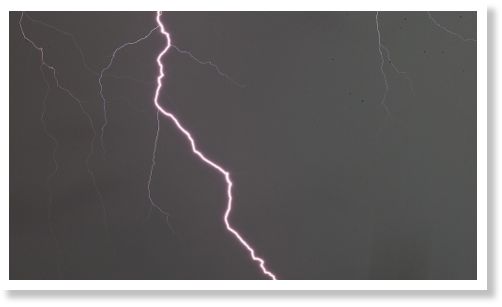
Entire family in Saxony, Germany struck by lightning

Image
© DPA
A nine-year-old boy was taken to hospital in a serious condition on Wednesday after he was struck by lightning along with four other members of his family.

The family were gathering their garden furniture and toys in during a storm at their home near Chemnitz, Saxony, when they were struck at around 5pm.

The boy's grandmother, her daughter, her daughter-in-law and two grandsons, aged six and nine, were all hit and taken to hospital

Comment: See: The Wrath of Gods: Lightning strikes are more intense and more deadly, and solar wind is to blame


Cloud Lightning

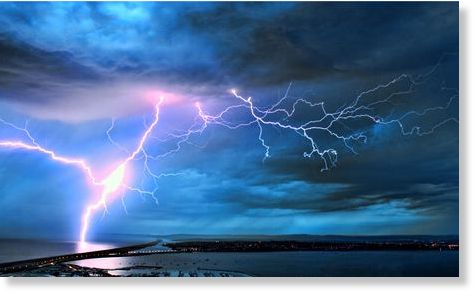
SOTT EXCLUSIVE: The Wrath of Gods - Lightning strikes are more intense and more deadly, and solar wind is to blame

Image
If lightning is the anger of the gods, then the gods are concerned mostly about trees. ~ Lao Tzu

As it turns out, it's no longer just trees. Back in September, 2013, SOTT reported that lightning strikes on people appear to have become more common. Whether or not there are actually more cases of lightning harming humans -- for example, such cases may just be reported more often -- it still appears as a serious deviation from the "norm", even after taking into account the official statistics:
  • According to the 2008 annual Lightning Detection Conference, an estimated 24,000 people are killed by lightning strikes around the world each year and about 240,000 are injured.
  • According to the NOAA, over the last 20 years, the United States averaged 51 annual lightning strike fatalities.
  • According to this site, men are killed by lightning four times more often than women.
  • Statistically, males account for 84 percent of all lightning-related deaths.
  • According to the National Weather Service, a new record low of only 23 people in the US died after being struck by lightning in 2013:

But how to reconcile this data with facts on the ground? Because daily reading of world news and common sense suggest that there is something very strange going on, and statistical data can't save us from reality striking us on the head. The bottom line is, if lightning were the only natural calamity disturbing our lives on this planet, we wouldn't feel like raising the alarm or asking questions, but more frequent and intense lightning appears to be just one symptom of a much larger and more serious syndrome:

SOTT Earth Changes Summary - April 2014
Signs of change: Extreme weather, seismic activity, and meteor fireballs in April and early May 2014

Considering the above, take a look at the result of our quick news sweep. Most of the news items are no more than a week old.

Better Earth

SOTT Focus: Antarctica, is it melting or not? Man-made global warming can't explain this climate paradox

In the last week or so a number of articles have surfaced concerning scientific observations made in Antarctica. When comparing these articles, it's hard to not be a little puzzled as to what is going on. One even gets the impression that climate scientists don't talk much to each other but rather stay within their own specific field of research. Before we examine these articles, let's take a quick look at Antarctica. According to Wikipedia:
At 14.0 million km2 (5.4 million sq mi), it is the fifth-largest continent in area after Asia, Africa, North America, and South America. For comparison, Antarctica is nearly twice the size of Australia.

About 98% of Antarctica is covered by the Antarctic ice sheet, a sheet of ice averaging at least 1.6 km (1.0 mi) thick. The continent has about 90% of the world's ice (and thereby about 70% of the world's fresh water).
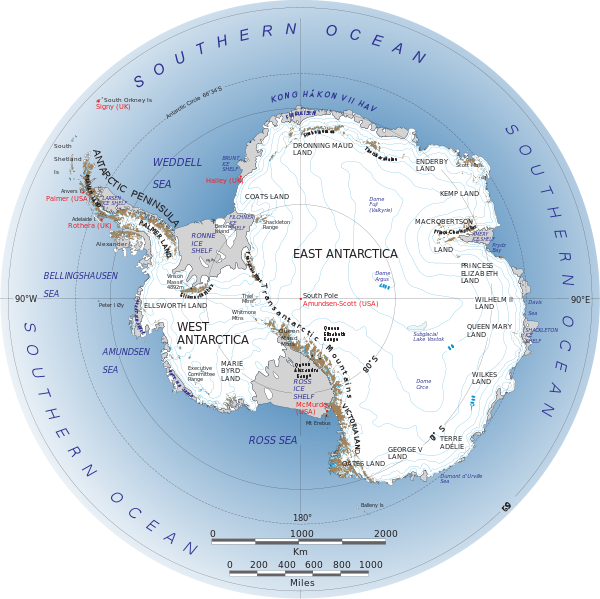
Furthermore the Antarctic ice sheet is divided into the West Antarctic ice sheet (WAIS) and the East Antarctic ice sheet (EAIS), something which is often missed in the mainstream media, where promoting the man-made global warming idea is all-important. Here is an image of Antarctica:

Antarctica
© Wikipedia
I couldn't find the exact percentage but as we can see, the WAIS is by far the smaller of the two ice sheets, accounting for no more than 20%. There are important differences between the two ice sheets. From Wikipedia again:
In East Antarctica, the ice sheet rests on a major land mass, but in West Antarctica the bed can extend to more than 2,500 meters below sea level. Much of the land in this area would be seabed if the ice sheet were not there.

Comment: See also:

Volcanic eruptions, rising CO2, boiling oceans, and why man-made global warming is not even wrong


Binoculars

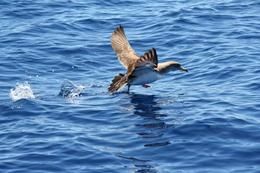
Disturbing amounts of plastic found in Mediterranean seabirds

Image
Cory's shearwater was the species with the highest level of ingested plastic
A new study has discovered that 94 per cent of Cory's shearwaters on the Catalan coast have ingested plastic. In the case of Yelkouan and Balearic shearwaters, the conclusion is that 70 per cent of studied birds were similarly affected. Jacob González Solís from the Department of Animal Biology and the Biodiversity Research Institute (IRBio) of the University of Barcelona (UB), headed a research group that carried out the study, published in the Marine Pollution Bulletin.

Plastic pollution is known to be a threat for marine ecosystems around the world, but it has not yet been extensively studied. Solís explained that, "this is the first assessment of plastic ingestion in Mediterranean seabirds. The Mediterranean Sea has been recognised as a singularly sensitive ecosystem because its coast is very industrialised, shipping activity is intense and it contains high density floating plastic areas."

Floating plastic debris can cause entanglement, ulcers, infections and death in marine animals. They can ingest them by mistake, because plastic fragments resemble their natural food items such as jelly fish, or take them in by eating prey which has in turn consumed plastic. Ingested fragments found were filaments, plastic spheres, laminar plastic and industrial pellets.

Comment: See also: Plastic Trash in Oceans May Be 'Vastly' Underestimated

The world's rubbish dump: a garbage pit that stretches from Hawaii to Japan

One-third of fish caught in English Channel have plastic contamination

Sea turtle choked with 317 plastic pieces found dead on Australian beach