Earth ChangesS


Music

Mystery humming noise is giving England residents sleepless nights

Humming Noise
© Herald Express, UKNoise annoys.
Claims that Paignton residents are having their sleep disturbed by a humming or droning noise coming from the giraffe house have been denied by Paignton Zoo.

Peter Thorne, of Brantwood Drive, Paignton, has, along with 20 other residents, handed in a petition to Torbay Council asking them to ask the Zoo to soundproof a oil gas boiler in the giraffe house that they believe is causing the humming or droning sound.

This low frequency noise has been disturbing residents since the autumn of last year and it can apparently still be heard at present, but the Zoo have confirmed to the Herald Express that the boiler has been turned off for weeks.

However, Mr Thorne, who handed in the petition last Thursday, has said: "I am very tired. The noise is still there. I am being disturbed in the night and am being kept awake by this. It is a humming or droning noise that at times it can be quite loud. It has been going on since October/November since last year."

Sun

Revision to 400-year sunspot record makes current solar cycle weakest in 200 years

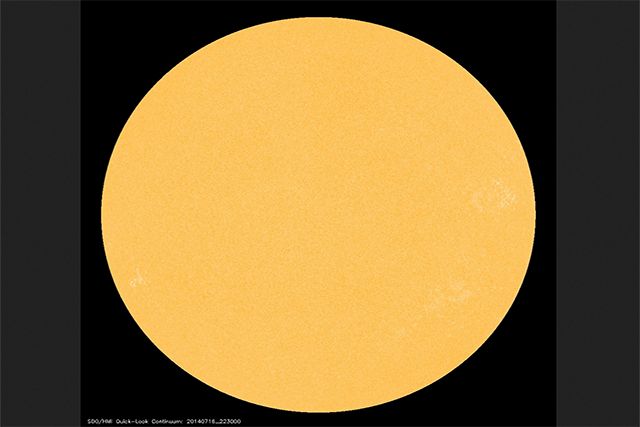
Rare spotless day observed on July 18, 2014
© Spaceweather.comRare spotless day observed on July 18, 2014
A rare spotless day on the sun on July 17-18, 2014 triggered public speculation that an already stunted Cycle 24 was nearly over. Such is not the case. Defying the odds for so late in a sunspot cycle, another solar sunspot maximum was set last month. Another one is coming this month.

In other major news, a long needed revision to the 400-year sunspot record was proposed. It'll be the first change made to the sunspot record since it was first established by Rudolf Wolf back in 1849. The changes will affect long-term climate and other dependent scientific studies.

One effect of the proposal will be to reduce modern sunspot totals. That will wipe out the so-called "Modern Maximum" and make the current sunspot cycle, Cycle 24, the weakest in 200 years.

Comment: The so-called 'pause' in global warming is nothing more than propaganda to enable the warmists to keep pushing their agenda. We are one step away from an ice age!

Global Cooling: Is an Ice Age coming?
Global warming? - Still no warming for 17 years 9 months
Ice Age Cometh: Russian Academy of Sciences experts warn of imminent cold period: "Global warming is a marketing trick"


Stop

Mysterious penguin disease spreads to Antarctica

Image
© Andres Barbosa
Although penguins can't fly, they still need feathers. Without them, the birds risk succumbing to rain, cold, disease, and even death - which is why researchers are concerned about the recent reappearance of a rare disorder causing the feathers of young penguins to fall out.

The so-called feather-loss disorder was first seen in 2006 in penguin chicks housed at a captive facility in South Africa. One year later, several cases were observed across the Atlantic Ocean, in wild Magellanic penguin chicks along the coast of Argentina.

Igloo

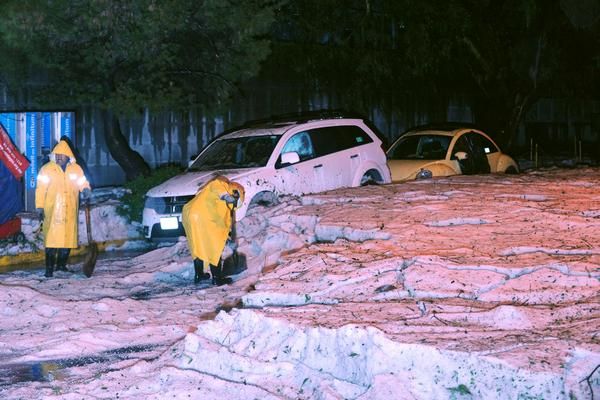
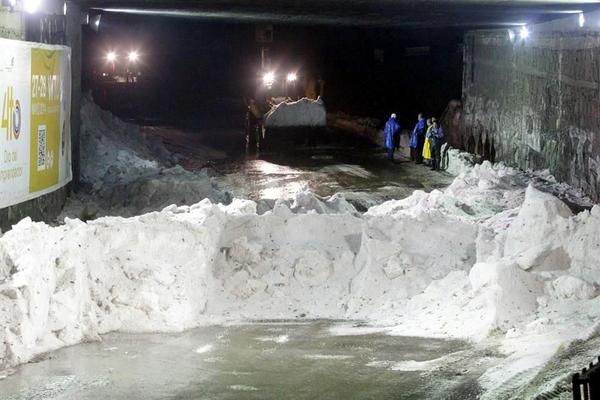
Ice age cometh: Two to three feet of hail crippled parts of Mexico City Sunday

Hail storm in Mexico City
© Twitter user sandyzzenSummer hail storm buries parts of Mexico City
A hailstorm of mammoth proportions hammered sections of Mexico City Sunday. Several feet of hail piled up, making some city roads impassable.

"Roads such as the North Loop [el Periférico Norte] were flooded by hail and flooding, so municipal and Federal District workers labored for hours to clear them, Notimex reported," wrote CNN Mexico.

Mexico news organization Azteca Noticias called it a "historical hailstorm".
Historic hailstorm in Mexico City
© Twitter user Reformacom
Pictures from Twitter are remarkable; parts of the low latitude city appear transformed into a winter wonderland in the dog days of August:

Hail is not uncommon in the Valley of Mexico, which includes Mexico City.

On Sunday, an area of low pressure at high altitudes generated the instability necessary for the vigorous, hail-producing storms.

In addition to hail, flash flooding was also reported in the region.

Here's video (narrated in Spanish) from Mexico City from Aztec News via YouTube:


Attention

Northwest Alaska villagers concerned about dead salmon washing up along Kobuk River

Alaska Salmon dieoff
© Annie Schaeffer-Barr / Kiana Traditional Council
A fish die-off leaves chum salmon carcasses along the shore of the Kobuk River on Sunday, August 17, 2014, about 10 miles above Kiana in northwest Alaska.

For the last week, from Shugnak all the way down to Kotzebue, people are reporting dead fish washed up on the banks of Northwest Alaska's Kobuk River in astonishing numbers. The fish appear to have been healthy and unspawned. Some have mysterious white welts dotting their backs.

Carolyn Ballot, mayor of Ambler, said when she first heard about the fish, she suspected bears were pulling salmon out of the water, which is nothing unusual. But the huge number of fish washing ashore quickly became concerning. She wondered whether warm weather in the region was causing the die-off.

"There is something going on," she said.

The explanation may be somewhat mundane, though: The Alaska Department of Fish and Game suspects the die-off is related to this year's extremely strong chum salmon run, to the point that the fish are practically clogging the waterway.

Cloud Precipitation

Phoenix, AZ: 'Sheets of Rain' - up to 4 inches of rain fell in an hour causing major flooding and interstate closures

Hard rain came down throughout the Valley and surrounding areas Tuesday morning, soaking several areas that are still reeling from last week's flooding. The National Weather Service issued a Flash Flood Warning that it extended twice.


Rainfall this morning
  • New River -- 3.98"
  • Black Canyon City -- 3.78"
  • Cave Creek -- 1.50"
  • North Phoenix -- 1.38"
  • Desert Ridge -- 1.32"
  • Glendale -- 1.10"
3TV Meteorologist April Warnecke said showers would continue off and on throughout the day. An inch had fallen since 5:30 a.m., and it was still coming down more than an hour later, prompting the National Weather Service to issue a Flood Watch and Advisory. The NWS later upgraded that to a Flash Flood Warning that originally was to expire at 9 a.m.. The NWS that warning extended until 11 a.m., and then again until 1 p.m.

Snowflake Cold

Snow set to blast Scotland as forecasters warn of 'coldest August spell in a century'

Image
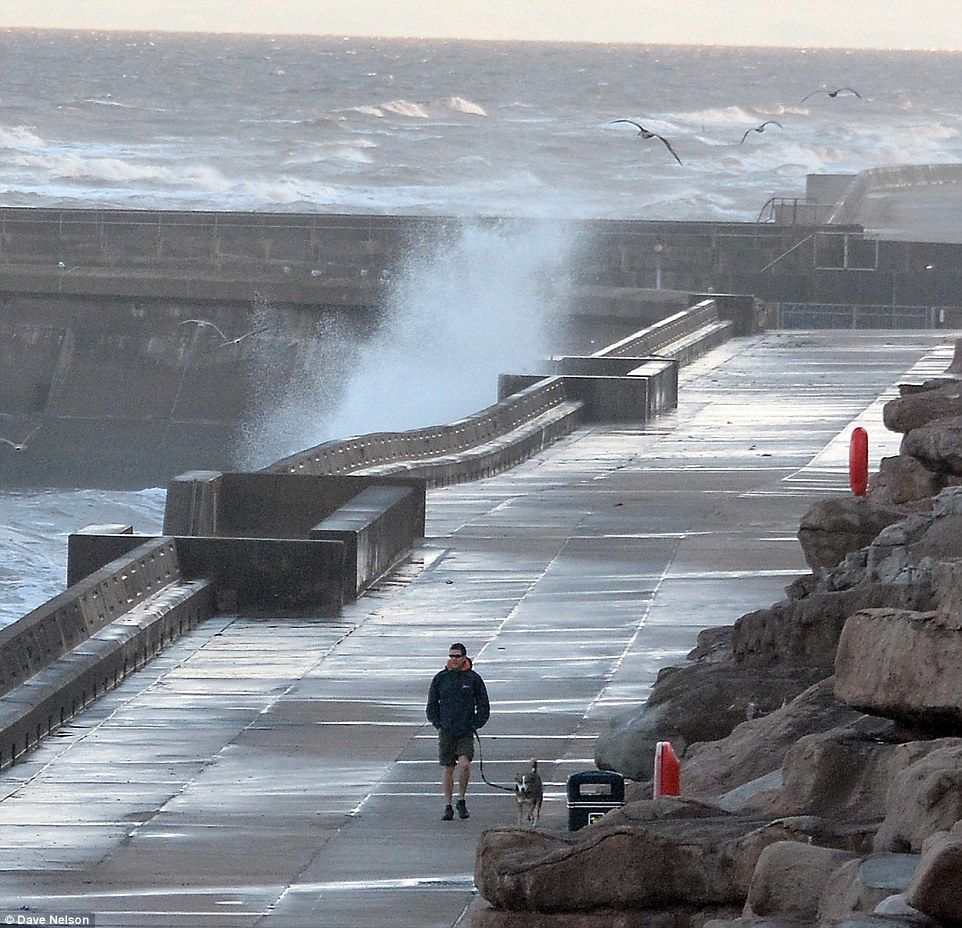
Stormy seas battering Blackpool Promenade this morning. Forecasters are predicting scattered showers, cool temperatures and windy weather for the next two weeks.
Bitter Arctic winds could plunge parts of Britain into the coldest spell of August weather for almost a century.

Thermometers are set to plummet as a stubborn band of low pressure drags air in from the north - with two weeks of wet, windy and cold weather on the horizon.

There is even a chance of snow and sleet over the mountains of Scotland as it dips to near freezing overnight. Government figures show the last time it was this cold in August was in 1919 when the mercury rose no higher than 8.9C for four days in Yorkshire and Cumbria.It is not expected to rise above 9C in parts of the north during the day all week with chilly winds making it feel much colder.

The Met Office said Loadpot Hill, in Cumbria, is unlikely to see a maximum daytime temperature of more than 8C on Thursday.

Forecasters blame an area of low pressure circling off the north of the UK for the cold and miserable week ahead. Met Office spokeswoman Charlie Powell said: 'The lowest daily maximum temperature we have is in Cumbria, Yorkshire and Shetland which was 8.9C in 1919. At the moment it looks like Tuesday, Wednesday and Thursday this week will see temperatures in that bracket.' Laura Young from the Met Office said: 'It is going to be much cooler this week, unseasonably cool due to much colder air coming down from the north.

Snowflake Cold

The Netherlands: Is this summer? This August is one of the coldest since 1980

Image
© ANP
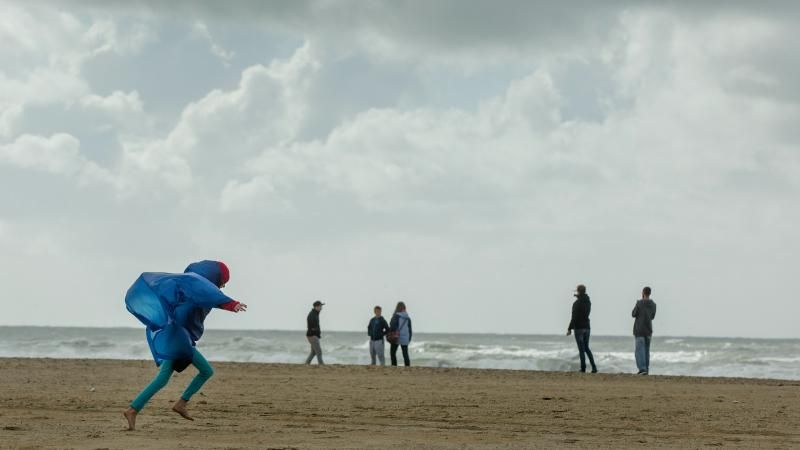
This August is the second coldest in 34 years with an average afternoon temperature of 17 Celsius at the De Bilt weather station.

In the average year, the temperature is around 22 Celsius in mid August, according to forecasting bureau Weerplaza.

Bizarro Earth

Iceland tells airlines Bardarbunga volcano under glacier may erupt, raises alert to orange

Bardarbunga
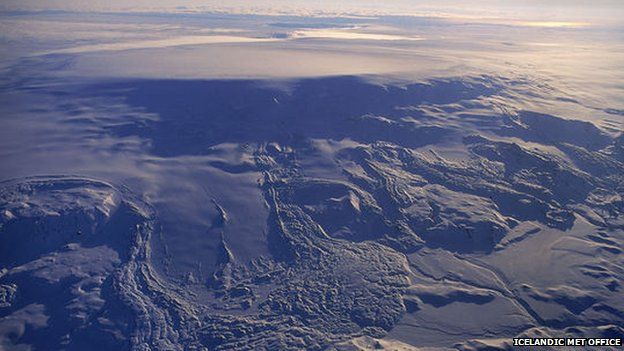
File photo: Bardarbunga, 7 November 1996
Seismic activity has been detected at Bardarbunga, including a strong earthquake
Iceland warned airlines that there may be an eruption at one of the island's largest volcanoes located underneath Vatnajokull, Europe's biggest glacier.

The alert level at Bardarbunga was raised to "orange," indicating "heightened or escalating unrest with increased potential of eruption," the Reykjavik-based Met Office said in a statement on its website. Over 250 tremors have been measured in the area since midnight. The agency said there are still no visible indications of an eruption.

The volcano is 25 kilometers (15.5 miles) wide and rises about 1,900 meters above sea level. Bardarbunga, which last erupted in 1996, can spew both ash and molten lava.

Comment: Given the news, this quote from an article that we published in 2011 seems timely and pertinent:
Bardarbunga's last major eruption was horrendous. It changed the weather pattern in northern Europe and darkened the skies for months during 1477. That gigantic eruption generated the largest lava flow in 10,000 years and significantly expanded Iceland's land mass.

Grim experts concede that if the volcano's current activity culminates in an eruption equal to that of 1477, all of Scandinavia and much of northern Russia and Europe will be left reeling.The UK will be slammed by choking volcanic dust, grit and poisonous superheated gases. Commerce will grind to a halt, the skies will blacken for weeks, perhaps months, and agriculture would be severely affected.

The late Cornell University professor, astronomer Carl Sagan, used the consequences of large volcanic eruptions impact on global cooling as part of his theoretical model for the frightening prospect of a nuclear winter.

Ken Caldeira, an earth scientist at Stanford University, California, and member of Britain's prestigious Royal Society working group on geo-engineering, explained that "dust sprayed into the stratosphere in volcanic eruptions is known to cool the Earth by reflecting light back into space."

That simple process has led to the starvation of whole nations in the past. Volcanic gases and dust suspended in the atmosphere cool the Earth to a point where the growing seasons significantly shrink and crops cannot reach maturity.


Windsock

Container ship crashes into Fremantle bridge as wild storm lashes Western Australia

Perth bridge damage
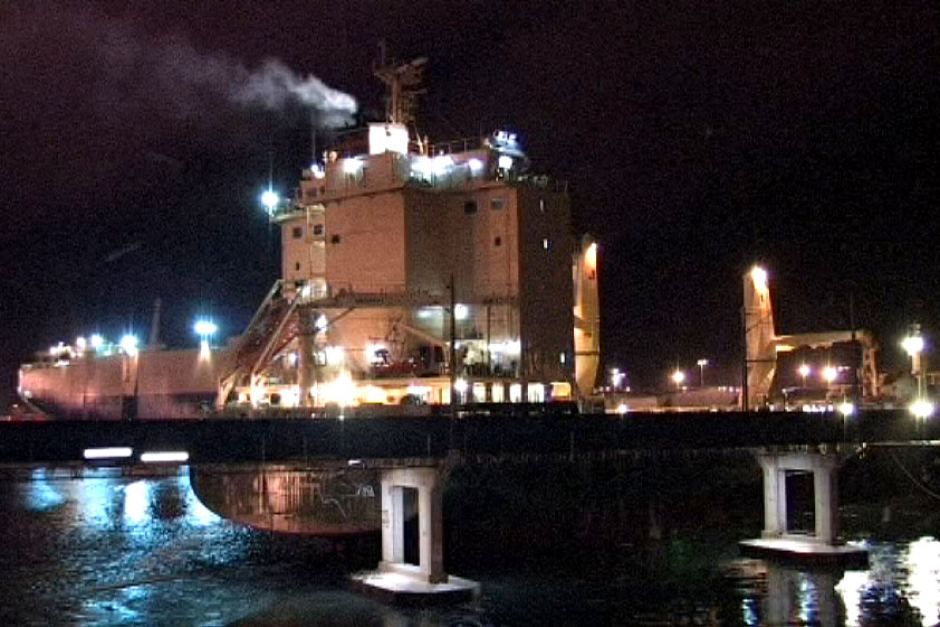
© ABC NewsA storm causes a container ship to break its moorings and hit the Fremantle rail bridge.
A wild storm that lashed Perth and WA's south-west overnight caused a container ship to break its moorings and crash into the rail bridge in the port of Fremantle.

Wind gusts of 122kph hit Busselton, while 34 millimetres of rain was recorded in Donnybrook and 22 in Swanbourne.

About 20,000 homes lost power overnight, although Western Power said only 2,400 customers - mostly in Manjimup - remained without electricity this morning.

The ship that crashed into the Fremantle rail bridge was unloading a cargo of cars when its stern rope snapped, causing it to swing out into the port.

A second cargo vessel also broke its moorings and hit the refuelling vessel Parmelia 1, which was docked near the bridge.