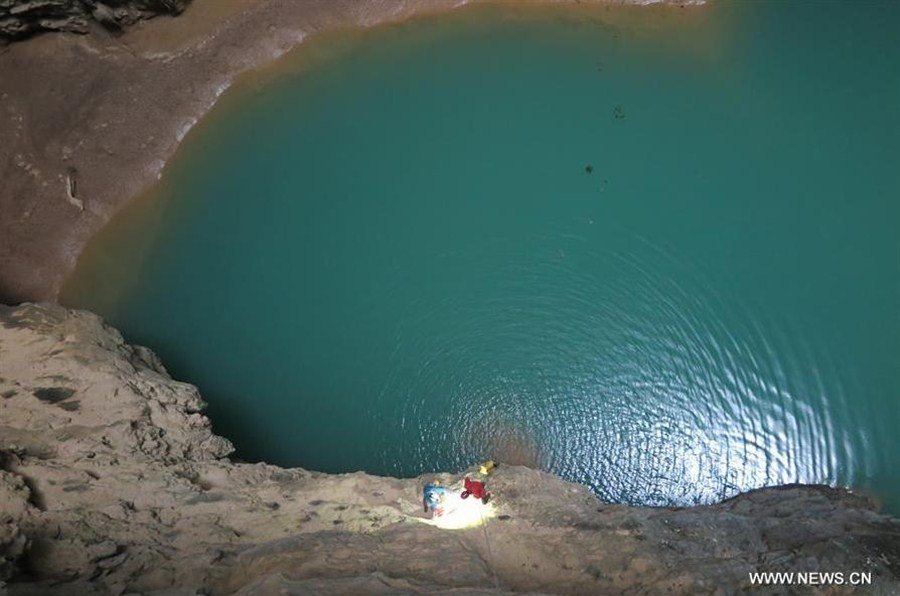
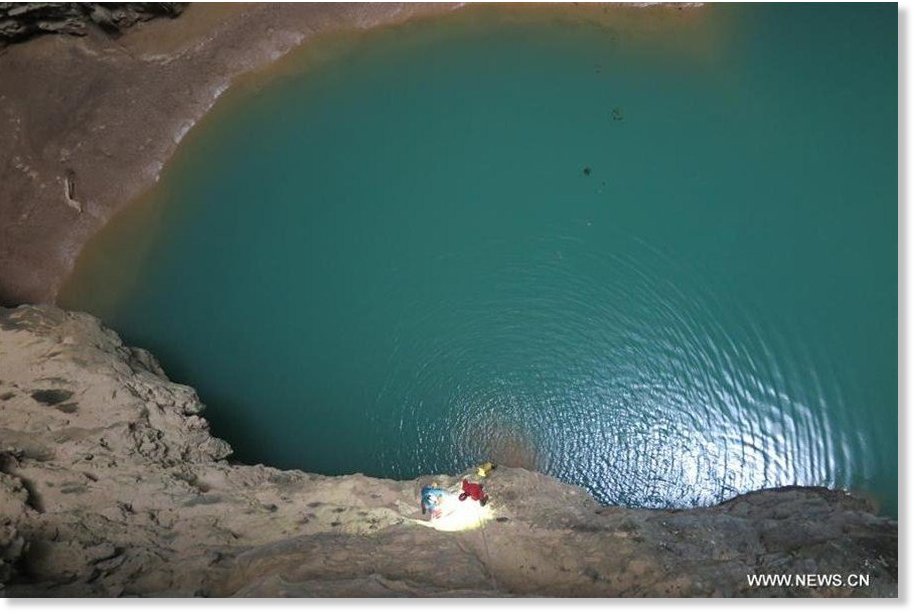
Photo taken on March 3 shows groundwater found at a huge doline in Donglan County, Hechi City of south China's Guangxi Zhuang Autonomous Region.
Scientists from China and France have discovered a rare huge sinkhole, habitat to many species in south China.
The 420-metre deep doline, or sink hole, was among several discovered by scientists during an eight-day expedition that began on February 26 in Donglan county of Guangxi Zhuang Autonomous region.
Dolines found in Guangxi are
normally around 250 metres deep, state-run Xinhua news agency reported.
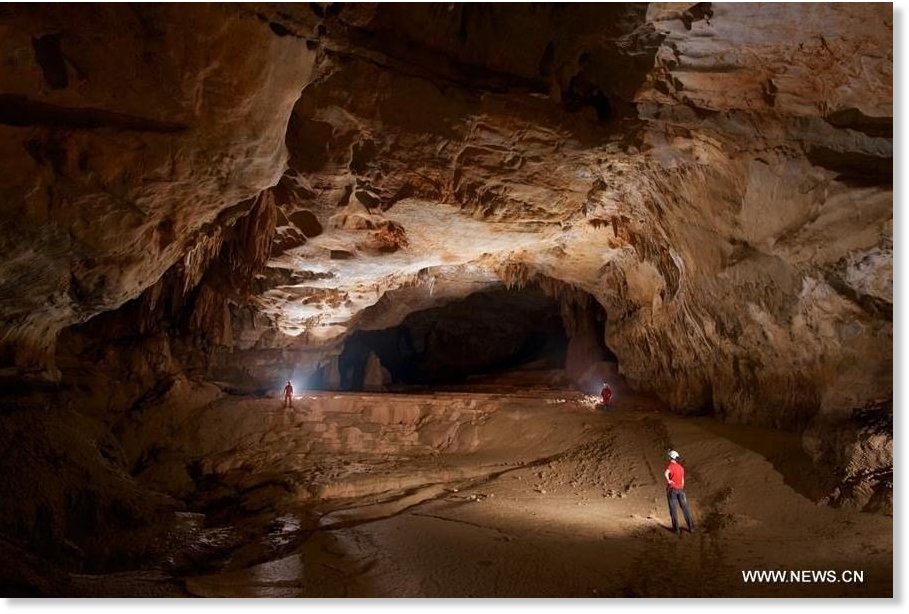
Many species live in these dolines, including bats and snakes. Scientists also found some as-yet unidentified vertebrates and plants.
Dolines are special geological landscape formations found in karst regions, formed by repeated cave-ins of underground caves. They are common in China, Mexico and Papua New Guinea.
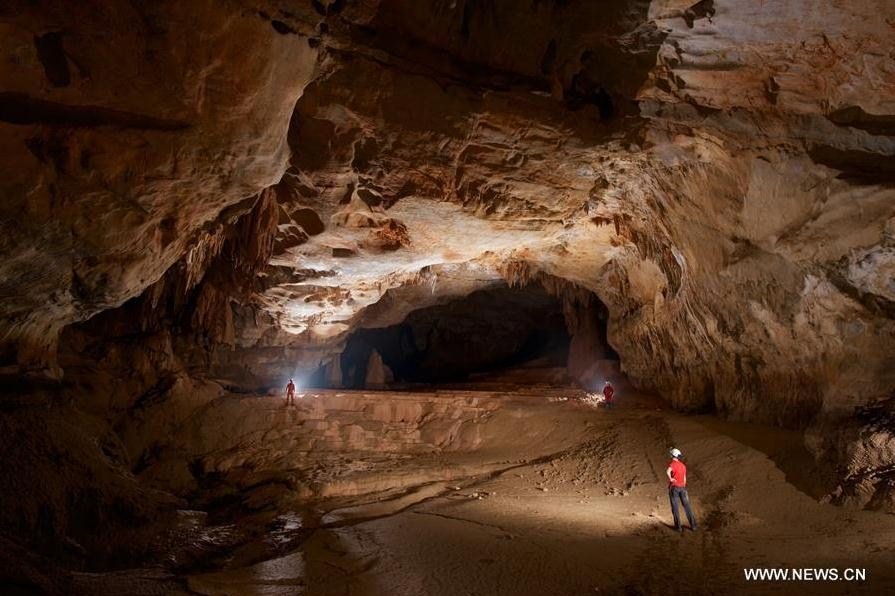
Photo taken on March 3 shows scientists exploring a huge doline in Donglan County, Hechi City of south China's Guangxi Zhuang Autonomous Region.














Comment: Oooh! How lucky! Isn't it LOVELY! Be sure to completely ignore the implications of a phenomenon normally seen over the Arctic appearing in Southern England. Are we soon to expect trite media articles about the splendor of icebergs, complete with polar bears, floating down the Thames?! Oh look! how lovely and lucky we are to see polar bears on the Thames! Now we don't have to go to the zoo! {{triple facepalm}}