Since the beginning of June, the Russian cities Tomsk and Novosibirsk have been experiencing a 'butterflypocalipce:' a phenomenal amount of Black-veined White butterflies have 'attacked' Siberian regions. There are so many of them that the ground is almost shaking!
The Black-veined White is a large butterfly which often goes by the more scientific name Aporia crataegus. It has rounded white wings with clear black veins and usually feeds on fruits of the wild bird cherry and apples. The species is common in Europe, Asia and North America, but is extinct in Great Britain and northern Scandinavia, migratory in the Netherlands and retreating from France.
Robert W. Felix Ice Age Now Wed, 21 Jun 2017 08:39 UTC
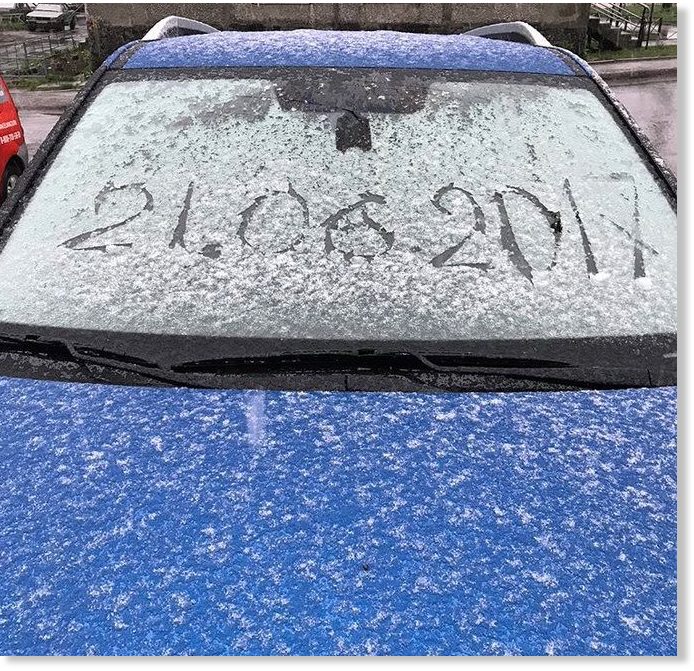
Heat wave? Not in Russia.
"In Moscow we have had repeated waves of cold (practically every week) since April and the social networks are full of jokes on "global warming", writes Moscow reader Alexey Parkhomenko.
Officials confirmed an earthquake happened near the South Carolina and Georgia border, and residents reported hearing a loud noise.
The earthquake was recorded 6 kilomoters southwest of Augusta, Ga. around 11:15 a.m. Tuesday, according to the U.S. Geological Survey.
The earthquake was recorded as 3.2 magnitude with a depth of 12.9 kilometers.
As of 12:45 p.m., about 1,600 people reported they felt the earthquake to USGS, including people as far away as Columbia and Greenville, S.C.
WRDW reported residents in the Augusta area are reporting the earthquake displaced furniture in homes and triggered security alarms at homes and businesses.
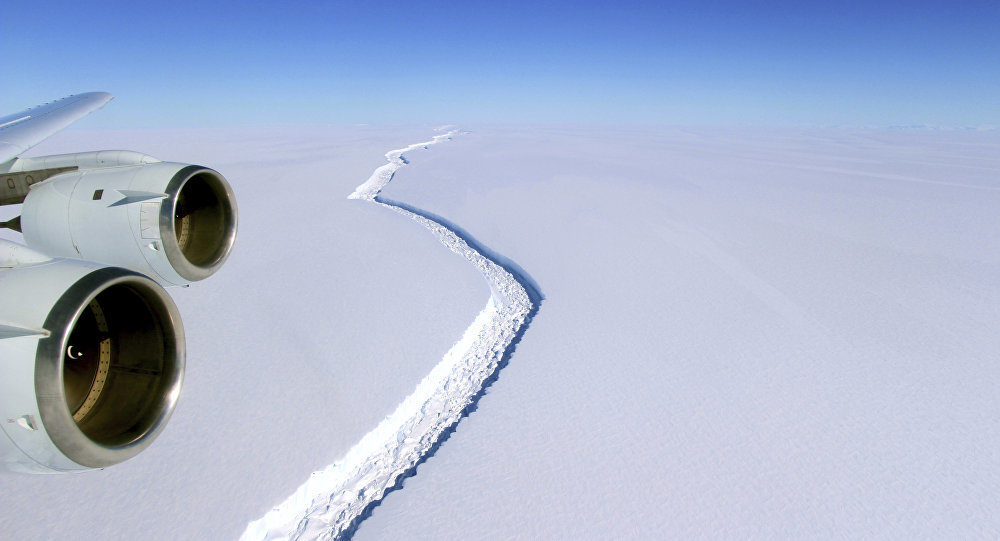
In a matter of days, the Larsen C ice shelf will crack apart and a gigantic iceberg the size of Delaware will calve into the ocean. This will be the climax of months of anticipation as the crack grew longer and larger.
When the crack was first observed in mid-2016, it was a tiny silver. But in November, it started to grow with impressive rapidity. It was thought to be all-but-certain than an iceberg consisting of 9 to 13 percent of the 19,000 square mile ice shelf's mass would form in 2017.
After a few months of inactivity, the crack accelerated once more, growing more than 10 miles in less than a week. Only 8 miles separate the 125-mile long crack from the edge of the shelf.
The 1,900 square miles will be the third largest iceberg ever recorded when it breaks up, but it isn't likely to last for more than a few years before breaking apart and sinking into the ocean.
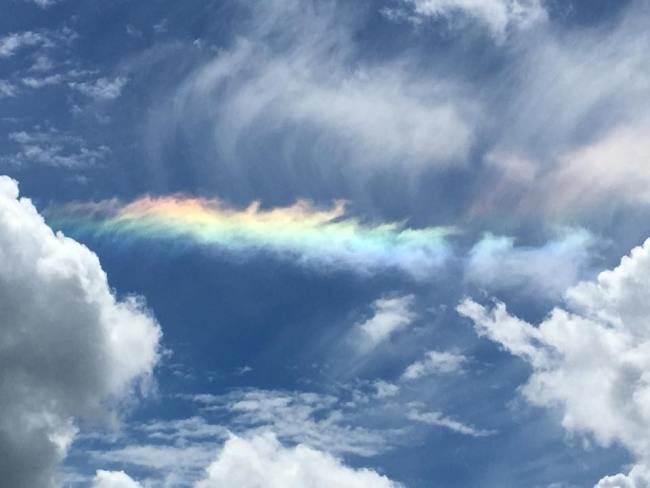
Ellen Bacca took the pic. above in downtown Grand Rapids Monday. It's a "fire rainbow" also known as a circumhorizontal arc.
It's actually not a rainbow caused by rain and you would be looking at a rainbow with the sun at your back. This occurs when sunlight passes through a band of high clouds with 6-sided crystals in the shape of plates.
The sun has to be at least 58 degrees above the horizon to see a circumhorizontal arc. That means today (one day from the Summer Solstice) you could see a circumhorizontal arc between 11:41 am and 3:50 pm and in Grand Rapids you can only see a fire rainbow from April 18 to August 23rd, when the sun climbs to 58 degrees above the horizon.
North (and south) of 55 deg. latitude, you'll never see a fire rainbow. In London, England (51.5 deg. latitude), they only have a total of 140 hours a year when the sun is high enough to see a circumhorizontal arc.
Some brief power outages and several downed tree limbs were all that law enforcement had to report following Saturday's severe weather that hit northeast Missouri, but the real damage reports started rolling in Monday at local insurance offices.
The National Weather Service reported "Severe thunderstorms tracked across eastern Iowa, northeast Missouri, and north central Illinois Saturday afternoon and evening. Large hail, torrential rain, and damaging winds up to 65 mph were reported. Very large hail fell in Muscatine, IA and Antioch, MO, where golf ball and baseball size hail was reported respectively."
The heavy rains and high winds did minimal damage in Scotland County, but hail ranging in size from golf ball to as big as baseballs, was reported, leading to hundreds of claims for hail damage to vehicles, homes and businesses.
At least 11 people have died in western Guatemala after heavy rains caused a mudslide that swamped homes, spilled onto a highway and buried two buses early on Tuesday, emergency services said.
The buses were hit following the collapse of part of a hillside in the municipality of San Pedro Soloma, national disaster center Conred said in a statement.
Ten of the fatalities were in a bus that was buried, and another was inside one of the homes, Conred added. Nine people were injured, it said.
Emergency services were working with local officials to establish how many homes may have been buried and how many people are missing, the statement noted.
A swarm of hundreds of earthquakes have hit Yellowstone National Park, the highest number within a single week in the past five years.
Hundreds of earthquakes have hit Yellowstone National Park in the space of a week, according to experts. A total of 464 quakes have been recorded over the past week at Yellowstone, which sits above one of the world's most dangerous supervolcanoes.
This is the highest number of earthquakes at the park within a single week in the past five years. The recent activity has raised fears that the supervolcano is about to blow.
If it were to erupt, the Yellowstone supervolcano would be one thousand times as powerful as the 1980 Mount St Helens eruption, experts claim - although they say the risk is 'low'.
Heavy monsoon rains coupled with thunder and lightning on Monday claimed at least nine lives in several districts of Bengal, police said. Five persons from West Bengal's Hooghly district died after being struck by lightning while three more were injured, police said. "Three people from Chinsurah and two more from Dhaniakhali died due to lightning.
Three more from Chinsurah were also injured," Hooghly Superintendent of Police Sukesh Jain said. There were more deaths in East Burdwan district as heavy rains and lightning lashed the state on Monday evening.
Almost all of France (apart from the south east) is now roasting under temperatures up to 38C as heatwave alerts are extended to 66 departments.
Most of France is sizzling under scorching temperatures with 66 departments now on heatwave alert, including the entire greater Paris region of Ile-de-France, national weather agency Meteo France said.
The weather agency extended the orange alert from 16 departments to 66 on Tuesday, meaning the sweltering temperatures are now affecting vast swathes of France.
The mercury is predicted to rise to nearly 40C in the west of the country with temperatures in the southwestern seaside town of Biarritz expected to reach a whopping 38C.
Comment: