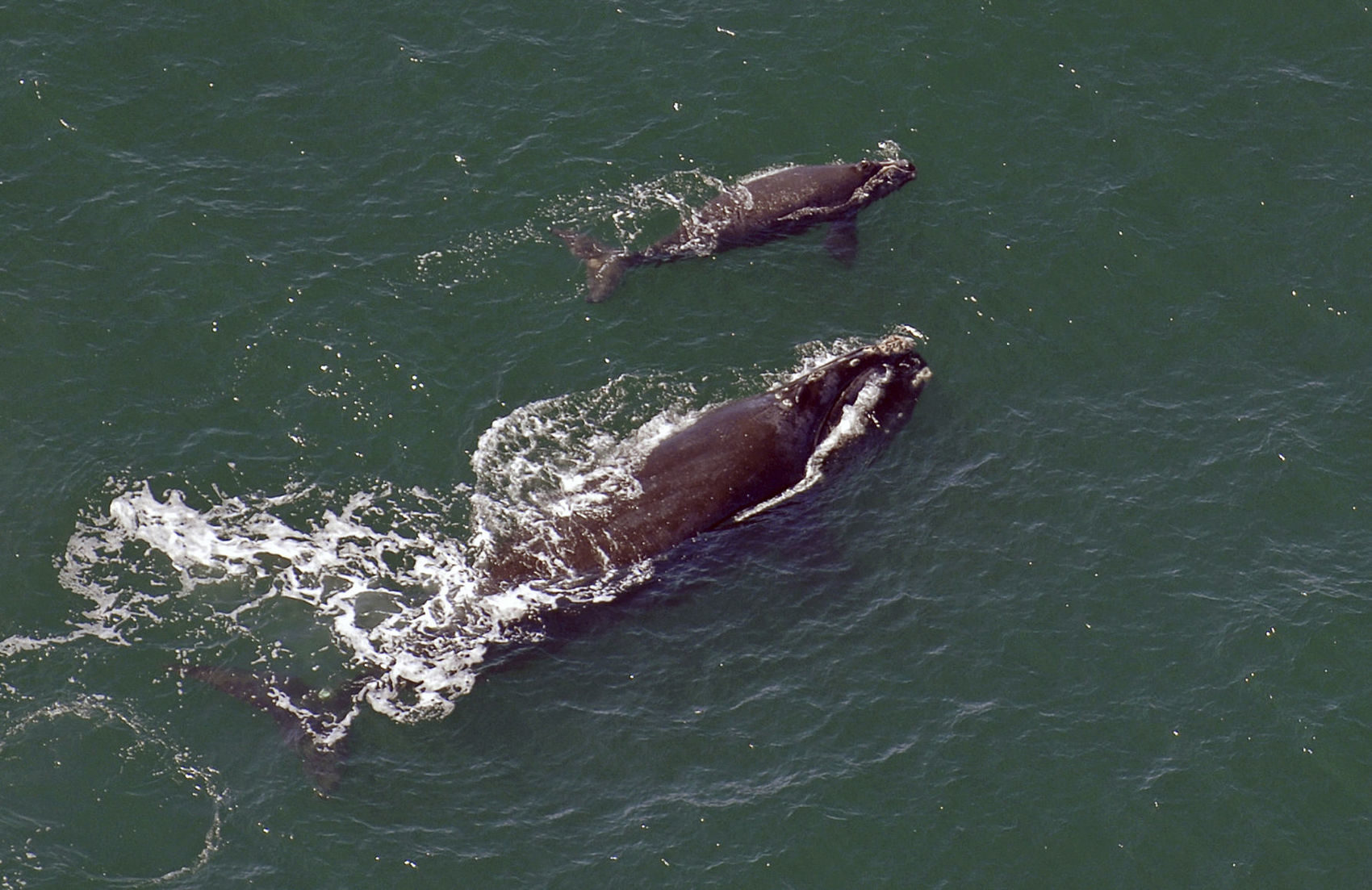
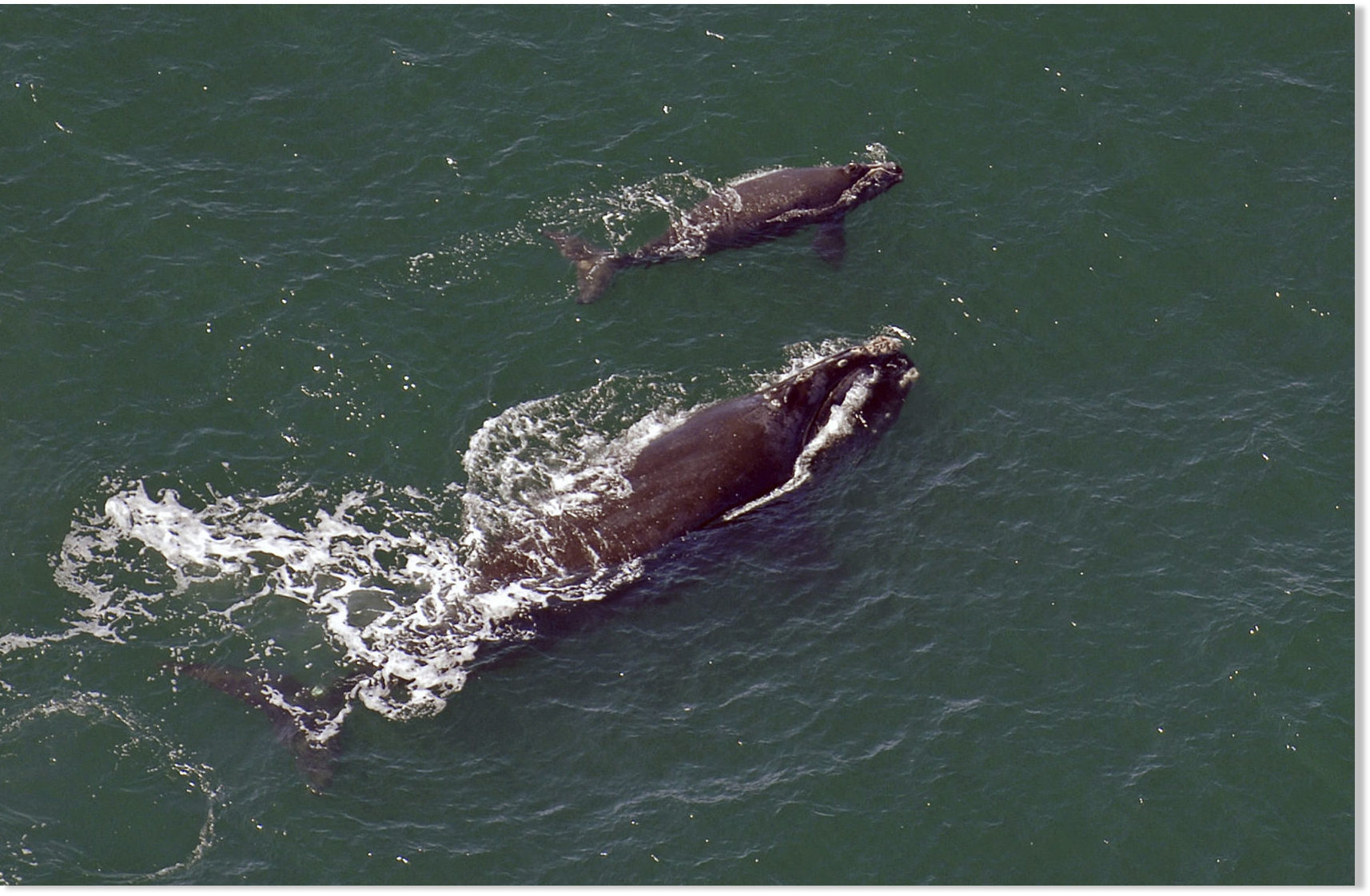
© John CarringtonIn this 2009 file photo, a female right whale swims at the surface of the water with her calf a few miles off the Georgia coast in 2009. Scientists watching for baby right whales off the Southeast U.S. coast have yet to spot a single newborn seven weeks into the endangered species' calving season, a dry spell researchers haven't seen in nearly 30 years.
Scientists watching for baby right whales off the Southeast U.S. coast have yet to spot a single newborn seven weeks into the endangered species' calving season —
the longest researchers have gone without any sightings in nearly 30 years.Bad weather that has limited efforts to look for whales could be to blame, rather than a reproductive slump. But scientists also worry it could point to another low birth year for the imperiled whales after a grim 2017,
when 17 confirmed right whale deaths far outpaced a scant five recorded births."We basically right now should be at the peak of the season and we haven't seen anything, so that's concerning," said Clay George, a wildlife biologist who oversees right whale surveys for the Georgia Department of Natural Resources. "I'm going from being the optimist I normally am to being pretty pessimistic about it."












Comment: Strangely enough, no one knows for sure why flu viruses appear in winter. Some say that viruses thrive in low humidity because they remain suspended in the air longer, but humidity can be very high in wintertime in many places. Maybe these bacteria and virii are in our bodies all the time and only activate during certain atmospheric conditions. Maybe some bugs need a 'key' to turn them on? Like some other virus or something in the atmosphere?
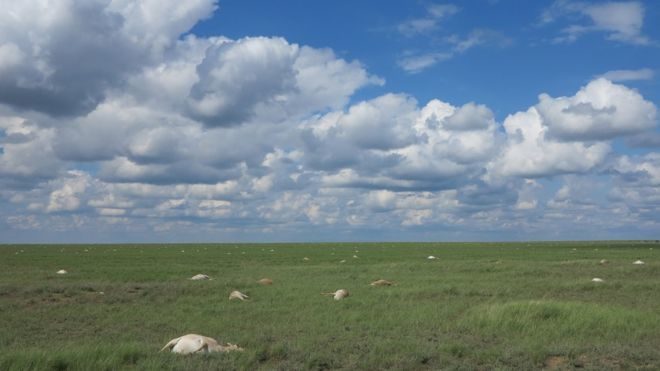
See also: Sixth Extinction continues: Mass deaths of Saiga antelope in Kazakhstan caused by bacteria