Science of the SpiritS


Bulb

Forgetting Is Part Of Remembering

Image
© Unknown
It's time for forgetting to get some respect, says Ben Storm, author of a new article on memory in Current Directions in Psychological Science, a journal of the Association for Psychological Science. "We need to rethink how we're talking about forgetting and realize that under some conditions it actually does play an important role in the function of memory," says Storm, who is a professor at the University of Illinois at Chicago.

"Memory is difficult. Thinking is difficult," Storm says. Memories and associations accumulate rapidly. "These things could completely overrun our life and make it impossible to learn and retrieve new things if they were left alone, and could just overpower the rest of memory," he says.

But, fortunately, that isn't what happens. "We're able to get around these strong competing inappropriate memories to remember the ones we want to recall." Storm and other psychological scientists are trying to understand how our minds select the right things to recall - if someone's talking about beaches near Omaha, Nebraska, for example, you will naturally suppress any knowledge you've collected about Omaha Beach in Normandy.

Pyramid

Flashback SOTT Focus: The Cult of the Plausible Lie

Image
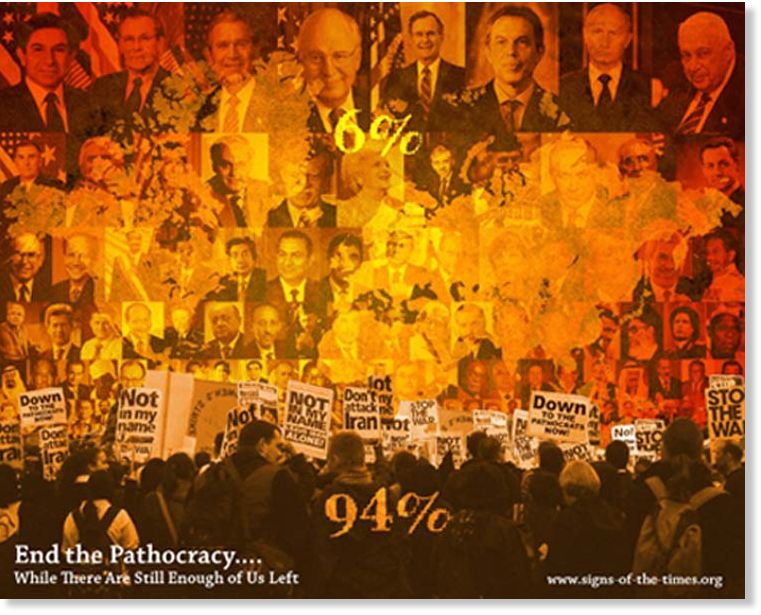
"Never ascribe to malice those things which may be explained by stupidity." That is an important phrase, and a necessary one; it keeps people from being paranoid. However, it has a corollary most people don't know: "One MAY ascribe to malice those things which stupidity cannot explain." Robert Canup
As the mail continues to come in on the COINTELPRO issue, a number of questions have been raised - mainly about how to tell the difference between Truth and Lies - and I thought I would take some time this morning to try to cover a few aspects of this issue.

I've covered many aspects of this issue here and there on our websites, but since google manages to ensure that we are suppressed on search results, many people have not yet discovered these collections of observation, evidence, and supporting material. (Regarding google, we have been collecting data and making experiments for over a year now and will soon publish some of the results, but don't expect to them to be trumpeted by google!)

Heart - Black

From Childhood Trauma, Adult Tumors

Groundbreaking MED study links child abuse and fibroid tumors

Image
© Unknown
Among children who have known the trauma of child abuse, the list of potential side effects is long: bad dreams and bed-wetting. Stuttering and substance abuse. Anxiety, aggression, withdrawal, and chronic difficulties in school.

But a new study by the Boston University School of Medicine suggests that child physical and sexual abuse can also have implications for the health and biological function of abuse victims far into adulthood. The groundbreaking study, which followed more than 60,000 women over 16 years, found that those who were abused as girls were more likely to develop uterine fibroids decades later as adults.

Roses

What happened to downtime? The extinction of deep thinking and sacred space

meditation sacred space
© Unknown
Interruption-free space is sacred. Yet, in the digital era we live in, we are losing hold of the few sacred spaces that remain untouched by email, the internet, people, and other forms of distraction. Our cars now have mobile phone integration and a thousand satellite radio stations. When walking from one place to another, we have our devices streaming data from dozens of sources. Even at our bedside, we now have our iPads with heaps of digital apps and the world's information at our fingertips.

There has been much discussion about the value of the "creative pause" - a state described as "the shift from being fully engaged in a creative activity to being passively engaged, or the shift to being disengaged altogether." This phenomenon is the seed of the break-through "a-ha!" moments that people so frequently report having in the shower. In these moments, you are completely isolated, and your mind is able to wander and churn big questions without interruption.


However, despite the incredible power and potential of sacred spaces, they are quickly becoming extinct. We are depriving ourselves of every opportunity for disconnection. And our imaginations suffer the consequences.


Bad Guys

Psychopathic killers: Computerized text analysis uncovers the word patterns of a predator

Image
© Unknown
As words can be the soul's window, scientists are learning to peer through it: Computerized text analysis shows that psychopathic killers make identifiable word choices - beyond conscious control - when talking about their crimes.

This research could lead to new tools for diagnosis and treatment, and have implications law enforcement and social media.

The words of psychopathic murderers match their personalities, which reflect selfishness, detachment from their crimes and emotional flatness, says Jeff Hancock, Cornell professor of computing and information science, and colleagues at the University of British Columbia in the journal Legal and Criminological Psychology.

Hancock and his colleagues analyzed stories told by 14 psychopathic male murderers held in Canadian prisons and compared them with 38 convicted murderers who were not diagnosed as psychopathic. Each subject was asked to describe his crime in detail. Their stories were taped, transcribed and subjected to computer analysis.

Laptop

Video games 'can alter children's brains'

computer games
The average child will spend almost 2,000 hours in front of a screen between their tenth and eleventh birthdays
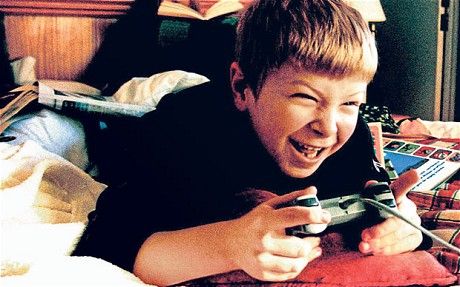
Children should "feel the grass under their feet" rather than play addictive computer games which can harm their mental development, a leading scientist has said.

Baroness Greenfield, the former director of the Royal Institution, said spending too much time staring at computer screens can cause physical changes in the brain that lead to attention and behaviour problems.

Technology that plays strongly on the senses - like video games - can literally "blow the mind" by temporarily or permanently deactivating certain nerve connections in the brain, the Baroness said.

Display

New Research May Be Able to Discover Tweeting Psychopaths

psycho
© istockphoto
In case you find yourself being tweeted at by a psychopathic killer (in case!), have no fear, researchers may find a way to spot them -- using said psycho's own tweets!

Using a text analysis program, professors Jeff Hancock from Cornell University, and Michael T. Woodworth and Stephen Porter from the University of British Columbia are trying to discover if we can spot a psychopath using anything he or she has written, from a tweet to a blog post.

Most experts count roughly one percent of the population as psychotic. The researchers want to take methods used to analyze the language of psychopaths and apply it to the general population using social media.

Life Preserver

Oakland Effect: Understanding neuroscience, psychology and the study of complex psychiatric disorders and trauma

Image
© Unknown
This is an excerpt from reporter Scott Johnson's blog, which focuses on the effect of violence and trauma on the community.

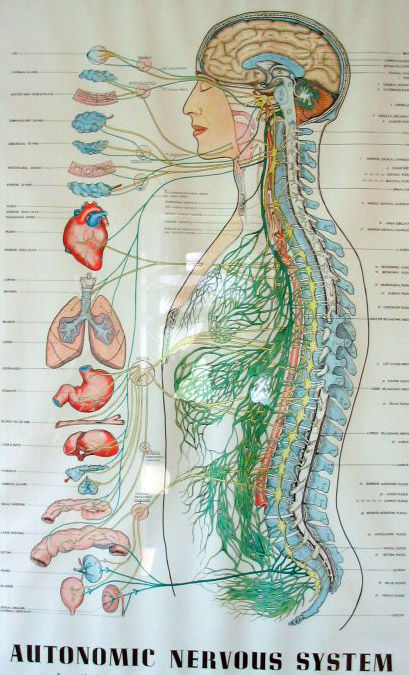
Why is it that when we hear a rumble, the sound of an earthquake, say, we don't try to locate the sound, but we immediately try to get away? Or, if we hear a high-pitched sound of distress, we try to locate it because, well, someone close to us might be in pain? Did you know that the muscles in your middle ear are linked in your brain stem to the muscles that control your upper face? Or that when you see people's eyes droop during a conversation, they're probably not hearing a word you're saying, or not well?

Broken down into their most basic components, our neural systems are modulated on two systems: safety and novelty. Safety is the more important of the two; it's the most important thing for every one of us. Novelty is also important; it helps our brains to grow, but novelty can't be experienced without safety. And yet we require novelty to become fully human; we can't expand as living beings without rich lives.

Toys

Babies as Young as 15 Months Grasp Fairness

Image
© Dreamstime
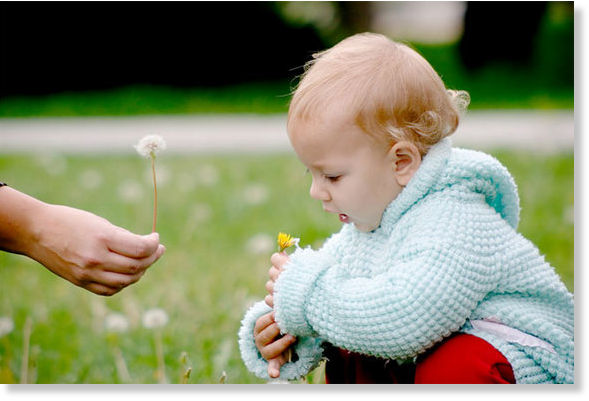
Even at 15 months, when they are just beginning to grasp language and acquaint themselves with their newfound motor skills, babies understand the concepts of sharing and fairness, suggests a new study.

The researchers also found that infants do have different sharing "personalities," with some being shocked by unfairness and others by equal sharing.

"These norms of fairness and altruism are more rapidly acquired than we thought," study researcher Jessica Sommerville, of the University of Washington, said in a statement. "These results also show a connection between fairness and altruism in infants, such that babies who were more sensitive to the fair distribution of food were also more likely to share their preferred toy."

Previous studies have revealed that 2-year-olds can help others - considered a measure of altruism - and at around age 6 or 7, they begin to display a sense of fairness. Previous research has also indicated that toddlers are able to understand altruism and react accordingly; they are more willing to help those who voluntarily share their toys.

Alarm Clock

Allowing Teenage Boys to Love Their Friends

Image
© Jennifer S. Altman for The New York TimesNiobe Way has written a book about boys' friendships.
It is occasionally true that the spark that ignites one's grand, all-consuming work is struck early in life - even by happenstance.

Niobe Way was a teenager when her younger brother Lucan had a terrible falling out with his best friend. John lived just across the street; the two boys were inseparable. One day her mother caught the boys cutting up a treasured childhood rag doll. She read both of them the riot act and then some. John slunk off.

Seven, eight times after, Lucan would knock on John's door. But he would always be told that John was not home or did not want to see him. The boys' rupture shook Lucan deeply. Even as a happily married adult, he does not like to talk about, as Dr. Way recounts, "the boy who broke his heart."