Science of the SpiritS


Attention

Maltreated children show same pattern of brain activity as combat soldiers

Image
© Unknown
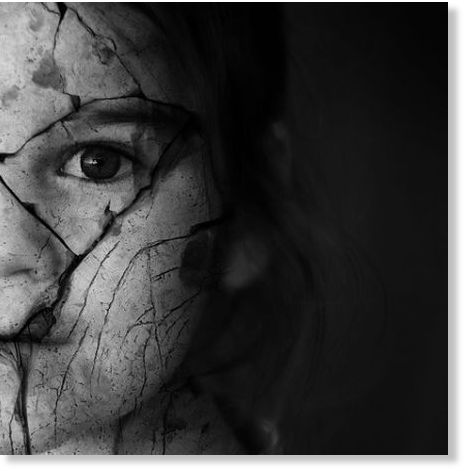
Children exposed to family violence show the same pattern of activity in their brains as soldiers exposed to combat, new research has shown.

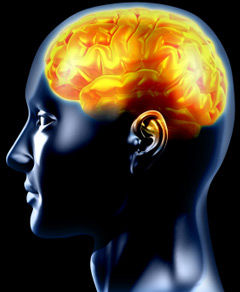
In the first functional MRI brain scan study to investigate the impact of physical abuse and domestic violence on children, scientists at UCL in collaboration with the Anna Freud Centre, found that exposure to family violence was associated with increased brain activity in two specific brain areas (the anterior insula and the amygdala) when children viewed pictures of angry faces.

Previous fMRI studies that scanned the brains of soldiers exposed to violent combat situations have shown the same pattern of heightened activation in these two areas of the brain, which are associated with threat detection. The authors suggest that both maltreated children and soldiers may have adapted to be 'hyper-aware' of danger in their environment.

However, the anterior insula and amygdala are also areas of the brain implicated in anxiety disorders. Neural adaptation in these regions may help explain why children exposed to family violence are at greater risk of developing anxiety problems later in life.


Magnify

Tuning Out Daydreaming: How Brains Benefit from Meditation

Experienced meditators seem to be able switch off areas of the brain associated with daydreaming as well as psychiatric disorders such as autism and schizophrenia, according to a new brain imaging study by Yale researchers.

Image
© Google Images
Less day dreaming has been associated with increased happiness levels, said Judson A. Brewer, assistant professor of psychiatry and lead author of the study published the week of Nov. 21 in the Proceedings of the National Academy of Sciences. Understanding how meditation works will aid investigation into a host of diseases, he said.

"Meditation has been shown to help in variety of health problems, such as helping people quit smoking, cope with cancer, and even prevent psoriasis," Brewer said.

The Yale team conducted functional magnetic resonance imaging scans on both experienced and novice meditators as they practiced three different meditation techniques.

Stormtrooper

Chaplains Wanted For Atheists In Foxholes

Image
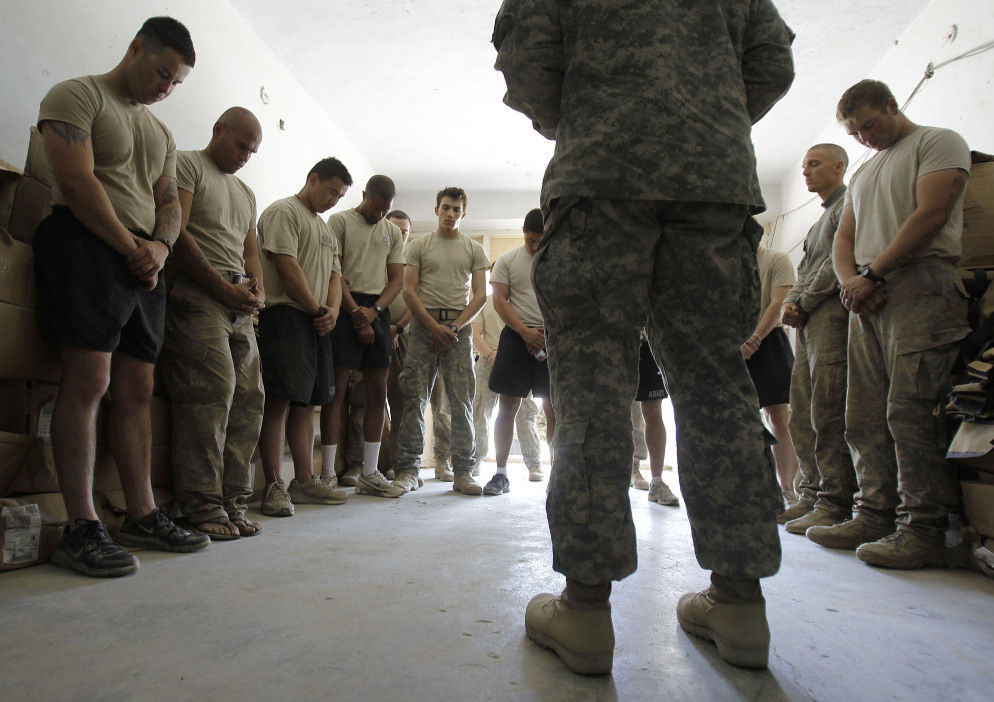
© Associated Press/Julie JacobsonSoldiers pray with a chaplain in Afghanistan. Jason Torpy says military chaplains are assigned many secular advising duties that atheist service members need, too.
Jason Torpy says military chaplains are assigned many secular advising duties that atheist service members need, too.

Retired Army captain and Iraqi war veteran Jason Torpy says the chaplains employed by the U.S. military can't relate to people like him. He's an atheist.

He's also the president of a group that's trying to get the armed forces to become more inclusive by hiring atheist chaplains. The Military Association of Atheists and Freethinkers wants the military to provide for the estimated 40,000 atheists, agnostics and humanists who serve in U.S. forces.

Military chaplains, most of whom are Protestant Christians, are assigned many secular advising duties, including marriage, family and suicide counseling, Torpy tells weekends on All Things Considered guest host Rachel Martin. They touch so many parts of service members' lives, he says, they can help improve what he sees as an environment of exclusion.

Info

Life's Extremes: Atheists vs. Believers

Praying Woman
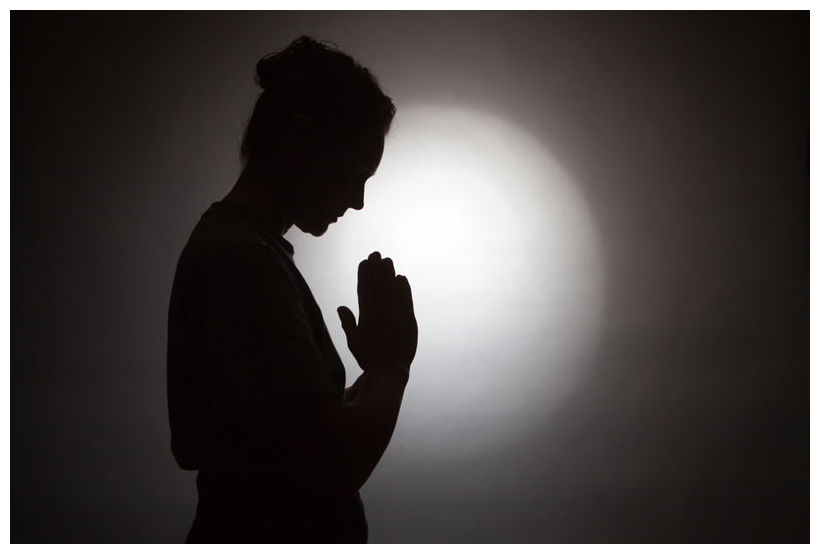
© Alexey Fursov | ShutterstockHow often do you pray? Or do you think it's a waste of time?

This December is chock full of "holy days," or holidays. On Dec. 25, Christians commemorate Christmas. For Jews, Hanukkah starts this year on Dec. 20 in the Western and international Gregorian calendar. Shia Muslims, meanwhile, celebrate Ashura today (Dec. 4), the 10th day of the Islamic lunar calendar's first month. Yet others in the Northern Hemisphere will party on Dec. 22 for the winter solstice, as druids might have ritualistically done so at Stonehenge in the U.K. 4,000 years ago.

Religion, it goes without further saying, is a very popular phenomenon. In the U.S., as in much of the world, a majority of people claim to practice some form of it. According to recent surveys, around 80 percent of American adults say they belong to an organized religion.

A minority of that population takes its religion very seriously. These individuals' behaviors and attitudes are largely influenced by what is perceived to conform to their faiths' dogmas. On the opposite end, another, smaller percentage of the population thinks that religion is absolute hooey.

Psychologists, sociologists and neurologists continue to study why some gobble up religion as profound truth while others reject it as superstition.

"This whole area [of research] teaches us something about the human mind and brain," said Andrew Newberg, director of research at the Myrna Brind Center of Integrative Medicine at Thomas Jefferson University and author of How God Changes Your Brain (Ballantine Books, 2009).

"There are a lot of philosophical and theological implications of this work and about how we understand the world," Newberg added.

People

Zero Degrees of Empathy

Professor Simon Baron Cohen presents a new way of understanding what it is that leads individuals down negative paths, and challenges all of us to consider replacing the idea of evil with the idea of empathy-erosion.


Family

Mental Illness: Early-Life Depression and Anxiety Changes Structure of Developing Brain

brain
New research identifies the brain chemicals and circuits involved in mental illnesses like schizophrenia, depression, and anxiety, giving potential new directions to their treatment. In addition, research with children shows that early-life depression and anxiety changes the structure of the developing brain.

The findings were presented at Neuroscience 2011, the Society for Neuroscience's annual meeting and the world's largest source of emerging news about brain science and health.

One in 17 Americans suffer from a serious mental illness, such as schizophrenia, major depression, or bipolar disorder, making it one of the leading causes of disability. Yet science is only beginning to understand the underlying physical causes of these diseases.

Family

Secure Attachment to Moms Helps Irritable Babies Interact With Others

mother child
Children with difficult temperaments are often the most affected by the quality of their relationships with their caregivers. New research suggests that highly irritable children who have secure attachments to their mothers are more likely to get along well with others than those who aren't securely attached.

These findings, from researchers at the University of Maryland, are published in the journal Child Development.

Researchers followed 84 infants from birth to age 2. About a third were characterized as highly irritable, while two-thirds were characterized as moderately irritable. The study also included their mostly low-income mothers. Irritability was measured using a test administered in the home within a month of the babies' births; the infants had to react to a series of events, including being undressed and hearing a bell ringing.

Palette

The Creative 'Flow': How to Enter That Mysterious State of Oneness

creativity flow
© Unknown
Flow -- the mental state of being completely present and fully immersed in a task -- is a strong contributor to creativity. When in flow, the creator and the universe become one, outside distractions recede from consciousness and one's mind is fully open and attuned to the act of creating. There is very little self-awareness or critical self-judgement; just intrinsic joy for the task. Since flow is so essential to creativity and well-being across many slices of life -- from sports to music to physics to religion to spirituality to sex -- it's important that we learn more about the characteristics associated with flow so that we may all learn how to tap into this precious mental resource.

But who enters flow? What are these lucky folks like? Recent research shows that people differ quite a bit from each other in the frequency and intensity of their flow experiences. These differences aren't just found in Western cultures. In a study conducted on Japanese students, those who reported experiencing flow more often in their daily lives engaged in more daily activities, and were more likely to have higher levels of self-esteem, Jujitsu-kan (a sense of fulfillment), life satisfaction, better coping strategies and lower anxiety.

Stormtrooper

Study suggests feelings of guilt may be a top factor in PTSD

pstd
© EEGInfo

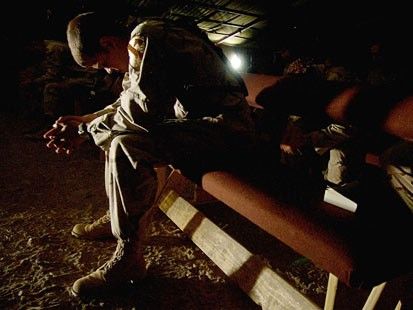
A leading cause of post-traumatic stress disorder is guilt that troops experience because of moral dilemmas faced in combat, according to preliminary findings of a study of active-duty Marines.

The conflicts that servicemembers feel may include "survivor's guilt," from living through an attack in which other servicemembers died, and witnessing or participating in the unintentional killing of women or children, researchers involved in the study say.

"How do they come to terms with that? They have to forgive themselves for pulling the trigger," says retired Navy captain Bill Nash, a psychiatrist and study co-author.

The idea of "moral injury" as a cause of PTSD is new to psychiatry. The American Psychiatric Association is only now considering new diagnostic criteria for the disorder that would include feelings of shame and guilt, says David Spiegel, a member of the working group rewriting the PTSD section.

Traditionally, PTSD symptoms such as nightmares or numbness to the world have been linked to combat violence, fear of being killed or loss of friends.

Eye 2

A Warning from the Ancestors - Psychopaths in Folklore and Fairy Tales

Image
Recently, I received a message from a someone who read Puzzling People and they asked me this question: "Why are ALL fairy tales about psychopaths and psychopathic behavior?"

Mythology and folklore are really an early form of psychology. In a pre-scientific era - it was the only means by which average people could anchor their frustration and warnings to others regarding the Consciousness Parasites and other pathological predators within the material world - without having to rely exclusively on supernatural-religious concepts such as demons, succubi and so on. This was probably to avoid charges of witchcraft and blasphemy. So rather than deal with purely religious motifs - from around the Middle Ages on - the psychopath entered into the world of children's fairy tale.

Just about all European fairy tales from this period on are about psychopaths and psychopathic behaviour. How to recognise their traits, and deal with them. This is not by accident - a collective folk memory was generated in the guise of children's stories of wicked stepmothers, wolves disguised as kindly and familiar people turning out to be killers. This repository of pathological awareness was essentially the only option available to a mainly illiterate population of the time. A powerful method to warn others in such a way that would be passed on and without risking ridicule and censure - by application of a linguistic folk art to develop changes in the collective consciousness. Ultimately, this is what these fairy tales were attempting to achieve going forward - a warning of sorts. While also serving the function of an allegorical collective therapy session to heal past trauma within a community caused by psychopaths in the past.