Science of the SpiritS


2 + 2 = 4

Teaching people what to do is less effective than teaching them to visualize an outcome

crossroads
An established but little-known psychological theory is likely to improve performances across a range of activities, including sport, according to new research published that can be applied to amateurs or skilled performers alike says psychologist Dr Warren Mansell, from The University of Manchester.

Many philosophers believed that all behaviors are predetermined and have a causal lineage. Some of the factors believed to influence determinism include genetics, environment, and past and present experiences.

Adam Bear, Ph.D performed a couple of simple experiments to test how we experience choices.

What role does memory play in directing our attention to specific details in our surroundings?

Results of Perceptual Control Theory experiments have demonstrated that an organism controls neither its own behavior, nor external environmental variables, but rather its own perceptions of those variables. Actions are not controlled, they are varied so as to cancel the effects that unpredictable environmental disturbances would otherwise have on controlled perceptions. According to the standard catch-phrase of the field, "behavior is the control of perception."

2 + 2 = 4

Mindful moments: Schools start offering yoga & meditation instead of detention

yoga
A school in Jonesboro, Arkansas, has joined many others in turning to an alternative method of discipline. The Success Achievement Academy has stopped using in-school suspension as punishment. Instead, the directors started using yoga as a means of helping students relieve stress and recognize responsibility for their actions. But does yoga instead of suspension work?

Comment: Additional articles about yoga for children and the possible benefits:


Family

Study: Same-sex parenting leads to poorer outcomes as children reach their 20's

same sex marriage rally
A new study on children raised by same-sex couples further confirms the findings of previous, authoritative studies: the healthiest environment for a child is a home with a mother and a father. Those seeking to protect the "stygmatized minority" of same-sex parents, the study's author suggests, may be letting ideology trump biology and placing the desires of adults above the health of children.

The study, conducted by sociology professor D. Paul Sullins of the Catholic University of America, found that children raised by same-sex couples are far more likely to suffer depression than those raised by male-female parents and demonstrate a higher risk of suicidality, "imbalanced closeness," child abuse, and self-esteem and obesity problems.

Sullins' study, which used information from the nonpartisan National Longitudinal Study of Adolescent Health to track children raised by 20 same-sex couples (17 lesbian couples and 3 gay couples) over a period of 13 years (1995 to 2008), found that the problems with those raised in same-sex homes often began to surface in their twenties.

Comment: Some of the studies which contradict the one above. More research is needed.


Bulb

Some notes on why I left the SJW cult and how I'm finding myself

Nietzsche quote
I've been undergoing a pretty significant change in the way I interpret the world and how to 'be' in it. As I've grappled with how to understand my shifting perspective, I've found that writing down my thoughts has helped to put them in some kind of order, so this is an attempt to continue doing that. I know some of my friends have wondered why I've lately been so critical of the left, my home, so I wanted to share with you what a vocal part of my particular and admittedly self-selected echo chamber is like.

SJW Kill list
A tolerant pacifist who does not believe in political correctness or genocide and is most certainly against fascism.

Comment: See also:


Ambulance

Waking the Tiger: An interview with Peter Levine

Tiger
An Unconscious Image

Victor Yalom: So Peter, you've spent most of your life working with trauma and traumatized patients, and have developed an approach called Somatic Experiencing® that focuses on including, and putting emphasis, on the physiological aspects of trauma. You believe that working with the trauma through the body is necessary to any trauma resolution and a required step before addressing emotional and cognitive issues. We'll get into this in more detail, but let's first start with: What got you there? How did you get interested in trauma in the first place?

Peter Levine: My career began somewhat accidentally. In the 1960s I started a practice in the fledgling field of mind-body healing. Around that time it was completely in its infancy. I had been developing a protocol to use body awareness as a tool for stress reduction. I would teach people how to relax different parts of their body and they would have a very deep relaxation that was much deeper than I had expected. And so I was referred a patient - I'll use the name Nancy - by a psychiatrist, and she had been suffering from a host of physical symptoms including migraines, severe PMS, what would now be called fibromyalgia and chronic fatigue, pain in most of her body. And the psychiatrist reasoned that if I could help her with some of my relaxation techniques, it could help with her anxiety or at least with her pain.

Comment: Even though this is an older interview, it's still relevant today. To learn more, you can follow this link: In An Unspoken Voice: How to Release Trauma and Restore Goodness


Yoda

What you do in the first twenty minutes of your day can prime you for success

making bed, morning routine
Make your bed - Your room will look cleaner and feel more organized, both of which train your mind to want to get things done, right away.
Engage a positive routine right after waking, and you'll tap into the power of your subconscious brain.

You all know about that morning-routine thing: Everyone raves that waking up early and sticking to your routine will help you get more done. But whether you get out of bed at 5 a.m. or 3 p.m., it's the first 20 minutes of your day that can set you up for success.

The brain produces electrical patterns, often referred to as waves. Scientists have found a correlation between the frequency of brain waves and the body's state. When you first awake, your brain operates at around 10.5 waves per second. The range from eight to 13 Hz, or cycles per second, is the alpha stage. It's been called the gateway to the subconscious mind.

Have you ever gone into a semi-daydreaming state while commuting? A few minutes pass, but you don't remember what happened. It's likely your brain entered the alpha state.

Without getting too deep into the science of brain activity, it's safe to say your subconscious mind is most active right when you wake up. You can train your brain to use this subconscious activity to think positively and accomplish more throughout your day. This quick checklist outlines six simple things you can do to make the most of these first 20 minutes.

Propaganda

Antifa & Neo-Nazi Propaganda: Are you susceptible?

It's worth digging into the psychology of people attracted to totalitarian ideology, though we might not like what we find.

kid on street
Do you believe that anyone who disagrees with your beliefs is the enemy? Would you ever don the white "glory suit" of the KKK or the balaclava and black hoody of Antifa? Would you ever hold this sign?

Mr. Potato

The epidemic that will destroy America is its permanent state of adolescence

Permanent Adolescence
It's clear that America is suffering from an epidemic of arrested emotional development

As a Humanities professor I have had the opportunity to teach psychology and social psychology for more than 20 years. Occasionally the knowledge obtained in these areas allows me analyze and understand social behavior and certain cultural trends. This is one those occasions.

If one is able to observe American society in an objective manner (granted no easy task) it becomes clear that the country is suffering from an epidemic of arrested emotional development (AED). This particular illness is characterized by some combination of: addiction, greed, immaturity, fear, blame, shame, resentments, anger, confusion and suffering. What it means is that the vast majority of Americans are stuck in adolescence exhibiting behavior like lying, negative attitudes, disobedience and disrespect, drug and alcohol abuse, depression, and issues of sexuality.

One has only to watch American movies or television shows to get a snapshot of juvenile, puerile, and base comedy characteristic of adolescent humor. It's no accident that 42 year old Jimmy Fallon is essentially the "eternal teenager" performing comedy that mostly includes bathroom humor and gags that are based on and appeal to a silly sense of immaturity. The other darling of late-night shows in America is Stephen Colbert who specializes in insulting public figures in an overtly adolescent display of negative attitude and disrespect.

Comment: Other observers agree with this sobering assessment:


Hearts

New study shows that expressions of appreciation help alleviate the burdens of spousal caregiving, relieve stress

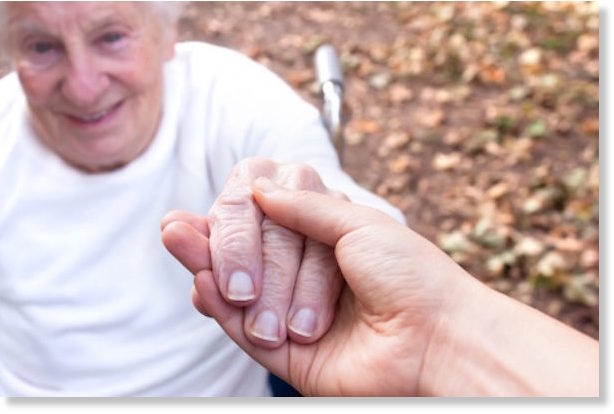
caregiving
The fact that spouses often become caregivers for their ailing partners is quite common in American life - and few roles are more stressful.

Yet helping behaviors, which are at the core of caregiving, typically relieve stress, according to Michael Poulin, an associate professor in the University at Buffalo Department of Psychology.

When discussing spousal care, the draining demands of caregiving and the uplifting effects of helping stand in apparent contrast to one another.

But recent research shows that the time caregivers spend actively helping a loved one can improve the caregiver's sense of well-being - and now, Poulin, an expert in empathy, human generosity and stress, is part of a research team that has published a study exploring why that's the case.

Comment: And on the other side of the coin, being thankful and showing gratefulness has its own benefits for those who give such expression:

Making it a habit to be a grateful human being

Irony alert: Ten wonderful things to be grateful for


Galaxy

Man who had near-death experience describes what happens to 'good souls' and 'bad souls' after they die

life after death
The man was rescued by lifeguards and resuscitated after nearly drowning.

It's a subject of eternal fascination and perhaps, in spite of all of mankind's scientific advancements, one of life's greatest mysteries.

What happens after death is a topic everyone has an opinion on - and it's an experience which a few people claim they've had.

One man has explained how by being medically "dead" for a few moments, he not only saw there was an afterlife, but also what happened to "good" and "bad" people.

The man revealed on Reddit how he had drowned a year and a half ago, and experienced a sensation like he was travelling in the moments before he was resuscitated by lifeguards.

Comment: While the man's descriptions may be consistent with stereotypical descriptions of "heaven" and "hell", it is interesting to note that some of his experiences have much in common with Rev. G. Vale Owen's book: The Life Beyond the Veil Volumes I-II