Science of the SpiritS


Info

Mysterious people who emerged from accidents with remarkable abilities

People with super powers
Since time unremembered there have been those among us who have stepped forth with skills, abilities, genius, perceptions, and attributes far beyond the norm. In many cases these have stemmed from some sort of genetic predestination, or even defect, leaving the bearer of these powers with significant shortages in other areas. Yet many are not born into these powers, but rather have them thrust upon them.

Just like any super hero origin story there are those nondescript individuals who have undergone some accident or life changing event which has caused them to go through a dark tunnel to emerge from the other side with powers they cannot explain. Far from the realm of comic books, this has proven to be a very real thing, and there are those out there who have gained remarkable skills and abilities from things that should have very well killed them.

Laptop

Social media as a negative coping mechanism leading to addiction

social media
Most people understand how social media can be beneficial to its users. However, there is a lot of misunderstanding or misinformation regarding its detrimental effects and elements. In this article, we will look into it in more depth to understand how social media sites like Facebook, YouTube, Twitter, and so on impact people's lives, and why people use it in the first place.

While seemingly more and more people get tired of or disillusioned with using social media, it undeniably has its benefits. You can find and spread information, market or find products and services, build social or business networks easier, communicate with people from all over the world, and stay in touch with friends and loved ones.

But there is a darker side, and people are capable of misusing or abusing anything, even social networks.

Comment:


Light Saber

Facing the dragon of anxiety & being generally okay with life's expectations

anxious person
© ShutterstockDon’t worry, research can help.
Do you have anxiety? Have you tried just about everything to get over it, but it just keeps coming back? Perhaps you thought you had got over it, only for the symptoms to return with a vengeance? Whatever your circumstances, science can help you to beat anxiety for good.

Anxiety can present as fear, restlessness, an inability to focus at work or school, finding it hard to fall or stay asleep at night, or getting easily irritated. In social situations, it can make it hard to talk to others; you might feel like you're constantly being judged, or have symptoms such as stuttering, sweating, blushing or an upset stomach.

Comment:


Wine n Glass

Alcohol drinking behaviour and the brain's immune system

Alcoholic beverages
© Wikimedia Commons
Researchers from the University of Adelaide have found a new link between the brain's immune system and the desire to drink alcohol in the evening.

In laboratory studies using mice, researchers have been able to switch off the impulse to drink alcohol by giving mice a drug that blocks a specific response from the immune system in the brain.

Now published in the journal Brain, Behavior and Immunity, this research is one of the first of its kind to show a link between the brain's immunity and the motivation to drink alcohol at night.

"Alcohol is the world's most commonly consumed drug, and there is a greater need than ever to understand the biological mechanisms that drive our need to drink alcohol," says lead author Jon Jacobsen, PhD student in the University of Adelaide's Discipline of Pharmacology.

"Our body's circadian rhythms affect the 'reward' signals we receive in the brain from drug-related behaviour, and the peak time for this reward typically occurs during the evening, or dark phase. We wanted to test what the role of the brain's immune system might have on that reward, and whether or not we could switch it off."

The researchers focused their attention on the immune receptor Toll-like receptor 4 (TLR4). They administered the drug (+)-Naltrexone (pronounced: PLUS-NAL-TREX-OWN), which is known to block TLR4, to mice.

Butterfly

Healing from the inside out: What to do when your emotional pain expresses itself in the body

emotional and physical pain
When we feel emotionally balanced, our bodies reflect this positive feeling, too.

Positive emotions such as contentment or satisfaction tell our brains to release positive chemicals like serotonin or dopamine to make our bodies feel good.

Unfortunately, the opposite of this is also true. When we find ourselves in a less than positive emotional state, this mental anguish can express itself throughout our bodies. For example, our brains release toxic levels of cortisol when we're exposed to long-term physical, mental, or emotional stress. Our brain chemistry gets burnt-out and our bodies reflect this in physical ways.

This type of pain linked to high levels of cortisol or adrenal fatigue is easy for most people to identify, but emotional stress can express itself physically in many ways. For many people, chronic emotional stress just feels normal. Sometimes we don't even realize we're in an unbalanced emotional state until we start examining our physical pain and attempt to find its source.

Do you have chronic headaches or a kink in your back you just can't seem to shake? Have you already tried everything medically available but the pain just won't go away? You could be looking in the wrong places.

Many types of pain are directly linked to our emotions. Once we identify what's causing the pain, we can start healing from the inside out.

Comment: Metaphysical meanings behind physical pain


Brain

Total recall is overrated: Why forgetting makes you smarter

light head
You're probably thinking you're a genius right? Well, you know those people who always boast about having a perfect memory? Maybe they shouldn't, because having total recall is totally overrated. That's according to a new paper in the journal Neuron, which concludes that forgetting things is not just normal, it actually makes us smarter.

In the new report, researchers Paul Frankland and Blake Richards of the University of Toronto propose that the goal of memory is not to transmit the most accurate information over time. Rather, they say, it's to optimize intelligent decision-making by holding onto what's important and letting go of what's not.

The researchers came to this conclusion after looking at years of data on memory, memory loss, and brain activity in both humans and animals. One of Frankland's own studies in mice, for example, found that as new brain cells are formed in the hippocampus -- a region of the brain associated with learning new things -- those new connections overwrite old memories and make them harder to access.

This constant swapping of old memories for new ones can have real evolutionary benefits, they say. For example, it can allow us to adapt to new situations by letting go of outdated and potentially misleading information. "If you're trying to navigate the world and your brain is constantly bringing up conflicting memories, that makes it harder for you to make an informed decision," says Richards.


Comment: See also:


Boat

Do we live haunted lives that lack meaning?

'Fear has many eyes
And can see things underground'
~Cervantes, Don Quixote
skeleton head
The world as we know it has gone from being flat to round; from being the center of the universe to the center of the solar system; from being animistic and supernatural to red in tooth and claw; from being particle-atomic to wavy-quantum. And now we are disappearing into the digital domains of virtual-augmented spaces and false information, bombarded with the spectacle and the image. And somewhere in the midst of all this is the human soul, still largely wrapped and unopened. If there's a crime here then it is that we've allowed ourselves to become haunted - to live haunted lives that lack significance and meaning.

The 'objects' or values that we have attempted to live by, or that we pursue, - such as power, truth, understanding, dreams, work, love, and the rest - have all seemingly vanished into some warped, elusive reality where the presence of these things no longer tangibly exist. However, the doubt, uncertainty, and pain of their absence - or 'fake presence' - are indeed real enough to affect us deeply. We seek the already disappeared and stalk their substitutes.

Cloud Grey

Good news for grumps: The surprising benefits of negative moods

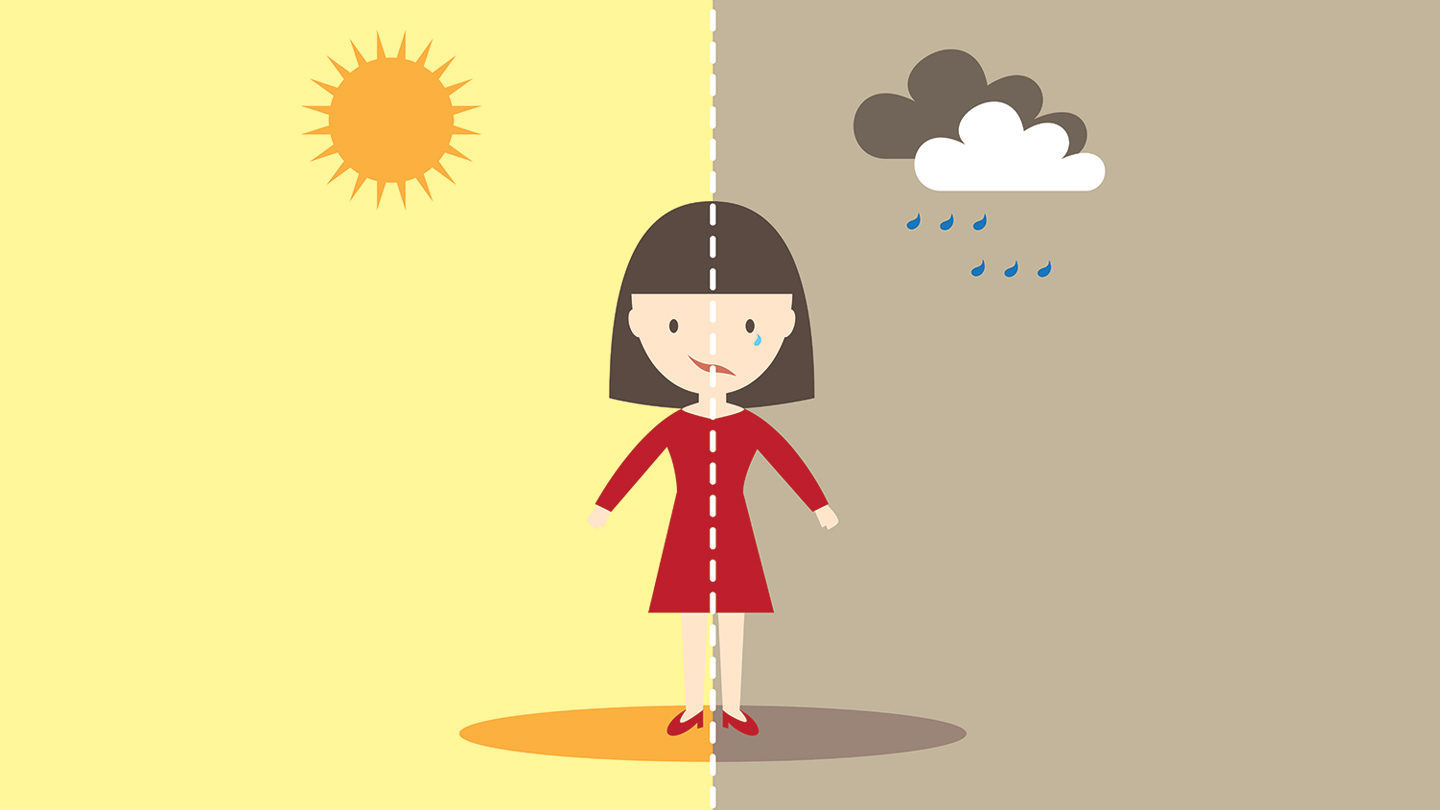
perks of unhappiness
We've been told since our first pimple arrived to look in the mirror and say, "I'm good enough, I'm smart enough, and today is going to be a GREAT day, despite this mammoth zit on my chin" while plastering a fake grin on our face.

Positive psychologists have force-fed us affirmations, telling us that the more we say them and try to believe them, that happiness will be ours; that happiness is the only thing we should really care about, because "the pursuit of happiness" is our American right.

But is all of this scientifically sound?

Susan David, PhD, a psychologist on the faculty of Harvard Medical School, thinks not. After two decades of researching the science of emotions, she is making waves with her concept of "emotional agility," which was declared by the Harvard Business Review to be one of the "Management Ideas of the Year." In her recent book Emotional Agility she explains why we need to stop forcing happiness and allow ourselves to feel our emotions.

Comment: Further reading:


Butterfly

The gentler symptoms of dying

death bed
© Bénédicte Muller
The patient's hair was styled with curls so stiff, they held her head a few inches up from her hospital pillow. She had painted her lips a shade of bright pink that exuded the confidence of age.

Just after her colon burst, she was still awake. She looked around, at me, at the monitors. She asked for pain medication. "Am I dying?" she asked.

"We think so," I said, touching her manicured fingernails. "I am here with you."

Comment:


Wolf

Sniffing themselves out: Researchers find novel way to test self awareness in dogs

dog in mirror
© Rumble ViralThe mirror test doesn't cut it.
A new study carried out by the Department of Psychology at Barnard College in the U.S. used a sniff test to evaluate the ability of dogs to recognize themselves. The results have been published in the journal Behavioural Processes.

The experiment confirms the hypothesis of dog self-cognition proposed last year by Prof. Roberto Cazzolla Gatti of the Biological Institute of the Tomsk State University, Russia. Dr. Alexandra Horowitz, the lead researcher, wrote, "While domestic dogs, Canis familiaris, have been found to be skillful at social cognitive tasks and even some meta-cognitive tasks, they have not passed the test of mirror self-recognition (MSR)."

Prof. Horowitz borrowed the "Sniff test of self-recognition (STSR)" proposed by Prof. Cazzolla Gatti in 2016 to shed light on methods of testing for self-recognition, and applied it to 36 domestic dogs accompanied by their owners.

This study confirmed the previous evidence proposed with the STSR by Dr. Cazzolla Gatti showing that "dogs distinguish between the olfactory 'image' of themselves when modified: Investigating their own odour for longer when it had an additional odour accompanying it than when it did not. Such behaviour implies a recognition of the odour as being of or from 'themselves.'"