Science of the SpiritS


USA

Making American parenting great again

John Rosemond
The problem in American parenting is the 1960s. Among other things that defined that very interesting (ref. ancient Chinese curse) decade was the replacement of rationality by emotionality. It was during the 1960s that the media, various self-appointed spiritual gurus, and the mental health professional community urged people to "get in touch with their feelings." And it was during the 1960s that parents were told by mental health professionals that children had a right to express their feelings freely.

I was in graduate school at the time. My professors taught that (a) feelings - especially children's feelings - held deep meaning, (b) therapy was all about helping people recover the feelings their parents had made them repress, and (c) getting in touch with one's feelings was the key to happiness. To be polite about it, a crock if there ever was one.

Comment:
Psychologist: Stop catering to kids' emotional whims


Fire

Keeping your head when many Americans are rapidly descending into madness

proverb those whom the gods
I don't live in an echo chamber, partly because there aren't enough people out there who think like me, but also because I constantly and intentionally attempt to challenge my worldview by reading stuff from all over the political map. I ingest as much as I can from a wide variety of intelligent sources, picking and choosing what makes sense to me, and then synthesizing it the best I can.

Though I'm certainly grounded in certain key principles, my perspective on specific issues remains malleable as I take in additional information and perspectives. I try to accept and acknowledge my own ignorance and view life as a journey of constant mental, emotionally and spiritual growth. If I'm not growing my capacity in all of those realms until the day I die, I'm doing it wrong. Life should be seen as a battle against one's own ignorance, as opposed to an obsession with the ignorance of others. You can't legislate morality, nor can you legislate wisdom. The only way the world will improve on a long-term sustainable basis is if more of us get wise. That's a personal journey and it's our individual duty to accept it.

People 2

Study finds that optimism often leads people to inaction

Woman in the sunshine
© LZF/iStock
So much for optimism. Believing that the future or certain conditions will improve - particularly that others will come around to seeing things the same way we do - can lead us to inaction, a new study finds.

Researchers at Harvard and UC Berkeley conducted six related studies to explore both the prevalence of optimism among average people, and the consequences of keeping one's glass half full.

Feeling optimistic that others will come around to seeing things the same way we do can lead us to inaction, a new study finds.

One study, conducted online, asked participants to weigh in on nine unrelated topics - abortion, gay marriage, the NBA, climate change, ideology, party affiliation, President Trump, soft drinks, and phone preferences - while also providing insight on how they thought others would view the same topics.

Snowflake

Human thought and water

water
"The day science begins to study non-physical phenomena, it will make more progress in one decade than in all the previous centuries of its existence." - Nikola Tesla
This is exactly what's happening right now, and it's making its presence felt in all levels of academia. But we still have a lot way to go. Fortunately, a group of internationally recognized scientists have come together to stress the importance of what is still commonly overlooked in the mainstream scientific community: the fact that matter (protons, electrons, photons, anything that has a mass) is not the only reality. We wish to understand the nature of our reality, but if we only examine physical systems and ignore all the rest - things like consciousness, and the way it interacts with matter - we'll never be able to.

Comment: The Health & Wellness Show: Water: What Do We Really Know?


Eye 1

Reality creation? Manipulating the mass mind & attention

reality creation
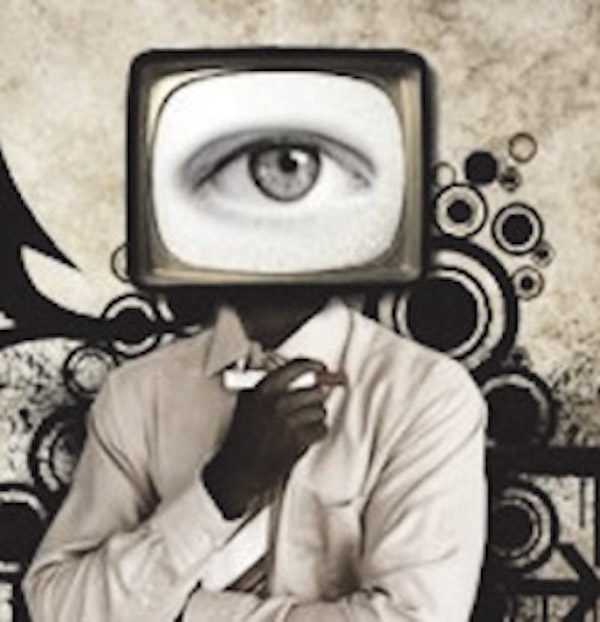
In my 30 years as a self-improvement coach, the most important insight is that where you put your attention is where your energy goes. If you find that hard to believe, try this: Walk through a crowd. Put your attention on the people. Then walk through the same crowd again and put your attention on the gaps between the people. More of them will now make way. Try it. It never fails. Here's another experiment: Stand at the corner of any city street and look upwards for a while. You will notice people around you also look upwards. They want to know what you are looking at, and for that brief period you determined the direction of their attention.

If I tell a group of people to think of a red car, there is a great likelihood that all of them will do it. And if I tell them not to think of a red car... they will also think of a red car! They could have chosen to think of a blue mountain instead. From that you realise how easy it is to steer mass attention.

People 2

Emotional intelligence in the workplace: Business leaders weigh in on what makes an exceptional employee

officeworker
© Getty Images
A recent international study surveyed more than 500 business leaders and asked them what sets great employees apart. The researchers wanted to know why some people are more successful than others at work, and the answers were surprising; leaders chose "personality" as the leading reason.

Notably, 78% of leaders said personality sets great employees apart, more than cultural fit (53%) and even an employee's skills (39%).
"We should take care not to make the intellect our God; it has, of course, powerful muscles, but no personality." -Albert Einstein
The problem is, when leaders say 'personality' they don't understand what they're referring to. Personality consists of a stable set of preferences and tendencies through which we approach the world. Being introverted or extroverted is an example of an important personality trait.

People

Even atheists view non-believers as less moral

church attendance
© muratart/ShutterstockBoth believers and nonbelievers tend to think atheists are less moral.
Even people who don't believe in God judge other nonbelievers as less moral than religious types, new research finds.

The study showed that in 13 very different countries, people were more likely to think that a serial killer must be an atheist rather than a believer. These findings persisted even in highly secular countries such as Finland and China; they were also true even for people who reported zero belief in God.

"Even as secularism reduces overt religiosity in many places, religion has apparently still left a deep and abiding mark on human moral intuitions," study researcher Will Gervais, a psychologist at the University of Kentucky, wrote with his colleagues Aug. 7 in the journal Nature Human Behaviour.

Info

The sleeping brain can learn during REM sleep

Sleeping Brain
© iStock/Frankramspott
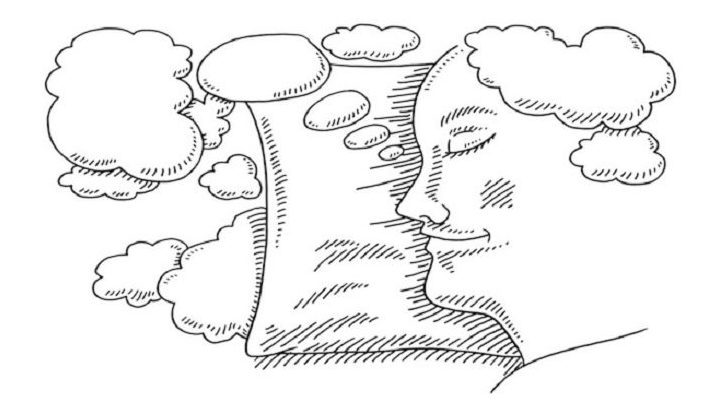
Scientists have long pondered why we sleep. Despite being nearly ubiquitous across the animal kingdom, the exact role of slumber remains an open question. While multiple studies suggest that, in both rodents and humans, it helps consolidate previously learned memories, the question of whether new information can be learned while snoozing has yet to be answered. A study published today (August 8) in Nature Communications reports that the sleeping brain can learn new information, but only during rapid-eye movement (REM) sleep, the stage when dreams typically occur.

"One of the most interesting results of the current study is that the encoding of sensory memory is specific to certain sleep stages," Thomas Schreiner, a postdoctoral researcher at Radboud University in the Netherlands who did not take part in the work, writes in an email to The Scientist. "While the authors made first steps in characterizing the neural circumstances of learning during sleep, clearly more research is needed to clarify the neural underpinnings of those processes."

To assess people's ability to learn during sleep, researchers played various acoustic patterns embedded in white noise to participants while they slept. "We decided to use [white noise] because it was a good example of something very complex . . . and we were interested in seeing whether such complex automatic learning could be performed during sleep," says study coauthor Thomas Andrillon, who conducted this work as a doctoral student in Sid Kouider's lab at the Ecole Normale Supérieure de Paris.

Brain

Researchers probe the biology of transgender identity - no irrefutable conclusions found yet

brain
© Carlo AllegriA worker checks the serial number on a slice of human brain before using a saw to cut a piece from the sample at a brain bank in the Bronx borough of New York City, New York, U.S. June 28, 2017.
While President Donald Trump has thrust transgender people back into the conflict between conservative and liberal values in the United States, geneticists are quietly working on a major research effort to unlock the secrets of gender identity.

A consortium of five research institutions in Europe and the United States, including Vanderbilt University Medical Center, George Washington University and Boston Children's Hospital, is looking to the genome, a person's complete set of DNA, for clues about whether transgender people are born that way.

Two decades of brain research have provided hints of a biological origin to being transgender, but no irrefutable conclusions.

Now scientists in the consortium have embarked on what they call the largest-ever study of its kind, searching for a genetic component to explain why people assigned one gender at birth so persistently identify as the other, often from very early childhood. (reut.rs/2w3Ozg9)

Info

New study says women have more active brains than men

Brain Scans
© RD Mag
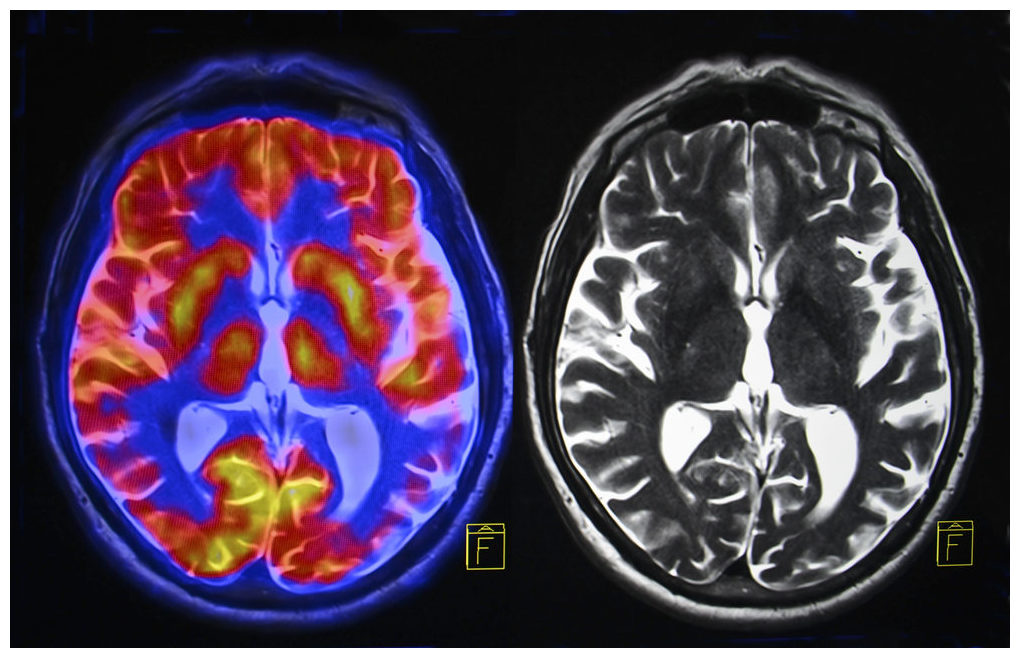
A new study on the brain differences between men and women may shed some light on why the different sexes are more susceptible to different diseases.

Researchers from Amen Clinics compared 46,034 brain single photon emission computed tomography (SPECT) imaging studies-which can measure blood perfusion in the brain-to quantify the differences between the brains of men and women from a total of 128 brain regions.

"This is a very important study to help understand gender-based brain differences," psychiatrist Dr. Daniel Amen, the lead author of the study and founder of Amen Clinics Inc., said in a statement. "The quantifiable differences we identified between men and women are important for understanding gender-based risk for brain disorders such as Alzheimer's disease.

"Using functional neuroimaging tools, such as SPECT, are essential to developing precision medicine brain treatments in the future," he added.