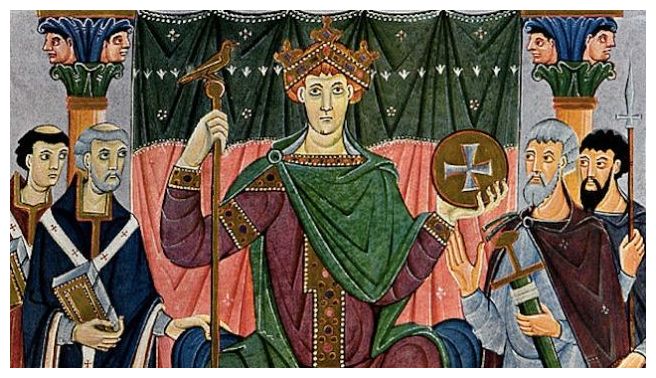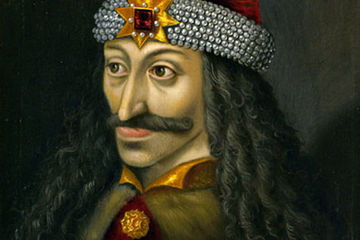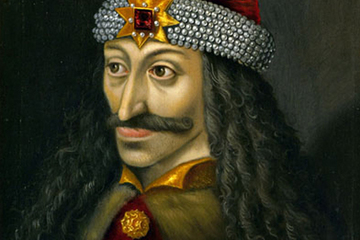
© Credit: Public domainThis portrait of Vlad Tepes, painted in the early 16th century, hangs in the museum at Castle Ambras in Innsbruck, Austria.
Few names have cast more terror into the human heart than Dracula. The legendary vampire, created by author Bram Stoker for his 1897 novel of the same name, has inspired countless horror movies, television shows and other bloodcurdling tales of vampires.
Though
Dracula may seem like a singular creation, Stoker in fact drew inspiration from a real-life man with an even more grotesque taste for blood: Vlad III, Prince of Wallachia or - as he is better known - Vlad the Impaler (
Vlad Tepes), a name he earned for his favorite way of dispensing with his enemies.
Vlad III was born in 1431 in
Transylvania, a mountainous region in modern-day Romania. His father was Vlad II Dracul, ruler of Wallachia, a principality located to the south of Transylvania. Vlad II was granted the surname Dracul ("dragon") after his induction into the Order of the Dragon, a Christian military order supported by the Holy Roman Emperor. [
8 Grisly Archaeological Discoveries]
Situated between Christian Europe and the Muslim lands of the Ottoman Empire, Transylvania and Wallachia were frequently the scene of bloody battles as Ottoman forces pushed westward into Europe, and
Christian Crusaders repulsed the invaders or marched eastward toward the Holy Land.
When Vlad II was called to a diplomatic meeting in 1442 with Sultan Murad II, he brought his young sons Vlad III and Radu along. But the meeting was actually a trap: All three were arrested and held hostage. The elder Vlad was released under the condition that he leave his sons behind.
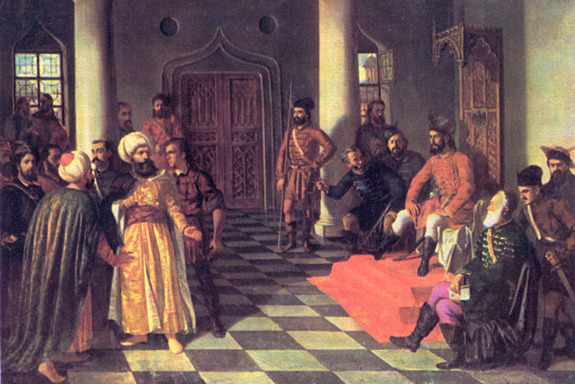
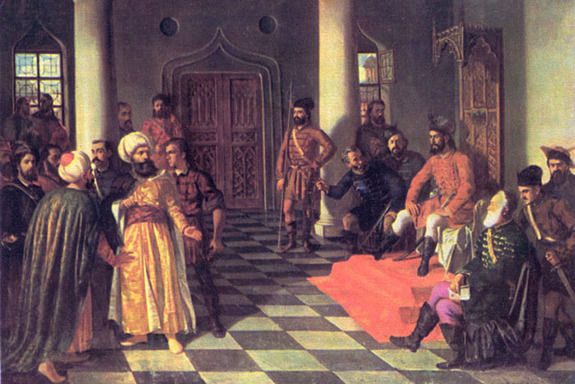
© Credit: Public domainThis painting, "Vlad the Impaler and the Turkish Envoys," by Theodor Aman (1831-1891), hangs in the National Museum of Art of Romania.