Secret HistoryS


Magnify

Magnificent ancient Roman silver treasure revealed

Roman Treasure of Berthouville makes its debut after meticulous conservation efforts.

Cup
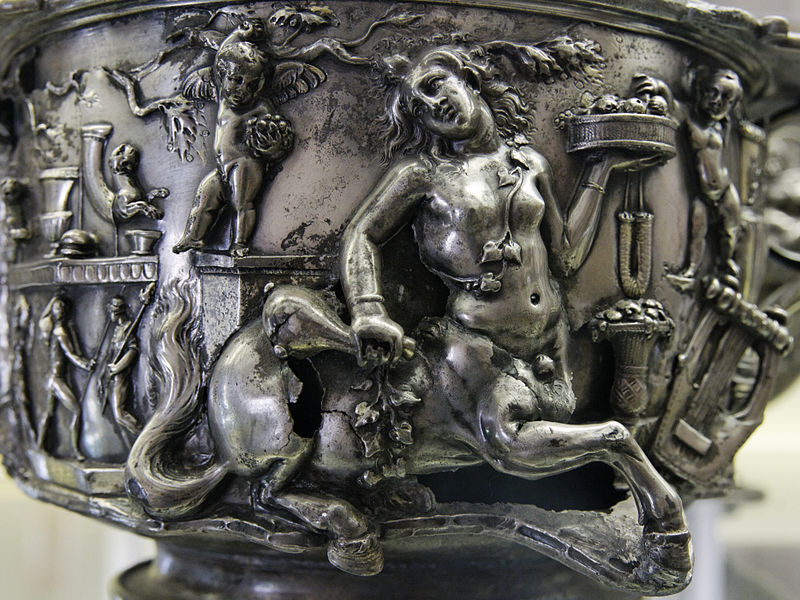
© Wikimedia CommonsCup with centaurs, detail. Italy, middle of the 1st century CE. From the Treasure of Berthouville, 1830.
Accidentally discovered by a French farmer plowing his field near the village of Berthouville in rural Normandy in 1830, the spectacular hoard of gilt-silver statuettes and vessels known as the Berthouville Treasure was an ancient offering to the Gallo-Roman god Mercury.

Following four years of meticulous conservation and research in the J. Paul Getty Museum's Antiquities Conservation Department, the exhibition Ancient Luxury and the Roman Silver Treasure from Berthouville, on view at the Getty Villa November 19, 2014, to August 17, 2015, will present this unique collection of ancient silver in its full splendor and offer new insights about ancient art, technology, religion, and cultural interaction. The opulent cache - in the collection of the Cabinet des médailles (now the Department of Coins, Medals and Antiques) at the Bibliothèque nationale de France - is displayed in its entirety for the first time outside of Paris, together with precious gems, jewelry, and other Roman luxury objects from the Cabinet's royal collections.

"Since 2010, this magnificent collection of silver objects has been undergoing extensive conservation and study at the Getty Villa, providing us a unique opportunity to examine the production of Roman luxury materials and seeing what this has to teach us about the art, culture and religion of Roman Gaul," says Timothy Potts, director of the J. Paul Getty Museum. "Being able to display this dazzling hoard at the Getty Villa is a great privilege for us and our visitors, and we have the added satisfaction of knowing that they will return to France much better understood and looking spectacularly better than before."

Info

Ancient stone circles in Mideast baffle archaeologists

J1
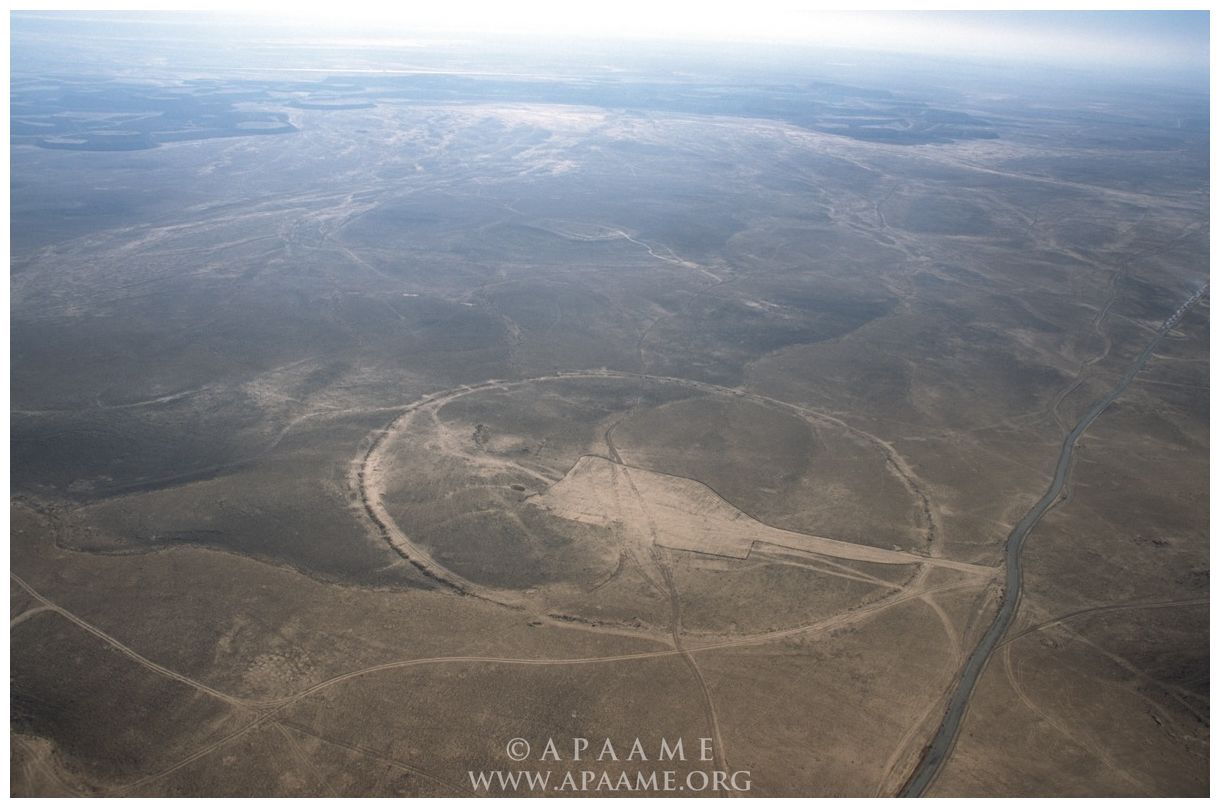
© David L. Kennedy, copyright is retained by the Aerial Photographic Archive for Archaeology in the Middle East imageAPAAME_20040601_DLK-0041The Big Circle called J1 is about 390 meters (1,280 feet) in diameter, with an open area created by bulldozing in its interior.
Huge stone circles in the Middle East have been imaged from above, revealing details of structures that have been shrouded in mystery for decades.

Archaeologists in Jordan have taken high-resolution aerial images of 11 ancient "Big Circles," all but one of which are around 400 meters (1,312 feet) in diameter. Why they are so similar is unknown but the similarity seems "too close to be a coincidence" said researcher David Kennedy.

The Big Circles (as archaeologists call them) were built with low stone walls that are no more than a few feet high. The circles originally contained no openings, and people would have had to hop over the walls in order to get inside. [See Aerial Images of the Mysterious Big Circles in the Mideast]

Their purpose is unknown, and archaeologists are unsure when these structures were built. Analysis of the photographs, as well as artifacts found on the ground, suggest the circles date back at least 2,000 years, but they may be much older. They could even have been constructed in prehistoric times, before writing was invented, scientists say.

Magnify

Roman sculptures discovered in Northern England

Archaeologists find fertility genius, godheads and oil lamps in Roman Cumbria

Image
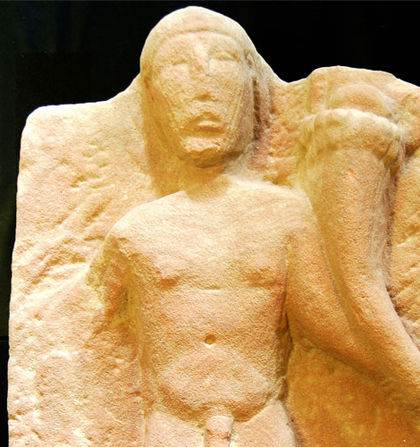
© Megan Stoakley / Wardell Armstrong ArchaeologyThe Fertility Genius from Papcastle: likely a local deity representative of an area rather than a town or fort.
A fertility genius in "amazing" condition, believed to be a local deity thousands of years ago, and the carved heads of male and female Roman gods have been found by archaeologists digging at a village in Cumbria.

The vague outline of an altar can be seen below the hand of the genius, unearthed in a 2,500-square metre area at Papcastle, where the 2009 floods gave excavators the first glimpses of Roman remains.

A cap worn by the male statue comes from the Phrygian kingdom in modern-day Turkey, meaning the figure could be Mithras, who was worshipped in the north between the 1st and 4th centuries AD. Archaeologists are also speculating that he could be the Greek god Attis, which would be likely to identify the female head as Cybele - Phrygia's only known goddess.

"This happens once in a lifetime," says Frank Giecco, of Wardell Armstrong Archaeology, which has overseen the Heritage Lottery Fund-backed Discovering Derventio project.

"You can work in archaeology all your life and never find anything like that. It's incredible."

Magnify

Amelia Earhart plane fragment identified

Image
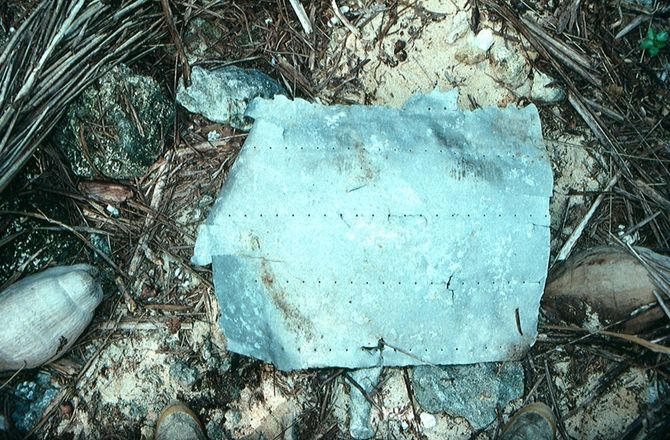
© TigharA piece of aluminum debris recovered in 1991 appears to belong to Earhart’s lost plane.
A fragment of Amelia Earhart's lost aircraft has been identified to a high degree of certainty for the first time ever since her plane vanished over the Pacific Ocean on July 2, 1937, in a record attempt to fly around the world at the equator.

New research strongly suggests that a piece of aluminum aircraft debris recovered in 1991 from Nikumaroro, an uninhabited atoll in the southwestern Pacific republic of Kiribati, does belong to Earhart's twin-engined Lockheed Electra.

According to researchers at The International Group for Historic Aircraft Recovery (TIGHAR), which has long been investigating the last, fateful flight taken by Earhart 77 years ago, the aluminum sheet is a patch of metal installed on the Electra during the aviator's eight-day stay in Miami, which was the fourth stop on her attempt to circumnavigate the globe.

The patch replaced a navigational window: A Miami Herald photo shows the Electra departing for San Juan, Puerto Rico on the morning of Tuesday, June 1, 1937 with a shiny patch of metal where the window had been.

Magnify

We no longer see the funny side of clowns

Clown
© Rex FeaturesClowns, such as this one in Stephen King's It, have always been figures of fear
Let's be honest, does anybody nowadays really like clowns? Certainly not in France. There has been a spate of reports this week of people dressed as clowns, some armed with pistols, knives and baseball bats, wreaking havoc in towns across the country. In Montpellier, a clown was arrested after attacking a pedestrian with an iron bar, and, in the nearby town of Agde, police arrested 14 teenagers dressed as clowns and carrying weapons.

The phenomenon has even prompted what has been described as "anti-clown vigilantism", and follows on the heels of reports of clowns stalking towns in California armed with knives and baseball bats. Nobody would pretend circus life is easy, but have things really got this bad?

Blame has been placed on everything from - inevitably - the internet to the popularity of a television series American Horror Story: Freak Show, featuring a serial killer called Twisty the Clown. As the actor Lon Chaney Jr, who spent a lifetime terrifying cinema audiences in the guise of various wolf men and monsters, once observed: "There is nothing laughable about a clown in the moonlight." And as these latest incidents suggest, if you wish to strike unease and terror into the hearts of people there is no more potent disguise than the garishly painted white face and fright wig of the clown.

In a sense, they always were figures of fear. The character of the clown - as jester, or fool - goes back to Roman times, a figure who was given license to poke fun at symbols of power and authority - the fool who is not a fool at all - but who also portended something more anarchic and subversive, if not malevolent.

Fireball

Two Swedish craters are the first evidence of binary asteroid hitting Earth

swedish Lockne crater
© Unknown
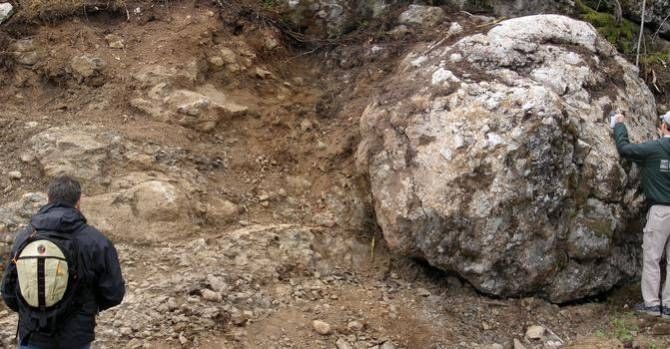
The Swedish Lockne crater, 7.5 km wide and Målingen, about 0.7 km, were caused both by the shock of a double asteroid, an object made up of about 600 m and a smaller 150 m . Both came after the explosion of a massive asteroid collision some 200 km in the main asteroid belt 470 million years ago. So suggests a study published this week in the open access journal Scientific Reports, a research team led by Jens Ormo, the Astrobiology Centre (INTA-CSIC).

"For the first time has been dated with high precision as a pair of craters of this type, both created 458 million years ago and are the only known example land that can no doubt be attributed to the impact of a binary asteroid" highlights Ormo to Sync. "All other potential candidates have ages with double periods of time not to be excluded that are formed separately."

The good condition of Lockne and Målingen, about 16 km away, has enabled very necessary to relate geological evidence.

"The double impact occurred in a shallow sea, and the two objects collided on the same rock stratigraphic setting beneath a water column of 500 meter" Ormo explains. The research highlights the value of such data "as a reference for numerical simulations of these events, and therefore, to assess the potential risks of asteroid impacts in the ocean."

Magnify

Preserved grains & trade goods unearthed in Indonesia

Liyangan archaeological site on the slope of Mount Sindoro in Temanggung regency, Central Java, has again proven its position as home to one of main archeological findings in Indonesia after archeologists from the Yogyakarta Archeology Agency found the fossilized remnants of staple foods, comprising maize and rice, still inside a bamboo basket at the site.

The archeologists said the finding indicated that Indonesia had long been part of an international agriculture network because maize was not endemic to Java and at the site they had also found many artifacts from other countries, especially China.

Head of the Yogyakarta Archeology Agency, Siswanto, said the findings proved that agricultural produce had been one of the primary commodities traded between Indonesia and its trade partners.

"The finding is also crucial to help us trace the history of food cultivation and technology in Indonesia, especially in Java," said Siswanto, who spoke during the opening of the 2014 General Soedirman University (Unsoed) Fair in Purwokerto, recently.

Blue Planet

500 year old map points to a very ancient human civilization

ancient map
If conventional wisdom on the history of the human race is correct, then human civilization is not old enough, nor was it advanced enough, to account for many of the mysterious monolithic and archeological sites around the world. Places like Gobekli Tepe in Turkey, the Bosnian Pyramids, and Adam's Calendar in South Africa, beg the same question: if human civilization is supposedly not old enough to have created all of these sites, then who, or what, had the capacity to create so many elaborate structures around the globe?

It is clear that our understanding of our own history is incomplete, and there is plenty of credible evidence pointing to the existence of intelligent and civilized cultures on Earth long before the first human cultures emerged from the Middle East around 4000BC. The Admiral Piri Reis world map of 1513 is part of the emerging more complete story of our history, one that challenges mainstream thinking in big ways.

Mapmaking is a complex and civilized task, thought to have emerged around 1000BC with the Babylonian clay tablets. Antarctica was officially first sighted by a Russian expedition in 1820 and is entirely covered in ice caps thought to have formed around 34-45 million years ago. Antarctica, therefore, should not be seen on any map prior to 1820, and all sighted maps of Antarctica should contain the polar ice caps, which are supposedly millions of years old.

Comment: See also:

New research reveals civilization is older than previously thought

Ancient Civilizations? Check out these mysterious structures found on the bottom of the ocean floor


Magnify

Unusual sacrifices unearthed in Peru

Image
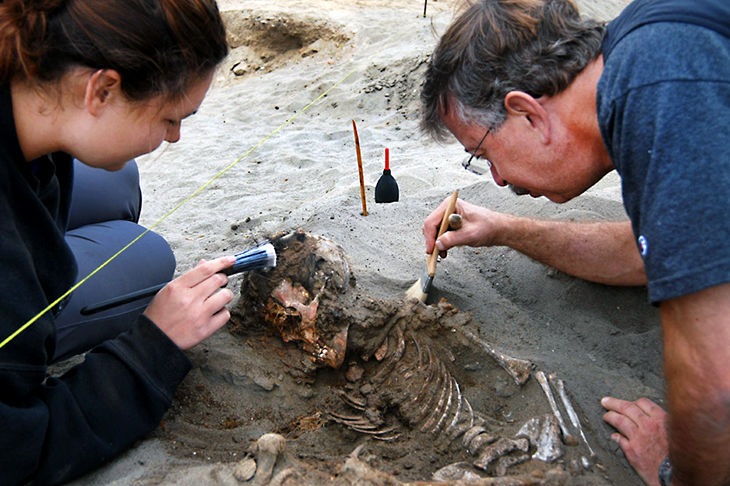
© John VeranoAt an excavation site on the Peruvian coast, Tulane anthropology professor John Verano, right, and PhD student Brittany Dement examine the remains of a child who was sacrificed and buried 600 years ago.
Tulane University physical anthropologist John Verano has spent summers in Peru for the last 30 years, digging for ancient bones and solving their secrets. But his most recent work focuses on a unique archeological discovery: a ritual sacrifice of children and young llamas dating back 600 years.

"This is unusual, and not what we've seen before," Verano said, "especially on the coast of Peru."

In June he traveled to the Peruvian coastal village of Huanchaquito to assist with new excavations at the site where Gabriel Prieto, a Peruvian archeologist, in 2011 found the remains of 42 children who were sacrificed in a religious ceremony along with 76 llamas. The area was once part of the Chimú state, which dominated most of coastal Peru from about 1100 until 1470 A.D., when it was conquered by the Inca empire.

This year, Prieto and Verano expanded the dig and completed the study of children's remains excavated in 2011 with support from the National Geographic Society and the Stone Center for Latin American Studies at Tulane.

Cow Skull

72,000 year old mammoth skeleton discovered in Idaho reservoir

mammoth discovery
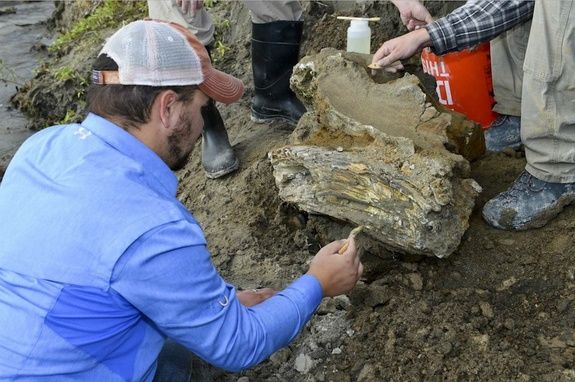
© Bureau of Reclamation Photo by Dave WalshThe fossil was discovered by a volunteer with the Bureau of Reclamation who was scanning the reservoir beaches for freshly revealed fossils.
The skeleton of a mammoth was discovered this month on the banks of a reservoir in Idaho. Paleontologists have rescued part of its skull and a tusk, but there could be a lot more buried below the surface.

"We may even have a complete mammoth," said Mary Thompson, a vertebrate paleontologist and senior collections manager at the Idaho Museum of Natural History. "This is very unique for us."

Every year, when water levels drop in Idaho's American Falls Reservoir, teams of paleontologists and volunteers with the Bureau of Reclamation walk the beaches in search of fossils. The ancient bones of camels, bison latifrons, giant ground sloths, saber-toothed cats and other extinct Ice Age beasts sometimes poke out of the freshly eroded reservoir banks.