Secret HistoryS


Treasure Chest

Prophet Mani: Ancient seal provides insights from antiquity

Image
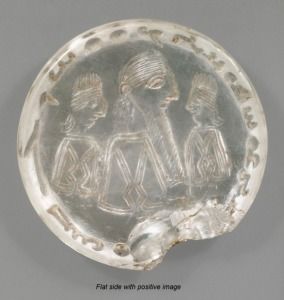
When a personal artifact of a religious leader is discovered nearly 1,700 years after its use, the object provides invaluable historical insights. Zsuzsanna Gulacsi, professor of Comparative Cultural Studies, has been studying an ancient crystal seal used by prophet Mani, to provide new interpretations and prepare the seal for further research.

Mani, a Persian born in 216, established Manichaeism, a religion drawing from the era's dominant religions, including Zoroastrianism and Christianity. Mani stood out among religious leaders of the time, Gulacsi said, because he wrote his own doctrine, compared to Jesus, Mohammad and the historical Buddha who were not known to read or write. The engraved crystal seal was used to authenticate Mani's writings and correspondence.

According to Gulacsi, Mani believed other religious leaders had their teachings distorted because they could not write themselves. "Their disciples did not have the capacity of a prophet, whose clarity of religious insight was believed to surpass that of ordinary human beings," Gulacsi said.

Palette

Leonardo legends: Master's self-portrait hidden from Hitler in case it gave him magic powers

leonardo da vinci
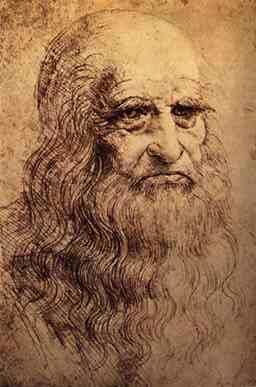
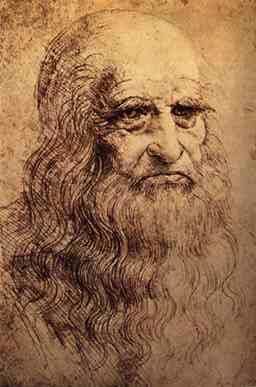
Self-Portrait by Leonardo da Vinci
One of the world's most famous self-portraits is going on rare public display in the northern Italian city of Turin. Very little is known about the 500-year-old, fragile, fading red chalk drawing of Leonardo da Vinci but some believe it has mystical powers.

There is a myth in Turin that the gaze of Leonardo da Vinci in this self-portrait is so intense that those who observe it are imbued with great strength.

Some say it was this magical power, not the cultural and economic value of the drawing, that led to it being secretly moved from Turin and taken to Rome during World War Two - heaven forbid it should ever fall into Hitler's hands and give him more power.

Whatever the reason, this was the only work from the entire collection of precious drawings and manuscripts to be removed from the Royal Library in Turin at the time.

The library's current director, Giovanni Saccani, says nobody even knows exactly where it was hidden. "To prevent the Nazis from taking it, an intelligence operation saw it transported in absolute anonymity to Rome."

Under such difficult circumstances, preservation was not properly considered, "nor did they have the same knowledge and techniques back then," says Saccani. "Naturally, this did not do its condition any good."

Inside the Royal Library a pristine red carpet lines the stairs - we follow the steps down to a secure underground vault with reinforced doors.

This purpose built caveau has been the home of Leonard's Self-Portrait, and thousands of other priceless drawings and manuscripts, since 1998. The picture's treatment today could not contrast more strikingly with the neglect it suffered during the first half of the 20th Century.

Dollar

American Tariffs and Wars: From the Revolution to the Great Depression

Image
Fair trade is once again a rallying cry for many Americans. Many contemporary leftists believe that the U.S. government should impose restrictions or tariffs on imported goods that are alleged to have been produced by underpaid or oppressed Third World workers. Few contemporary protectionists are aware of the sordid history of trade conflicts earlier in American history. Restrictive trade policies were a major cause of the American Revolution. "In 1732, England slapped heavy duties on American pig iron, and, in a death blow to the hat industry, decreed that hat makers were forbidden to have more than two apprentices each," as an 1892 Stanford University monograph noted. In 1750 Britain prohibited Americans from erecting any mill for rolling or slitting iron; William Pitt exclaimed, "It is forbidden to make even a nail for a horseshoe." The Declaration of Independence denounced King George for "cutting off our trade with all parts of the world." Many Founding Fathers recognized the corrupt nature of such restrictions. Benjamin Franklin observed, "Most of the statutes or acts, edicts, arrests, and placarts of parliaments, princes, and states, for regulating, directing, or restraining trade, have been either political blunders, or jobs obtained by artful men for private advantage, under pretense of public good."

Colosseum

Sacred tunnel discovered in city of Teotihuacan is filled with ritual objects and may lead to royal tombs

Stone figures Teotihuacan
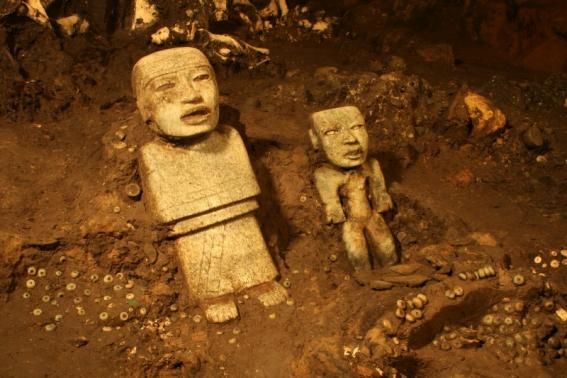
© ReutersStone figurines are seen in a tunnel that may lead to a royal tombs discovered at the ancient city of Teotihuacan, in this November 19, 2013 National Institute of Anthropology and History (INAH) handout picture made available to Reuters October 29, 2014.
A sacred tunnel discovered in the ancient Mexican city of Teotihuacan is filled with thousands of ritual objects and may lead to royal tombs, the lead Mexican archaeologist on the project said on Wednesday.

The entrance to the 1,800-year-old tunnel was first discovered in 2003, and its contents came to light thanks to excavations by remote-control robots and then human researchers, archeologist Sergio Gomez told reporters.

The site is located about 30 miles (50 km) northeast of Mexico City. The ruins have long been shrouded in mystery because its inhabitants did not leave behind written records.

The artifacts found inside the tunnel, located below the Temple of the Plumed Serpent, include finely carved stone sculptures, jewelry and shells.

Bomb

1980s Home Office nuclear warfare experiment: Put psychopaths in charge!

nuclear explosion
© AFP
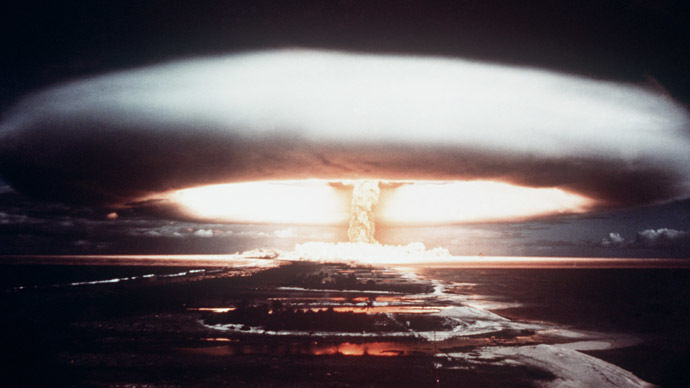
A clandestine Home Office experiment in 1982 tested Britain's capacity to rebuild after a catastrophic nuclear assault. Previously secret files, made public by the National Archives, document proposals to keep order using psychopathic recruits.

The exercise, dubbed 'Regenerate', was devised to prepare Britain to cope with a massive nuclear attack. The project aimed to create back-up measures in the event of a World War Three scenario.

Establishment officials imagined a situation where a nuclear exchange had devastated Britain's major cities, causing millions of casualties and widespread radiation poisoning.

The Cold War experiment's strategic means of dealing with such a disaster entailed assembling and recruiting a large group of officials, who would report to 12 carefully selected commissioners.

Those who participated in the experiment were predominantly police officers, state officials, military officers and fire services.

Comment: The irony here is that the very professions involved in this experiment - police officers, state officials, military officers - are full of psychopaths. So Hogg's suggestion, "extraordinary" and "bizarre" as it may appear to someone like Hennessy, is actually not that far from the truth. The problem is that psychopaths' lack of feelings for others is NOT an advantage. That's what they would like us to believe, and there has been a disinformation campaign for years to put these ideas in the public's awareness. But as Andrew Lobaczewski shows in Political Ponerology, psychopaths are anything but good in such situations; they make life intolerable for everyone else.


Sherlock

Hoard of 17th century artefacts found at Rathfarnham Castle in Ireland

Items revealing lives of 'elite' family found in underground lair by construction workers

penny
© Frank Miller / The Irish TimesArchaeologist Alva MacGowan with a 1602 Elizabeth 1st Irish penny, part of a large hoarde of objects from the 17th century discovered in a pit during the construction of a lift shaft at Rathfarnham Castle in Co Dublin.
A near perfect hoard of 17th century artefacts has been discovered in an underground lair of Rathfarnham Castle, revealing intimate details of the lives of the family who lived there and wider Irish society during that period.

The hoard was discovered about a month ago by construction workers installing a lift shaft at the castle. It was found in a sealed lair between two stone floors at the bottom of one of the castle towers.

Alva MacGowan, find supervisor with Archaeology Plan, the organisation commissioned by the Office of Public Works to deal with the hoard, said the "absolutely superb" preservation of the artefacts was "every archaeologist's dream".

Among the items discovered was a foldable toothbrush, clay pipes, jewellery, porcelain, coins, chamber pots, crystal goblets, as well as wine bottles and ointment jars with as of yet unknown liquids inside.

Magnify

Eight square meter vault and marble door found in Amphipolis tomb

Image
© Greek Ministry of Culture
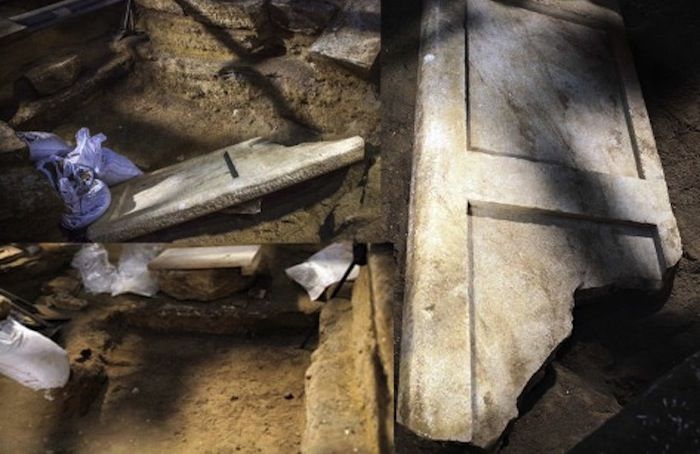
In an effort to reach the fourth chamber in the Amphipolis tomb, the excavation crew reached an 8.4 square meter vault and found an almost intact marble door weighing 1.5 tons.

According to an official announcement by the Greek Ministry of Culture, the removal of the backfilling earth from the fourth chamber exposed a vault dug on the natural slate floor. The vault has a surface of 4X2.10 meters and its floor is sealed with limestone. In addition, a marble door that belongs to the third chamber with dimensions 2X0.90X0.15 meters, weighing 1.5 tons, was found with only a small part missing.

Parts of the limestone remain intact and are connected to the side walls. On the west part of the floor, there is an incline caused by the floor caving in. On the east part, the limestone is in place. The stones from the west wall will be removed to facilitate supporting and bracing works.

The report describes the vault as filled with soil, like the rest of the monument, and the removal of soil has led to a depth of 1.40 meters so far and it looks like it goes much deeper. The second door was found inside the soil. The removal of soil is continuing uninterrupted.

Chess

Medieval chess pieces unearthed in England

Image
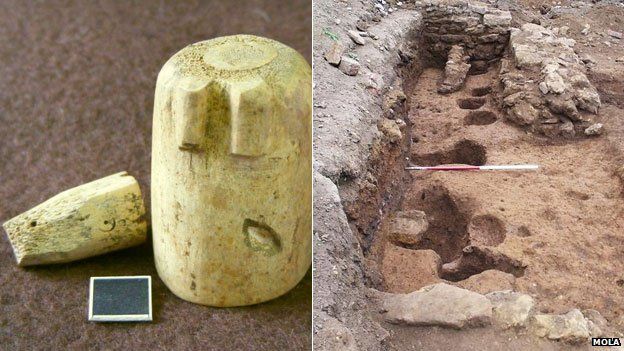
© MOLAThe chess pieces were found in a large dump of off-cuts near the foundations of a timber-framed building
Archaeologists have found two Medieval chess pieces made from antler during the final stages of a dig in Northampton town centre.

The excavation is at St John's Street, at the location of Northamptonshire County Council's new £43m headquarters.

Archaeologist Jim Brown said the pieces were "clear evidence" of demand for a "leisure product" in middle to late 12th Century Northampton.

The dig has now been completed and the finds will eventually go on display.

The larger piece was probably intended to be a bishop and is 60mm (2.3in) high, while the second piece was the top part of a king and is about 30mm (1.2in) high.

Mr Brown, from the Museum of London Archaeology, said the chess pieces were found among bone and antler off-cuts, and appear to been discarded during their manufacture.

Flashlight

"Ancient" skull recovered from a cave in England

Image
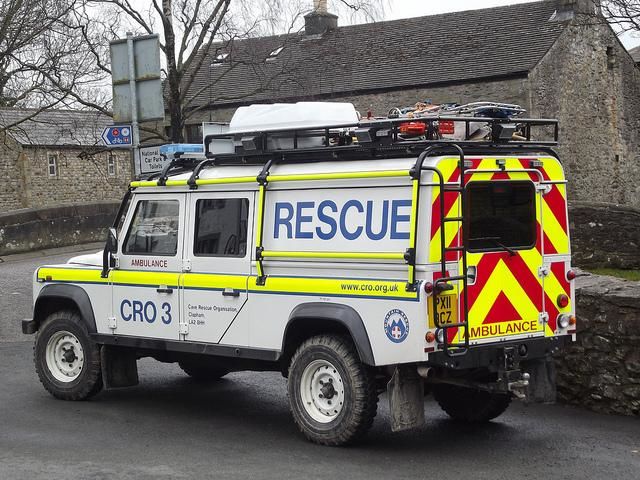
© The Westmorland GazetteRescuers called in by police
Police are investigating after a human skull was discovered by cavers in a north Lancashire pothole.

Members of Clapham-based Cave Rescue Organisation (CRO) were asked by Lancashire Police to retrieve the skull - which the rescuers described as "ancient" - from Dunald Mill Hole, Nether Kellet, yesterday.

The CRO team received the call at 11.21am on Friday.

A spokesman said: "An ancient human skull was discovered by cavers in Dunald Mill Hole and reported to the police.

"CRO was asked to retrieve it as part of the subsequent police investigation and a small team completed the task later in the day."

Sherlock

Ancient village discovered in Colombia

Image
© EPM
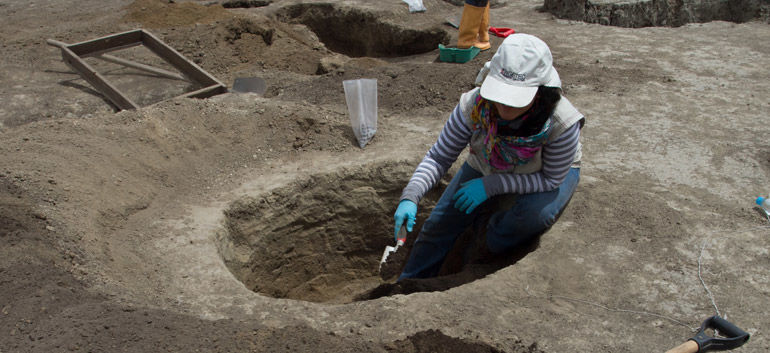
Archaeologists have discovered a pre-Columbian town in central Colombia, recovering tons of archaeological evidence of which some dates as far back as 900BC, sponsor EPM said Friday.

The site was initially found when EPM, a public-private energy company, did soil research while planning the construction of an energy network in the municipality of Soacha, just southwest of the capital Bogota.

According to EPM, the archaeological site is the biggest ever found in Colombia, measuring some 4.9 hectares, and allows scientists to understand how now-extinct indigenous tribes lived.

"The relevance of this finding lies in the information contained in the settlement patterns, the architectural and agricultural development of the societies that lived on the central high plans of Colombia and, in general, about demographic aspects in pre-Hispanic times," archaeologist John Alexander Gonzalez told EPM, that paid for the $7.5 million operation.