Secret HistoryS


Hourglass

Cant, Polari and Gobbledygook: The anti-languages of the anti-societies

Elizabethan vagrants
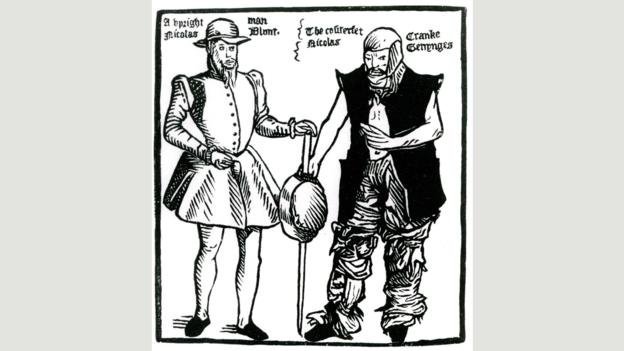
© AlamyThomas Harman's book deciphered the elliptical slang used by Elizabethan vagrants to plan their crimes.
Could you erectify a luxurimole flackoblots? Have you hidden your chocolate cake from Penelope? Or maybe you're just going to vada the bona omi?

If you understand any of these sentences, you speak an English "anti-language". Since at least Tudor times, secret argots have been used in the underworld of prisoners, escaped slaves and criminal gangs as a way of confusing and befuddling the authorities.

Thieves' Cant, Polari, and Gobbledygook (yes, it's a real form of slang) are just a few of the examples from the past - but anti-languages are mercurial beasts that are forever evolving into new and more vibrant forms.

Question

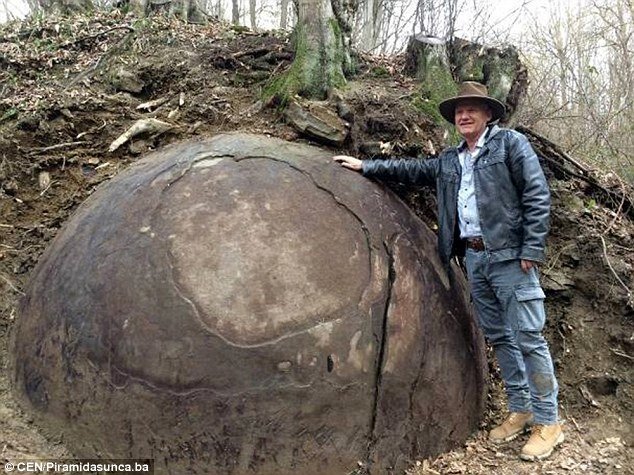
Largest mysterious man-made sphere discovered in Bosnia

Bosnian stone sphere
© CEN/Piramidasunca.ba
What about this mysterious man-made sphere discovered by a controversial archeologist in Bosnia?The specialist claims this bizarre natural sphere is the world's oldest man-made sphere proving Europe has an advanced lost civilisation that used impressive technology more than 1,500 years ago.

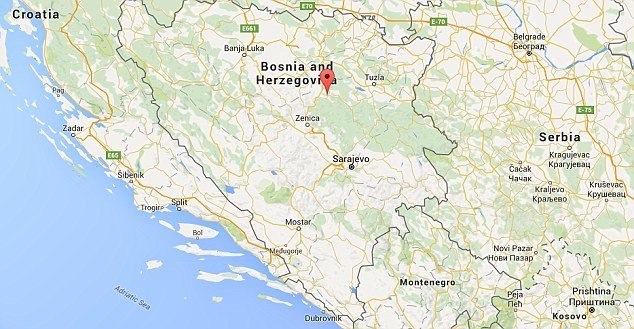
The giant ball of rock has a radius of between four and five feet (1.2 to 1.5 metres) and is extremely iron rich. Semir Osmanagic discovered the 'stone ball' near the town Zavidovici in central Bosnia and Herzegovina and said it is the heaviest man-made ball in the world.
Bosnia and Herzegovia Map
© Piramidasunca.ba
Dr Osmanagic had previously hit the headlines for his work on the supposed existence of ancient pyramids in the Visoko Valley, which he believes are hidden in plain sight as a cluster of hills. The phenomenon of stone balls has been linked with ancient civilisations around the world with the most famous being the stone spheres of Costa Rica. In total there are around 300, weighing up to 15 tonnes, which are believed to have been created by the now extinct Diquis culture, potentially making them up to 1,500 years old.


It is unclear how they were created but it is believed they were first sculpted from a local stone before being hammered and polished with sand.
If the huge stone in Bosnia is found to be made by human hands, it would be the largest man-made stone ball ever found - twice as heavy as the Costa Rican ones.

But there seems to be no proof that the 'sphere' is anything more than an unusual product of nature at the moment. These images actually reminds me of the Moeraki boulders in New Zealand.

Comment: See also:


Magnify

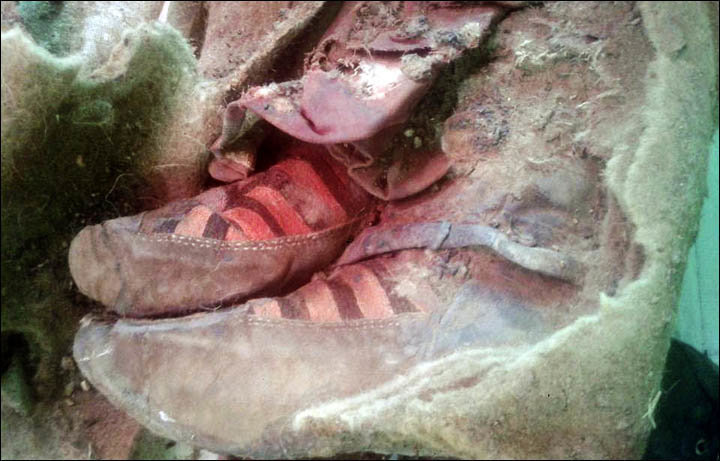
Archeologists find rare ancient mummy of Turkik origins buried in Altai mountains

mummy mongolia
© Khovd Museum'The finds show us that these people were very skilled craftsmen.'

Remains of suspected female of Turkik origin found in at an altitude of 2,803 metres in the Altai Mountains.


The ancient human remains are wrapped in felt but the excavation is being hailed as the first complete Turkik burial found in Central Asia. B.Sukhbaatar, researcher at Khovd Museum, said: 'This person was not from elite, and we believe it was likely a woman, because there is no bow in the tomb.

'Now we are carefully unwrapping the body and once this is complete the specialists will be able to say more precisely about the gender.'

In the mummy's grave archeologists found - alongside the human remains - a saddle, bridle, clay vase, wooden bowl, trough, iron kettle, the remains of entire horse, and four different 'Dool' (Mongolian clothes).

Eye 2

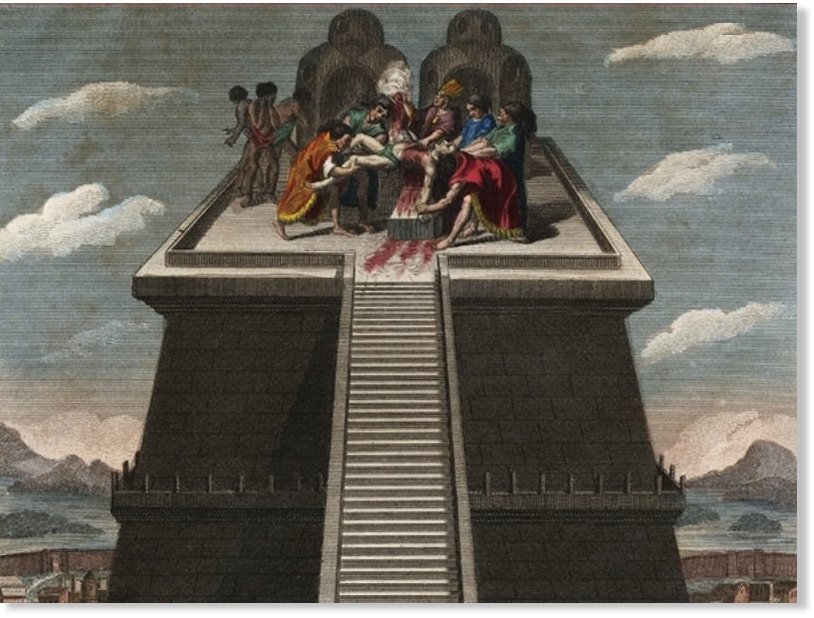
How elites used human sacrifice to impose inequality in ancient societies

human sacrifice
Religion has long been a useful tool for social control, with fear of god used in service of every despicable practice from slavery to war. A new study reveals that religious rites, particularly ritual sacrifice, helped create and maintain class stratification in ancient societies. According to researchers from the University of Auckland, Victoria University and the Max Planck Institute for the Science of Human History in Germany, the findings reveal a "darker link between religion and the evolution of modern hierarchical societies" than once thought.

The analysis focused on 93 Austronesian cultures, meaning peoples who originated in Taiwan, later settling in Madagascar, Rapa Nui (Easter Island) the Pacific Islands and New Zealand. Researchers found that the more class stratification that existed in a society—elites on top, with the rest of the populace on the bottom—the more likely it was to engage in ritualistic killings. The powerful frightened the masses into staying in proverbial line by employing "god-sanctioned" sacrifice, which entailed implicitly threatening the lives of many for supposed wrongdoing. Those at the top became, by proxy, gods among men and women, and they maintained those positions by doling out killings as they deemed necessary.

Hourglass

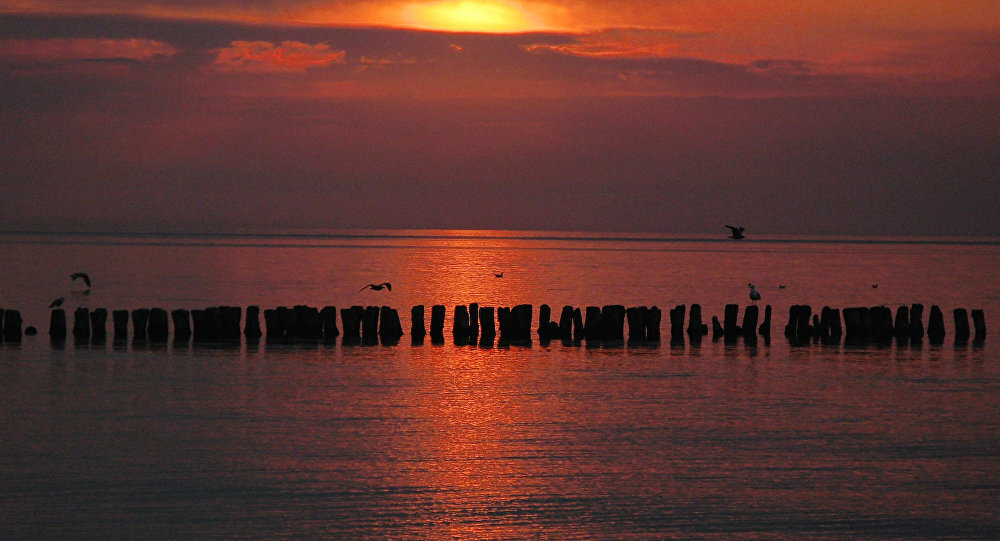
Champagne, UFOs and other interesting finds off the coast of Sweden's Baltic Sea

baltic sea
© RIA Novosti/Vladimir Fedorenko
Sweden has reportedly been planning to salvage a legendary Halifax bomber from its territorial waters. In 1943, the Canadian Halifax HR871 crashed off the coast of Falsterbo in southern Sweden during a Nazi raid. To commemorate the occasion, Sputnik decided to offer you a list of the most interesting findings in the Baltic Sea in recent history.

According to the Swedish news outlet The Local, the Halifax wreckage was discovered four years ago. Since then, divers from the Swedish Coast and Sea Center, researchers from the University of Lund and members of the Canadian Halifax 57 Rescue group have been examining the seabed for more traces of the plane. Here is a list of other famous findings in the Baltic which you may not know about.

Magnify

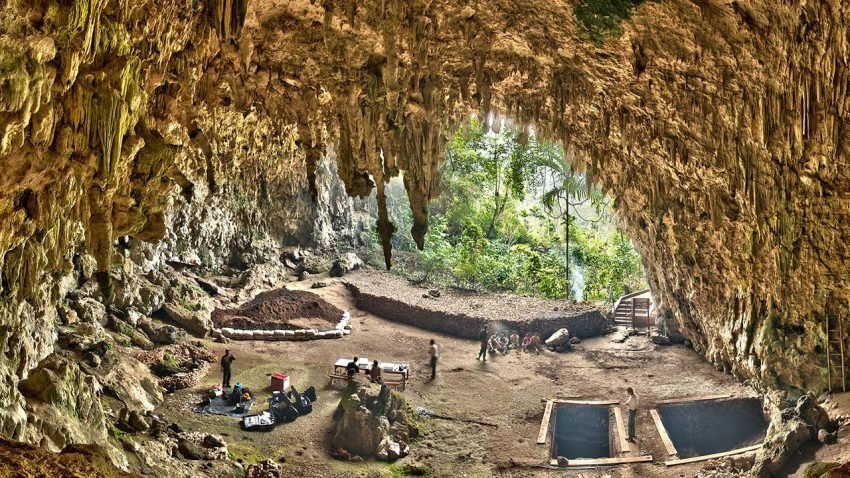
Revised dating reveals 'hobbits' were separate human species, living 10K years before homo sapiens in the region

hobbit fossils
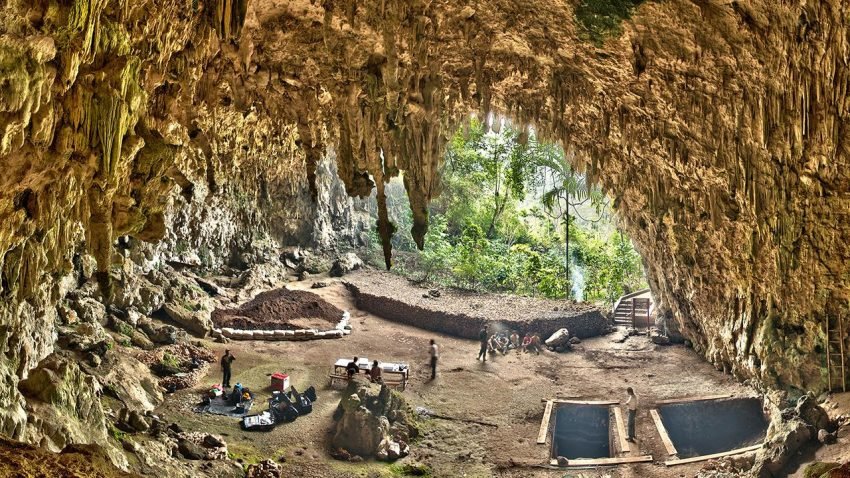
© Smithsonian Digitization Program Office/Liang Bua TeamThe “hobbit” fossils were discovered in 2003 in the cathedrallike Liang Bua cave, on the Indonesian island of Flores.
In 2003, scientists made a startling find in a remote cave on the Indonesian island of Flores: The skull and skeleton of an adult female hominin, a group consisting of modern humans and extinct human species, who stood only about a meter tall. That discovery sparked a fierce debate about whether the hominin—officially dubbed Homo floresiensis but often called the "hobbit"—was a separate species or a diseased modern human. Now, many of the same scientists who made the discovery have radically revised their estimate of the fossils' age, based on an exhaustive new analysis of the cave's geology. Instead of living 18,000 years ago, as they originally reported, the hobbit lived between 60,000 and 100,000 years ago—some 10,000 years before H. sapiens arrived in the region.

That new, much older date range for H. floresiensis makes it "impossible to argue that it is a pathologically-dwarfed modern human," says Russell Ciochon, a paleoanthropologist at the University of Iowa in Iowa City who was not involved in the study. "In my opinion, this paper drives the final nail in the coffin" of that hypothesis.

A chief argument underpinning the diseased Homo sapiens hypothesis was the original 18,000-year age of the fossils—long after H. sapiens arrived in southeast Asia and Australia. However, that 18,000-year-old date was based on only a geological analysis of the fossils' surroundings and not on direct analysis of the bones themselves. And the complexity of the cave's geology initially misled the scientists, says Matthew Tocheri, a paleoanthropologist at Lakehead University in Thunder Bay, Ontario, Canada, and a member of the discovery team.

Comment: Further reading:


Binoculars

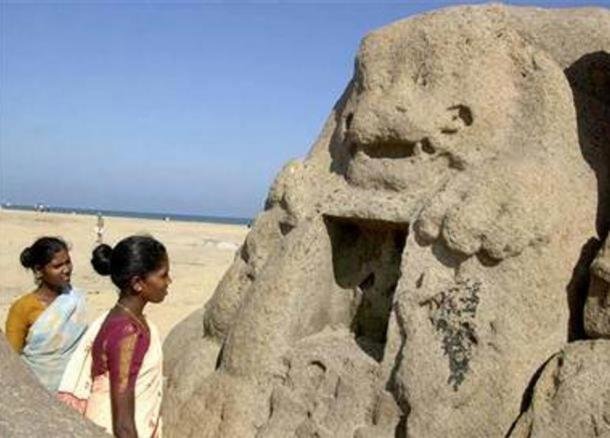
Scientists discover ruins of ancient township and legendary shore temples of Mamallapuram, India

lion statue mahabalipuram india
Lion statue that appeared after the December 26, 2004 tsunami on the beach of Mahabalipuram, India.
When the shoreline receded during the 2004 tsunami, tourists in Mamallapuram swore they saw a long row of granite boulders emerge from the sea, before it was swallowed again as the water hurtled forward. More than a decade later, a team of scientists and divers have uncovered what eyewitnesses saw on that fateful day - vestiges of an ancient port.

In a discovery that could lead to more underwater explorations off the historic town of Mamallapuram, a group from National Institute of Oceanography (NIO) has found the remains of a port or ruins of one of the six shore temples which, according to legend, went under water. The 10-member team, comprising divers, geologists and archaeologists, found a 10m-long wall, a short flight of stairs, and chiselled stone blocks scattered on the seabed. They were found 800m from the shoreline at a depth of nearly 27ft.

Magnify

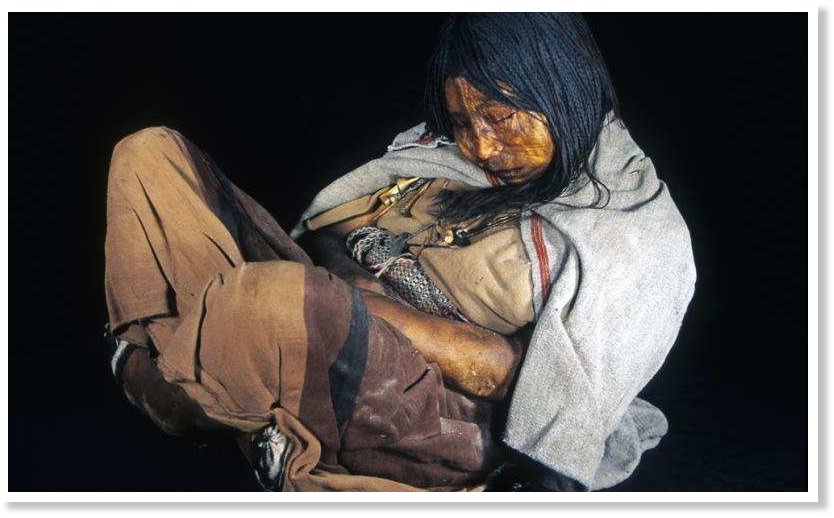
DNA study confirms devastating impact of European colonization on American indigenous populations

incan mummy
© Johan Reinhard Llull Maiden: DNA of The Doncela (The Maiden) Incan mummy found at Mount Llullaillaco, Argentina, in 1999, was used in the study.
The first largescale study of ancient DNA from early American people has confirmed the devastating impact of European colonisation on the Indigenous American populations of the time.

Led by the University of Adelaide's Australian Centre for Ancient DNA (ACAD), the researchers have reconstructed a genetic history of Indigenous American populations by looking directly into the DNA of 92 pre-Columbian mummies and skeletons, between 500 and 8600 years old.

Published today in Science Advances, the study reveals a striking absence of the pre-Columbian genetic lineages in modern Indigenous Americans; showing extinction of these lineages with the arrival of the Spaniards.

"Surprisingly, none of the genetic lineages we found in almost 100 ancient humans were present, or showed evidence of descendants, in today's Indigenous populations," says joint lead author Dr Bastien Llamas, Senior Research Associate with ACAD. "This separation appears to have been established as early as 9000 years ago and was completely unexpected, so we examined many demographic scenarios to try and explain the pattern."

Comment: Genocidal history lesson: Christopher Columbus' invasion of America


Gold Seal

Rising up against the Evil Empire: The legacy of Easter 1916

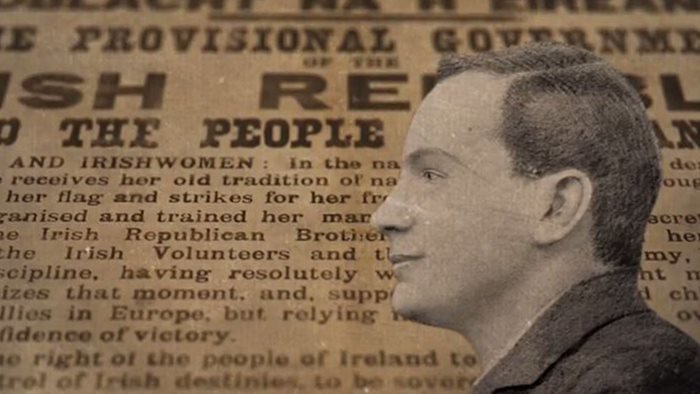
Padraig Pearse
Irish rebellion leader Padraig Pearse
With the centenary of the 1916 Easter Rising fast approaching (24-29 April 2016), the events of that awesome week will be celebrated throughout Ireland with parades, bunting and speeches with an emphasis on those who gave their lives in the cause of liberty. Politicians will, as ever, line up to be photographed and, by association, linked to the men who fell. 1916 was a year of atrocious bloodletting across the battlefields of Europe, but there is an essential difference between those millions sacrificed to an Empire's war in a determined drive to crush Germany and those who took part in the uprising in the expectation that they would sacrifice their lives for Ireland. Indeed the Proclamation which Patrick Pearse read out in front of the General Post Office in Dublin invoked the readiness of Ireland's children 'to sacrifice themselves for the common good'.1 It was an overt choice, a clear decision pledged to Ireland's freedom from the British imperialist yoke. The consequent loss of life in Ireland cannot be compared to the horrendous carnage in the battles of attrition over the Somme from July 1916,2 but its significance was to prove far greater than contemporary British historians and commentators have recorded.

The Secret Elite and their imperial guard in the press, the foreign and the colonial offices, the war office and the great money houses in London and New York, made every effort to downplay the actions taken by James Connolly, Patrick Pearse, Thomas MacDonagh, Sean Mac Diarmada, Eamonn Ceannt, Joseph Plunkett and the men and women who fought by their side. Because he represented an intellectual and dangerous challenge to the Empire, they promoted a devastating tirade against Roger Casement based on allegedly sexually explicit diaries which were circulated secretly to influence pro-Irish Americans.

Comment: The extent to which Ireland today is 'independent' is debatable. The country is under management by the Western banking cartel (the same Secret Elite described above). It must accept US torture and refuelling planes for said Elite's war machine. And it remains cut off from its 6 northeastern counties, which are under British occupation to this day.

Nevertheless, Docherty and Mcgregor's assessment of the Irish Uprising in Easter 1916 is spot-on.

If you haven't read it yet, their Hidden History book rips the Western fairytale origins of World War One to shreds, exposing the real aggressors and revealing the scale and drive of their ever-present quest for total world domination.


Info

Ancient Viking site in North America discovered using satellites

Viking Find in N.America
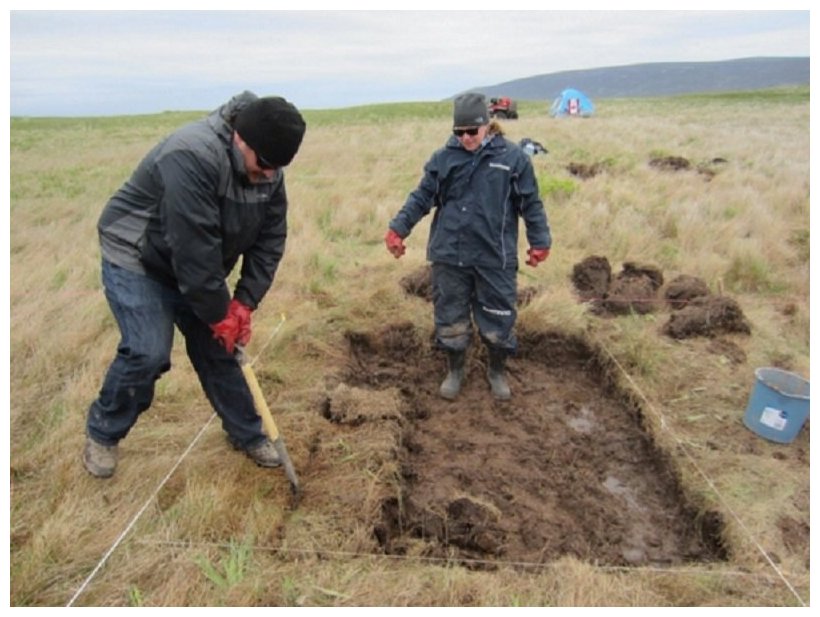
© Greg MumfordChilds and Parcack dig at the site in question.
Thanks to satellite technology and the efforts of an intrepid group of archaeologists, evidence of a second Viking settlement has been discovered in North America, documentaries set to air next week on PBS in the US and BBC One in the UK will reportedly reveal.

According to BBC News and National Geographic reports, University of Alabama-Birmingham archaeologist Sarah Parcak, Douglas Bolender from the University of Massachusetts-Boston, and their colleagues discovered a stone hearth used for ironworking at a remote peninsula in Canada, several hundred miles from the only confirmed Viking settlement in the New World.

Evidence of human activity at the site, a remote peninsula that runs from southern Newfoundland to the Gulf of St. Lawrence, was originally discovered last summer thanks to satellite data, which uncovered signs of previous human activity in the region. After a long and dangerous hike across bogs and bear-infested forests, Parcak and Bolender turned to more traditional techniques such as the use of trowels and brushes to make what the BBC calls a potentially "seismic" discovery.

While digging at Point Rosee, hundreds of miles south of the only previously known Viking outpost known as L'Anse aux Meadows, the researchers found the iron-working hearth partially covered by what appears to have been a wall made from turf. The artifacts found indicate the use of metal working that is not associated with the native people of the region, the New York Times reported, and radiocarbon dating places them firmly during the Norse era.