Secret HistoryS


Binoculars

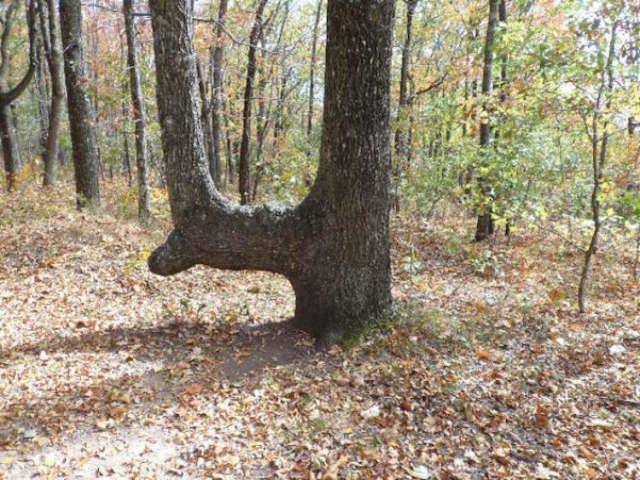
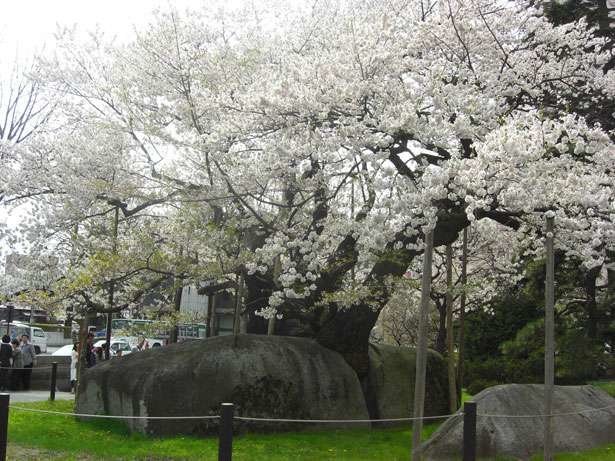
Mysterious bent trees are actually Native American trail markers navigating the forests

trail marker tree
Next time you go hiking through the forest keep an eye out for some pretty strangely-shaped trees. These trees are quite unique in that they bend in very unnatural angles. Sure, some trees are just weirdly-shaped, but there's something special about these bent trees.

Native Americans would bend trees in order to create trail markers that formed an early routing system, which served multiple purposes. From indicating that water and food was nearby, to warning travelers of rough country ahead, these landmarks were important features in navigating the early Americas.

Document

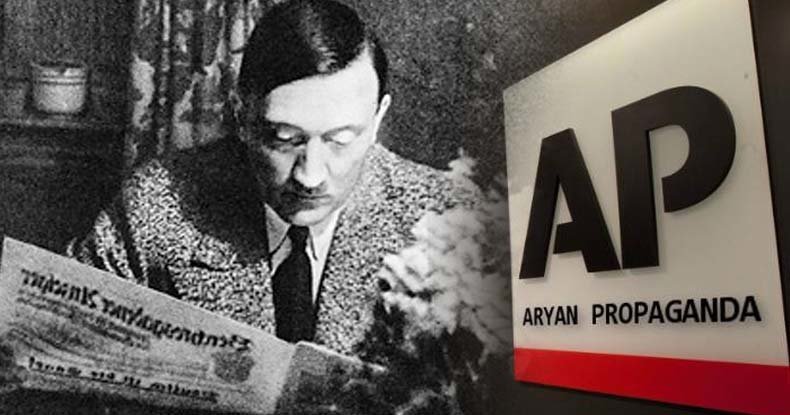
German historian: Associated Press supplied American newspapers with Nazi propaganda

associated press links nazis
A German historian has unearthed an extremely troubling formal relationship between the Associated Press (AP) and the Nazi party in the 1930's, in which propaganda produced by the Hitler regime was supplied to American newspapers in exchange for continued access to Germany

After the Nazi party came to power in 1933, they began a campaign of strict image control, which encompassed the banning of almost all international media within Germany. By 1935 most media outlets were forced to close their German bureaus after persistent persecution due to their continued employment of Jews within their agencies.

The New York-based AP was the only international media outlet that was able to maintain operations under the Nazi regime, continuing to operate until the U.S. entered World War II in 1941. This created a paradigm in which the AP became virtually the sole hub of information about Nazi Germany being disseminated to the rest of the world.

Comment: Navigating the news - Or how to cut through media lies


Info

Inscriptions on sandstone slab may offer clues to the mysterious Etruscan people

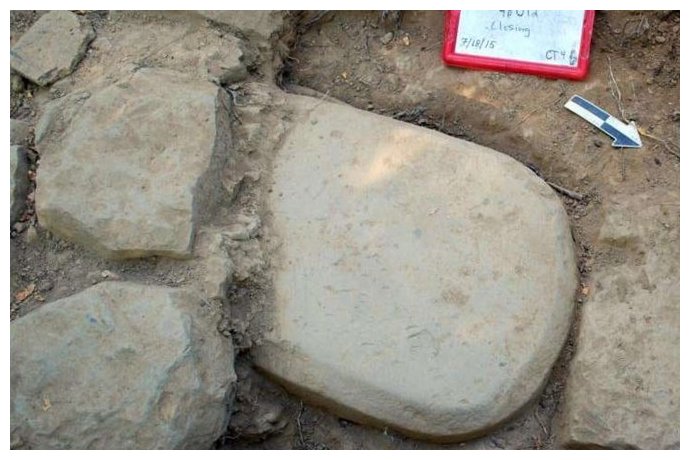
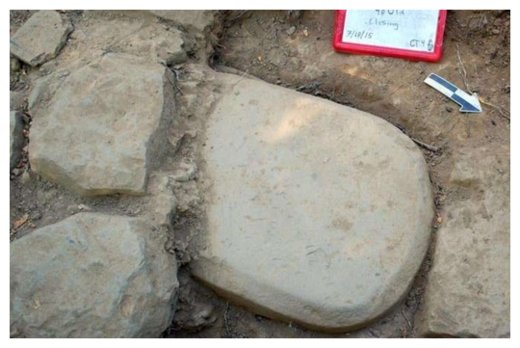
Inscribed Stone
© Mugello Valley ProjectThis inscribed stone was found embedded in the foundations of an Etruscan monumental temple.
Archaeologists have unearthed an inscribed sandstone slab in Italy that features what may be a rare sacred text written in the mysterious Etruscan language.

The finding promises to yield a wealth of new knowledge about one of the ancient world's most fascinating and mysterious civilizations.

Weighing about 500 pounds and nearly four feet tall by two feet wide, the slab was unearthed at Poggio Colla, some 22 miles miles north-east of Florence in the Mugello Valley.

The stone had been buried for more than 2,500 years in the foundations of a monumental temple at the Etruscan site. It was heavily abraded and chipped, with one side reddened possibly from burning.

According to archaeologist Gregory Warden, co-director and principal investigator of the Mugello Valley Archaeological Project, which made the discovery, the 6th-century B.C. slab has at least 70 legible letters and punctuation marks.

"Now if we could only unravel that text," Warden, professor emeritus at Southern Methodist University, Dallas, told Discovery News.

He explained that it will probably take months of study by Rex Wallace, a noted expert on the Etruscan language at the University of Massachusetts Amherst, before the researchers can say anything definitive about the text written on the stele, as such slabs are called.

"At this point we have just finished cleaning the stele, and Professor Wallace is working from photos. He will return to Italy in June to continue to work on it," Warden said.

Warden speculates the text may refer to a goddess that was worshiped at the site.

"The center of worship was an underground fissure that was ritually treated after the destruction of the temple," Warden said.

He explained the ritual included placing a temple block in front of the fissure, along with a gold ring and a textile embroidered with gold.

"Underground cults of this type were often associated with female divinities," Warden said.

Gem

Isaac Newton's recipe for 'philosopher's stone' rediscovered in 17th-century manuscript

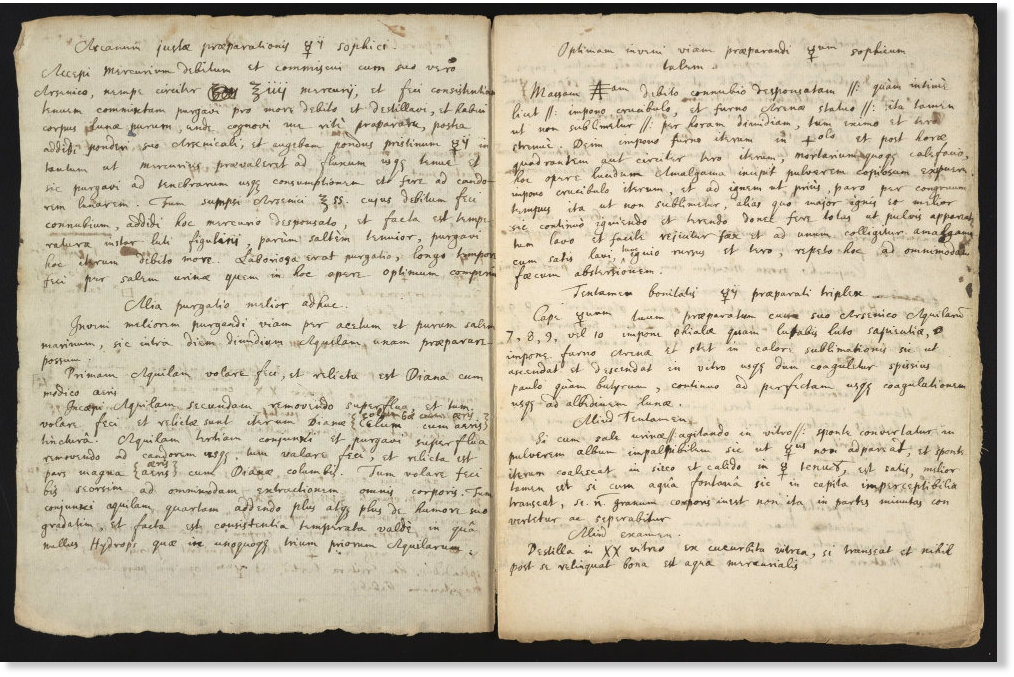
This 17th century manuscript contains instructions that Newton copied from an American alchemist's writings, as well as descriptions of one of Newton's own experiments.
© Chemical Heritage FoundationThis 17th century manuscript contains instructions that Newton copied from an American alchemist's writings, as well as descriptions of one of Newton's own experiments
One of Isaac Newton's 17th-century alchemy manuscripts, buried in a private collection for decades, reveals his recipe for a material thought to be a step toward concocting the magical philosopher's stone.

The "philosopher's stone" was a mythical substance that alchemists believed had magical properties and could even help humans achieve immortality.

The manuscript turned up at an auction at Bonhams in Pasadena, California, on Feb. 16, where the Chemical Heritage Foundation (CHF) in Philadelphia bought it. The alchemy text will be available in an online repository for those interested in the history of modern chemistry, according to James Voelkel, the CHF's curator of rare books.

The handwritten document contains instructions for making "philosophic" mercury that Newton copied from a text by another known alchemist. Written in Latin, its title translates to "Preparation of the [Sophick] Mercury for the [Philosophers'] Stone by the Antimonial Stellate Regulus of Mars and Luna from the Manuscripts of the American Philosopher."

Cross

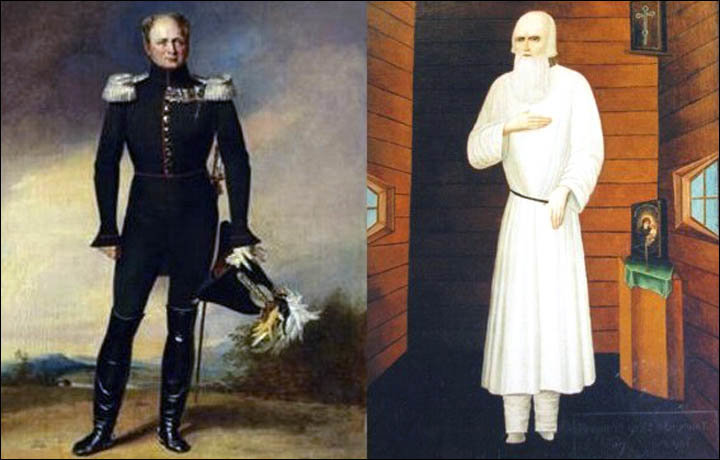
Russian Tsar Alexander I may have faked his death to live secretly as a monk in Siberia

tsar monk
© Vesti Tomsk

Now analysis suggests strong similarities between the handwritings of Alexander I and the monk.
Rumours have long suggested that emperor Alexander I staged his death in 1825 and became holy man Feodor Kuzmich, also known as Feodor Tomsky.

A theory was that he wanted forgiveness for any role he may have played in the assassination of his father Pavel I in 1801, or in benefiting from the work of others in slaying the tsar.

Now analysis by Svetlana Semyonova, president of Russian Graphological Society, suggests strong similarities between the handwritings of Alexander I and the mysterious monk. 'I was given a handwritten by Alexander I at the age of 45, and also another handwritten sample by Feodor Kuzmich,' she said. 'As a graphologist, I have noted an unusual style of both handwritings.'

Red Flag

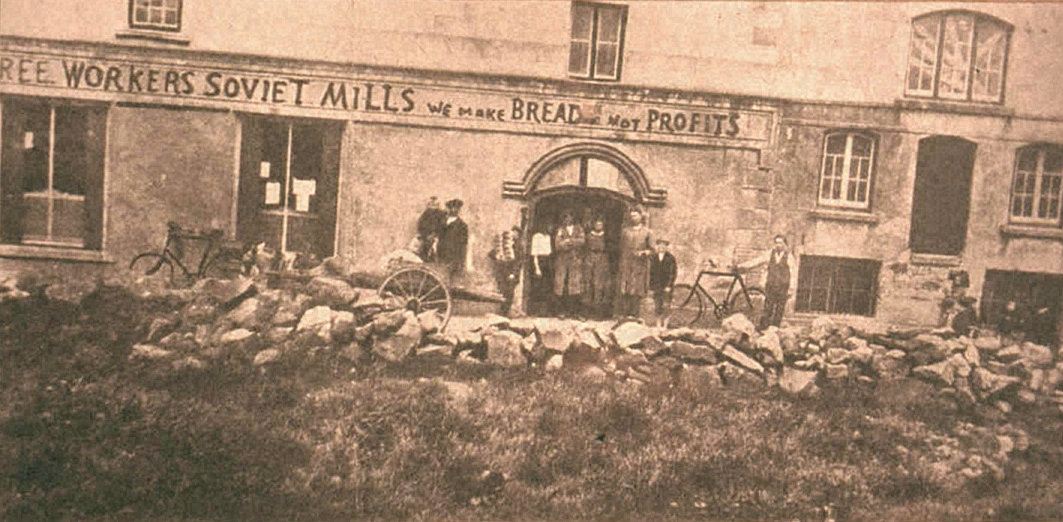
Irish Soviets 1919-23, a forgotten chapter in Ireland's 'war for independence'

soviet ireland
Bruree Workers Soviet Mills – 'We Make Bread Not Profits'
Workers throwing out the boss, hoisting a red flag and proclaiming a Soviet are not something that you would normally associate with Irish history. That sort of stuff is normally presumed to have happened in Europe but not Ireland. Most history books describe all Irish people as being united with the sole aim of driving the British out. Yet Ireland was caught in a wave of socialism similar to that in Italy and France. During the War of Independence, over 100 Soviets were set up in Ireland. Although it is now forgotten, many thought Bolshevism was a greater threat to British rule than Sinn Fein.

All across Europe there were strikes and revolutions. The mass slaughter of the First World War lead many to desire a new society and the Bolshevik revolution of 1917 was an inspiration for many. There was a Soviet republic in Hungary and several German cities, as well as mass factory occupations in Italy. This was referred to as the "Red Years". Ireland was no exception. Limerick city was occupied and run as a Soviet for two weeks in 1919 (the subject of my last post) and the countryside was the scene of something near class warfare (the subject of my next post).

It was a revolutionary time. People were challenging the old order, the old way of doing things and it wasn't always clear what would replace it. In 1918, 10,000 people rallied outside the Mansion House in Dublin to celebrate the Bolshevik revolution in Russia. There was a massive growth in trade union activity. The Irish Trades Union Congress grew from 111,000 in 1914 to 250,000 in 1920 to 300,000 in 1921. The Labour Party got 22% of the vote in the election of 1922, the same number as anti-treaty Sinn Fein despite having half the candidates. It was clear that Labour issues were just as important as national ones.

Comment: Wars for independence are really revolutionary wars - wars to overthrow a corrupt oligarchy.

In this light, did Ireland - and countless other countries - actually achieve 'independence'?


Star of David

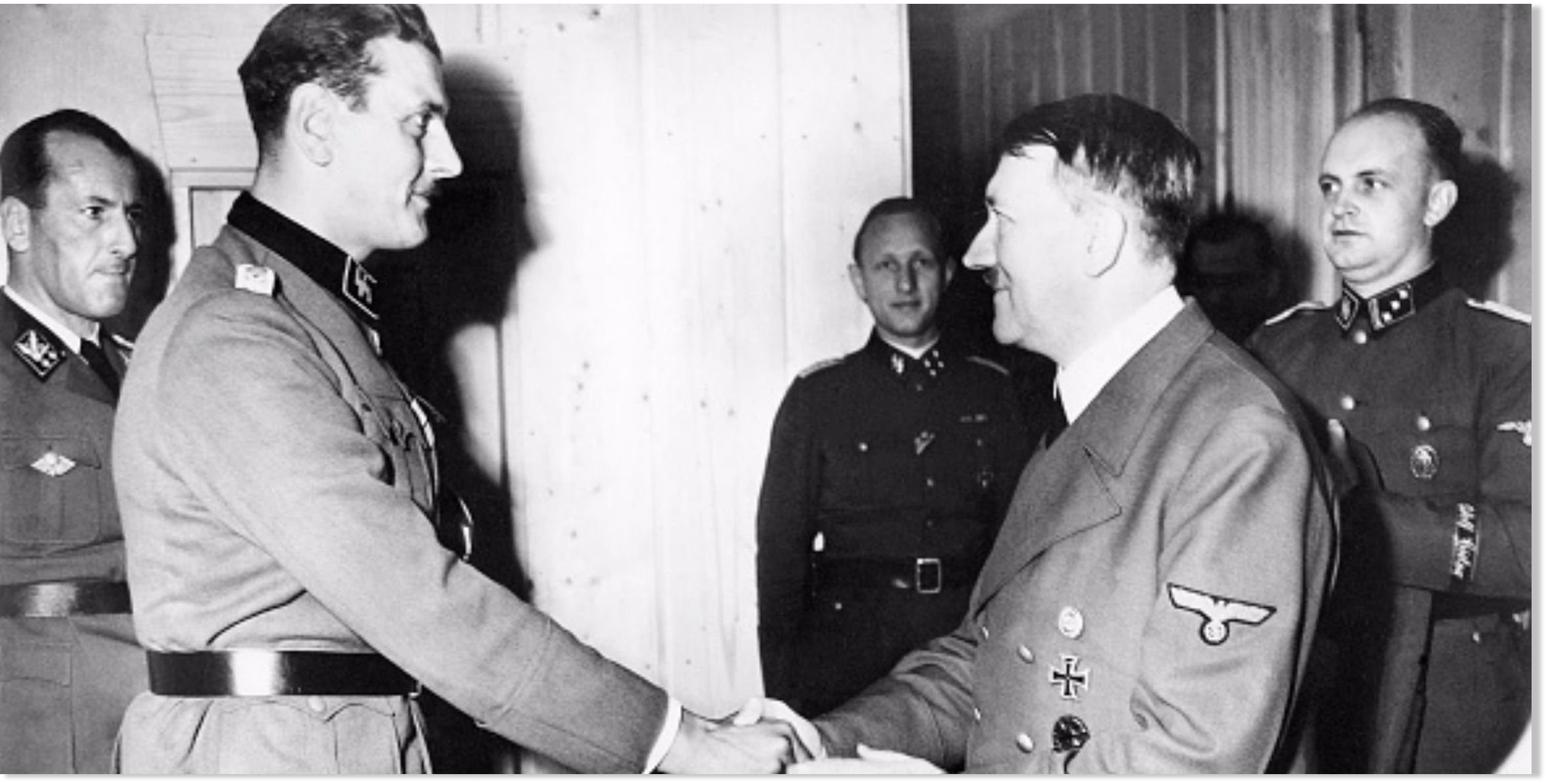
Otto Skorzeny: The Nazi SS commander who later became a Mossad hitman

hitler meeting skorzeny
© GettyOtto Skorzeny meets with Hitler in 1943 after leading the daring rescue of the German leader’s friend and ally, Benito Mussolini.
On September 11, 1962, a German scientist vanished. The basic facts were simple: Heinz Krug had been at his office, and he never came home.

The only other salient detail known to police in Munich was that Krug commuted to Cairo frequently. He was one of dozens of Nazi rocket experts who had been hired by Egypt to develop advanced weapons for that country.

HaBoker, a now defunct Israeli newspaper, surprisingly claimed to have the explanation: The Egyptians kidnapped Krug to prevent him from doing business with Israel.

But that somewhat clumsy leak was an attempt by Israel to divert investigators from digging too deeply into the case — not that they ever would have found the 49-year-old scientist.

We can now report — based on interviews with former Mossad officers and with Israelis who have access to the Mossad's archived secrets from half a century ago — that Krug was murdered as part of an Israeli espionage plot to intimidate the German scientists working for Egypt.

Pharoah

3400-year-old New Kingdom necropolis found in Egypt

Necropolis
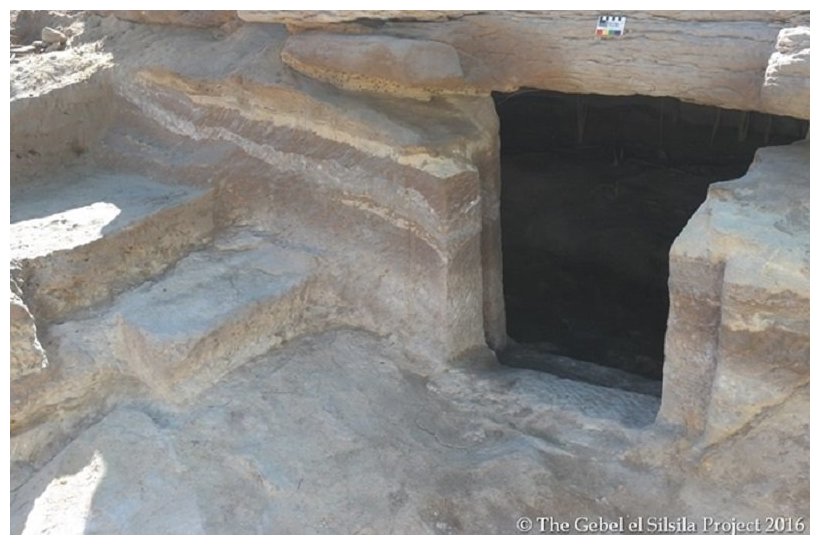
© The Gebel el Silsila Survey Project 2016One of the rock-cut tombs of the necropolis found at Gebel el Sisila.
A remarkable 3,400-year-old necropolis has been discovered at an Egyptian quarry site, the Ministry of Antiquities announced on Wednesday.

Consisting of dozens of rock-cut tombs, the New Kingdom necropolis was found at Gebel el Sisila, a site north of Aswan known for its stone quarries on both sides of the Nile. Blocks used in building almost all of ancient Egypt's great temples were cut from there.

"So far we have documented over 40 tombs, including a small shrine on the banks of the Nile," Lund University archaeologist Maria Nilsson, director of the Gebel el Silsila Survey Project, told Discovery News. "Many tombs are in bad condition. They have suffered from heavy erosion and extreme decay due to the rising water and its high salt contents," Nilsson said.

Nilsson and associate director John Ward concentrated on the cleaning of a small selection of tombs. Their team worked in cooperation with the Ministry of Antiquities as well as Kom Ombo and Aswan Inspectorates under General Directors Abd el Menum and Nasr Salama respectively.

The shrine is a small rock-cut sanctuary featuring two open chambers facing the river and an inner doorway crowned with the winged solar disc. The burials, meanwhile, consist of one to two undecorated rock-cut chambers, with one or more crypts cut into the bed rock floors.

In some cases the archaeologists found remains of the original lids.

Flashlight

Evidence of peaceful prehistoric Japanese hunter-gatherers shows violence and warfare were uncommon

japanese tree
© Tony Watanebe
A team of Japanese researchers (and one from the U.K.) has found evidence in the remains of ancient Japanese people that suggests that people are not necessarily predisposed to living a violent existence or even to engaging in warfare. In their paper published in the Royal Society journal Biology Letters, the team describes their analysis of the remains of people that lived during the Jomon period (from 13,000 - 800 BC) in what is now Japan, which showed very little evidence of violent behavior or death.

In recent years, scientists have found evidence of many hunter-gatherer groups that behaved in a violent manner, sometimes even banding together to wage war on other people or groups. That has led to more evidence of the common assumption that humans are inherently violent and that war has generally been the result when two or more groups have different ideas of how things should be done. In this new effort, the researchers suggest such findings might be premature as they have found an example of an early hunter-gatherer culture that did not appear to wage war or even behave in a violent manner.

Bad Guys

Associated Press willingly cooperated with the Nazis, assisted creation of propaganda

Third anniversary of National Socialism's accession to power in 1933
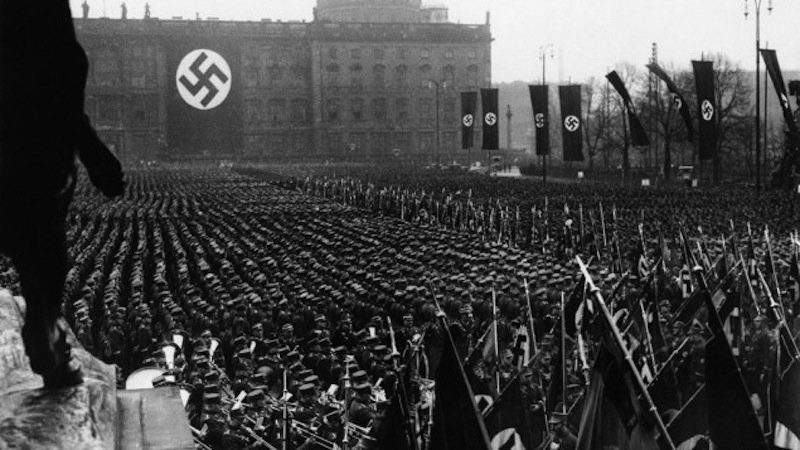
© APThe Associated Press photographs the third anniversary of National Socialism's accession to power in 1933 widely celebrated throughout Germany on Feb. 11, 1936. At noon, Adolf Hitler assembled 25,000 of his oldest stormtroop comrades in the Lustgarten in Berlin. In his address, Hitler reiterated Germany’s will to peace. This is a general view of the banner and flag bearers in Berlin.

News agency and Third Reich said to have made mutually beneficial deal, with AP providing countless photos for Nazi propaganda; AP denies collaboration


The Associated Press news agency willingly cooperated with Nazi Germany, submitting to the regime's restrictive rulings on the freedom of the press and providing it with images from its photo archives to be used in its anti-Semitic and anti-Western propaganda machine, a new report reveals.

When Adolf Hitler's National Socialists rose to power in 1933, all international news agencies but the US-based AP were forced to leave Germany. The AP continued to operate in the Third Reich until 1941, when the United States joined World War II.

According to German historian Harriet Scharnberg, the world's biggest news agency was only allowed to remain in Germany because it signed a deal with the regime.

The news agency lost control over its copy by submitting itself to the Schriftleitergesetz (editor's law), agreeing not to print any material "calculated to weaken the strength of the Reich abroad or at home," she wrote in an article published in the academic journal Studies in Contemporary History.

Scharnberg's research was first reported by the UK-based Guardian newspaper.

Comment: With this story, we now see how Western collaboration with the Nazis was 'complete'. Prescott Bush (George W. Bush's grandfather), IBM, Ford Motors, Standard Oil and the Bank of England - all did business with and helped build up the most monstrous and murderous regime of the twentieth century. And now we learn that the 'reality creators' of the Western media also 'did their part' by shaping the big lies which led to one of the most destructive wars in known history.