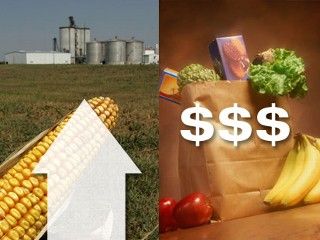
Metro-east consumers will see higher food prices in 2013, while likely facing a harder time finding organic and locally grown food -- all thanks to the drought gripping the Midwest and the nine-month extension to the federal farm bill passed Jan. 1 as part of the "fiscal cliff" deal between the White House and the U.S. Congress.
As a result of the extension, farmers and agri-businesses lost out on the five-year window of certainty regarding crop insurance and subsidies they were seeking. Instead, they will face the threat of more partisan haggling in Congress leading up to the extension's Sept. 1 deadline.
Steve Koeller, who grows corn and soybeans near Godfrey, said he doesn't know what to expect as the extension deadline approaches.
"It's gotten to the point now where it doesn't seem like anyone wants to give an inch," said Koeller, the president of the Madison County Farm Bureau. "It's just so political and media-driven."
The federally subsidized crop insurance program remains intact for now, but anxieties about its future are building.
Last year, metro-east farmers, like farmers across the Midwest and Southwest, suffered through the worst drought in 50 years. About 80 percent of all agricultural land in the United States experienced drought in 2012, according to a U.S. Department of Agriculture report issued last month.