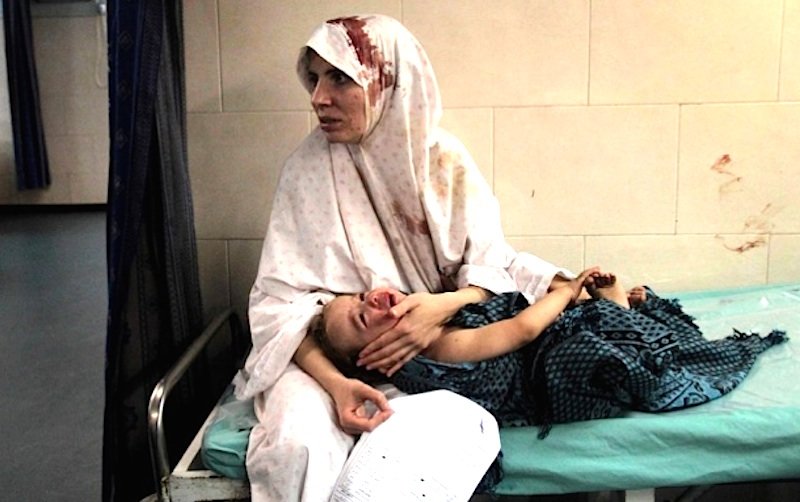
© www.popularresistance.orgCare needed, little available.
according to UNRWA, the United Nations agency for Palestinian refugees.
On the second anniversary of the war, the
Gaza Strip's Shifa hospital had 3,839 registered patients waiting for scheduled operations, more than half of which were classified as
major surgeries, according to a
statement published Monday by UNRWA, adding that surgical appointments were being
scheduled for as far away as 2018. "Some patients are still suffering two years after their injury and need ongoing care. Many
others are still waiting for prosthetic limbs. The state of prosthetics in Gaza is still very precarious," Dr. Mahmoud Matar, an orthopedic surgeon at Gaza's Shifa hospital told UNRWA. UNRWA stressed in their statement that "The long waiting lists have left many frustrated, sometimes
in unnecessary pain and facing health risks associated with delayed care."
Meanwhile, a significant part of
Gaza's healthcare infrastructure remains severely damaged, which according to the Palestinian Ministry of Health and the World Health Organization (WHO) had already been near collapse prior to the start of the hostilities.
Al-Wafa hospital in Gaza City and three primary healthcare clinics were completely destroyed in the war, in addition to 18 hospitals and 60 clinics that sustained damages. "To date, all of these facilities have been or are in the process of being repaired/reconstructed, with the exception of the al-Wafa hospital which requires major funding to proceed with reconstruction," UNRWA said.
A total of
11,200 Palestinians -- including 3,800 children -- were wounded in the war, according to UN documentation. Meanwhile, some
360,000 Palestinians -- 20 percent of the Gaza Strip's population -- are estimated to require mental health support as a result of the war, according to the WHO. UNRWA said the backlog in treatment was mainly due to the
lack of skilled personnel in the Gaza Strip's crumbling healthcare system.











Comment: Anti-Muslim sentiment is becoming increasingly popular among people in the Western world as a result of fear-mongering tactics thrust upon the public via political pundits and mainstream media manipulation. Islamophobia renders people apathetic toward the slaughter of innocent civilian Muslim populations across the world, and therefore indirectly facilitates the pillage and plunder of resource-rich countries in the Middle East. The people who benefit from this are the psychopathic elites found in political circles, big business and the military-industrial-complex, who are intent on destroying entire nations to make profit from war and human suffering.