Society's ChildS


Snakes in Suits

Zuckerberg apologizes to families hurt by social media

Mark Zuckerberg, Senate Judiciary Committee
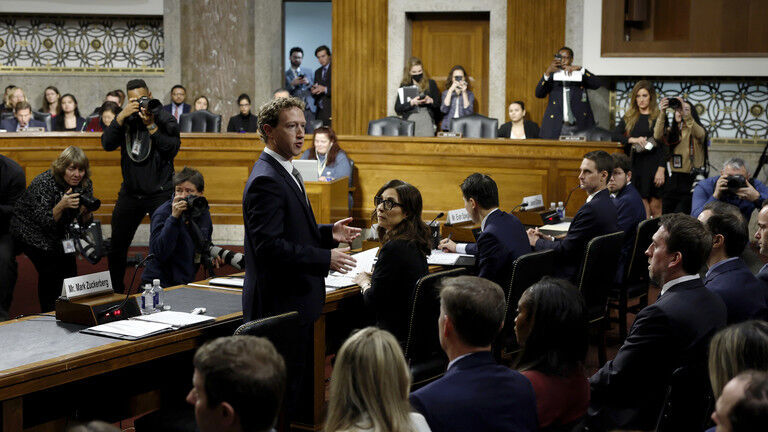
© Anna Moneymaker / Getty ImagesMark Zuckerberg at a Senate Judiciary Committee hearing, January 31, 2024.
Meta CEO Mark Zuckerberg has offered an apology to victims and relatives of people harmed by his social media sites, including teens who were sexually abused online and those who took their own lives following digital bullying.

During a contentious Senate Judiciary Committee hearing on Wednesday, the Facebook founder was grilled about the negative effects his products have on children and teenagers, with families and victims sharing concerns on a wide range of issues, including sexual predators, mental health, and the addictive nature of social media.

Following their testimony, Republican Senator Josh Hawley asked the CEO whether he had personally compensated any of the families for what they endured, with Zuckerberg responding "I don't think so."

Asked if he would like to apologize to the victims, Zuckerberg took the opportunity, turning to address the parents and teens in attendance.


Star of David

A study on Israeli public opinion

red words
© Unknown
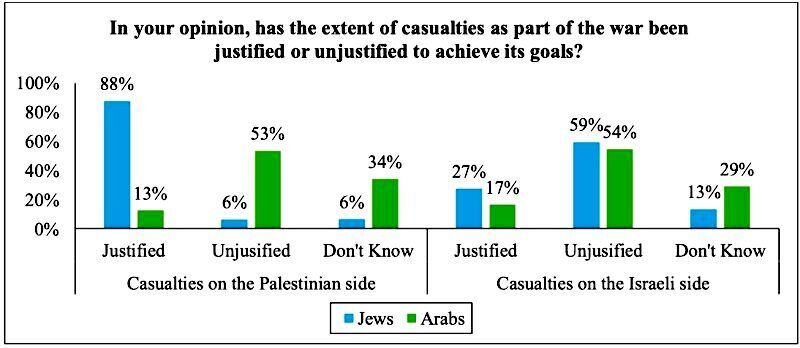
Tel Aviv University carried out a major study on Israeli public opinion covering the period from 8 to 15 January 2024. The findings are surprising.

Outside of Israel, one cannot fully understand the way in which the 7 October attack was experienced by the Israeli population and the evolution of their thinking ever since. Jewish Israelis were convinced that their country was an inviolable sanctuary, which provided them with absolute security. By its very existence, the State of Israel protected them from a new "shoah". The shattering of this belief on October 7 triggered in them an inextinguishable panic.

They then turned to their government for security, but it failed to rally them behind a government of national unity. After much hesitation, a war cabinet was set up which, instead of promoting unity, sowed utter discord, with ministers insulting each other and slamming doors. The impotence of the Israeli leaders was showing through. The Zionist myth was falling apart. The panic experienced by the Israeli population turned into a frenzied thirst for more and more bloodletting.

Initially, the Israelis denounced the spiral of violence and called for restraint, to the extent that Benyamin Netanyahu's coalition was reluctant to send ground troops to Gaza.
poll chart
Today, 88% of Jewish Israelis think that the 25,000 Palestinian civilian casualties are justified, while half of the Arab Israelis react humanely and lament the deaths of both sides.

Quenelle

Farmers' revolt: Flames and angry protests rage outside EU parliament

farmer protest european parliament EU brussels
© Thomas Padilla/APFarmers gather outside the European Parliament for a protest as European leaders meet for an EU summit in Brussels, Thursday, Feb. 1, 2024.
Thousands of farmers descended on Brussels, where they burned manure and pelted the legislature with eggs

A crowd of furious farmers picketed the EU Parliament building in Brussels on Thursday to protest environmental regulations and the threat to their livelihoods posed by cheap Ukrainian imports. The protesters hurled stones, eggs, and abuse at the bureaucrats behind police lines.

Convoys of tractors began streaming into Brussels on Wednesday night, and by Thursday morning the streets of the Belgian capital were blockaded by around 1,300 vehicles, according to a police estimate.

The farmers assembled in front of the European Parliament building on Luxembourg Square where they burned pallets and piles of manure. The crowd lobbed eggs, stones, fireworks, and flaming projectiles at the legislature, while similar scenes took place outside the nearby headquarters of the European Council.

Comment: Project Ukraine above all, even your own citizens. One might wonder what is possessing EU leaders, with the exception of Hungary's Viktor Orban.


Gold Coins

Cabinet spent $199M to enforce COVID vaccine mandates for federal employees

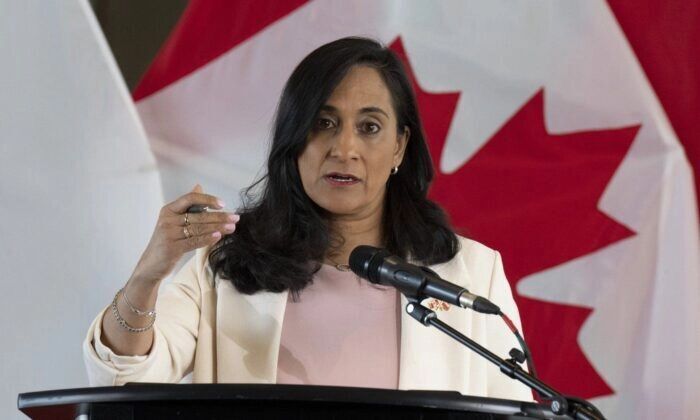
Minister of Defence Anita Anand responds to a question during a news conference in Ottawa, May 8, 2023.
© The Canadian Press/Adrian WyldMinister of Defence Anita Anand responds to a question during a news conference in Ottawa, May 8, 2023.

The federal government spent more than $199 million to enforce COVID-19 vaccine mandates for federal employees, despite 95 percent already being vaccinated, according to records obtained through an Inquiry of Ministry.


"Measures were $85.7 million and $112.9 million in 2021-22 and 2022-23, respectively," Treasury Board President Anita Anand wrote in reference to the "Policy on COVID-19 Vaccination" for the core public administration, which included the RCMP.

Ms. Anand noted that of the $81.9 million allocated in 2021-2022 through the Treasury Board, $19.2 million was used for "procuring, warehousing and distributing COVID-19 rapid tests across the core public administration," as well as funding for legal services. Additionally, $3.4 million was allocated for "Vote 1 Operating Authorities" and more than $350,000 was given to "Statutory Authority for Employee Benefit Plans."

Comment:

See also:


Bad Guys

Canada delays euthanizing the mentally ill: Country halts plans to broaden assisted dying to people with depression 'because there aren't enough doctors to assess them'

hospital
Canada has delayed a plan to offer assisted suicide to people suffering solely from mental illness, health officials announced.

The controversial policy, which critics feared would lead to people killing themselves out of desperation, currently allows anyone in Canada with an incurable medical condition to apply to die, even if the disease is not terminal.

The country's law around medically assisted dying is one of the most liberal in the world. In 2022 alone, about 13,000 Canadians were euthanized as part of the program.

Comment: Since it has been well established that "nine out of ten people who attempt suicide and survive will not go on to die by suicide at a later date" and that decision making processes related to impulsivity are impaired in those who attempt suicide, broadening the assisted suicide legislation to include those with mental health issues seems highly irresponsible and is offering the public a fast track to suicide.

It's a 'quick-fix' to a complex problem that the Canadian government would rather not deal with and is essentially getting rid of the 'undesirables'.


Family

Tech CEOs told 'you have blood on your hands' at US Senate child safety hearing

facebook mark zuckerberg
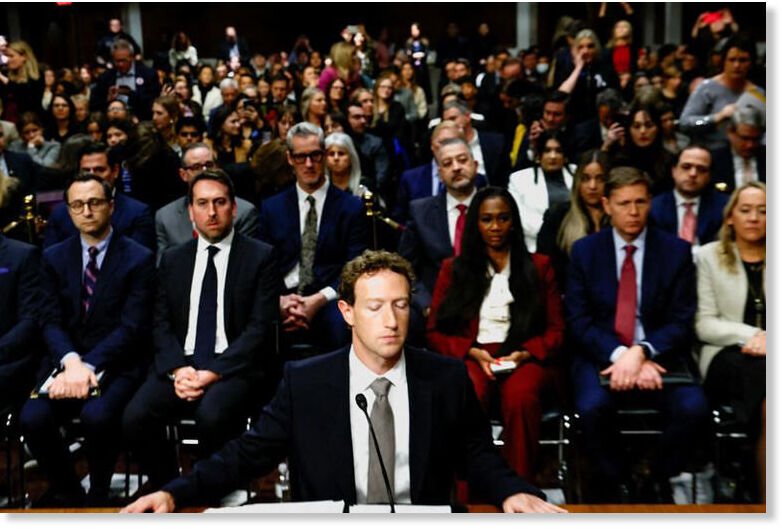
© REUTERS/Evelyn HocksteinMeta's CEO Mark Zuckerberg reacts as he testifies during the Senate Judiciary Committee hearing on online child sexual exploitation at the U.S. Capitol in Washington, U.S., January 31, 2024.
U.S. senators on Wednesday grilled leaders of the biggest social media companies and said Congress must quickly pass legislation, as one lawmaker accused the companies of having "blood on their hands" for failing to protect children from escalating threats of sexual predation on their platforms.

The hearing marks the latest effort by lawmakers to address the concerns of parents and mental health experts that social media companies put profits over guardrails that would ensure their platforms do not harm children.

"Mr. Zuckerberg, you and the companies before us, I know you don't mean it to be so, but you have blood on your hands," said Republican Senator Lindsey Graham, referring to Meta (META.O), CEO Mark Zuckerberg. "You have a product that's killing people."

No Entry

Sucharit Bhakdi is still being prosecuted for antisemitic 'crimes' in Germany

Sucharit Bhakdi
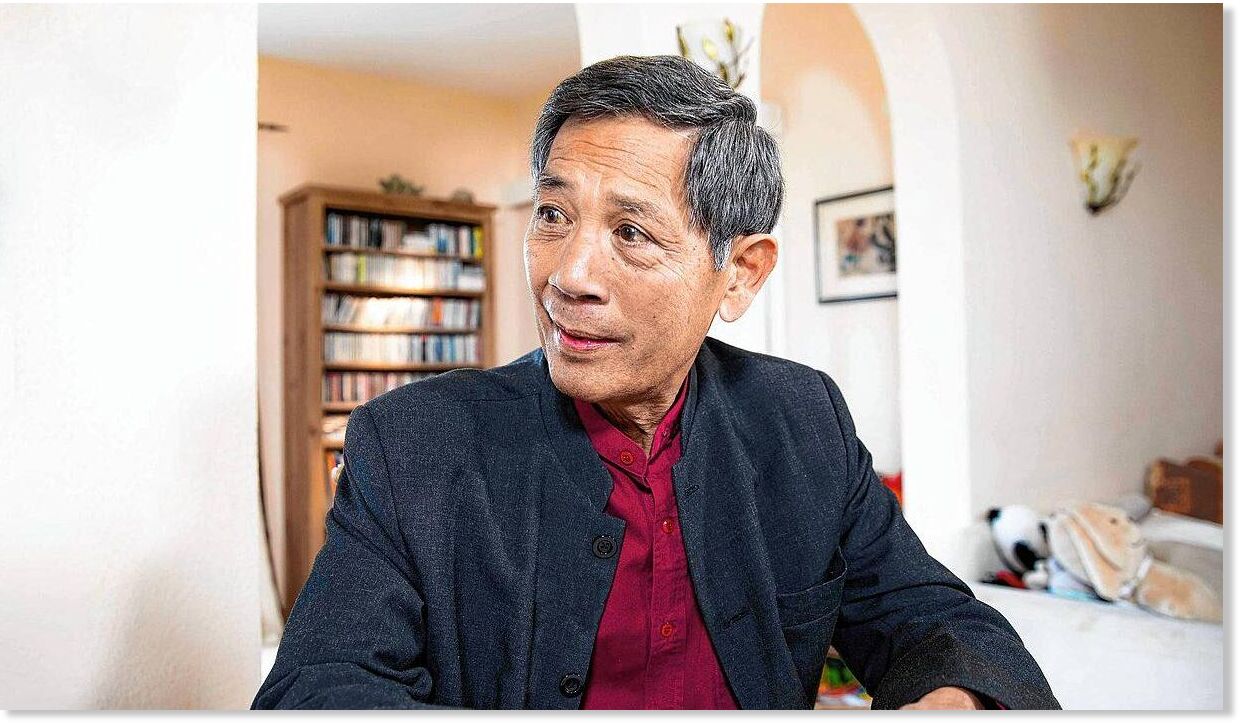
In a New Year's Eve tweet, the journalist Taylor Hudak noted that "As 2023 comes a close, one of the biggest victories this year was the acquittal of Prof. Sucharit Bhakdi". This was a victory, and it would be a reason to be cheerful, except for the fact Bhakdi is in fact still being prosecuted in Germany for "incitement to hatred", namely against Jews, and "trivialisation of the Holocaust".

Last May, as covered by Hudak and others, Bhakdi was acquitted of these charges by a local court in the small town of Plön. But this victory was short-lived. For defendants in Germany do not enjoy double jeopardy protection in the Anglo-Saxon sense, and just two months later, the public prosecutor appealed the acquittal. Indeed, just days after the original judgment, the public prosecutor's office had already announced that it would appeal the acquittal in some form - a fact which somehow escaped the notice of Bhakdi's international admirers.

Bhakdi is now to be tried again on exactly the same charges in the district court of Kiel. A date for the trial has not yet been set.

Bomb

Footage shows mob of illegal migrants attack NYPD officers

NYPD police
© NYPD Crime Stoppers5 asylum-seekers are pictured in an encounter with police officers in Times Square on Jan. 27, 2024.
The assault occurred Saturday as officers were taking someone into custody.

The assault occurred Saturday afternoon near Times Square as officers were trying to take a person into custody.

Five asylum-seekers have been arrested on charges they assaulted police officers in Midtown Manhattan, the NYPD said.

The assault occurred Saturday afternoon near Times Square as two officers were trying to take a person into custody.

According to police, officers attempted to disperse a disorderly group on West 42nd St. when a physical altercation occurred. When the officers attempted to place an individual in custody, the suspects began to kick and punch the officers, according to the NYPD. The suspects then fled.

Comment:


Red Pill

US Congress to address worsening medication shortages, UK's pharmacists warn low supplies threaten lives

pill medication shortage
© GettyThe Mapping America's Pharmaceutical Supply (MAPS) Act would create a database that identifies supply chain weaknesses before they turn into a drug shortage.
Drug shortages across cancer, attention-deficit hyperactivity disorder (ADHD), diabetes and other therapeutics have remained a persistent problem in the U.S. — and despite congressional setbacks, some lawmakers are trying to push legislation through to address it.

Earlier this month, Rep. Larry Bucshon, (R-IN), and Rep. Doris Matsui, (D-CA), introduced a bipartisan bill that would help the federal government prepare for future drug shortages by creating a database mapping the pharmaceutical supply chain.

Comment: Tellingly, serious shortages, have worsened in the UK, France, and Canada.

The Guardian reports:
NHS medicines shortage putting lives at risk, pharmacists warn

An unprecedented medicines shortage in the NHS is endangering lives, pharmacists have said, as unpublished figures reveal that the number of products in short supply has doubled in two years.

A treatment for controlling epileptic seizures was the latest to be added on Wednesday to a UK drugs shortage list that includes treatments for conditions ranging from cancer to schizophrenia and type 2 diabetes.

Causes of the crisis are thought to include the plummeting purchasing value of the pound since the Brexit referendum, which reduces the NHS's ability to source medicines abroad, and a government policy of taxing manufacturers.


Last year in Canada the excuse they gave for the lack of certain medications was that the Head office for procurement simply forgot to order enough...

One thing's for sure whatever the reasons are, they're effecting countries across the West, and governments appear to be doing very little to address them.


According to the British Generic Manufacturers Association, there were 111 drugs on a shortages list on 30 October last year and 96 on 18 December, with supply notifications issued for a further 10 treatments to NHS providers in the UK since then.

Its analysis suggests a 100% increase in shortages compared with January 2022, with pharmacists and health charities claiming the conditions of some patients were deteriorating as a result.

Delyth Morgan, the chief executive of Breast Cancer Now, said her organisation had been contacted over the past 12 months by several patients unable to source the medicines they needed to control the spread of their disease.

She said: "Last year many people shared with us, via Breast Cancer Now's helpline, that they'd been facing difficulties accessing their hormone treatment including letrozole, anastrozole and tamoxifen, causing them huge worry and anxiety. Trying to track down a treatment by travelling to a number of different pharmacies is an added burden for patients at an already difficult time.


And that's only if there are stocks elsewhere.


"It may also sometimes be that certain brands of drugs are out of stock and people may have to switch to another brand or different drug. In the worst case someone may have a period of time without the medication, a drug which could help reduce the risk of their breast cancer coming back or spreading."

Douglas Twenefour, the head of care at Diabetes UK, said: "The ongoing shortages of many GLP-1 medications are having serious implications for many people with type 2 diabetes and are still a major concern. With these shortages likely to last for at least the rest of this year, this will have a significant impact on whether many people with type 2 diabetes can access the best course of treatment for them."

The war in Ukraine and problems in global supply chains have generally affected many European countries' drugs supply, with concerns being raised about fresh market instability in light of the violence in the Red Sea, a key shipping corridor for vital ingredients.


Note that, by bombing Yemen, the UK sabotaged its ability to ship through the region.


The EU, of which the UK is no longer a member, recently agreed to create a stockpile for key drugs and to invest in increased domestic production.

There have been well-documented shortages in hormone replacement therapy and attention deficit hyperactivity disorder products due, in part, to higher demand.


In just a few years? Even so - and that does seem probable - governments are responsible for forecasting and responding to these fluctuations.


Janet Morrison, the chief executive of Community Pharmacy England, said the shortages were unprecedented and were beginning to hit patients hard. "Pharmacy teams have been struggling to get hold of prescription medicines for many months but the problem is now worse than ever," she said.

"It has become worryingly normal to see hundreds of medicines affected by pricing and other issues every month, with problems now a daily occurrence for pharmacies. Pharmacies are having to spend hours - on average an extra 11 hours a week - tracking down the medicines their patients need.

"This all causes worrying delays for patients, and in worst cases it can lead to a deterioration of their health: last year we surveyed people working in pharmacies and 87% told us that their patients' health was being put at risk due to medicine supply issues. This is shocking, and government and the NHS must step in to resolve these issues."

The NHS is increasingly having to issue price concessions on products under which it agrees to increase its level of reimbursement to pharmacists due to spikes in demand and market prices.

There were 152 such concessions in December 2023 compared with 20 in June 2016, the month of the Brexit referendum, when the UK's stated intention to leave the EU hit the value of sterling.


Evidently Brexit is not the problem.


There are also concerns that a government policy to limit NHS spending on branded drugs is having an effect on the pharmaceutical industry's willingness to invest in supplying the UK. There is a cap on the total allowed sales value of branded medicines to the NHS each year, which grows at an agreed rate of 2% per annum.

Any medicine sales above the cap are paid back to the government via a levy charged on companies' sales revenues. A scheme with a 4% cap has been introduced for the next five years after consultations with the pharmaceutical industry.

Morrison said the government was underinvesting in drug supply.

She said: "Price concessions are a sign that companies won't, or can't, supply a type of medicine at the price that officials previously thought would be enough. Although they show that the system is responding, they are a symptom of the squeeze that brings disruptions and shortages."

Mark Dayan, the Brexit programme lead at the Nuffield Trust, said there was evidence of a drop-off in medical imports from the EU since Brexit that suggested companies had responded by changing their supply chains, potentially leaving the UK more exposed to supply issues.

He said: "For the UK, this situation has been exacerbated by pressures on drug prices from 2016, probably associated with the Brexit referendum pulling down the value of sterling.

"A payment mechanism to claw money back from companies when sales rose too high saved the NHS money, but it reduced the incentive to sell branded products here.

"In the last two years, being outside the single market has added costs at the border with the EU, resulting in a drop in products passing into this country."

A DHSC spokesperson said they did not recognise the figures provided by the British Generic Manufacturers Association.

He said: "There are a number of reasons that a limited number of medicines may be unavailable, such as manufacturing difficulties, supply of raw materials, sudden demand spikes or issues with distribution.

"The department has well-established procedures to deal with such issues and works closely with industry, the NHS and others to prevent shortages, and resolve any problems as soon as they arise.

"This includes working closely with the NHS so they can put suggested plans in place to mitigate the risk of the shortage impacting patients."
Perhaps a sign of just how rapidly the West is deteriorating, manufacturer incompetence - and not just corruption - seems to be another contributing factor:
ADHD medication recalled due to labelling mishap

A drug manufacturer is voluntarily recalling one of its medications - Zenzedi - that treats ADHD and narcolepsy due to mislabeled packaging amid a year-and-a-half-long stimulant shortage.

The recall notice, posted on 24 January, stated that Azurity Pharmaceuticals is recalling its 30mg tablets of Zenzedi after a pharmacist in Nebraska discovered that a bottle labelled as containing Zenzedi actually contained an antihistamine called carbinoxamine maleate.

The FDA noted that ADHD or narcolepsy patients who were prescribed Zenzedi and accidentally took the antihistamine "will experience undertreatment of their symptoms".

While Zenzedi is a stimulant, carbinoxamine maleate could cause drowsiness, sleepiness, central nervous system depression, increased eye pressure, enlarged prostate urinary obstruction, and thyroid disorder, the FDA warned.

The agency said that the 30mg tablets of Zenzedi look like light yellow hexagonal tablets marked with "30" on one side and "MIA" on the other.

Zenzedi recalled after labelling mishap

The Nebraska pharmacist described the carbinoxamine maleate tablets as white round tablets with imprints of "GL" on one side and "211" on the other side.

The FDA warned consumers who have the recalled medication to stop using it and return the medication to where they obtained it.

Azurity sent recall notification letters to wholesale distributors on 4 January, the agency said, and "arranged for the return of all recalled products at that wholesaler level".

The recall comes as a stimulant shortage has persisted since October 2022. The shortage has sparked a crisis across the US, affecting millions of adults and children.


One can only imagine what the consequences might be when a population who have become reliant on a drug for mental stability are forced to go cold turkey.


Ever since the FDA announced that there was a scarcity of Adderall in October 2022, a domino effect of shortages has ensued. People were forced to switch from Adderall to other medications, leading to shortages in Vyvanse in July 2023 followed by a methylphenidate (Concerta and Ritalin) shortage days later.
These same nations are also facing food shortages, whilst also trying to put its producers out of business:


Arrow Down

Grid on the Edge: Queensland Govt switched off thousands of home air conditioners six times in the last 8 weeks

Dystopian House
© Ari Galang Udayana from Pixabay
You will own nothing and be hot and bothered

Welcome to modern Australia where the grid is so fragile, poor people have to buy air conditioners that the government can remotely switch off . Such is the state of decay that Queensland no longer has enough electricity to allow the riff-raff to have air conditioning whenever they want it — only the rich can do that.

The state energy companies of Queensland offer customers up to $400 cashback when they buy an air conditioner, but in return they allow the government to reach into their homes and turn off the air conditioner when the grid is in trouble, which it seems is a lot lately. It was only supposed to be a "few days a year".

It's a way to manage the grid — think of it as 170,000 mini blackouts instead of one big one:
Energex remotely cuts power to 170,000 air conditioners six times in a month

ABC News

Queensland's state-owned power grid remotely turned down almost 170,000 air conditioners six times in the past two months as part of a scheme to protect the electricity network.
So this is where someone owns a Hi-Tech instrument designed to keep them cool, that they can't use on the hottest days of the year. They call this the PeakSmart scheme (so you know it's stupid). Gone are the luxury days when consumers could control their own appliances, get cheap reliable electricity, and not need invasive, complicated schemes in order to keep some of their own money.

It also allows the energy companies to send people into your home to "visit" for afternoon tea, or rather, to check you haven't ripped out the PeakSmart controller boxes. They will give you five days notice. Nice of them, eh?