Fire in the SkyS


Red Flag

NASA invents explanation for recent fireball cluster: It's 'fireball season'

Image
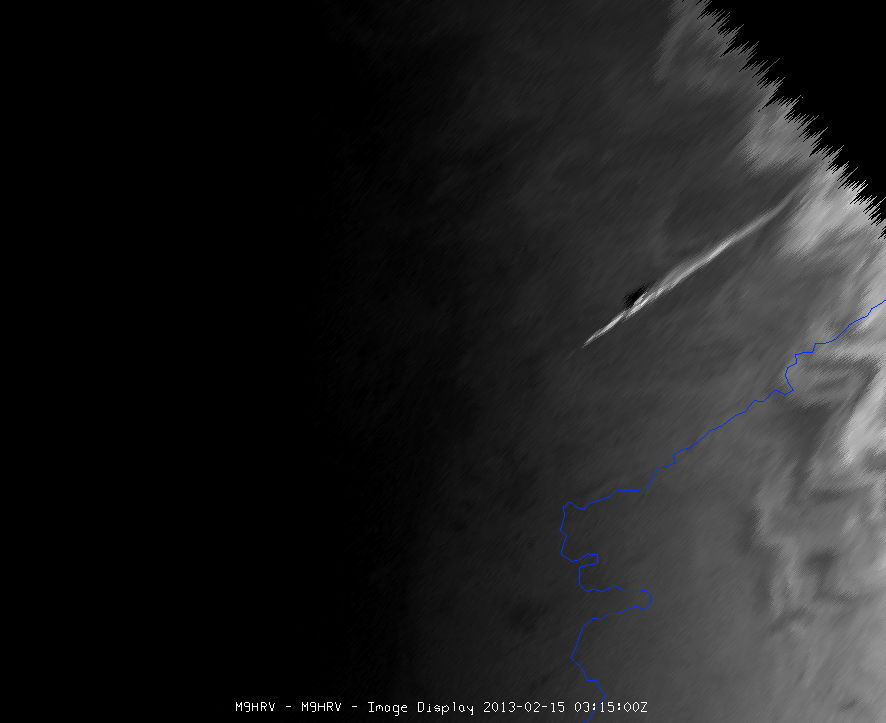
© EUMETSATThe meteor which exploded over the Urals of central Russia was seen by Meteosat-9, at the edge of the satellite view. Hundreds of people were reportedly injured as the meteor's massive sonic boom caused widespread damage. Image taken Feb. 15, 2013, 3:15 UTC.
Astronomer Ian Holliday studied photographic records of roughly a thousand fireballs from the 1970s and 80s, finding what looked like a fireball stream crossing Earth's orbit during February, late summer and fall. Halliday's results are somewhat controversial, but the phenomenon appears real.

The meteor which exploded over the Urals of central Russia was seen by Meteosat-9, at the edge of the satellite view. Hundreds of people were reportedly injured as the meteor's massive sonic boom caused widespread damage.

It's fireball season on Earth, and it is starkly clear for residents in eastern Russia where a bright fireball exploded in the atmosphere early today (Feb. 15).


Comment: The only sense in which it is 'Fireball Season' is that these next few months and years are going to see a whole lot more fireballs than usual.


For reasons scientists don't quite understand, there appears to be an increase in the number of bright meteors visible blazing through the night sky during the month of February. The notion hit home today when a meteor exploded over Russia's Ural Mountains, injuring more than 900 people and damaging thousands of buildings, according to press reports. (Another space rock, the asteroid 2012DA14, is on course to pass very close to Earth Friday evening, but will not hit the planet.)


Comment: It is not just February that has seen a large increase in fireballs - they have been increasing in frequency in all seasons in recent years!

Celestial Intentions: Comets and the Horns of Moses is a must-read to understand just what the heck is going on here.


Fireball 3

Fireball photographed over Somerset, England, 6 February 2013

Is it a bird? Is it a plane? Or was it, similar to the meteorite that hit Chelyabinsk this morning, a space rock breaking up in the atmosphere?

Its origins are a genuine mystery.

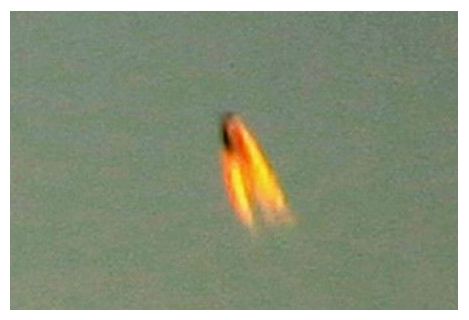
Mystery Object
© Annie HendersonA close up of the mysterious object in the sky.

Captured over the Avalon Marshes nature reserve at Shapwick Heath last Wednesday, these pictures of a curious light in the sky have many people baffled.

The pictures were snapped at the bird sanctuary by Annie Henderson who lives on the Somerset Levels.

Unlike the usual blobs of light, which can be explained away as the contrails of distant jet aircraft, Chinese sky lanterns, weather balloons or passing satellites, the distant light appears to be burning up with flaming gases shooting off its form.

Fireball 3

Fireball leaves behind long smoky trail as it crosses South Africa, 13 February 2013

13 February 2013 - George Coutouvidis, Prince Albert, Western Cape, South Africa 9:45:00
4 seconds duration. South - north direction. Bright orange head with a long smoky trail. It was as bright as the moon.
13 February 2013 - Will H., Oudtshoorn, South Africa 21:25 GMT
10-15 seconds duration. South, southeast to the north. I was facing East. Bright blue and white colour. As bright as the Moon, it looked like a shooting star, but lasted for ages and moved at great speed with a trail covering a much bigger distance than normal shooting stars.

Fireball 5

Asteroids rock! (Except when they hit you)

More than 1,000 people were injured Friday, when the largest meteor to strike the Earth in two generations disintegrated above the Russian city of Chelyabinsk, raining burning bits of rock that shattered windows and caused a panic.

Before disintegrating into thousands of meteorites, the meteor that Russians watched blazing across the sky in a burst of bright light, probably weighed around 7,700 tons and was about 49 feet across, NASA estimated.
Russian Meteor_5
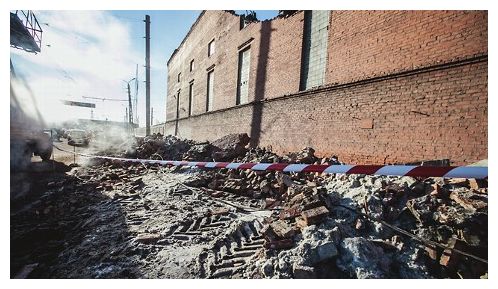
© ITAR-TASS/NewscomA zinc factory was damaged when meteorites struck the Russian City of Chelyabinsk.
Scientists call such collisions between the Earth and space rocks "impact events." While meteor showers are a common occurrence, really big impact events are rare. The bigger the rock - like the 6-mile wide meteor that killed off the dinosaurs - the less likely a collision.

Comet 2

SOTT Focus: Celestial Intentions: Comets and the Horns of Moses

[Editor's Note: With the truly alarming increase in the number of meteorites/cometary fragments entering our atmosphere over the past 10 years, and the startling meteorite detonation over Russia this morning, it is long past time that every single person on this planet informed themselves about the clear and present threat to all life on earth posed by these celestial 'visitors'. To this end, Laura Knight-Jadczyk has recently published the first in a new series of books that presents clear evidence that, not only has human history been regularly punctuated (or 'punctured') by 'rains of fire from the heavens,' we may be overdue for another round of cosmic catastrophe.

Below we present a relevant excerpt from this first new volume: Comets and the Horns of Moses (available from all Amazon web sites).]



Image
As I read through the piles of books on the archaeology, history (assumed and reasonably reconstructed from data), and especially the input from the sciences such as astronomy, geology and genetics that should accurately parallel the archaeology and history, but usually doesn't for all the reasons we've discussed so far, in order to collect the material for this series of volumes, the one thing that became increasingly apparent was that, over and over and over again this planet has been bombarded by various types of impacts, the most common being the overhead comet fragment air burst of the Tunguska type. These events have repeatedly brought cultures, nations, even civilizations, to their knees. Dark Ages are inevitably the result, and then, when human society begins to recover, myths are created, religions are born, or re-born with twists and distortions, and always and ever, the facts of the previous era of destruction are covered up in veils of metaphor and allegory.

Why? What sort of madness is this?

It is actually very simple. Historically, when a people begin to perceive atmospheric, geological, climatic disruption and all the ills that these bring on a society, including famine, plague and pestilence, they individually and collectively look to their leaders to fix things. That is where the concept of the Divine King came from to begin with: the king was supposed to be able to intercede for his people with the gods. If the king was unsuccessful with his intercession, a solution had to be found. Sacrifices were made, rituals were performed, and of course, if that didn't work, if the gods remained angry, then the king had to die. This is possibly due to a similar brain switch that drives people to seek whatever relieves the stress on their brain: if the gods are angry, find a scape-goat. And when it is the nation that is threatened, the most obvious guilty person or persons are those in charge, the king and his elite. What's more, they know their vulnerability to this reaction instinctively.

Then again, given that human history appears to be defined by a succession of more or less corrupt ruling elites, and if we are to assume that such corruption (and its spread throughout society) is the mechanism by which a civilization attracts cosmic catastrophe, blaming and deposing the elite is a good solution. The problem, however, is that the underlying mechanism is not understood by the people, which means that they lack the knowledge that, if they are to prevent further destruction, they must, at all costs, prevent the establishment of any future corrupt elite.

Fireball 5

Was Siberian meteor blast a warning of things to come?


The 10-meter-diameter chunk of rock that exploded over western Siberia yesterday had nothing to do with the 45-meter asteroid whizzing close by Earth today, scientists say. But it does provide a more dramatic reminder of the incessant rain of cosmic debris that the planet endures.

Fireball 3

SOTT Focus: Fireball explodes over Russian city: Widespread panic and structural damage, Thousand people injured

Image
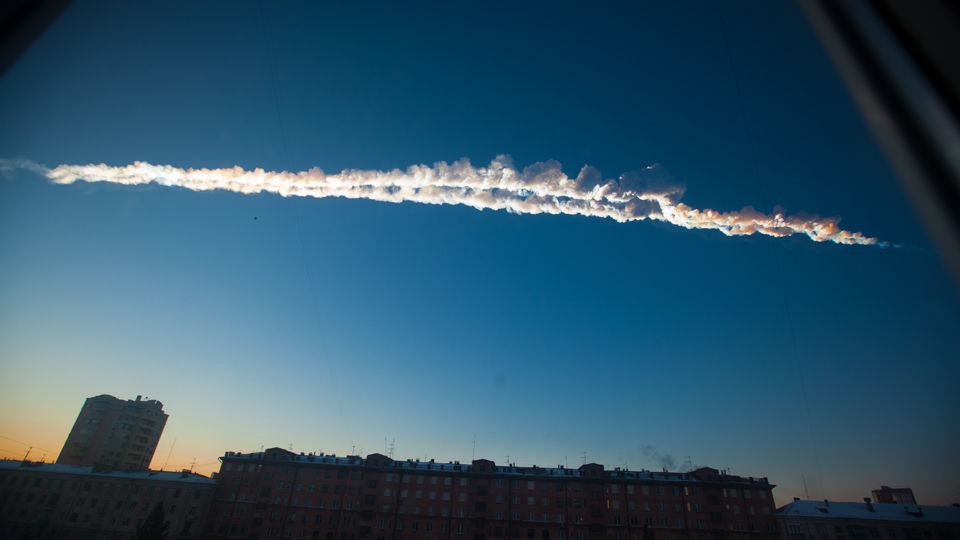
The thick plume of smoke left behind by an incoming meteor/comet fragment that exploded above Chelyabinsk, Southern Russia on Friday 15th February, 2013.
Today was supposed to be the day when we witnessed the 'closest fly-by ever' of a space rock measuring about 45 meters in diameter. Government space agencies, 'experts' and the mainstream media have spent the past few weeks reassuring us that asteroid 2012-DA14, although coming within the orbit of some satellites, would safely pass the planet by. And indeed, it probably will have done so by the time you are reading this. But while people have fixated on this asteroid, the cosmos apparently had other plans - the actual impact of a different and totally unexpected fireball... on the same day!

At 8:45am local time today, a large fireball appeared out of the clear blue sky above South-central Russia, dramatically lighting up the surrounding region before exploding with a tremendous bang as it fragmented near the city of Chelyabinsk, located east of the Ural mountains.

Multiple smaller explosions (between 5 and 6) followed the shock wave from the initial explosion as the bolide fragmented. Eyewitnesses across a wide area have also reported seeing burning objects fall to earth, suggesting that perhaps some of the later booms were sounds accompanying meteorite impacts as debris was scattered over a wide area. Witnesses described the initial explosion as being so loud that it seemed like an earthquake and thunderbolt had struck at exactly the same time. Once the immediate danger had passed, residents of Chelyabinsk reported "huge trails of smoke across the sky".

Fireball 4

Russian meteor not related to asteroid flyby, NASA confirms

Russian Meteor_1
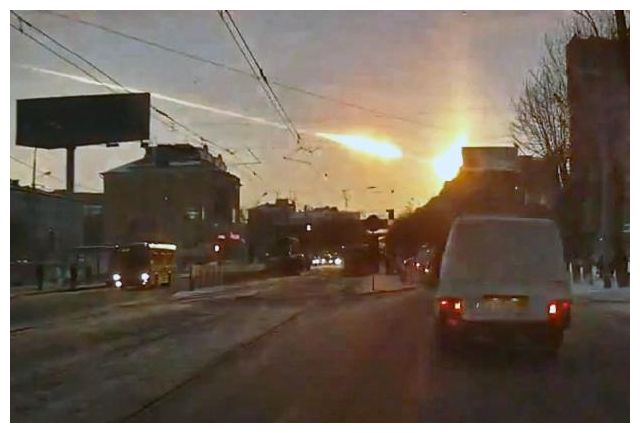
© Universe TodayA meteorite flashes across the sky over Chelyabinsk, Russia, taken from a dashboard camera.
The meteor that streaked over the skies of Russia - creating a shockwave that shattered windows, injuring upwards of 1,000 people - is not related to the asteroid that will whiz past Earth later today, (Feb.15), NASA has confirmed.

As many of our readers have noted in comments on our previous story on the Russian meteor, the trajectory of the Russian meteorite was significantly different than the trajectory of the asteroid 2012 DA14, making it a completely unrelated object.

Fireball

Meteor fall 'injures hundreds' in central Russia


A meteor crashing in the Urals of central Russia has reportedly injured at least 400 people, as the shockwave blew out windows and rocked buildings.

Most of those hurt suffered minor cuts and bruises but some received head injuries, Russian media report.

A fireball was seen streaking through the sky above the city of Yekaterinburg, followed by loud bangs.

The meteor is believed to have landed in a lake near Chebarkul, a town in the neighbouring Chelyabinsk region.

Much of the impact was felt in the city of Chelyabinsk, some 200km (125 miles) south of Yekaterinburg.

"We saw a big burst of light, then went outside to see what it was and we heard a really loud thundering sound," Chelyabinsk resident Sergey Hametov told AP news agency by phone.

Fireball

Enormous daytime fireball explodes over central Russia: sparks panic in the Urals

A series of explosions in the skies of Russia's Urals region, reportedly caused by a meteor shower, has sparked panic in three major cities. Witnesses said that houses shuddered, windows were blown out and cellphones stopped working.

"According to preliminary data, the flashes seen over the Urals were caused by [a] meteorite shower," the Emergency Ministry told Itar-Tass news agency