OF THE
TIMES


Wide swatch CME now visible in updated LASCO C3 imagery. More to come. pic.twitter.com/FxxP9RHTFhForecasters don't yet know when the solar storm - which erupted from the Sun's surface late Wednesday - will arrive here or which part of the planet will be facing the brunt of the effects. It could arrive as early as this afternoon Australian time, or may take a few days.
- SolarHam (@SolarHam) September 10, 2014
Major X1.6 solar flare observed around region 2158. A fast moving CME likely associated and possibly Earth directed.pic.twitter.com/DsKsrZ74DIScientists will have a better idea after they get more satellite data. Solar flares in the "extreme" scale can cause geomagnetic storms capable of bringing down power grids, damaging satellites and disrupting radio transmissions. More often, the only effect is to brighten the auroras over the north and southern hemispheres.
- SolarHam (@SolarHam) September 10, 2014
Sailing through an #Aurora into #Sunrise. #SpaceVine#Timelapse. https://t.co/y5xGBLxWtQ
- Reid Wiseman (@astro_reid) September 9, 2014
There has been a significant increase in the discovery of asteroids in recent decades. In 1980, there were 9,000 known asteroids in the solar system. By 2000, there were 86,000. By 2007, there were 380,000. As of 2013, the International Astronomical Union's Minor Planet Center had data on 1.1 million asteroids.
Of the 1.1 million asteroids known in 2013, NASA announced the discovery of the 10,000th NEO - Near Earth Objects on Earth-crossing orbits - in June 2013. An alarming number especially when we know that most NEOs are discovered just as they fly past Earth, and very often inside lunar distance. Other estimates place between 100,000 and 1,000,000 more undiscovered NEOs on similar Earth-crossing orbits, increasing the current estimated total range of asteroids in the solar system to 100 million.
The number of discovered comets has also increased in recent years. While newly discovered comets were virtually nil at the beginning of the 1990s (for example, only one comet was discovered in 1995, namely 1995 O1 Hale-Bopp), by 2000 over 150 new comets were being discovered per year, a figure that increased to 265 by 2009. Note that the figures between 2009 and 2013 are not yet finalized. Once updated, I fully expect the final count for those years to be higher than the current count.
Rather appropriately, 2013 was declared the 'Year of the Comets', with a high number of active comets in the Sun's vicinity. By November 21st, 17 comets were visible with a small telescope, of which five exhibited a magnitude between +4 and +7.5 - meaning they could be seen with binoculars - and two of which (ISON and Encke) could be seen with the naked eye.
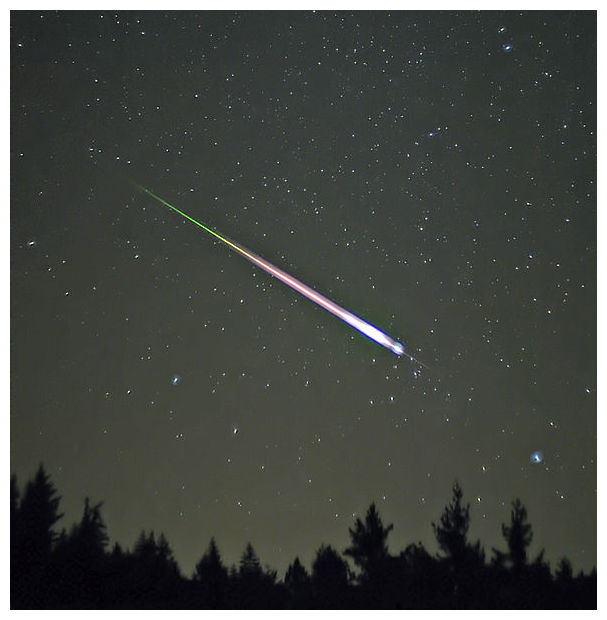
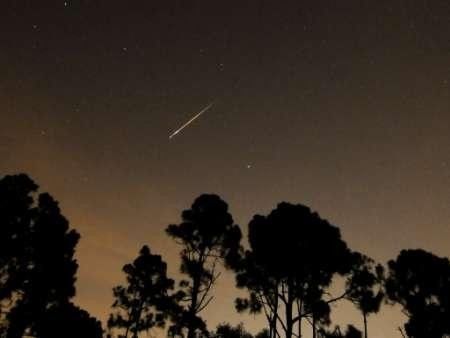
Remember, these are only the identified comets, bright enough to be observed at a long distance. Most 'comets' remain invisible (as 'asteroids') until they start glowing as a result of the heliosphere-induced electric stress they experience when they enter the solar system. If the exceptional fireball events in 2013 were anything to go by, 2014 may have even more celestial surprises in store for us.
Comment: See also: Thousands of people in California lose power after truck crash and meteor flash