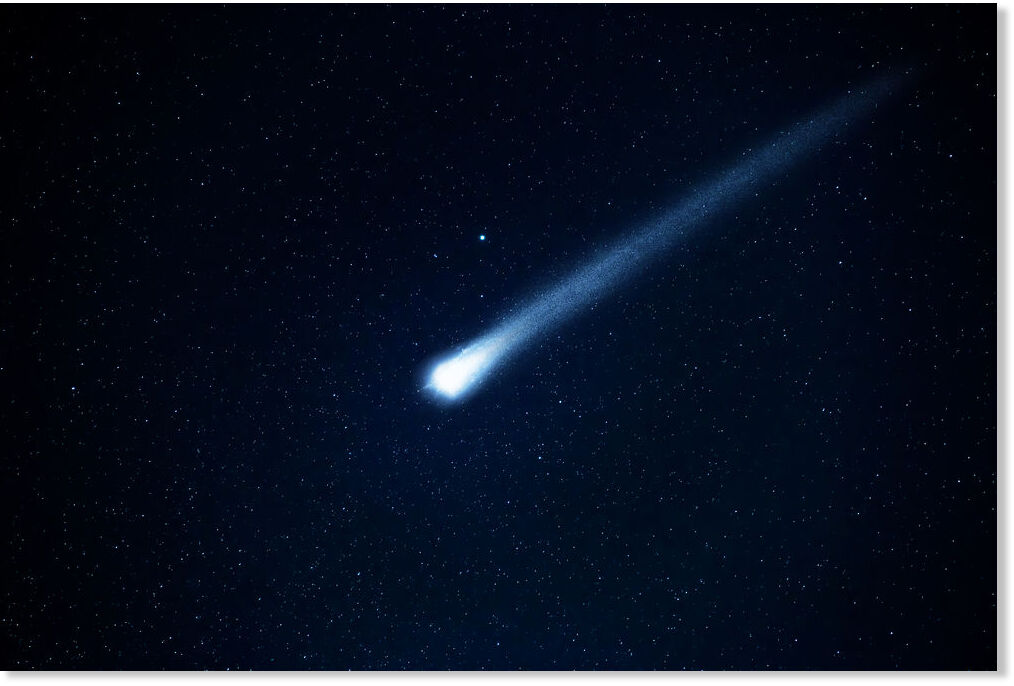
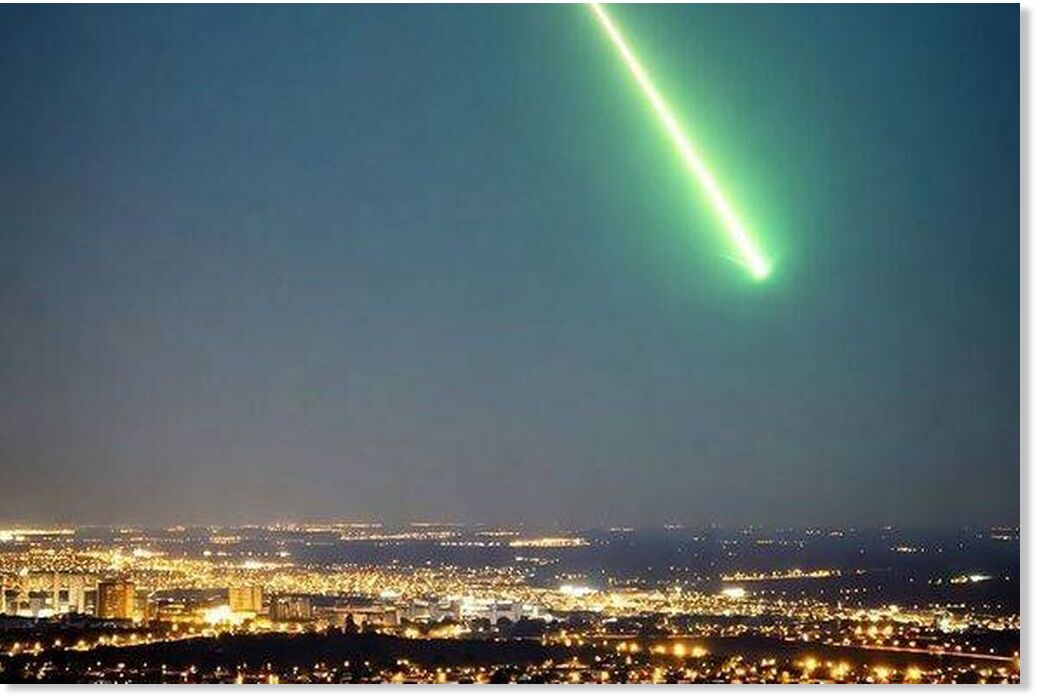
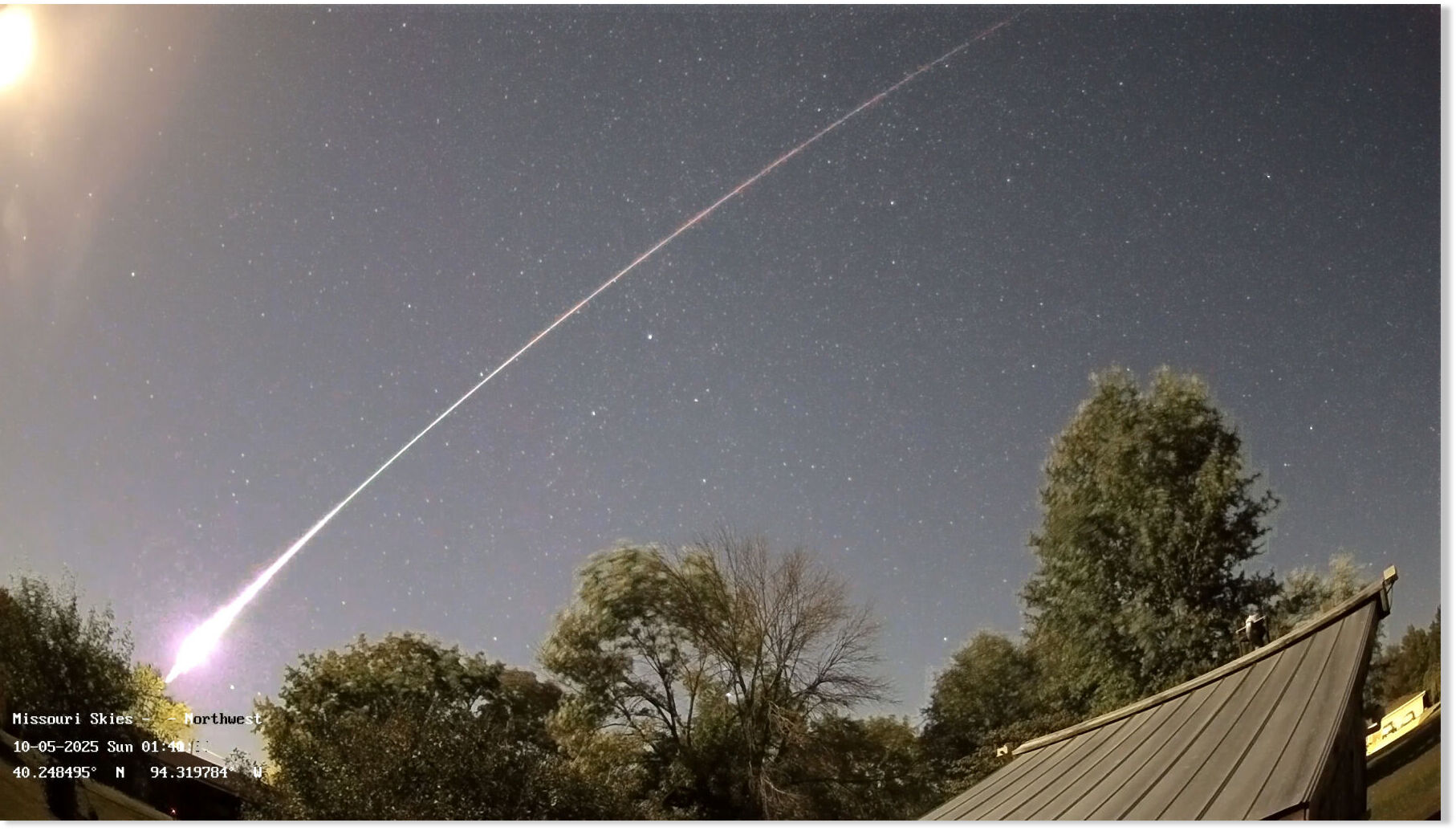
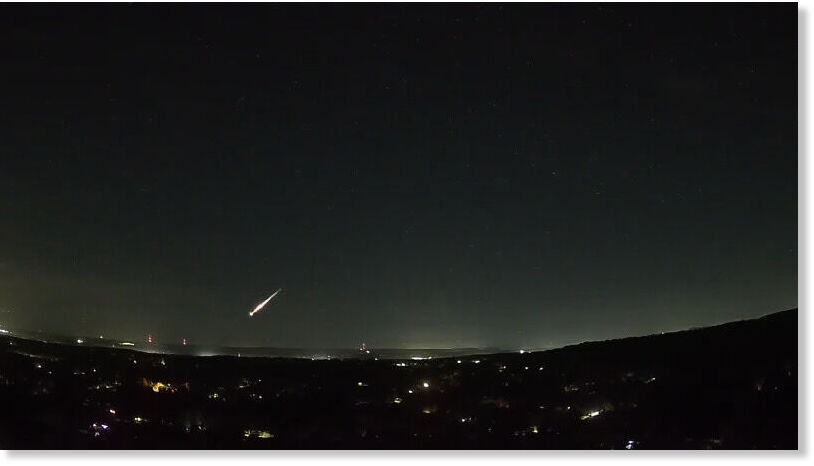
We received 89 reports about a fireball seen over Bretagne, Centre-Val de Loire, England, Grand Est, Hauts-de-France and Normandie on Tuesday, October 7th 2025 around 19:09 UT.
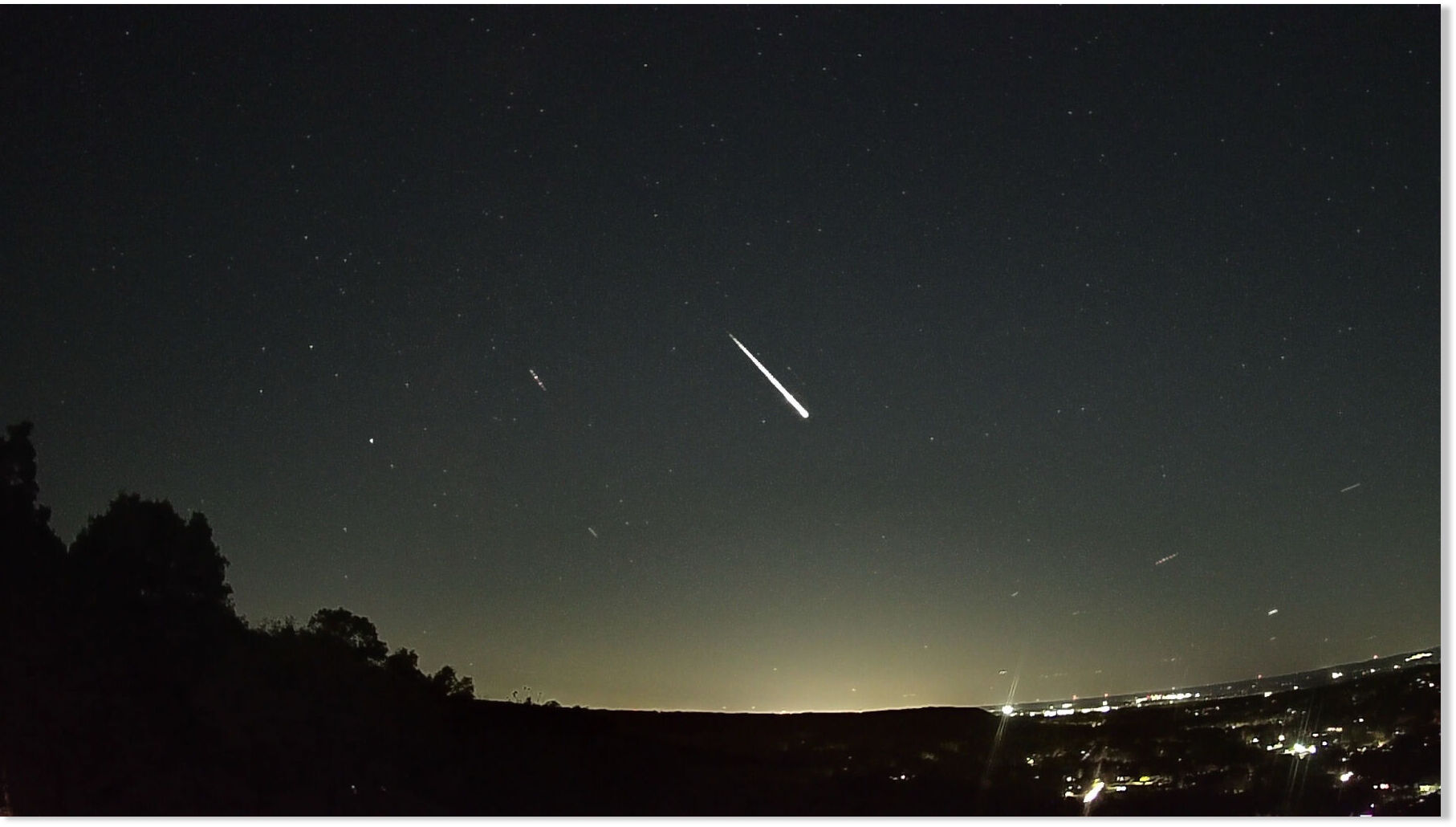
This video shows a stunning bolide recorded over Spain on October 6, at 2:44 local time (equivalent to 0:44 universal time). It was as bright as the full Moon. The event was generated by a rock (a meteoroid) from a comet that hit the atmosphere at about 127,000 km/h. The fireball overflew the provinces of Badajoz, Ciudad Real and Córdoba. It began at an altitude of about 104 km over the locality of Fuenlabrada de los Montes (province of Badajoz), moved southeast, crossed Ciudad Real, and ended at a height of around 29 km over the locality of Guijo (province of Córdoba).
This bright meteor was recorded in the framework of the SMART project, operated by the Southwestern Europe Meteor Network (SWEMN) from the meteor-observing stations located at Huelva, La Hita (Toledo), Calar Alto, Sierra Nevada, La Sagra (Granada), and Sevilla. The event has been analyzed by the principal investigator of the SMART project: Dr. Jose M. Madiedo, from the Institute of Astrophysics of Andalusia (IAA-CSIC). Its code in the SWEMN database is: SWEMN20251006_004434.
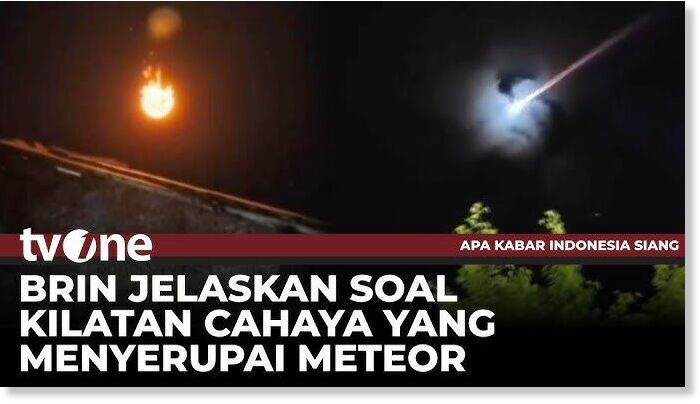
A large meteor entering Earth's atmosphere and falling into the Java Sea on October 5 evening caused a bright fireball and loud explosion that startled residents in parts of Cirebon city, West Java province of Indonesia, according to the National Research and Innovation Agency (BRIN).
The meteor reportedly traversed the skies over Kuningan and Cirebon from the southwest between 18:35 and 18:39 (local time) before crashing into the Java Sea.
Several security cameras also captured the glowing object around 18:35, while the Cirebon office of the Meteorology, Climatology, and Geophysics Agency (BMKG)'s ACJM seismic sensor picked up significant ground vibrations at the same moment.
Astronomy professor Thomas Djamaluddin emphasised that the explosions and lights observed by the public posed no danger. He explained that the loud booming sound was generated as the meteor entered the lower atmosphere.
In the coming time, BRIN will continue analysing data from observation stations and satellites to accurately determine the meteorite's size, trajectory, and impact location. So far, there have been no signs of meteorite debris falling in residential areas.
This video shows a striking bolide recorded from Spain on October 5, at 1:56 local time (equivalent to 23:56 universal time on October 4). It was as bright as the full Moon. The event was generated by a rock (a meteoroid) from a comet that hit the atmosphere at about 115,000 km/h. The fireball overflew the provinces of Cuenca and Valencia. It began at an altitude of about 111 km over the locality of Garaballa (province of Cuenca), moved southeast, and ended at a height of around 69 km over the locality of Teresa de Cofrentes (province of Valencia).
This bright meteor was recorded in the framework of the SMART project, operated by the Southwestern Europe Meteor Network (SWEMN) from the meteor-observing stations located at Huelva, La Hita (Toledo), Calar Alto, Sierra Nevada, La Sagra (Granada), Sevilla, and Otura (Granada). The event has been analyzed by the principal investigator of the SMART project: Dr. Jose M. Madiedo, from the Institute of Astrophysics of Andalusia (IAA-CSIC). Its code in the SWEMN database is: SWEMN20251004_235613.