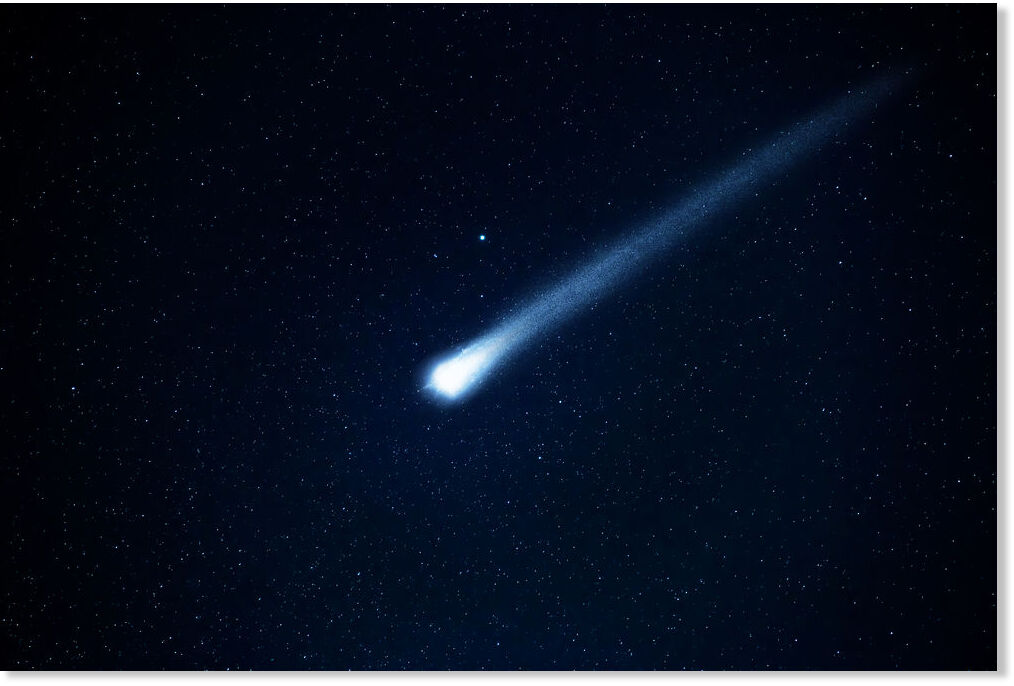
A fireball with an impact energy of 0.38 kilotons (380 tons of TNT equivalent) was detected at 22:26 UTC on September 13, 2025, at an altitude of 22.8 km (14.2 miles) over central Argentina. The event was observed from multiple provinces and produced a persistent trail and visible fragmentation.
A bright fireball was detected at 19:26 local time (22:26 UTC) on September 13, over central Argentina.
The object entered the atmosphere near latitude 38.0°S and longitude 64.8°W, at an altitude of 22.8 km (14.2 miles), releasing an estimated 0.38 kilotons (380 tons of TNT equivalent) of energy, according to NASA's Center for Near Earth Object Studies (CNEOS).
The International Meteor Organization (IMO) received two reports submitted from observers in Bahía Blanca, Buenos Aires Province, and Puerto Madryn, Chubut Province.
Observers described the fireball as extremely bright, with magnitudes between −5 and −6. One report noted a white terminal flash with fragmentation and a persistent incandescent trail lasting about 90 seconds. Another described a large explosion-like flash and a red cloud that remained visible for several minutes.
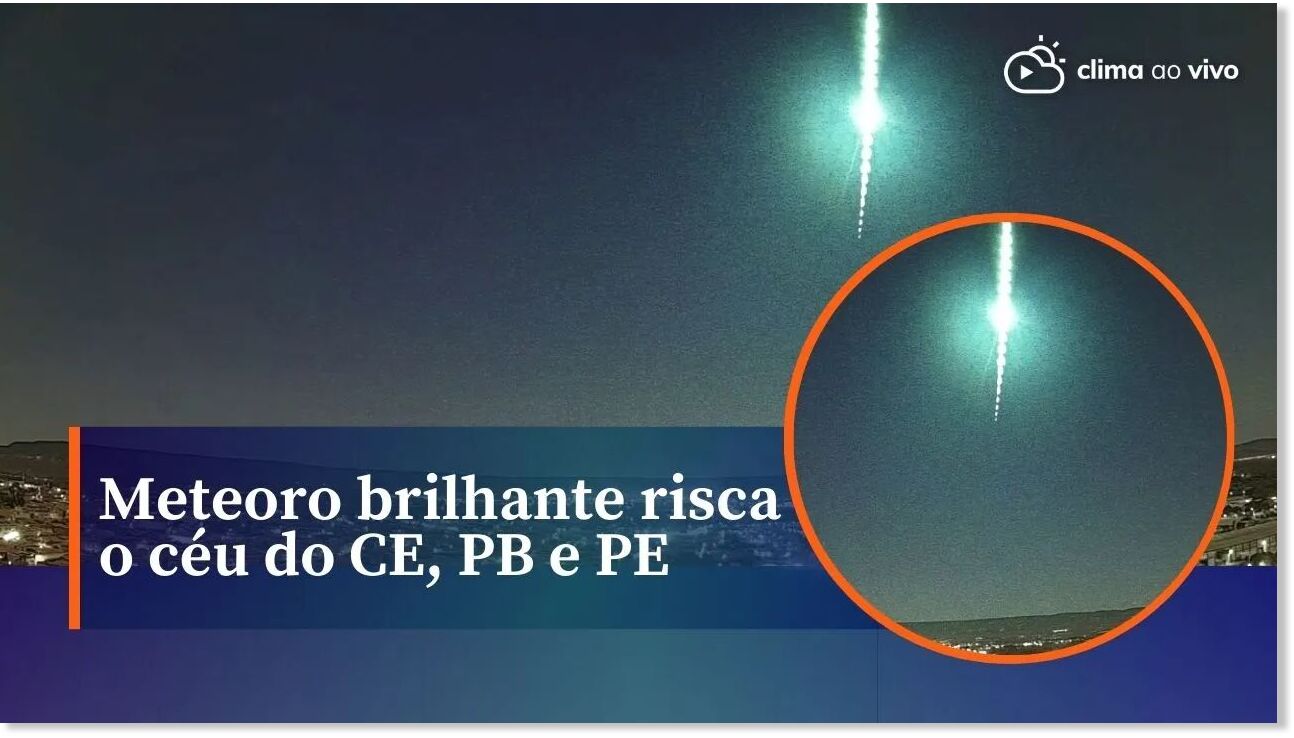
Clima ao Vivo cameras recorded a meteor that occurred during the night of this Thursday (11), which streaked across the sky of some cities in PE, PB and CE.
A bright daylight fireball was recorded at 17:49 UTC (14:49 LT) on September 9, 2025, over the Atlantic Ocean, off the northeastern coast of Brazil. NASA's CNEOS data show the object released 0.44 kilotons of impact energy at an altitude of 24 km (15 miles). IMO and AMS received 10 reports from Ceará, with witnesses describing orange to blue colors, persistent trails, fragmentation, and sounds ranging from faint hissing to thunder-like booms.
The event is confirmed by instrumental detection, satellite imagery, and eyewitness accounts, consistent with a low-altitude bolide airburst visible in broad daylight across Ceará.
A bright daylight fireball was recorded at 17:49 UTC (14:49 local time) on September 9, over the Atlantic Ocean, off the coast of Ceará State, northeastern Brazil. The event was registered at coordinates 2.3°S, 39.5°W.
NASA's Center for Near-Earth Object Studies (CNEOS) measured the object at a peak altitude of 24 km (15 miles). Its velocity was calculated at 20.7 km/s (74 520 km/h or 46 300 mph). The total radiated energy was 1.53 x 10¹¹ J, corresponding to an impact energy of 0.44 kilotons TNT equivalent.
This bright bolide was spotted from Spain on September 4, at 0:38 local time (equivalent to 22:38 universal time on September 3). The event was generated by a rock (a meteoroid) from an asteroid that hit the atmosphere at about 99,000 km/h. The fireball overflew the province of Cuenca. It began at an altitude of about 98 km over Villaverde y Pasaconsol (province of Cuenca), moved northwest, and ended at a height of around 52 km over Horcajada de la Torre (province of Cuenca).
This bright meteor was recorded in the framework of the SMART project, operated by the Southwestern Europe Meteor Network (SWEMN) from the meteor-observing stations located at Huelva, La Hita (Toledo), Calar Alto, Sierra Nevada, La Sagra (Granada), Sevilla, and Otura (Granada). The event has been analyzed by the principal investigator of the SMART project: Dr. Jose M. Madiedo, from the Institute of Astrophysics of Andalusia (IAA-CSIC). Its code in the SWEMN database is: SWEMN20250903_223820.