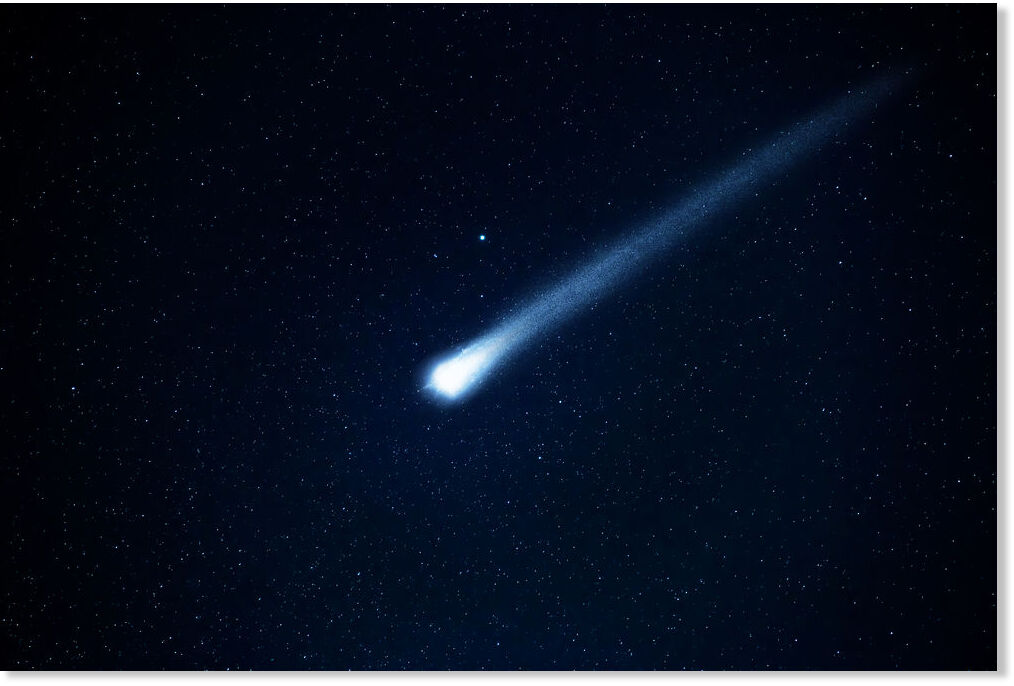
We received 41 reports about a fireball seen over Aragón, Auvergne-Rhône-Alpes, Île-de-France, Bretagne, Catalonia, Cataluña, Centre-Val de Loire, Hauts-de-France, Lombardia, Normandie, Nouvelle-Aquitaine, Occitanie and Pays de la Loire on Friday, October 24th 2025 around 20:40 UT.
Residents in the central and eastern provinces of Thailand witnessed a bright orange-yellow fireball streaking across the sky on Sunday (Oct 26) morning.
Several social media users reported the sightings followed by a sonic boom at around 12.30am.
According to the UK's Royal Museums Greenwich, the Orionid meteor shower is active from Oct 2 to Nov 7.
The museum added that the while the meteor shower would have peaked on the night of Oct 22, it should be observable "for several days on either side of this 'maximum' date".
Object's trajectory and disintegration into sparks align with typical fireball behaviour
Cameras captured a bright green object streaking across the night sky over Moscow, Russia, on October 27, 2025.
Early morning commuters and residents across Moscow observed a mysterious celestial display on Monday.
The vivid green colour and trailing sparks suggest it was a significant fireball event, similar to the 2013 Chelyabinsk meteor, which also occurred in Russia and caused widespread attention due to its brightness and the damage it inflicted, as reported on social media, including geologist Sergio Almazan.
This video shows a bolide recorded from Spain on October 23, at 6:03 local time (equivalent to 4:03 universal time). It was brighter than the full Moon. The event was generated by a rock (a meteoroid) from a comet that hit the atmosphere at about 231,000 km/h. The fireball overflew Algeria, but because of its high luminosity it could be seen from a distance of over 800 km. It began at an altitude of about 122 km over the locality of Moughel (Algeria), moved southwest, and ended at a height of around 73 km over the locality of Boukais (Algeria).
This bright meteor was recorded in the framework of the SMART project, operated by the Southwestern Europe Meteor Network (SWEMN) from the meteor-observing stations located at Calar Alto, Sierra Nevada, La Sagra (Granada), Sevilla, and Mazagón. The event has been analyzed by the principal investigator of the SMART project: Dr. Jose M. Madiedo, from the Institute of Astrophysics of Andalusia (IAA-CSIC). Its code in the SWEMN database is: SWEMN20251023_040320.