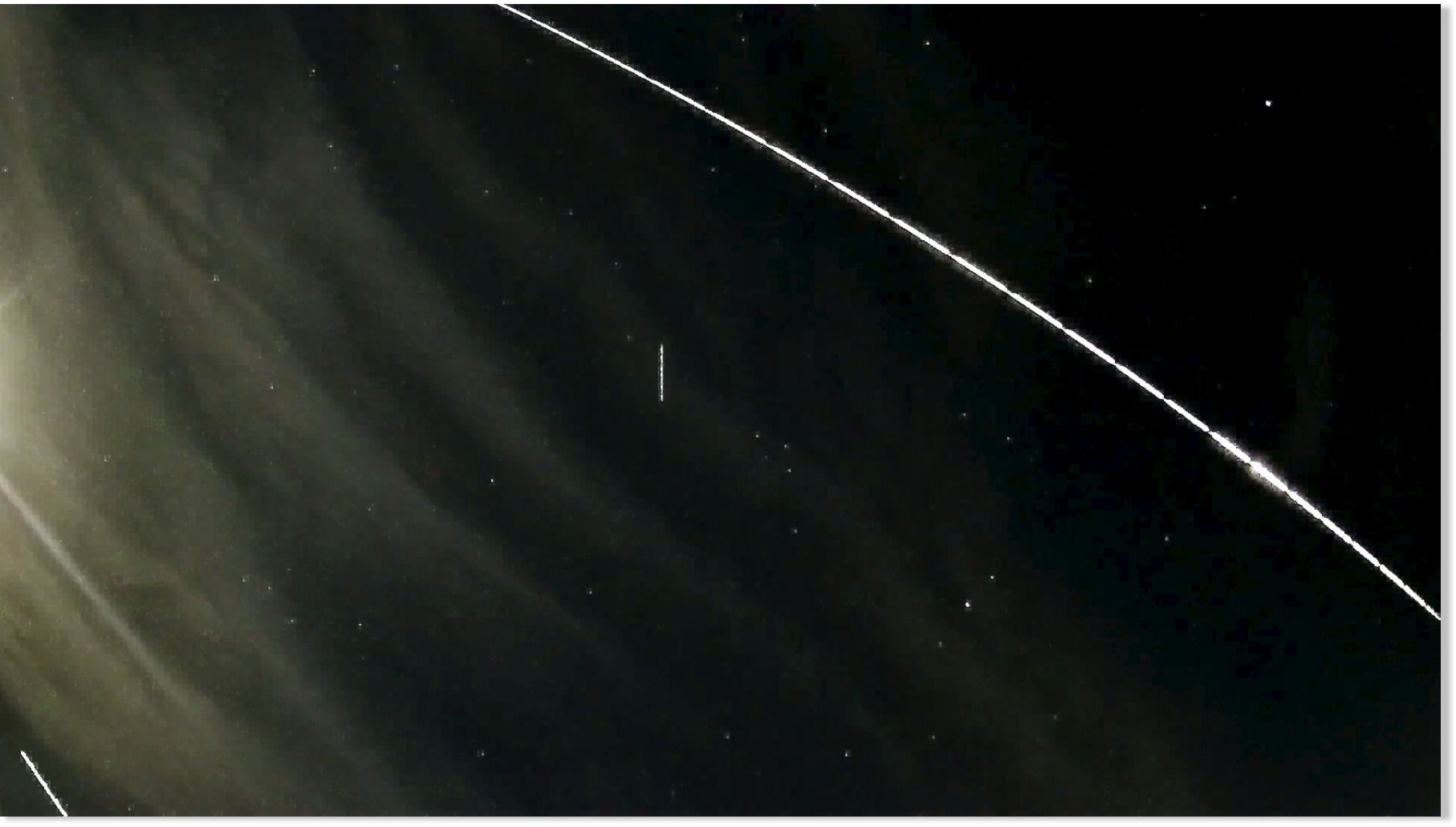
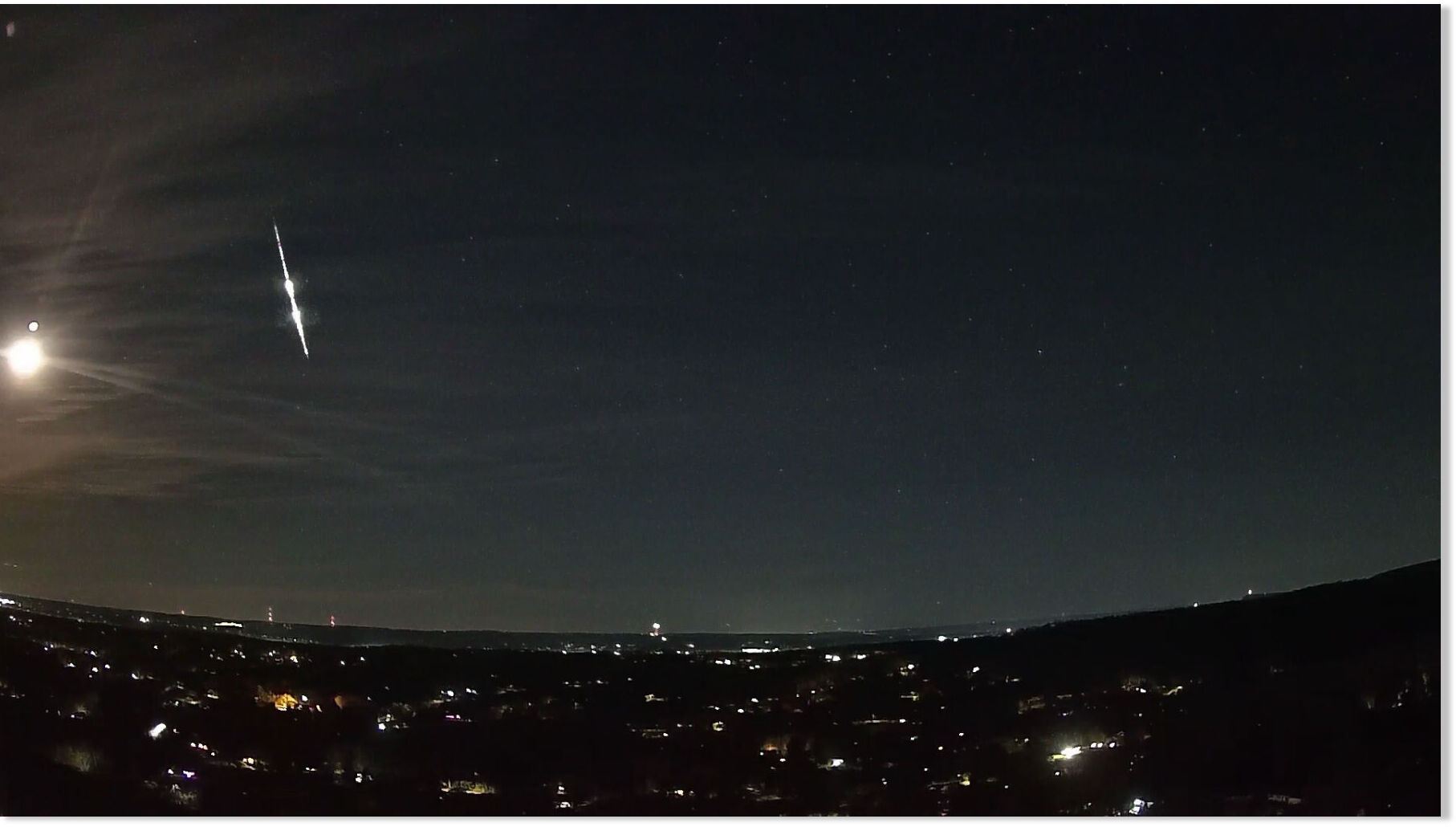
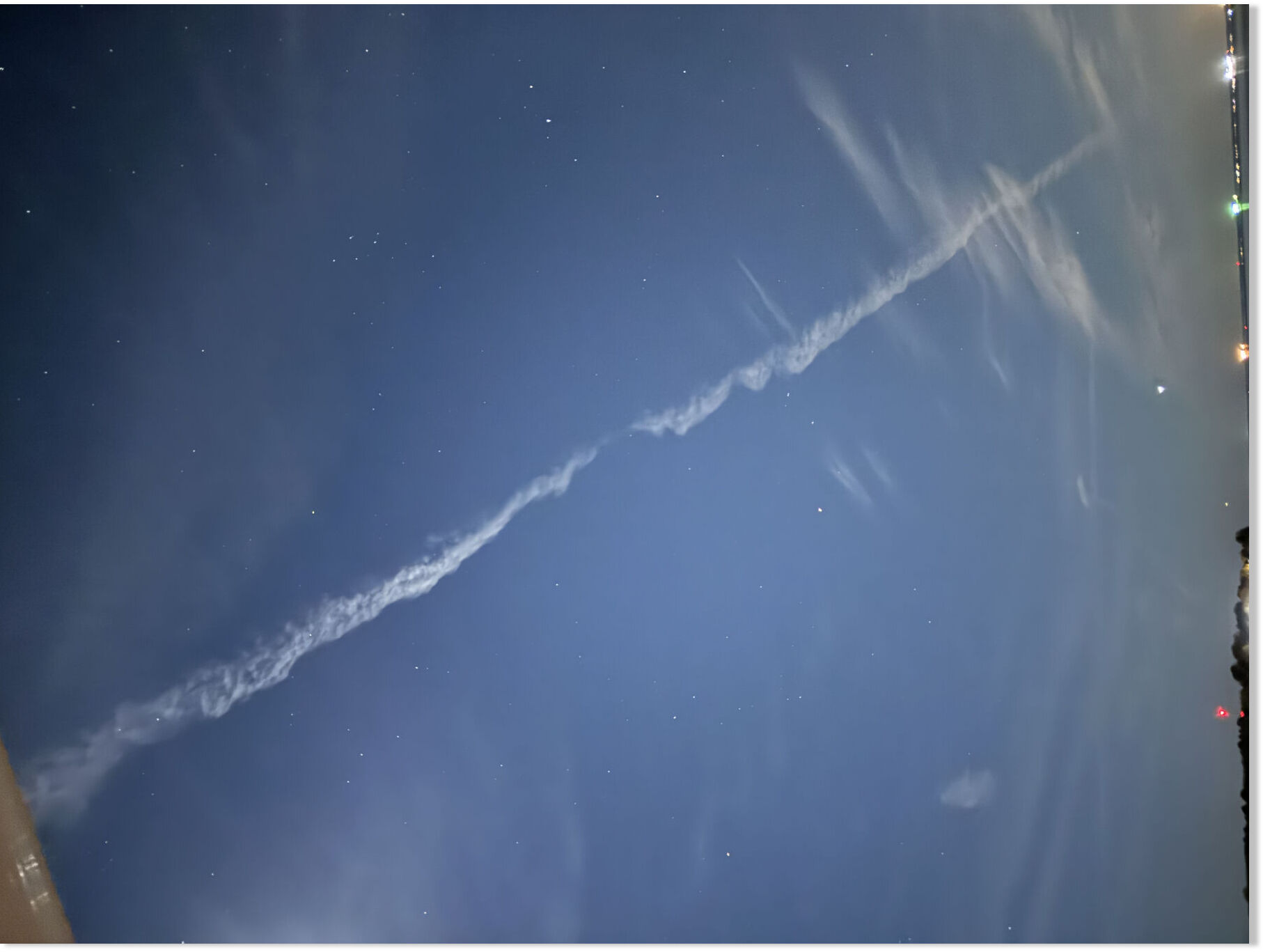
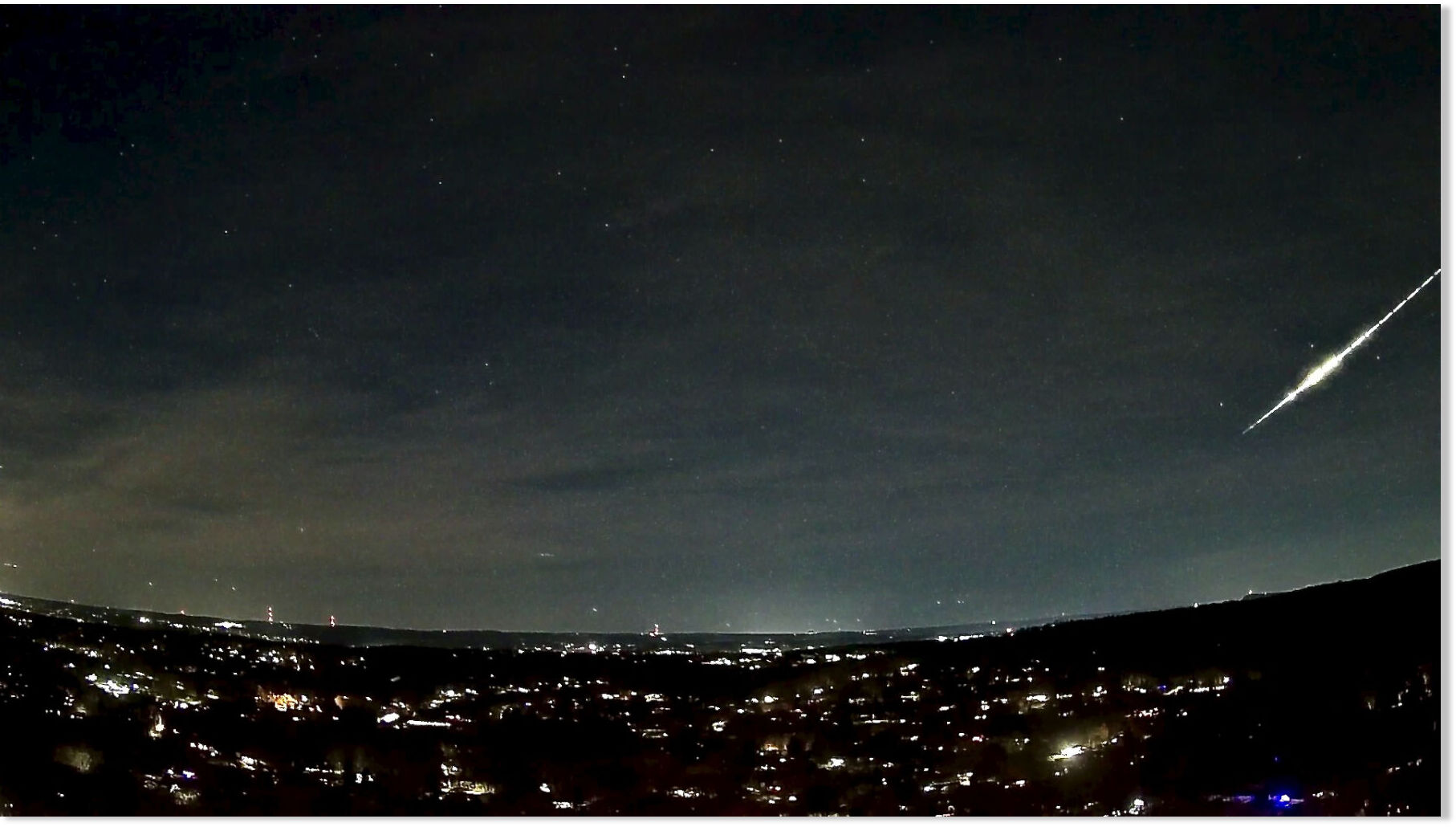
This bright bolide was spotted from Spain on November 2, at 2:29 local time (equivalent to 1:29 universal time). The event was generated by a rock (a meteoroid) from a comet that hit the atmosphere at about 264,000 km/h. The fireball overflew Algeria and the Mediterranean Sea. It began at an altitude of about 131 km over Douar el Hasasna (Algeria), moved northwest, and ended at a height of around 81 km over the Mediterranean Sea.
This bright meteor was recorded in the framework of the SMART project, operated by the Southwestern Europe Meteor Network (SWEMN) from the meteor-observing stations located at La Hita (Toledo), Calar Alto, Sierra Nevada, La Sagra (Granada), Sevilla, and Otura (Granada). The event has been analyzed by the principal investigator of the SMART project: Dr. Jose M. Madiedo, from the Institute of Astrophysics of Andalusia (IAA-CSIC). Its code in the SWEMN database is: SWEMN20251102_012928.
Michael Dahlstrom Yahoo! News Mon, 03 Nov 2025 16:07 UTC
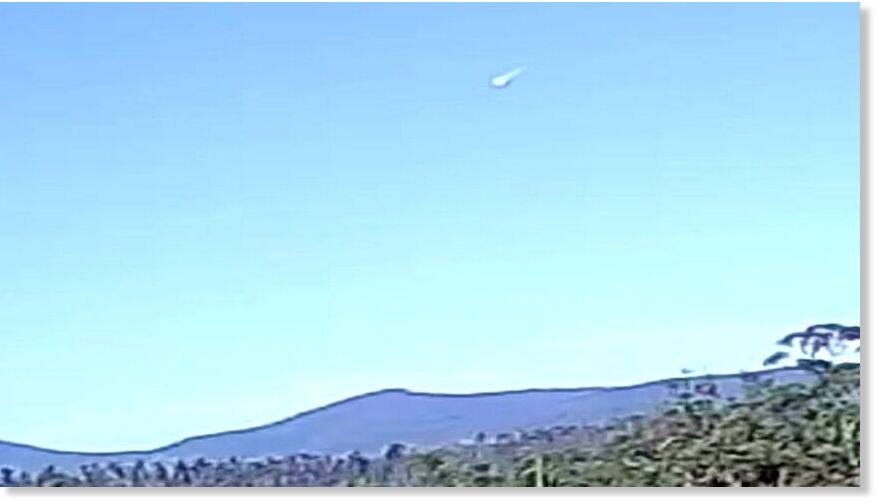
A suspected meteor lit up Gippsland on Sunday afternoon.
Although meteors fall at the same frequency during day and night, they've got to be incredibly bright to be seen when the sun is shining.
The one witnessed by this reporter in the Victorian coastal town of Inverloch on Sunday afternoon was no exception. Its blinding white head, followed by a yellow tail, appeared in the sky for two spectacular seconds, and then disappeared behind bushland.
Although the meteor appeared close by, it was likely 80km above the Earth, meaning it could be seen in multiple towns over much of the sprawling Gippsland region and even in outer Melbourne. Reports suggest it may have hit the ocean or the ground near the holiday town of Lakes Entrance, over 200km northeast from Inverloch. Associate Professor Michael Brown, an astronomer at Monash University, explained it's hard for witnesses to determine how close meteors are.
This bright bolide was spotted from Spain on November 1, at 21:49 local time (equivalent to 20:49 universal time). The fireball was observed by a wide number of casual eyewitnesses, who reported it on social networks.
The event was generated by a rock (a meteoroid) from Asteroid 2004 TG10 that hit the atmosphere at about 116,000 km/h. The fireball overflew the provinces of Córdoba and Sevilla (Spain). It began at an altitude of about 105 km over Encinarejo de Córdoba (province of Córdoba), moved west, and ended at a height of around 61 km over Constantina (province of Sevilla).
This bright meteor was recorded in the framework of the SMART project, operated by the Southwestern Europe Meteor Network (SWEMN) from the meteor-observing stations located at Huelva, La Hita (Toledo), Calar Alto, Sierra Nevada, La Sagra (Granada), Sevilla, and Mazagón. The event has been analyzed by the principal investigator of the SMART project: Dr. Jose M. Madiedo, from the Institute of Astrophysics of Andalusia (IAA-CSIC). Its code in the SWEMN database is: SWEMN20251101_204956.
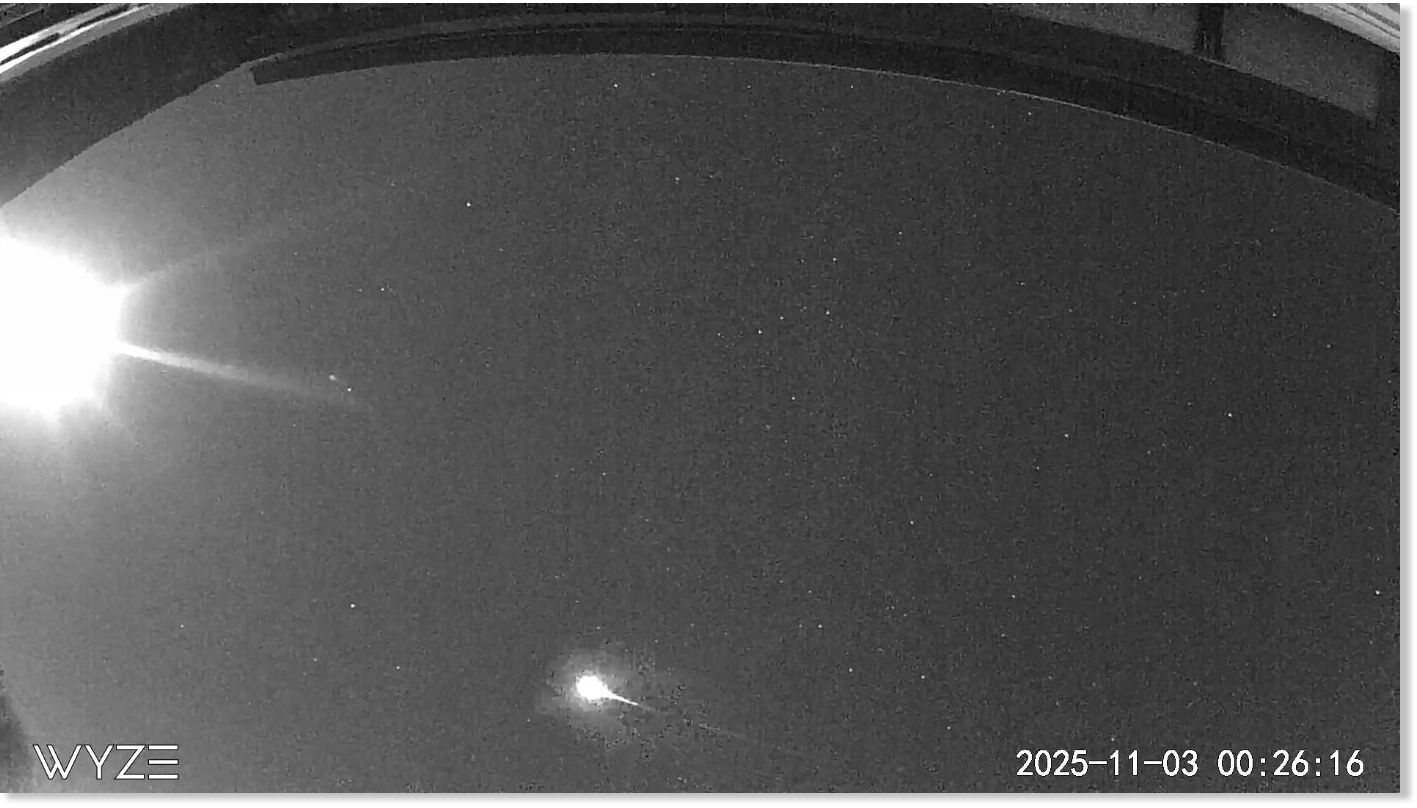
We received 45 reports about a fireball seen over CT, MA, MD, ME, NY, NH, NJ, Ontario, PA, Québec, VT and WV on Monday, November 3rd 2025 around 05:30 UT.
For this event, we received 5 videos and 3 photos.