Puppet MastersS


Arrow Up

Best of the Web: Where new JFK evidence points

Media specials are on tap for the 50th anniversary of John F. Kennedy's murder, but none will explore the troubling new evidence that has been declassified in recent years - and that undercuts the Official Story of the Lone Gunman.

JFK Motorcade
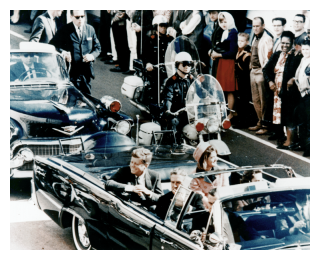
© Walt Cisco, Dallas Morning NewsPresident John F. Kennedy in the motorcade through Dallas shortly before his assassination on Nov. 22, 1963.
In late 1991, film director Oliver Stone released JFK, his film about the investigation of the murder of President John F. Kennedy by New Orleans District Attorney Jim Garrison. To say the film was controversial does not begin to describe the furor which surrounded its reception. Six months before the film was in theaters, stories began to appear in large newspapers criticizing a film no one had seen yet.

When the film was finally shown, there was an interesting dichotomy. Whereas most of the film critics liked it, editorials and news stories about the movie attacked it. One critic actually lost her job over a positive review of the film.

But the film did two things relevant to the state of the evidence in the matter of President Kennedy's assassination on Nov. 22, 1963. At the end of his film, Stone had shown a title card saying that the files of the House Select Committee on Assassinations (HSCA) had been classified until the year 2029.

Embarrassed - and faced with public outrage - Congress held hearings. Many people testified including Stone, and the last chief counsel of the HSCA, Robert Blakey. As a result, the Assassination Records Review Board (ARRB) was created, tasked with finding and releasing all documents held by public and private entities in America concerning the murder of President Kennedy. Eventually, two million pages of classified files were open to the public.

The second thing the film did was arouse the curiosity of many people who were not aware of the evidentiary problems that had haunted the Kennedy case for nearly 30 years. Stone's film was the first time in over a decade that millions of Americans had been exposed to things like the Zapruder film, Oswald's odd relationships with the FBI and CIA, his associations with right-wingers in Dallas and New Orleans, the investigative failings of the Warren Commission, the problems with the autopsy of President Kennedy, and much, much more.

These new people who were drawn into the case had fresh perspectives to offer and new insights. Between the newly declassified documents and this new generation of writers, the information base about both Kennedy and his murder grew exponentially in a relatively short time.

But this week's 50th anniversary of President Kennedy's assassination will be marked almost entirely by television specials that will be silent about this new and plentiful information, which alters the calculus of the Kennedy case. That is because, despite the uproar created by Stone's film, the defenders of the Warren Commission's narrative circled the wagons and protected the Establishment's preferred solution to the assassination - that Lee Harvey Oswald acted alone.

Dollar

End the 1 percent's free ride: Taxing land would solve America's biggest problems

Image
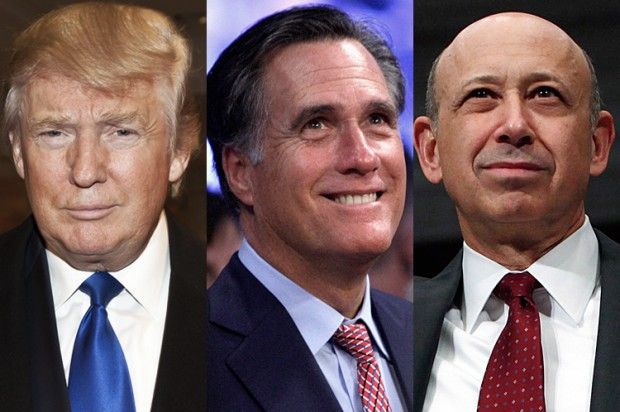
© Lev Radin via Shutterstock/Reuters/Steve Marcus/Jim Young/SalonDonald Trump, Mitt Romney, Lloyd Blankfein

Appealing to the overwhelming majority of Americans who believe the tax code is so complex that it needs "major changes or a complete overhaul," Senate Finance Committee Chairman Max Baucus, D-Mont., and House Ways and Means Committee Chairman Dave Camp, R-Mich., have adorably started a joint Twitter handle: @simplertaxes. The bipartisan love fest is no doubt a heartfelt effort, but not very convincing from men who acquired the fancy titles by opening and maintaining loopholes for the ownership class. Baucus' hot-off-the-presses tax reform proposals predictably simplify the code very little.

At present, neither party advocates the tax code so elegant it can reduce inequality, mitigate poverty, stimulate productivity, prevent asset price bubbles, stem community-shredding gentrification and drain the distended Wall Street cabal of its ill-gotten gains - in just one tax.

Land value. If we want a real overhaul/simplification of the tax code, the way to do it is to tax land value. It might be the only tax we need. No sales tax. No income tax. No payroll tax to fill a Social Security trust fund. No corporate income tax that, as we can plainly see, offshores profits. No need to tax labor and industry at all. Just tax the stuff that humans had nothing to do with creating, and therefore have no basis to claim ownership over at all. You'll find that almost all of it is "owned" by the fabled 1 percent.

Question

Best of the Web: JFK Denialism: Why does mainstream media refuse to ask the real questions about his death?

Image
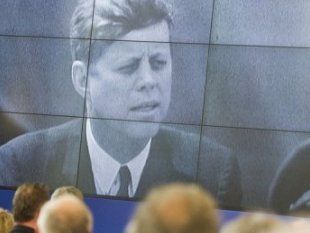
Guests watch a JFK speech at a ceremony commemorating the 50th anniversary of his Cold War declaration "Ich bin ein Berliner", on June 26, 2013.
Questions about the official story are derided as "conspiracy theories" by journalists who'd rather talk about fashion.

Every day, people are charged with criminal conspiracy in courtrooms around the country. In those cases, a "conspiracy" merely describes a criminal act involving two or more individuals. Also every day, the establishment media reports on various criminal conspiracies - including racketeering, insider trading, political corruption, sex scandals and murder plots.

Murder plots are their favorite, particularly when a husband or wife or crazed lover hires an assassin to knock off a troublesome or inconvenient spouse for personal gain. The details and facts of those conspiracies attract a great deal of attention from journalists and news personalities who pore over police blotters, always looking for a good hook to a shocking story with "legs" and, therefore, a long life with lots of details and great ratings.

Yet, over the last 50 years, the simple, descriptive word "conspiracy" has taken on a double life. On one hand, a feverish "true crime" obsession has spread around the news business, turning newsmagazine shows into banal police procedurals, and transforming entire cable broadcasts into tabloid mimics fixated upon mysteries, cover-ups and conspiracies.

Comment: The reason the official spokespeople of the current regime engage in denialism is simple: those who killed Kennedy are the current regime.


Bad Guys

BBC: Belfast undercover soldiers 'killed unarmed civilians'


The BBC's Panorama programme has uncovered evidence that soldiers from a secret unit used by the British Army during the Troubles in the early 1970s, shot unarmed civilians.

Take 2

United States can spy on Britons despite pact, N.S.A. memo says

The National Security Agency is authorized to spy on the citizens of America's closest allies, including Britain, even though those English-speaking countries have long had an official non-spying pact, according to a newly disclosed memorandum.

The classified N.S.A. document, which appears to be a draft and is dated January 2005, states that under specific circumstances, the American intelligence agency may spy on citizens of Britain without that country's consent or knowledge. The memo, provided by the former N.S.A. contractor Edward J. Snowden, is labeled secret and "NOFORN," indicating that it may not be shared with any foreign country.

In recent months, the N.S.A.'s activities have stoked anger across the world after leaked documents have exposed American spying on political and economic partners like Germany and France, as well as various foreign leaders. But until now, there has been almost nothing disclosed about spying among the "Five Eyes" countries - the United States and its close intelligence partners Britain, Canada, Australia and New Zealand.

Attention

Senate Democrats drop the 'nuclear option' on Republicans and limit filibusters

Harry Reid
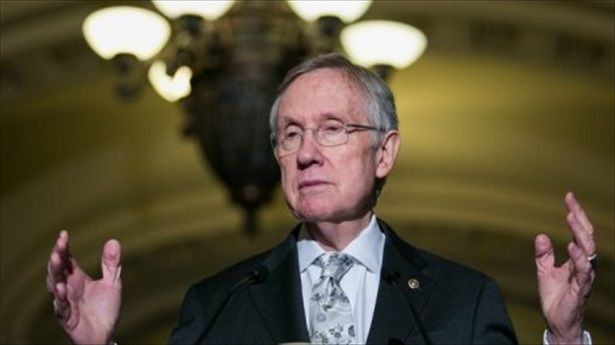
© Agence France-PresseSenate Majority Leader Harry Reid (D-NV) speaks to reporters after the Senate policy luncheons, on Capitol Hill, Sept. 17, 2013.
The US Senate took the potentially explosive step Thursday of changing its rules to allow executive and lower court nominees to be approved by a simple majority vote.

Senate Majority Leader Harry Reid invoked the move, known in Washington as the "nuclear option," to end what he considered long-standing abuses of blocking procedures that for more than two centuries have required a 60-vote threshold - instead of a simple majority vote - to overcome.

The so-called filibuster would remain intact for Supreme Court nominations and for all legislation.

The move could dramatically ease the bottleneck on stalled nominees including federal judges, but lawmakers worry it could almost certainly curtail the influence of the party in the Senate minority and lead to an escalation of partisanship.

They also warned it would dramatically boost the partisan nature of presidential picks - regardless of which party holds the White House.

Stock Down

Global savings glut portends continued sluggish economy

Image
The glut of savings in leading economies has become a constraint on demand.

Lawrence Summers has poured gallons of icy water on any remaining optimists. Speaking on a panel at the International Monetary Fund's annual research conference, the former US Treasury secretary suggested that there could be no easy return to pre-crisis normality in high-income economies. Instead, he sketched out a disturbing future of chronically weak demand and slow economic growth. Mr Summers is not the first to identify the possibility of so-called "secular stagnation": the fear of emulating Japan's lost decade has been in the minds of thoughtful analysts since the crisis. But his was a bravura performance.

Why might one believe him? It is possible to point to three relevant features of the western economies.

First, the recovery from the financial crisis of 2007-08 has been decidedly weak. In the third quarter, the US economy was just 5.5 per cent bigger than at its pre-crisis peak, more than five years earlier. US real gross domestic product has continued to decline, relative to the pre-crisis trend. Moreover, such weakness has endured, despite ultra-expansionary monetary policies.

Stock Down

Four fallacies of the Second Great Depression

Image
Robert Skidelsky
London - The period since 2008 has produced a plentiful crop of recycled economic fallacies, mostly falling from the lips of political leaders. Here are my four favorites.

The Swabian Housewife. "One should simply have asked the Swabian housewife," said German Chancellor Angela Merkel after the collapse of Lehman Brothers in 2008. "She would have told us that you cannot live beyond your means."

This sensible-sounding logic currently underpins austerity. The problem is that it ignores the effect of the housewife's thrift on total demand. If all households curbed their expenditures, total consumption would fall, and so, too, would demand for labor. If the housewife's husband loses his job, the household will be worse off than before.

The general case of this fallacy is the "fallacy of composition": what makes sense for each household or company individually does not necessarily add up to the good of the whole. The particular case that John Maynard Keynes identified was the "paradox of thrift": if everyone tries to save more in bad times, aggregate demand will fall, lowering total savings, because of the decrease in consumption and economic growth.

If the government tries to cut its deficit, households and firms will have to tighten their purse strings, resulting in less total spending. As a result, however much the government cuts its spending, its deficit will barely shrink. And if all countries pursue austerity simultaneously, lower demand for each country's goods will lead to lower domestic and foreign consumption, leaving all worse off.

Arrow Down

Regulators watch porn and literally sleep with industry they're supposed to rein in ... instead of protecting the public

They're Pimps ... Selling Out the American People For a Price

The Washington Times reported yesterday that Nuclear Regulatory Commission workers watch porn instead of cracking down on unsafe conditions at nuclear plants.

That's not an isolated problem ...

We noted last year:
Investigators from the Treasury's Office of the Inspector General found that some of the regulator's employees surfed erotic websites, hired prostitutes and accepted gifts from bank executives ... instead of actually working to help the economy.

Likewise, senior SEC employees spent up to 8 hours a day surfing porn sites instead of cracking down on financial crimes.

The Minerals Management Service - the regulator charged with overseeing BP and other oil companies to ensure that oil spills don't occur - was riddled with "a culture of substance abuse and promiscuity", which included "sex with industry contacts".
The biggest companies own the D.C. politicians. Indeed, the head of the economics department at George Mason University has pointed out that it is unfair to call politicians "prostitutes". They are in fact pimps ... selling out the American people for a price.

Source: Washington Blog

Light Sabers

Best of the Web: Who killed Kennedy: CIA, LBJ, or the Truly "Unspeakable"?

Image
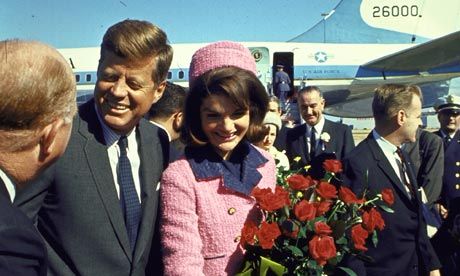
© Art Rickerby/Time Life Pictures/GettyJohn and Jackie Kennedy arrive in Dallas, 22 November 1963.
Anybody following closely the recent developments in JFK research cannot fail to notice that there are basically two kinds of books on Kennedy's assassination. (I am only talking of books seriously engaged in the pursuit of truth, not those defending the Warren Commission cover-up, such as Vincent Bugliosi's pitiful Reclaiming History, 2007).

Image
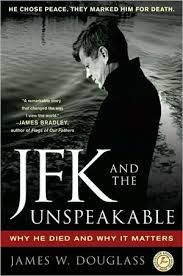
Fifty years of investigative work and archive declassification has narrowed down the list of credible suspects: on the one side are books blaming a faction within the Military-Intelligence complex, the most recent and authoritative being: James Douglass, JFK and the Unspeakable: Why He died and Why it Matters (Touchstone, 2008), David Talbot, Brothers: The Hidden History of the Kennedy Years (Simon & Schuster, 2007), and Mark Lane, Last Word: My Indictment of the CIA in the Murder of JFK (Skyhorse Publishing, 2011).

On the other side are books blaming Lyndon Johnson, represented recently by Phillip Nelson, LBJ: The Mastermind of JFK's Assassination (XLibris, 2010), James Tague, LBJ and the Kennedy Killing, by Assassination Eyewitness (Trine Day, 2013), and Roger Stone, The Man Who Killed Kennedy: The Case Against LBJ (Skyhorse, 2013), just available this month.1 I will summarize the arguments of both theses, highlight their shortcomings and contradictions, and attempt to overcome them by pointing to an alternative hypothesis.

I will contend that these two trails of investigation, if coherently connected, do compliment each other, but not quite as two halves of the truth; rather as two thirds of the truth. The remaining third piece of the puzzle is the really "Unspeakable".