OF THE
TIMES
"...As for Russian President Vladimir Putin, he has secured a ringside seat and may settle down with a bowl of popcorn. Any outcome suits him as long as Ukraine struggles to get out of its impasse alone. He will be happy to see the Lugansk and Donetsk regions turn into a frozen-conflict zone, precluding Ukraine's further integration into NATO and the European Union, and equally pleased to have them gain broad autonomy from Kiev and a veto on major political decisions. A military solution suits him, too, since the West has refused to engage him except in the form of ineffectual sanctions."Make no mistake about it: The ceasefire is a victory for Putin, a vindication of his aggression and duplicity. I just hope it ends the bloodshed.
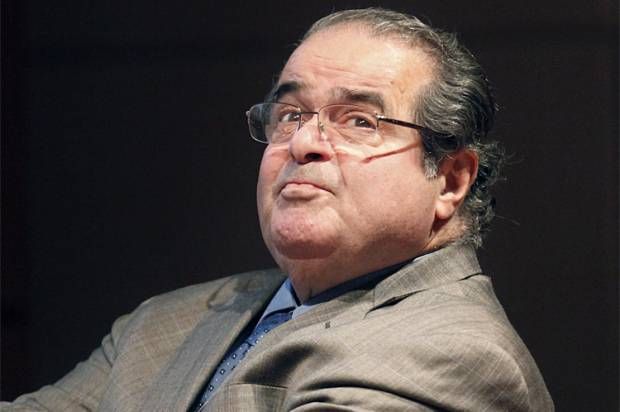
While my views on the morality of the death penalty have nothing to do with how I vote as a judge, they have a lot to do with whether I can or should be a judge at all. To put the point in the blunt terms employed by Justice Harold Blackmun towards the end of his career on the bench, when he announced that he would henceforth vote (as Justices William Brennan and Thurgood Marshall had previously done) to overturn all death sentences, when I sit on a Court that reviews and affirms capital convictions, I am part of "the machinery of death." My vote, when joined with at least four others, is, in most cases, the last step that permits an execution to proceed. I could not take part in that process if I believed what was being done to be immoral.One might wonder how he can stay on the court after the revelation last week that two convicted murderers he once described as lucky to be given the blessing of a lethal injection have turned out to be innocent. That's right, this is about the case everyone's been talking about - the two brothers, both mentally disabled, who were railroaded onto death row some 30 years ago with coerced confessions by a corrupt police department. As the New York Times reported:
- Justice Antonin Scalia
The case against the men, always weak, fell apart after DNA evidence implicated another man whose possible involvement had been somehow overlooked by the authorities even though he lived only a block from where the victim's body was found, and he had admitted to committing a similar rape and murder around the same time.
The startling shift in fortunes for the men, Henry Lee McCollum, 50, who has spent three decades on death row, and Leon Brown, 46, who was serving a life sentence, provided one of the most dramatic examples yet of the potential harm from false, coerced confessions and of the power of DNA tests to exonerate the innocent.


Comment: For a behind the scenes view of what is really going on in Ukraine, see:The Ukrainian conflict explained in historical context: Interview with Sergei Glaziev, advisor to President Putin