

© NATO.intDepleted Uranium Engagement Points 6 Apr 99 - 10 Jun 99 - Map produced 18 Jan 01
The UN has never published the text, but parts of it leaked to the public thanks to the interviewee of Vesti, American independent journalist Robert Parsons, a reporter from the international institutions in Geneva.
He managed to get Kante's report from his source in UNEP and publish its parts in June 1999 in Geneva daily Le Courrier in an article entitled "Hidden alarming report on the consequences of the bombing of Yugoslavia: Toxins that UN will not see".
Parsons spoke exclusively for Vesti about how reports on the health consequences of the use of depleted uranium (DU) weapons in the Balkans were censured and changed in the offices of the United Nations.
After 12 days of his stay in Yugoslavia, which was still being bombed at the time, in May 1999, where he was with missions of other agencies of the UN system, Bakary Kante submitted a report to UNEP which speaks of ecological horror: atmosphere and the soil in former Yugoslavia have been permanently contaminated with toxic materials because of the bombing of industrial-chemical complexes and use of depleted uranium weapons.
The report was categorical in the assessment that the future generations living on the bombarded soil will suffer from cancer, leukemia, the number of miscarriages and deformities of newborns will be increased.
Kante's report further says that because of the bombing, the nature in Yugoslavia has been contaminated with toxic substances among which the most dangerous is polychlorinated biphenyl (PCB), highly cancerogenous and responsible for immunological diseases. The report stresses that one liter of PCB is enough to contaminate one billion gallons of water.
PCB is located in the electrical substations and numerous oil refineries which were the target of NATO. It is added that the bombing of numerous factories which processed heavy metals caused, among other things, spreading of cadmium and methylmercury (the most poisonous form of mercury). These are metals that are poisonous even if they are spread on an area of several thousand kilometers. The result - the Danube was poisoned.
In the eight[h] chapter of the report Kante speaks about the pollution caused by the use of depleted uranium weapons. "According to available data, NATO used depleted uranium ammunition targeting military and civil targets".
A 30 - milimeter ammunition was used. It was fired mostly from aircrafts "A-10″, as well as within cruising missiles "Tomahawk". These missiles can penetrate 57 mm thick steel.
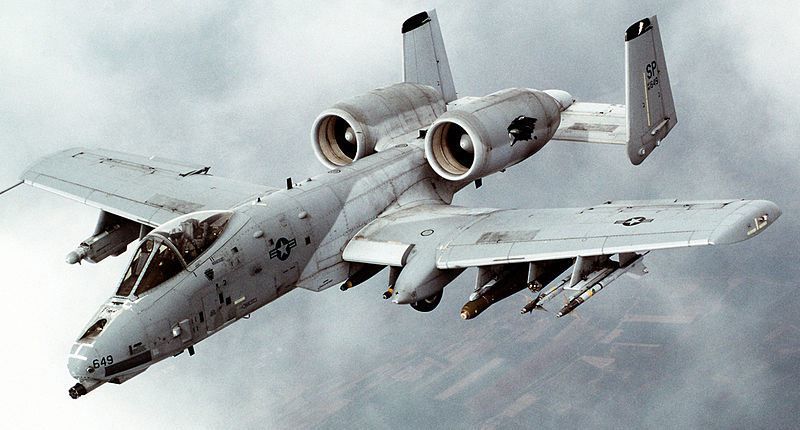
© WikipediaAn A-10 Thunderbolt II from the 81st Fighter Squadron, Spangdahlem Air Base, Germany, pulls away from a tanker (not shown) after refueling on the way to Serbian targets during Operation ALLIED FORCE.
The use of this ammunition has terrible consequences for the population, because in addition to physical injuries it causes radiological contamination. This contamination has toxic and radiological consequences that cause cancer," says Kante's report submitted to the Director General of UNEP, Klaus Töpfer.
Kante further says: "During the use (explosion) of the depleted uranium weapon is produced uranium oxide (U308 and UO2) as well as, among other things, very reactive gases radium and radon. The oxide particles have a width between 0.5 and 5 microns, and wind can carry them to the distance of several hundred kilometers.
Since in the region of Yugoslavia dominate northwestern winds, this means that the pollution goes from Yugoslavia to Hungary, Germany, Croatia and Bosnia, or to Albania, Former Yugoslav Republic of Macedonia and Greece."
















Comment: Initially created to counter the strength of the armor plating of Soviet tanks, DU is a legacy of the tail-end of the Cold War. Depleted uranium is a horrific weapon, cursing the populations subjected to it to generations of cancers and genetic defects. The first admitted use of DU armaments was in the first Gulf War, but it is apparent from this article that the psychopaths in NATO used the Balkans conflict as a testing ground for its toys.