Puppet MastersS


Bad Guys

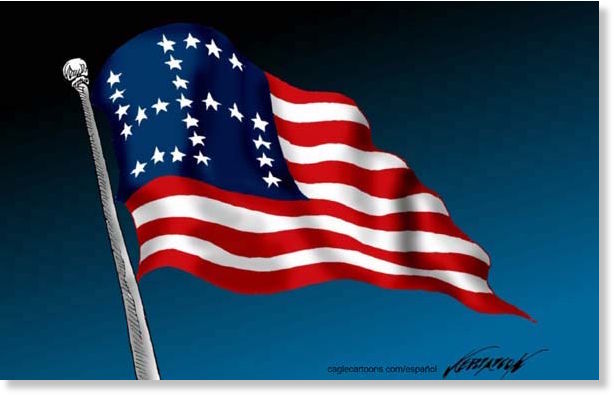
The UN anti-Nazi resolution and the history of U.S. Nazism accommodation and acceptance

Image
The Syrian Arab Republic, together with the Democratic People's Republic of Korea, Cuba, Venezuela, Bolivia are among the many co-sponsors of this UN Anti-Nazi Resolution, adopted by a majority vote of 133 by the United Nations General Assembly on December 18, 2014. There were 51 abstentions. Only 4 nations opposed this resolution: the United States, Ukraine, Palau and Canada. Excerpts from the Resolution state:
"1. Reaffirms the relevant provisions of the Durban Declaration and of the outcome document of the Durban Review Conference, in which States condemned the persistence and resurgence of neo-Nazism, neo-Fascism and violent nationalist ideologies based on racial and national prejudice and stated that those phenomena could never be justified in any instance or in any circumstances.

4. Expresses deep concern about the glorification, in any form, of the Nazi movement, neo-Nazism and former members of the Waffen SS organization, including by erecting monuments and memorials and holding public demonstrations in the name of the glorification of the Nazi past, the Nazi movement and neo-Nazism, as well as by declaring or attempting to declare such members and those who fought against the anti-Hitler coalition and collaborated with the Nazi movement participants in national liberation movements;

6. Emphasizes the recommendation of the Special Rapporteur that 'any commemorative celebration of the Nazi regime, its allies and related organizations, whether official or unofficial, should be prohibited by States, and stresses in this regard that it is important that States take measures, in accordance with international human rights law, to counteract any celebration of the Nazi SS organization and all its integral parts, including the Waffen SS.

7. Expresses concern about recurring attempts to desecrate or demolish monuments erected in remembrance of those who fought against Nazism during the Second World War, as well as to unlawfully exhume or remove the remains of such persons, and in this regard urges States to fully comply with their relevant obligations, inter alia, under article 34 of the Additional Protocol 1 to the Geneva Conventions of 1949;

11. Welcomes the call of the Special Rapporteur for the active preservation of those Holocaust sites that served as Nazi death camps, concentration and forced labour camps and prisons, as well as his encouragement of States to take measures, including legislative, law enforcement and educational measures, to put an end to all forms of Holocaust denial."

Star of David

Iran thwarts Mossad attempt on nuclear scientist's life

Image
© Reuters / Raheb HomavandiBushehr nuclear reactor
Iran claims it has foiled an assassination attempt against one of its nuclear scientists by the Israeli intelligence service, Mossad. A senior Iranian security official said the Revolutionary Guards thwarted the attempt.

"In the last two years, the Zionist enemy (Israel) was trying hard to assassinate an Iranian nuclear scientist, but the timely presence of the IRGC security forces thwarted the terrorist operation," the Deputy Chief Liaison Officer of Flight Guards Corps, Colonel Yaqoub Baqeri told Iran's Fars news agency on Saturday.


Comment: That's exactly what it was: a terrorist operation. And it wasn't the first. Mossad is one of the biggest terrorist entities on the planet. See:

Pirates

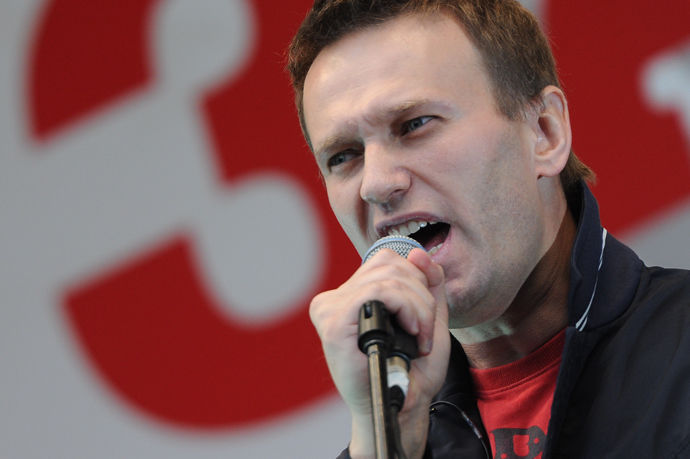
SOTT Focus: Meet Alexei Navalny: The U.S. State Department's inside man for 'regime change' in Russia

Image
© RIA Novosti / Ramil SitdikovAlexei Navalny, "anti-corruption" campaigner or U.S.-sponsored controlled opposition?
In recent months it's come to light that the U.S. government and allied Western powers have arrayed all of their economic, social, political, martial, and propagandizing forces against Russia and the leadership of its president, Vladimir Putin. Some of the policies, strategies and approaches towards destabilizing Russia are out in the open. Some less so. But this is where it gets most interesting. For while it was fairly easy to spot some of the aggression aimed at Russia from without, seeing it occur even more covertly from within is another story. Which brings us to some recent news.

The western media is now carrying the story of a protest on the streets of Manezh Square in Moscow which occurred on Tuesday, December 30th. At the center of the rally was Alexei Navalny, self-proclaimed "anti-corruption" blogger and head of the largest opposition movement of the leadership of Vladimir Putin and his administration in Russia. Navalny was just convicted of defrauding a cosmetics company of about $440,000 and given a suspended sentence of 3 1/2 years. Relating to the same case, his brother, Oleg, will be sent to prison for the same period of time. In 2013, Alexei Navalny was also tried and convicted of embezzling over $500,000 from the state-owned timber company Kirovles, where Navalny worked as a volunteer in 2009.


Dollars

SOTT Focus: 2015, the BRICS checkmate Western finance?

"Permit me to issue and control the money of a nation, and I care not who makes its laws."

Image
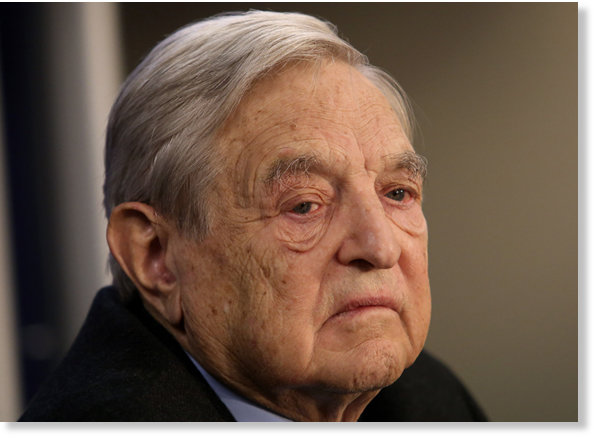
Ex-Judenrat and Nazi collaborator, Georges Soros. He busies himself with the destruction of currencies and people. His financial worth is $23 billion. His moral worth is somewhat lower.
Credit Defaut Swap (CDS), mortgage backed security (MDS), bottom-up investment, high frequency trading, naked short sale... these are the kind of complicated terminology you encounter when you start exploring the financial jungle.

But don't be mislead. This overuse of jargon is designed to confuse and destroy any motivation to explore further. Clearly 'they' don't want you to understand because they are hiding some rather dirty secrets wrapped up in apparently complicated jargon.

Scratch beyond this seemingly complex veneer however, and the reality of finance is surprisingly simple... and disgusting. The objective of this article is to explain, in layman terms, finance principles and the slavery most individuals and states are subjected to. I will also show why things might soon change dramatically and offer some sound advice for such times of financial turmoil.

Quenelle - Golden

Eurasian Union: 'The birth of a new geopolitical reality in the 21st century'

Image
On January 1, 2015 Russia, Belarus and Kazakhstan formed the Eurasian Union. The new economic alliance is a further step in the three countries' cooperation, replacing as it does the Customs Union that Moscow, Minsk and Astana formed in 2010.

The Eurasian Economic Union creates a common market of the three countries based on rules of the World Trade Organisation. In line with the treaty the territory of the EAU is free for the movement of goods, services and labour resources while the signatories undertake to carry out coordinated or unified economic policies. Member states also have agreed to bring their national legislations in line with Union rules within 10 years.

The new economic alliance comprises countries with a combined population of 170 million and is the biggest organisation of its kind in the post-Soviet space. Its trade turnover currently stands at $66 billion having increased by almost 50% over the past three years in the framework of the Customs Union. The three member countries of the new Union account for 20% of global reserves of gas and 15% of oil.

President Nursultan Nazarbayev of Kazakhstan welcomed the emergence of the Union as the 'birth of a new geopolitical reality of the 21st century'. At the same time he also cautioned against repeating mistakes of the European Union: "The point is that none of the participating countries were subject to de-industrialisation, and traditional industries did not suffer. Lessons from the European recession are in this."

Comment: No fanfare, no artsy displays, little media attention... quietly, quietly, a new pole in the multipolar world came into being on New Year's Day 2015. Four times the size of the EU, with one third of the people and three times the natural resources, the Eurasian Union could soon be calling the shots.


Brick Wall

SOTT Exclusive: Ukrainians hold Nazi torchlight parade in honor of Stepan Bandera

Image
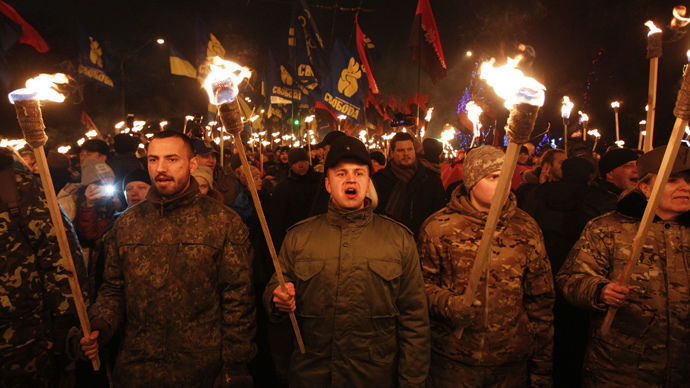
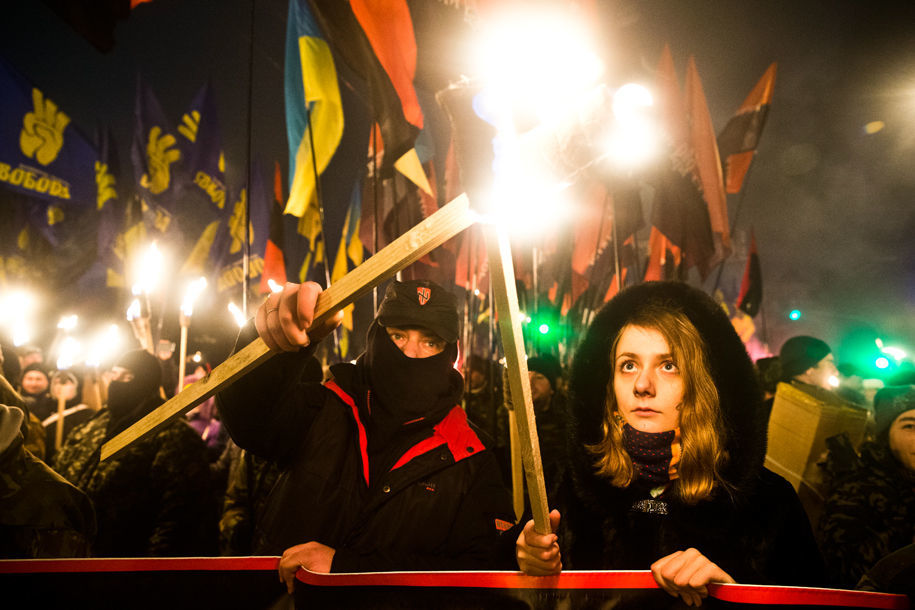
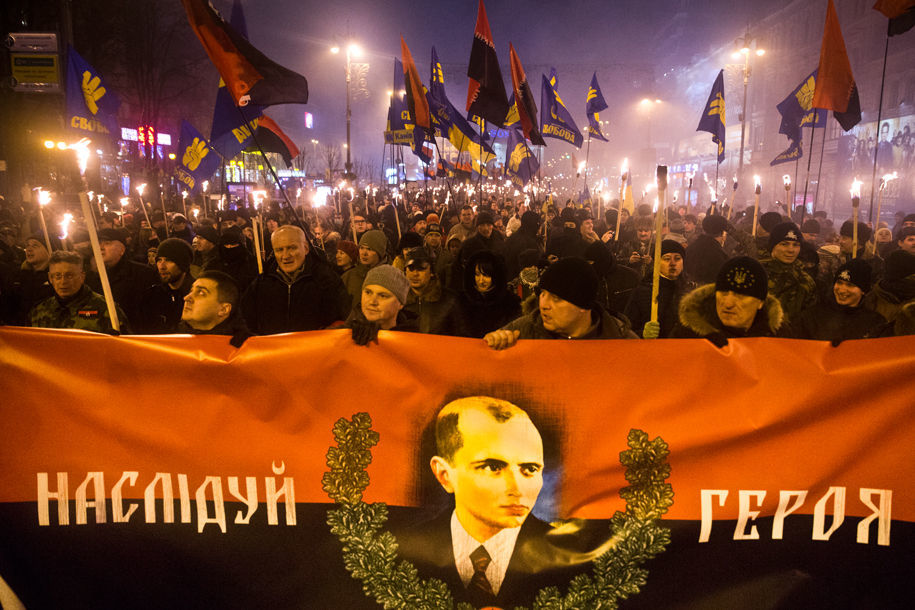
© Reuters / Valentyn OgirenkoActivists of the Svoboda (Freedom) and Right Sector Ukrainian nationalist parties hold torches as they take part in a rally to mark the 106th birth anniversary of Stepan Bandera, one of the founders of the Organization of Ukrainian Nationalists (OUN), in Kiev January 1, 2015.
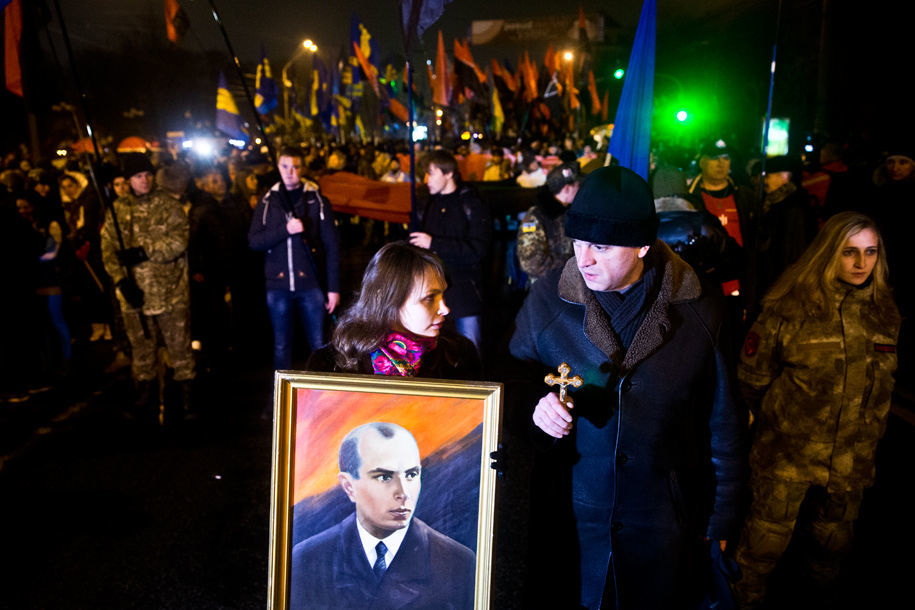
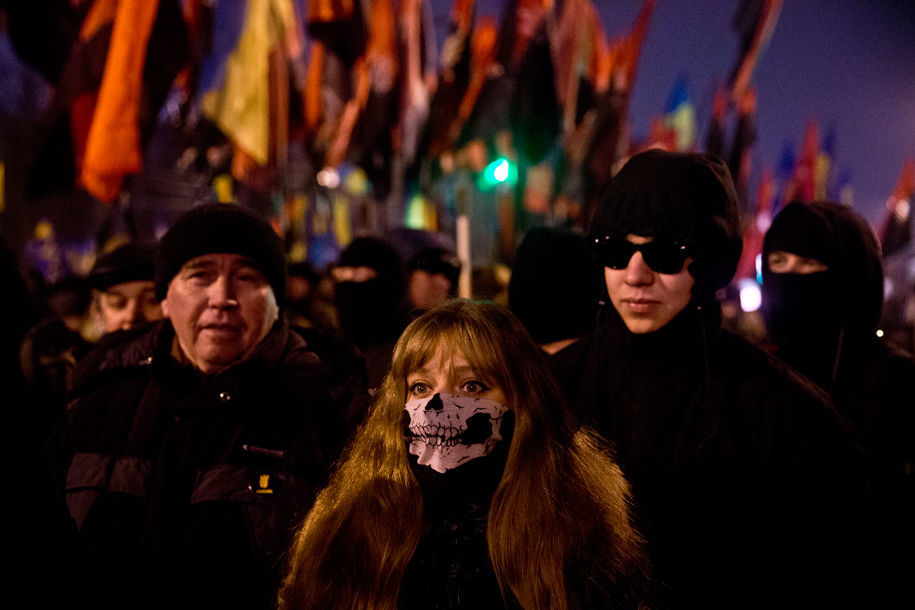
An estimated 2,500 neo-Nazis decided to take to the streets of Kiev on the 1st of January and commemorate the birthday of the Nazi collaborator Stepan Bandera, holding a torchlight procession in his honor. The fanatics carried portraits of Bandera as well as flags of the Svoboda and the Right Sector parties, shouted slogans such as: "Glory to the nation! Death to enemies!", "Ukraine belongs to Ukrainians" and "Bandera will return and restore order." The hooligans also assaulted and robbed Russian reporters in front of the police! Welcome to the new democratic Ukraine, brought to you by the U.S. and their 'partners' in the EU.


The Czech President Milos Zeman was appalled after watching the video of the demonstrations, saying that there was "something very wrong with Ukraine", as well as with the EU, which "doesn't condemn such rallies".
"The parade itself attempted to replicate Nazi torchlight parades where participants shouted the slogan: 'Death to the Poles, Jews and communists without mercy," Zeman explained.
In recent months the Western media has repeatedly excused or ignored the presence of Neo-Nazis in Ukraine and asserted that any such allegation were 'Russian propaganda'.

Below are a few more photos from the rally. Judge for yourself.
Image
© Unknown
Image
© Unknown
Image
© Unknown
Image
© Unknown
Image
© Unknown
Stepan Bandera, the man that the regime in Kiev considers their hero, was one of the leaders of the Organization of Ukrainian Nationalists (OUN). The organization collaborated with Nazi Germany during World War II and was involved in the ethnic cleansing of Russians, Poles and Jews. The following is a list of atrocities commited against civilians by this organization.

Comment: See also: Ukraine's Neo-Nazis. Stepan Bandera and the Legacy of World War II

Parallels between Germany of 1930s and Ukraine of today


Footprints

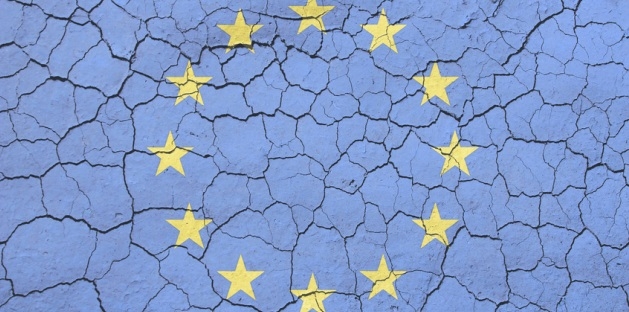
Euro at 9 year low while Greece may separate from the EU

Image
© AFP Photo/Philippe Huguene
The euro fell to $1.1861, its weakest level since 2006 on the back of uncertainty over Greece's position within the single currency. A strong dollar and expectations that the European Central Bank will beef up its stimulus program have also not helped.

The euro dropped to a low of $1.1861 against the dollar during Asian trading hours on Monday. However, it did pick up slightly to trade at $1.1950 during European trading. This has seen the single currency lose as much as 1.2 percent of its value.

European shares were volatile, initially falling sharply before rebounding into positive territory within an hour of the open as investors digested the implications of the weak euro and yet another hefty slide in oil to a 5-1/2 year low, Reuters reports.


Comment: The failing Euro has little to do with anything Greece does or does not do. It has to do with the same type of blind and disastrous policies that caused Greece to collapse and kept her in economic ruin. It's really quite obvious by now that the EU is calling on its own destruction by following along with the US sanctions on Russia. But sure, Greece makes a nice scapegoat.


Eye 1

US Politicians and their 'accidents': Senator Harry Reid latest to fall foul

Image
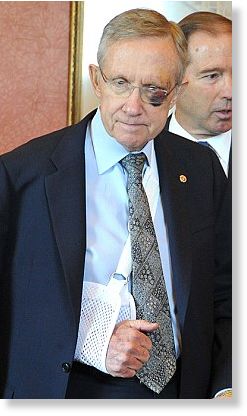
Harry Reid got into a fight with an "exercise machine". Just like Dick Cheney "accidentally" shot Harry Whittington in the face in 2006.
It could not have happened to a nastier person.

On New Year's day, in an unlikely unfortunate home "exercise" accident, USSA Senator, Harry Reid (D-NV) smashed his face, resulting in broken facial bones, as well as broken ribs and a very black eye.

Reid also previously dislocated his shoulder, bumped his head and got a black eye, while "jogging" in 2011.

It Happens All The Time

To high level politicians, I mean. Getting savagely brutalized by home exercise equipment, dislocating their arms while jogging.

By contrast, how many times have you gone to work out at the gym, and inadvertently smashed your face on a piece of exercise equipment, breaking facial bones and ribs, and getting a black eye? Probably never, but then you are not a high level politician.

Comment: On a point of interest: Whittington was the first person to be shot by a sitting vice president since Alexander Hamilton, who was shot and killed by Aaron Burr during a duel over issues of honor and political maneuvering. In more modern times however, duels have been dispensed with and the 'offended' politician simply spontaneously shoots his opponent in the face to get even.


Green Light

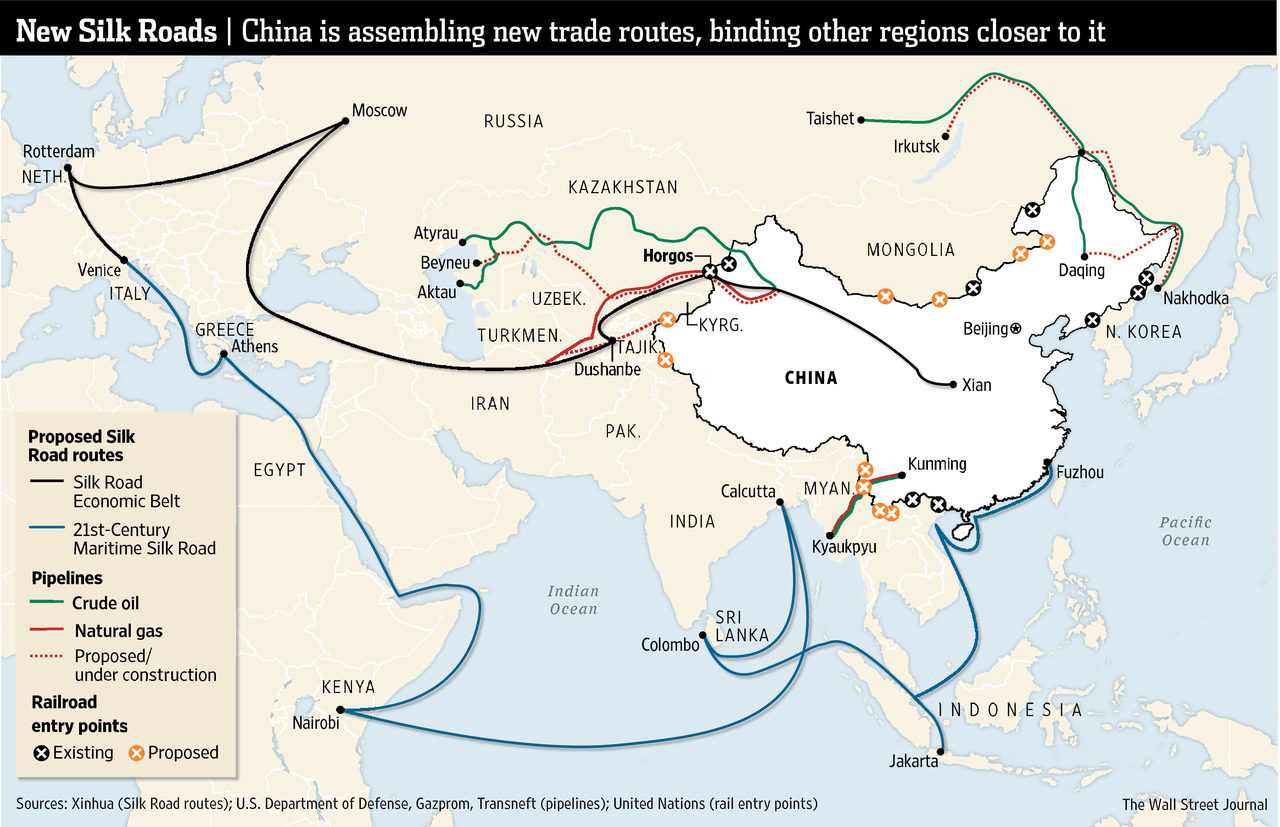
China's new Silk Road to Europe, via the Balkans

China Silk Road
© The Wall Street JournalChina's proposed new trade routes.
In the latter part of 2014, China became the world's largest economy, dethroning the United States which has held the position since 1872. The technique for identifying such sizes will always be up for question, even if the IMF did account for the issue of purchasing power parity. Those in the US can still summon relatively larger pay packets than their Chinese counterparts.

Be that as it may, China now makes up for about 16.48 percent of the world's purchasing-power adjusted GDP, with the US coming in at 16.28 percent. Analysts point out that these figures ignore "raw terms" (Business Insider, Oct 8, 2014), though that doesn't diminish a spectacular transformation - in 1980, China's overall economic output was a mere tenth that of the US.

The chatter about Beijing's economic surge coincided well with its Balkans drive, yet another means by which the Chinese business juggernaut is seeking satiation. Chinese diplomats and figures are not strangers to the region. Their involvement during the eccentric relationship between Beijing and the communist Albanian state of Enver Hoxha is well noted.

The love affair with Hoxha went cold in the late 1970s. China began cultivating ties with Yugoslavia and Romania, insisting that both the Soviet Union and the United States adopt more constructive approaches to the Balkan region. Then, as now, the Balkans was to provide an entry point into the markets of European states while also enabling a currying of favour with so called third world countries.[1] Then, as now, China's regimes boasted new, reformist faces, at least in rhetorical aspiration.

Comment: The Chinese are looking to increase their position in Europe through the Balkans by investing in infrastructure and energy, which benefits both parties. The Chinese have now two cargo piers at the Greek port of Piraeus, with 35-year contracts and plans to expand, so a new road to Europe seems to be emerging, through Greece and the Balkans into Eastern and Central Europe.

As CSEBA communication manager Sinisa Malus commented on the beyondbrics blog:
"The Chinese strategy to become an important player in the countries which now have EU candidate status, like Serbia, Montenegro, Macedonia and Albania, might secure Beijing's long-term presence in the region and a continuing cooperation with the enlarged EU in the future," he said. "Besides investments, tourism and culture have important perspectives. Both Croatia and Serbia have announced direct flights to China."

He said a recent survey by the EU Chamber of Commerce in China found that 71 per cent of Chinese businesspeople gave access to the common market as the main reason for investing in the EU. The logic for setting up in low-cost Balkan markets with free trade agreements with not just the EU, but also Russia and Turkey, is strong.
It's important for Europe to start looking more towards the east, towards both Russia and China, where, in plain cost-benefit terms, they get a better deal than being a 'vassal state' of United States. That's where a viable future for Europe lies.


Yoda

Will the Czech Republic, Slovakia, and Hungary leave the NATO/EU reservation?

Image
© AP Microstock
Despite the firmness shown by the EU's biggest players when it comes to sanctioning Putin's Russia, lower down the pecking order some member states are not happy. Unlike the most craven and obedient puppets - the Baltic States and Poland - it took some arm twisting to get the Czech Republic, Slovakia and Hungary to agree to punish Moscow for annexing Crimea. Each country is dependent for much of its energy on Russia with which there are also valued economic ties. Why rock the boat? Despite hyperbole claiming that Vladimir Putin was intent on taking them over and rebuilding the iron curtain, in reality, Russia has been an unproblematic neighbour for a quarter of a century.

Could these ripples of discontent with the famed Washington consensus develop into something more troubling for both the US and Brussels? What can they do about it? All three countries are members of both NATO and the EU. Promoting regime change inside the Euro-Atlantic tentsurely becomes more problematic. Or, does it? Let us examine each case separately and see what the auguries bode.

On 17th November 2014, it was drab and raining in Prague as the Czechs celebrated 25 years since the so-called "velvet revolution," unlike the classic freezing, East European winter day of 17th November 1989. Demonstrations to mark the event were slated to take place and a mass of candles filled the passage way on Národní Třida (National Street) where student "Martin Šmid" died at the hands of the police, an event that was said to have triggered the collapse of the communist regime. But, hold on: it soon emerged that Martin Šmid didn't exist; he had been invented by the Czechoslovak security services, the STB (Státní Bezpečnost) as part of a ploy to bring a new, reformed post-communist regime to power.

Emoting over a death that never took place seems weird but, in a way it sums up the banality that lays at the heart of all things connected with the "velvet" events. This was only reinforced later in the day when a group of anti-capitalist protesters snaked its way through the city centre wearing papier maché masks, some bearing the image of the evil Putin, others the reviled (at least, by the local cogniscenti) Czech president, Miloš Zeman. A few Ukrainian flags brought up the rear. Other banners denounced Ecuador's left wing president, Rafael Correa, hardly a household name in Prague.[I] As the hundred or so protesters passed the Rudolfinum concert hall, a group of elderly rock musicians with lank, grey hair plugged away at some ancient protest songs watched by a handful of leather clad biker types.

Comment: The West's attempts to subvert the interests of the Czech Republic, Slovakia, and Hungary demonstrate not only the type of relationships that exist, but also show just how desperate the US et al are in trying to maintain its imperialist foothold over the region. Anyone with eyes to see can recognize the emerging economic stability coming out of Eurasia while the EU teeters towards collapse. The Eurasian Economic Union was officially established last Thursday, but it has been a long time coming, and there's quite a bit of momentum behind it. Things are moving quickly on the geopolitical scene, and it seems not a matter of if but when the countries in the region will align with their natural interests in the East. If the EU knew what was good for them (which they apparently don't), they'd take up Putin's invitation to join the Eurasian Economic Union tout de suite!