Puppet MastersS


Cult

After nuclear deal US still wants Iran's blood

Ballistic Missiles
When the P5+1 Nuclear Talks were completed, and the Joint Comprehensive Plan of Action (JCPOA) was put into practice, jubilant words resounded from many places. The "reformist movement" within Iranian politics used the nuclear deal as a campaign issue and swept up victories in the recent parliamentary elections. Meanwhile, the Republican Party writhed with the anger of defeat, inviting Netanyahu to address Congress against Obama's wishes, and screaming doomsday predictions about a "nuclear-armed Iran" after the deal was signed.

The expectation of all parties involved, and the many voices supporting the negotiation process, was that after the deal was signed, the United States and the Islamic Republic of Iran would become much friendlier. The nuclear deal was expected to open a new chapter of diplomacy, resolving the decades of intense hostility.

Ballistic Missile Deceptions

However, this has not taken place. The signing of the nuclear deal and the lifting of the nuclear-related sanctions imposed on Iran has been followed by swift and blatant acts of aggression against Iran — not only from the United States, but from its allies around the world.

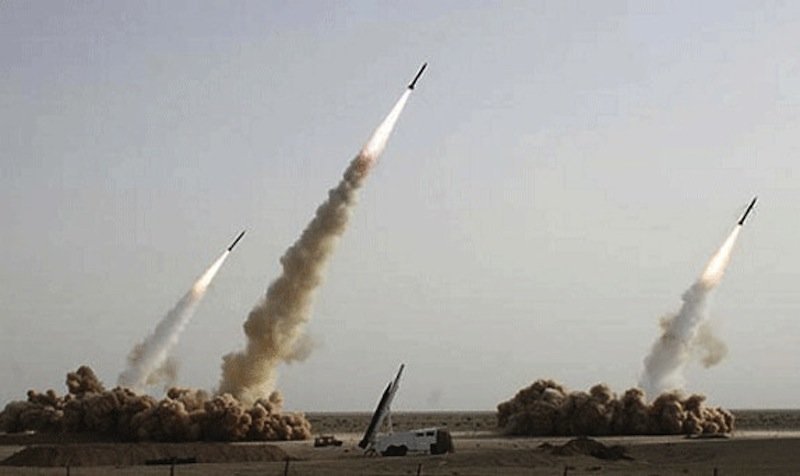
Almost immediately after the deal was signed, US leaders began to denounce Iran's ballistic missile system. Iran maintains ballistic missiles for the purpose of self-defense. Iran's regional enemy, Israel, is known for erratic, unannounced attacks on its neighbors. It has invaded Lebanon five times, and it randomly attacked Iraq in 1981.

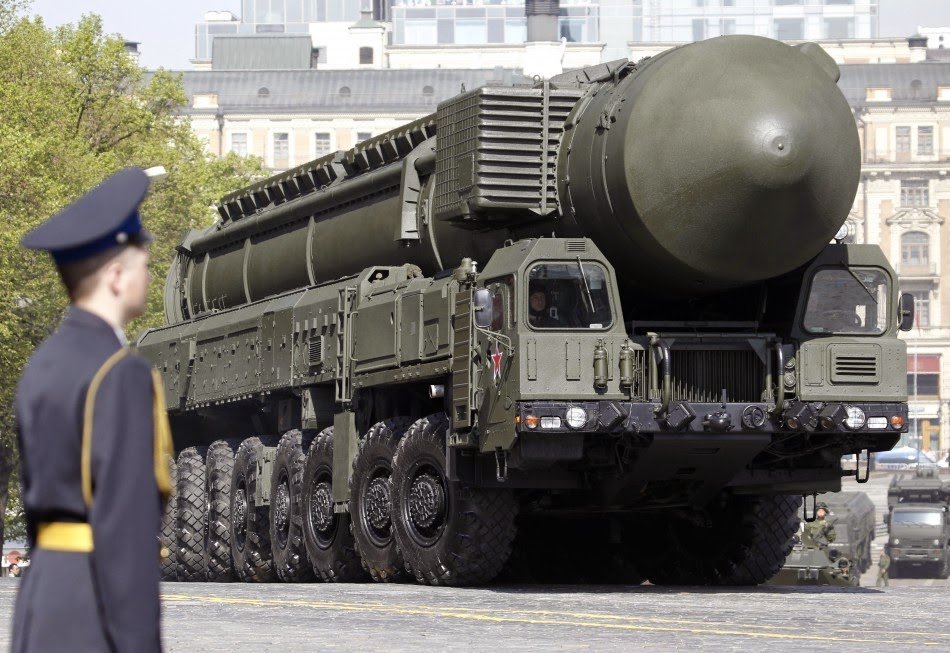
Comment: Just think: the US, at this time, is now behaving aggressively either overtly or covertly, politically or militarily, or both - towards China, Russia, Iran, Syria and other nations. When have we seen this before? And what happened then? We know the answers.


Light Saber

Washington can kiss its silly missile defense system goodbye

Russia's answer to NATO
Americans rarely excell at the game of chess in the manner that many Russians do. The last great world-class chess master from the United States was Bobby Fischer whose zenith was reached in 1971. Mostly, over the past several decades, Washington has relied on an arrogant brute force - might makes right - to push its globalist agenda for what Michael Ledeen, a neo-conservative, once called Universal Fascism. It means total, absolute control of people, nations, trade flows, of life itself by a global corporativist cartel. The ultimate US brute force game against her long-standing nemesis, Russia, is creation of a "missile shield" aimed at Russia. In 2007, George W. Bush announced Washington was going to deploy what it called Ballistic Missile Defense. It was more or less the beginning of deep and now fundamental distrust by Russia and by Vladimir Putin of Washington's honesty and her intentions. Now Moscow, in what appears a brilliant chess move, unveils a surprise response.

A brief look at the situation at the beginning of the 1990's as the Soviet Union was deconstructed, is useful to understand the dynamics of Russian foreign and military policy today.

US Secretary of State James Baker III met with the last Soviet leader, Mikhail Gorbachev, and gave him a pledge that, in return for the Soviets allowing the two Germanys to reunite, Washington would never extend NATO eastward.

In response to that solemn US pledge, the formerly formidable Soviet Union, now a vastly reduced Russian Federation, promised Washington and NATO that it would systematically dismantle its nuclear arsenal. Toward that end, the Russian Duma ratified a Start II Treaty for reduction of actively deployed nuclear weapons. They made the ratification contingent on both the US and Russia's adhering to the 1972 Anti-Ballistic Missile Treaty which prohibited deployment of an active missile defense shield by either side.

Comment: Imagine how much more Russia would be able to do for its people - nay, for the people of the world - if it didn't have to spend so much of its resources (however thriftily) having to not only clean up America's disaster in Syria and elsewhere - but also having to put its top minds towards defending Russia, in what has become a nearly life and death resistance to domination. It cannot be overstated: Russia's recovery from the brink of an almost total collapse in the 90's - on nearly every societal level - is nothing short of remarkable.


Crusader

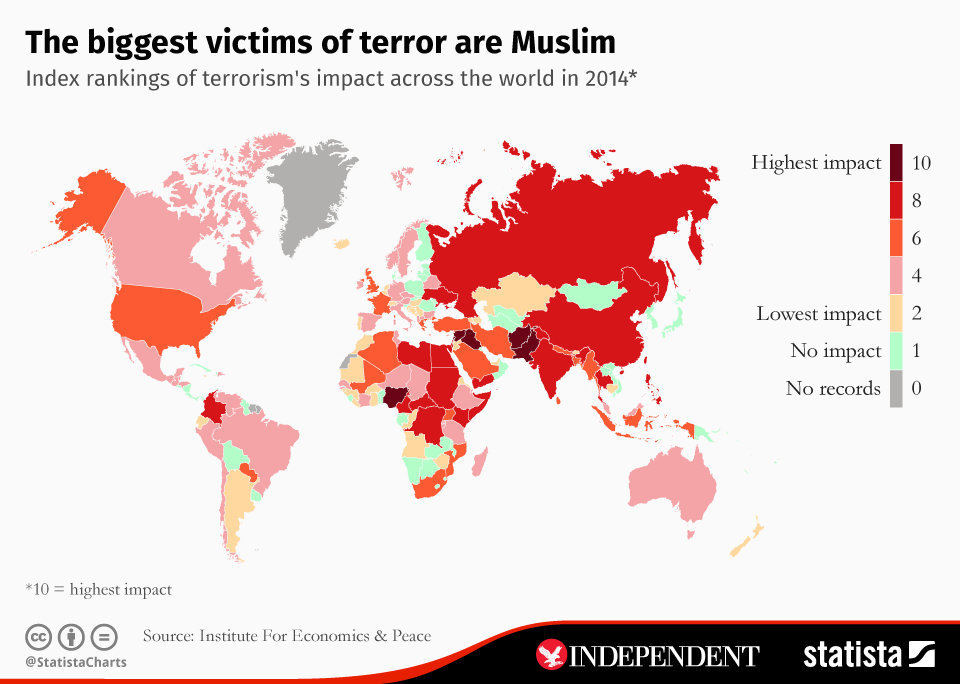
SOTT Exclusive: Reality check - The biggest victims of terror are Muslims

terrorism statistics victims
This chart shows index rankings of terrorism's impact across the world in 2014. Muslims are not the perpetrators of terror.
As has become common in the aftermath of terrorist attacks, shortly after the bomb attacks in Brussels, people have been blaming... oh, pretty much the entire Muslim population. How 1.7 billion people who are either adherents of, or loosely connected to, the world's second-biggest religion could be responsible for these attacks is beyond me. Many took to Twitter to tweet their support for 'the removal of Islam' via the hashtag 'StopIslam', blaming the religion for the lives lost in the Brussels terrorist attacks (and those before), thus pretty much pointing the finger at all Muslims for the existence of terror itself.

Tweets using the trending hashtag include either anti-Islam sentiment, or support for Islam by Muslims who use the hashtag to repeat the obvious: that they are "Muslim, but not a terrorist." Apparently, people forget that the biggest victims of terror are Muslim. Indeed, by saying that Muslims are responsible for these terror attacks, one is saying that (to name a few examples)... ...are all, in one way or another, responsible for attacks in the West.

It boggles the mind.


Dollars

Flashback WikiLeaks Clinton cables portray Saudi Arabia as a cash machine for terrorists

Ajmal Amir Kasab Mumbai
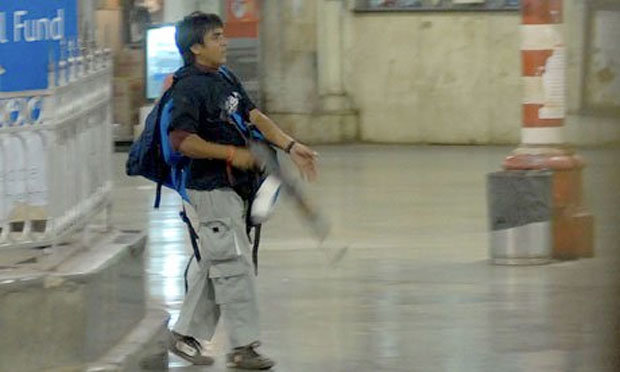
© Sebastian D'souza/AP The terrorist Ajmal Amir Kasab walks through the Chhatrapati Shivaji train station in Mumbai during the 2008 attacks. Lashkar-e-Taiba, which carried out the atrocity, is one of several groups that have raised funds via Saudi Arabia.
Saudi Arabia is the world's largest source of funds for Islamist militant groups such as the Afghan Taliban and Lashkar-e-Taiba - but the Saudi government is reluctant to stem the flow of money, according to Hillary Clinton.

"More needs to be done since Saudi Arabia remains a critical financial support base for al-Qaida, the Taliban, LeT and other terrorist groups," says a secret December 2009 paper signed by the US secretary of state. Her memo urged US diplomats to redouble their efforts to stop Gulf money reaching extremists in Pakistan and Afghanistan.

"Donors in Saudi Arabia constitute the most significant source of funding to Sunni terrorist groups worldwide," she said.

Three other Arab countries are listed as sources of militant money: Qatar, Kuwait and the United Arab Emirates.


Comment: But far from doing anything, Clinton then exploited that knowledge just three years later as part of the U.S. bid to overthrow the government of Syria.
Wikileaks 2012 Killary email: Secure Israeli hegemony, destroy Syria

... Later in the email Clinton bluntly opined: "Bringing down Assad would not only be a massive boon to Israel's security, it would also ease Israel's understandable fear of losing its nuclear monopoly." She then stated that the US would achieve this by arming Syrian rebels:
Washington should start by expressing its willingness to work with regional allies like Turkey, Saudi Arabia, and Qatar to organize, train and arm Syrian rebel forces. The announcement of such a decision would, by itself, likely cause substantial defections from the Syrian military. Then, using territory in Turkey and possibly Jordan, U.S. diplomats and Pentagon officials can start strengthening the opposition. ... Arming the Syrian rebels and using western air power to ground Syrian helicopters and airplanes is a low-cost high payoff approach.

The cables highlight an often ignored factor in the Pakistani and Afghan conflicts: that the violence is partly bankrolled by rich, conservative donors across the Arabian Sea whose governments do little to stop them.

The problem is particularly acute in Saudi Arabia, where militants soliciting funds slip into the country disguised as holy pilgrims, set up front companies to launder funds and receive money from government-sanctioned charities.

Comment: Given the above, where are the questions in mainstream media about the funding and weaponry sources for 'ISIS' following the recent Brussels attacks?


Sheeple

Exploiting fear for greater control: After Brussels attack, world looks to Israel as model for airport security

Israeli airport security
© AP Photo/Ariel SchalitAn Israeli airport security guard patrols with a dog in Ben Gurion airport near Tel Aviv, Israel.
After string of extremist incidents targeting heart of Europe over past year, leaders may have to resort to much tougher measures.

Authorities in Europe and across the world tightened security at airports, railway stations, government buildings and other key sites after deadly attacks Tuesday on the Brussels airport and its subway system.

With Brussels in lockdown and the French prime minister saying that Europe is "at war," European leaders held emergency security meetings and deployed more police, explosives experts, sniffer dogs and plainclothes officers, with some warning against travel to Belgium.

The nervousness was felt far and wide. In New York City, authorities deployed additional counter terrorism units to crowded areas and transit locations.

After a string of extremist attacks targeting the heart of Europe over the past year, some analysts say Europe will finally have to implement a much tougher level of security not only at airports, but also at "soft targets" like shopping malls — the kind that Israelis have been living with for years.

Bad Guys

Global hunger games: There's no shortage of food, only people too poor to pay for it thanks to food speculation

starving child
© Unknown
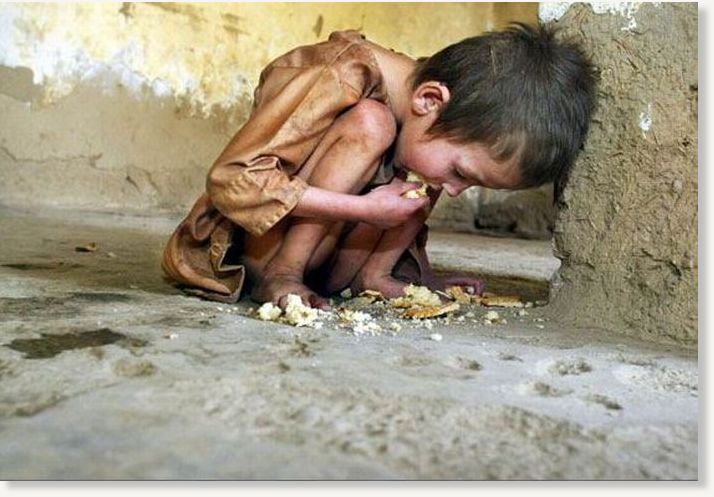
The leading expert on food at the United Nations says sharp price fluctuations in the price of food has little to do with actual supply. Nowadays, rapacious out-of-control investment banks such as Goldman Sachs, Morgan Stanley and Barclays Capital now dominate food speculation through the commodities markets. They dwarf the amount traded by actual food producers and buyers needlessly tipping millions into hunger and poverty.

The United Nations Food and Agriculture Organisation currently estimates that about 795 million people of the 7.3 billion people in the world, or one in nine, are suffering from chronic undernourishment in the period 2014-2016. We are not talking of poverty here but life threatening food shortages driven by the pursuers of profit.

About one in eight people, or 13.5 percent of the overall population, remain chronically undernourished in developing regions. As the most populous region in the world, Asia is now home to two out of three of the world's undernourished people.

By 2014, food speculation by banks and hedge funds had risen to $126bn, a figure that has doubled from 2008. From 2000 to 2015 global food prices rose a staggering 94 percent and although they have been falling consistently over the last year, prices are still only 14 percent lower than all-time highs.

To give some perspective, speculative investment in agricultural commodities five years ago was 20 times the amount spent by all countries on agricultural aid and Goldman Sachs, for instance, earned $600 million from it. It was George Bush who deregulated this market with the Commodities Futures Modernization Act in 2000. Hence the astronomic price rises that followed and it is now estimated that 115 million people has suffered as a direct result.

Various attempts have been made to curb speculation of food prices but most countries have done nothing significant.

Comment: See also:


Play

South Front: The Brussels bombings, China's security expansion in Central Asia

south front
Series of Terror Attacks Hits Brussels


Comment: Further reading:


Bomb

Months of tension and uncertainty explode in Brussels attacks

brussels
© Francois Lenoir / ReutersPeople leave the scene of explosions at Zaventem airport near Brussels, Belgium, March 22, 2016
The twin blasts that rocked Brussels Airport and further explosions on the city's Metro have come just four days after Salah Abdeslam, who was wanted in connection with the November 13 Paris terror attacks, was captured by Belgian police.

While Belgium's migration minister, Theo Francken, claimed "We got him," Foreign Minister Didier Reynders said at a German Marshall Fund forum that Abdeslam was "ready to start something from Brussels." Police found a number of heavy weapons, and they also believed that a new network of terrorists was developing around him.


Comment: You'll never guess how they say they found him: a suspicious pizza order. After raiding what they thought to be an empty safe house, Belgian police were shot at. While they killed the shooter, two others escaped, one of whom they believed was Abdeslam, whose fingerprints they found on a glass in the flat. Their suspicions that another flat was "hiding a large group of people" were seemingly confirmed after "an unusually large pizza order" was made by a woman there. Police broke in, presumably to find Abdeslam chowing down on a slice. You can't make this stuff up.


Propaganda

Belgian Foreign Minister: Paris terror suspect Abdeslam planned more attacks - 'heavy weapons & new network'

Belgian police
© Francois Lenoir/ReutersBelgian police officers secure an access to the federal police headquarters in Brussels, March 19, 2016.
The man who played a key role in organizing the Paris November 13 attacks and was finally arrested in a police raid last week, was busy setting up a terror network and preparing for more attacks, on Belgian soil in particular, the country's foreign minister revealed.

Salah Abdeslam was "ready to start something from Brussels," Foreign Minister Didier Reynders said at the German Marshall Fund's forum.

"We found a lot of weapons, heavy weapons in the first investigations, and we have seen a new network of people around him in Brussels," the minister revealed.

Reynders added that while searching for 10 possible accomplices in the Paris attacks, Belgian authorities discovered more than 30 people of interest to the investigation. The PM said that EU-wide intelligence sharing helped track Abdeslam, as well as information from Turkey in particular.

"We are sure that for the moment we have found more than 30 people involved in the terrorist attacks in Paris, but we are sure there are others," Reynders said.

France seeks the extradition of the Algerian-Belgian national who was captured in a raid, along with three other people, in Molenbeek on Friday. During the raid Belgian police shot and killed an Algerian man, Samir Bouzid, was also wanted in connection with the Paris attacks.

Reynders promised to deliver Abdeslam, who has been charged with "terrorist murder" to France within three months.


Folder

Prison-based gerrymandering unconstitutional; Florida judge orders congressional district maps be redrawn

US voters
© Politico
A federal judge ruled on Monday that Florida's practice of using prison populations to manipulate voting districts is unconstitutional, perhaps foreshadowing Virginia's Supreme Court case questioning the constitutionality of its congressional districts.

The Third District of Florida's Jefferson County has an interesting population. Out of the entire voting age population, 43.2 percent cannot legally vote in County Commission and School Board elections, according to The American Civil Liberties Union (ACLU).

The district map for Jefferson County's Third District was drawn to include the Jefferson Correctional Institute with its 1,157 inmates, who make up more than a third of the district's population, the Palm Beach Post reports.

Gerrymandering, the practice of redrawing legislative district lines to gain political advantages, has become an issue of contention in both Florida and Virginia. For Florida's Jefferson County, including the inmate population in the Third District resulted in giving eligible voters almost twice the voting power.

Because of the additional 1,157 non-voting inmates included in the Third District's population, the amount of power that other districts - and local populations - have in local politics is diluted. The ACLU's attorney, Nancy Abudu, told ThinkProgress, "It's about access and the ability to influence, and making sure officials are responsive to their electorate."

However, a federal judge in Florida's Northern District has ruled that prison-based gerrymandering is a violation of the "one person, one vote" principle under the Equal Protection Clause of Fourteenth Amendment of the US Constitution. The County has until April 4 to redraw congressional district lines before the June qualifying election for commissioners and school board members. If it fails to do so, the court will impose its own interim plan.

Comment: The PTB has been busy redrawing districts prior to the election:

2016: 2015: