
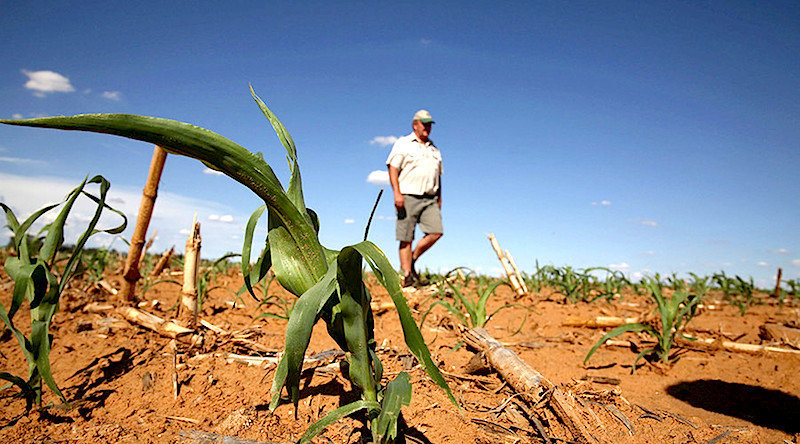
© Siphiwe Sibeko / ReutersExpropriation Bill contains a few shades of gray.
The bill combines a series of measures that would see the land expropriated "in the public interest" and "for public purpose," and has passed with both the ANC and several opposition parties voting in favor. "The passing of the bill by parliament is historic and heralds a new era of intensified land distribution program to bring long-awaited justice to the dispossessed majority of South Africans," an ANC statement reads.
Since the fall of apartheid, about 20 million hectares (50 million acres) of land have been transferred to black owners. According to Al Jazeera, that's 10 percent of what the whites there owned in 1994. The ANC aims to raise the amount to 30 percent. But concerns have been voiced the law still requires work, and that there's a lack of clarity on how the measures will be implemented. The Democratic Alliance (DA) voted against. The party sees a problem with the term 'property', fearing that the loose term would create loopholes allowing more than just land to be taken away - such as shares and intellectual property.
Another issue stemming from the legislative requirements is that the sums paid out for the land would not cover outstanding bank payments. According to DA MP Anchen Dreyer, "It is therefore possible that an expropriated owner could end up without a house or farm, and would still need to pay installments on an outstanding bank loan. Which bank would grant such loans?" The United Democratic Movement (UDM) also voted against on the grounds that the bill would leave out those who were dispossessed of their land before the 1913 Land Act.
Comment: The government claims that the Bill is needed to speed up land reform, but only 8% of South Africans want land to farm; at least 73% of land reform projects have failed; and the Government has taken hundreds of farms out of production with little benefit to anyone. Confiscation empowerment to benefit the State done badly...sounds like a plan!

















Comment: With passage of this bill, the societal and economic ramifications for apartheid-sensitive South Africans may bring out the worst in its people. Beside's the South African government's for cents-on-the-rand asset grab, who's hidden hand stands to benefit from such a potentially volatile and destabilizing reversal of fortune? It might be a country that has an underlying 'destroy BRICS one-by-one' agenda.