

© Reuters/Lucas JacksonU.S. presidential candidate and former Secretary of State Hillary Clinton participates in a discussion in a classroom at New Hampshire Technical Institute while campaigning for the 2016 Democratic presidential nomination in Concord, New Hampshire, April 21, 2015
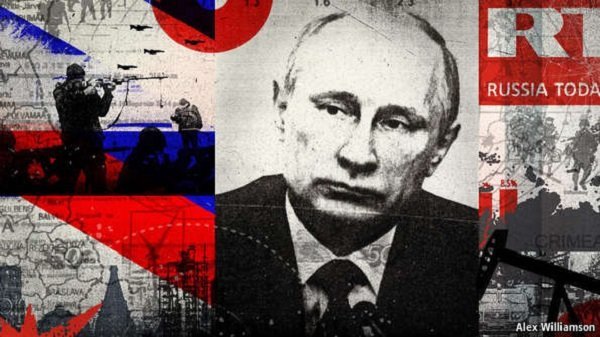
This week saw the Washington Post newspaper float a bizarre theory that Democrat presidential candidate Hillary Clinton may have been poisoned by Russian agents on the orders of Russian President Vladimir Putin.
The Post quoted a renowned US sports-injury doctor as saying that Putin or Republican candidate Donald Trump, working in league, may have induced Clinton's recent bout of ill health.
And the doctor recommended that the Clinton campaign team get a toxicological analysis of her blood carried out, on the suspicion that she may have been poisoned.
For several months now, the 68-year-old former senator's health has been the subject of intense public speculation, not least fanned by her Republican rival Donald Trump.
Apparent facial seizures while addressing public platforms and coughing spasms in front of media reporters culminated last Sunday at a New York event commemorating the 9/11 terror attacks, when Clinton was videoed collapsing on a sidewalk as aides bundled her limp body into the back of a van.
Clinton's campaign team later said she was suffering from pneumonia, which forced her to take three days off from political rallying this week. She has since resumed the stumps, having apparently made a recovery.
However, after weeks of dismissing claims about Clinton's ill-health as wild conjecture, the Washington Post then gives vent to the even wilder notion that the Democrat candidate has been poisoned by Russian agents.
The Post, on one hand, half-acknowledges that the "theory" is far-fetched. Yet, the newspaper - one of America's top publications - also sneakily adds credence by going on in the same article to reiterate baseless British claims that Russia's Putin ordered the poisoning of Kremlin critic Alexander Livitnenko while he was living in exile in London in 2006.
Livitnenko's death from Polonium poisoning was more likely caused by shady rivals in the criminal underworld. There is no evidence that Russian state agents were involved in his demise. But the claims have provided Western media with plenty of material to continue demonizing Moscow and Vladimir Putin in particular, as the Washington Post article demonstrates.












Comment: Anglo-American russophobia: The good, the bad and the oh-so-stupid