This year is shaping to be a pivotal one for Sino-Russian defense ties. Both countries have agreed to
boost the number of "exercises and events" planned for 2016. From
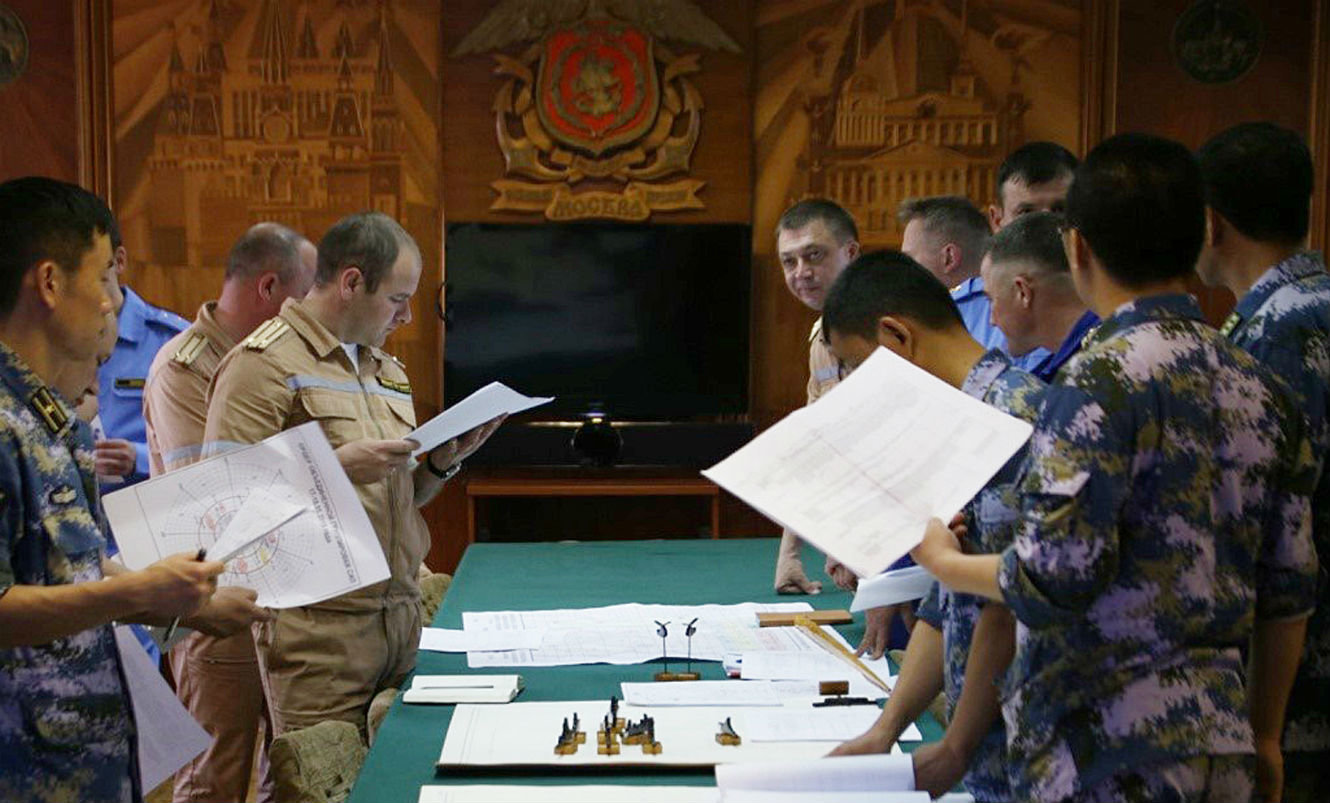
Sept. 12 to 19, they held their sixth exercise in the Joint Sea series, conducting a naval warfighting drill in the South China Sea to enhance their ability to "
jointly respond to maritime security threats." The
Joint Sea series began in 2012 as an
anti-submarine warfare and maritime rescue activity off the Chinese coast, near Qingdao. With each passing year, Joint Sea has grown in scope and complexity. The August 2015 iteration was
reportedly the "largest ever," involving 23 surface ships, two submarines, over a dozen fixed-wing aircraft, and six helicopters in the Sea of Japan.
The series has captivated the U.S. national security community, with some observers
cautioning that Beijing and Moscow may be drifting toward an alliance. It has also caught India's attention, with one analyst
citing fears that the "growing intimacy" between both countries "could impact the balance of power in Asia." Context is important, however.
Although the uptick in Sino-Russian military cooperation is striking, it pales in comparison to the United States' impressive portfolio of bilateral and multilateral (i.e., "combined") exercises.Each year, U.S. Pacific Command participates in over 1,500 exercises, training events, and professional engagements with regional
militaries. The vast majority of U.S.-led exercises pass with little fanfare here in the United States, but Beijing and Moscow tend to view them through a dark lens. In June, when U.S., Indian, and Japanese forces were underway in the Philippine Sea for exercise Malabar, Chinese Foreign Ministry spokesman Lu Kang
remarked, "Everyone should keep an eagle eye on their true intentions." Likewise, Russia's Ambassador to NATO, Alexander Grushko,
slammed the
43rd-annual BALTOPS naval warfare exercise in the Baltic Sea as evidence of NATO's "hostile policy" toward Moscow. Even U.S. officials have partaken in the war of words. Adm. Scott Swift, commander of the U.S. Pacific Fleet, has
criticized China and Russia for their decision to hold Joint Sea 2016 in the South China Sea — the first time the series has been held in that location. Adding to the controversy, reports abound of
Chinese and
Russian "spy ships" shadowing U.S.-led exercises, as well as aggressive Russian
overflights and reactionary
"snap" exercises.




















Comment: Meanwhile in Ukraine: Minsk talks: Kiev says weapons withdrawal in Donbass to begin this week