Puppet MastersS


Heart - Black

The 2016 US presidential election comes down to only one singular solitary thing...

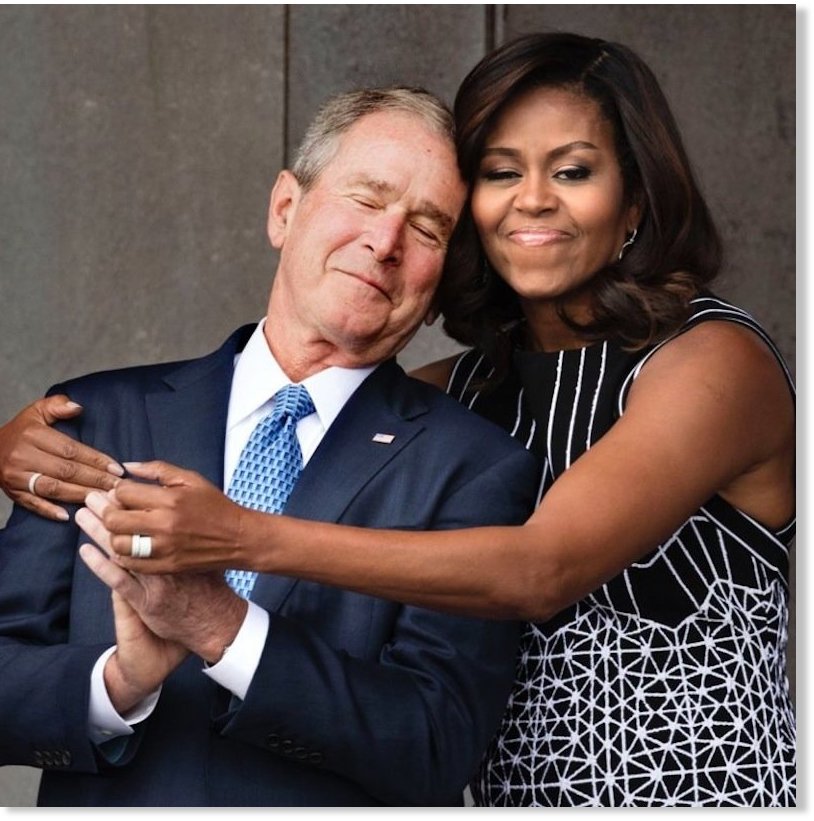
Bush and michelle
As we inch closer and closer to November 8th, one thing has become increasingly clear to me. This election will be viewed by voters as a referendum on the status quo's itself. While it'll definitely be a referendum on Obama specifically, it's much bigger than that. It'll be about whether the American people want to continue along the path we've been on for decades, or if they're willing to try something entirely different.

Indeed, Hillary Clinton clearly highlighted the choice herself earlier today with the following tweet:
Comment: Do not miss: "The Bush-Clinton nexus": Permanent criminal state, "a Clinton White House guarantees war with Russia"


Cult

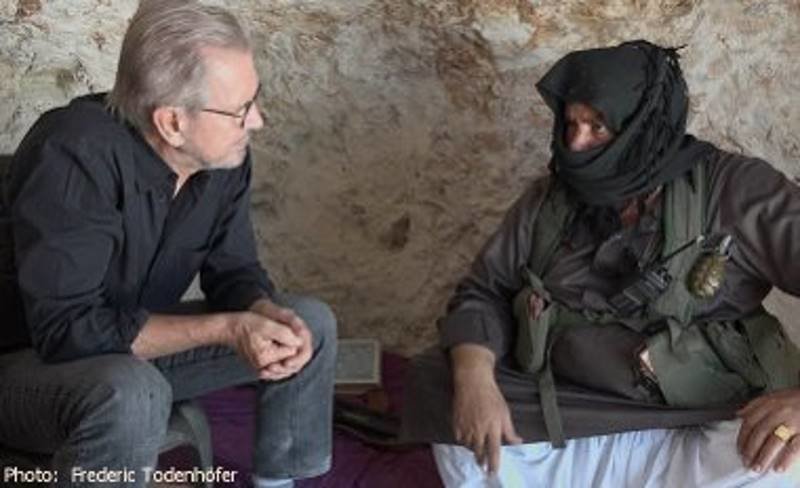
Best of the Web: Interview with Al-Nusra commander Abu al-Ezz: "The Americans stand on our side"

interview jihadist
© Frederic TodenhöferJürgen Todenhöfer interviews rebel commander Abu al-Ezz
This interview by Jürgen Todenhöfer was first published in German on September 26 2016 by the Kölner Stadtanzeiger, the major newspaper in the Cologne region. (The interview was copied and translated to English by Bernhard for educational and academic purposes.)

Interview with al-Nusra commander "The Americans stand on our side"

By Jürgen Todenhöfer

It was the seventh trip by my son Frederic and me to the civil war country Syria. We were there for 13 days. Words can only barely describe the extent of damage and suffering on both sides.

We conducted the interview ten days ago with a commander of the al-Qaida branch "Jabhat al-Nusra". Abu al-Ezz reported quite openly about his financiers Saudi-Arabia, Qatar and Kuwait. We were able to exactly research the identity of the man and know practically everything about him.


Comment: Syria is the front line against the head-chopping Wahhabist maniacs unleashed by the US through its proxies Saudi Arabia and Qatar. Israel and Turkey have joined the game, as it suits their particular national agendas. Only Russia's timely intervention has prevented those mercenary crazies from overrunning the entire Middle East. The U.S. has sown the wind and will reap the whirlwind. Update: RT interviewed the German journalist who conducted this interview. Worth watching:


Choice quotes:

"Unfortunately, there isn't ... a peaceful, democratic opposition."

"In a certain way he [the Jabhat al-Nusra commander] is repeating what Pentagon said four years ago."

"This is a game everybody knows. It's very clear that the Americans know that their weapons will in the end be in the hands of terrorists."


Caesar

One year on from stunning intervention in Middle East, Syrian Arab Army grateful for Russian assistance against Western-backed terror

russia planes syria
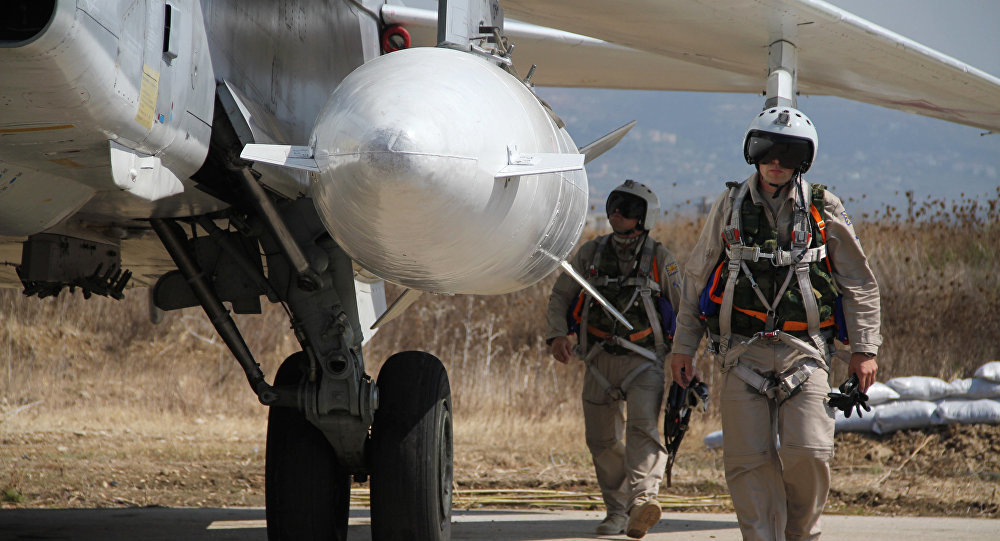
© Sputnik/ Dmitriy Vinogradov
In twelve months, Russian forces achieved major success in Syria, destroying radical fighters, stolen oil trucks, militant command and control centers, as well as deploying humanitarian aid and assisting the Syrian Arab Army (SAA), but most importantly bringing civilians hope for a peaceful future, a Syrian lieutenant told Sputnik.

Moscow launched its anti-Daesh operation in Syria almost a year ago, on September 30, 2015. Unlike the US-led coalitions' efforts in the country, Russia's campaign has been authorized by Damascus and is conducted in close cooperation with government forces. "Russian aircraft have brought Syrians hope for life and security," the source said. "In Latakia alone, dozens of villages were liberated in several months [after the Russian operation was launched]. Thousands of people returned to their homes. The SAA retook control of hundreds of strategic locations. People are no longer at risk of the militants shelling them because [radical fighters] were pushed far away from Latakia."

Comment: What else can we add but...

Ave, Vladimir Vladimirovich, Liberator of Syria


Propaganda

US propaganda machine in action: Manipulating home front opinions about the Syrian war

U.S. propaganda syria
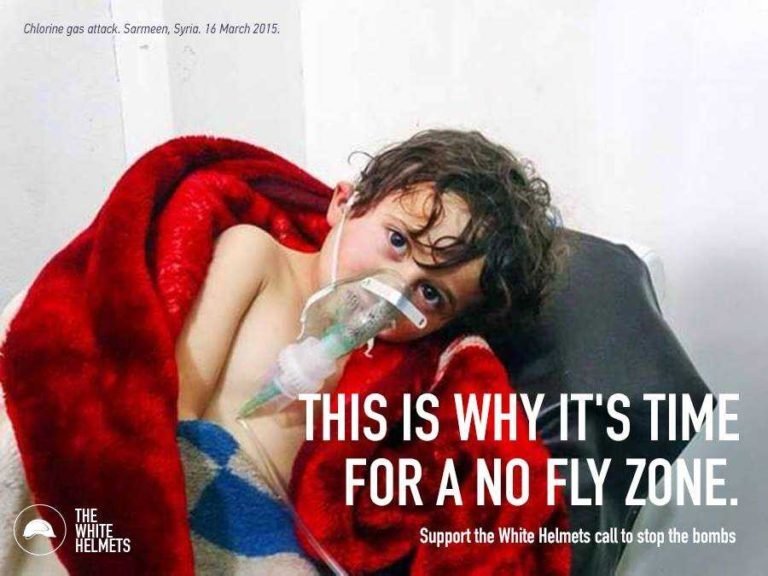
A heart-rending propaganda image designed to justify a “no-fly zone,” a major U.S. military operation inside Syria against the Syrian military.
U.S. foreign policymakers have experimented at planting propaganda in social media and then citing it as evidence to support their goals, a process now playing out in the Syrian "regime change".

Manipulation of public perception has risen to a new level with the emergence of powerful social media. Multibillion-dollar corporate giants, such as Facebook, Twitter and Google, influence public perceptions, often via payments for "boosting" Facebook posts, paid promotion of Tweets, and biased results from search engines.

Marketing and advertising companies use social media to promote their clients, but so do U.S. foreign policy managers who hire or enlist these companies to influence public perceptions to support U.S. foreign policy goals.

For example, Secretary of State Hillary Clinton described making sure that Twitter was primed for street protests in Iran following the 2009 election, ready to spread and manage news of protests following the election and the killing of a young woman, which was blamed on the Iranian government although the circumstances of her death were murky. [Hard Choices hardback, p 423]

The results of similar media manipulation can be seen in the widespread misunderstanding of the conflict in Syria, amid the demonization of the Syrian government and leadership and the skillful use of social media by anti-government activists. Influenced by both mainstream and this alternative media, most people in the West do not know that Bashar al-Assad remains popular with many Syrians. Nor do they realize that Assad won an election two years ago.

Comment: In case that's not enough evidence:


SOTT Logo

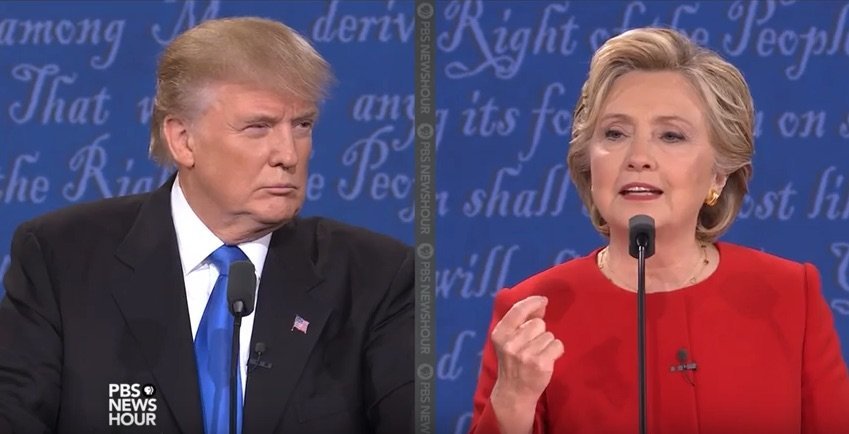
SOTT Focus: First Clinton-Trump debate: Worth a laugh, but not much else

trump clinton
This is the first debate I've watched since the first Obama debate back in 2008. I tuned in to be entertained more than informed. I have to say I was a little bit disappointed in Trump - he tossed out a couple of minor zingers but seemed to be really holding back. Perhaps he is following the "American TV model" where the first episode or two in a season are usually really suspenseful and draw you in, the middle of the season is often tangential standalones that are rather boring, and the finale brings it all to a climactic clash. Perhaps he's luring Clinton into a false sense of security and he's really going to make a media splash at the "season finale" of the presidential campaign that will stick with everyone, and which will be harder for her to redirect. Outside of that or someone strong-arming him to shut up, it really seemed like he wasn't all there.

Overall this debate seemed like a draw, with both Trump and Hillary mainly doing "fan service" without getting into a real debate outside of their respective boxes. We had a sort of watered-down Trump trying to keep his angry unemployed people roused up without whipping them into a fervor, and Clinton recycling the same old yuppified pseudo-intellectual social equality/great society stuff that the so-called intelligentsia of the nation loves to slurp down. If you weren't already in one of these two camps, I don't see where there was anything of substance said that would sway your opinion, which is nothing new with these so-called "debates."

Arrow Up

New conflict in Balkans? Serbs outrage NATO and al-Qaeda by holding forbidden referendum

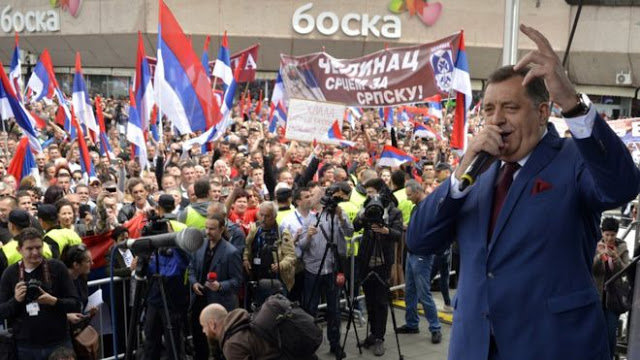
Milorad Dodik
Prime Minister Milorad Dodik leads a pre-victory rally in Banja Luka, de facto capital of Republika Srpska
Understanding post-Yugoslav geopolitics makes the global situation today involving NATO, the EU, Russia, Syria, and Gulf States all suddenly crystal clear. The West Balkans is where all of these collide. - ed

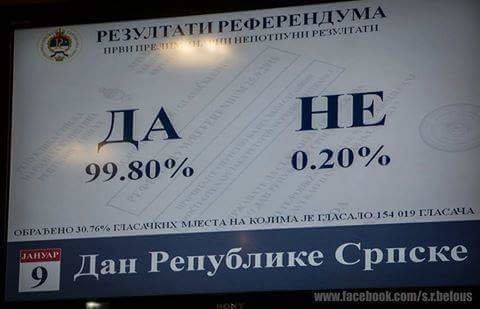
Republika Srpska - the Serbian autonomous state locked inside of Bosnia & Herzegovina - held a game-changing referendum yesterday. The referendum was nominally over the recognition of a state holiday - Independence Day. It was publicly endorsed and supported by the Prime Minister of Republika Srpska, Milorad Dodik.

srpska referendum
Last night, the final votes were tallied up, with an overwhelming 99.8% voting 'Yes' and approving of recognition of Independence Day.

But critics and supporters, on both sides, unanimously agree that it is really a test run for a very likely referendum on an actual independence bid in the future, to break from the Republic of Bosnia & Herzegovina, and with the potential to join with the Republic of Serbia, and its capital of Belgrade, to its east. This is a move that Russia backs.

Such a referendum for independence can occur now at any time between the present, and the publicly discussed year of 2018. The precise dates will depend on the speed that NATO moves with Bosnian leaders to push the fragile, multi-confessional and multi-ethnic post-Yugoslav state into the NATO alliance and destabilizing constitutional reforms.

Comment: Republika Srbska's president Dodik ignored a summons to Sarajevo for questioning after defying the Bosnian high-court ruling forbidding the referendum. Citing concerns for his safety, he said he was willing to give a statement from any other judiciary office in RS. He could now face an arrest warrant.


Pirates

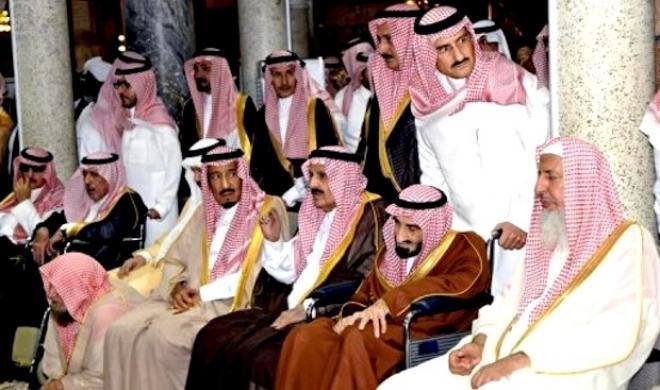
The ongoing battle for who will be the next king of Saudi Arabia

Saudi Royal family
A struggle for the post of the future King is apparently unfolding in Saudi Arabia. Due to his old age and many diseases, the acting King, as they say, "reigns but does not rule". However, most of his functions, especially in foreign affairs, are performed by his son. According to the official hierarchy, he is just the third most important person in the Kingdom, while Muhammad bin Nayef Al Saud is the second one and official heir to the throne, even though he is the King's nephew.

Important to note is why the nephew, and not the son, has become the heir to the throne. In the 2000s and early 2010s, the principle of gerontocracy prevailed. Over a short period, three Crown Princes died, one after another, due to old age. In 2015, according to the tradition, Muqrin bin Abdulaziz, the youngest of the sons of the Kingdom's founder, Abdulaziz bin Abdul Rahman Al Saud (Ibn Saud), became the Crown Prince. After April 29, 2015, when King Salman changed the scheme of succession, his nephew, Muhammad bin Nayef Al Saud, who has no heir and therefore is unable to pass power to his son, became heir.

To describe the son of the King and real candidate for the royal throne in detail, we must first note that he is quite a young man, born in 1985. Currently, Muhammad bin Salman Al Saud is the Deputy Crown Prince of Saudi Arabia, the son of the King Salman, the Second Deputy Prime Minister and Defense Minister, the head of the Royal Court, the Chairman of the Economic Affairs and National Development Council, and the holder of a number of less important positions.

Anyone who has talked with the Saudi tends to say the same of his negative features: irascibility, impulsiveness, his lack of the desire to regard another person's opinion, even that of a foreign state's President or Prime Minister, the absence of experience in negotiations which leads to his lack of flexibility in decision-making, excessive stubbornness and belief in his rightness, even if his errors are obvious to everybody. The Prince is also vengeful and has an inert inability to forgive his grievances, which is characteristic of reasonable rulers with great experience. In this case, an Arab proverb, which says that a Bedouin is like a camel that never forgets and never forgives offences, is applicable. To sum it all, it is no big secret that these are the typical traits and genes of a common Bedouin, which in this case come from the House of Saudi. The same features can be found among other members of the Saudi family, even when they became Kings of Saudi Arabia. The fact is that they became Kings at the advanced age and were able to hide their negative traits of character.

Comment: Is there about to be a soft coup d'etat in Saudi Arabia?


Info

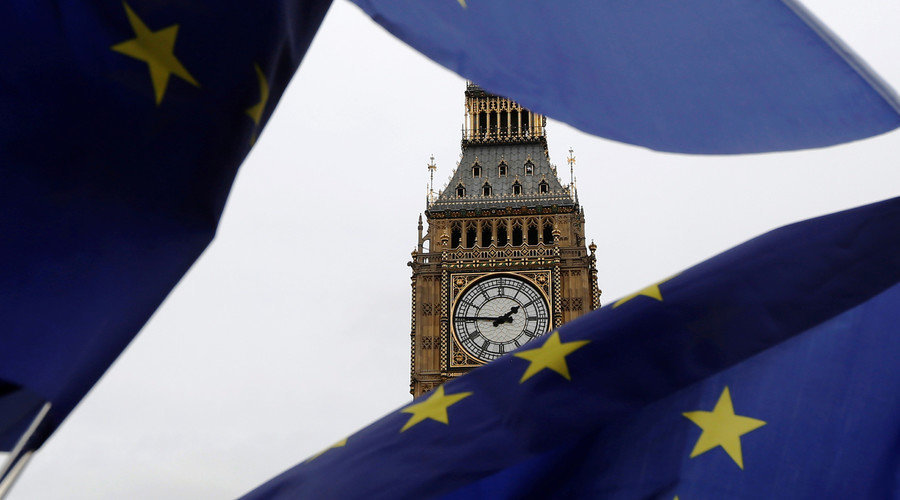
British government waffles about maybe starting 'Brexit' sometime in 2017

London tower
© Luke MacGregor / Reuters
Growing evidence indicates the British government will invoke Article 50 to trigger Brexit early next year, despite Prime Minister Theresa May refusing to comment on a timetable.

May reportedly told Martin McGuinness, Northern Ireland's deputy first minister, she would get the ball rolling "early next year," it emerged on Tuesday.

Speaking at an event at the Labour Party annual conference in Liverpool, Sinn Fein's McGuinness said: "I asked her about when she will trigger Article 50 of the Lisbon Treaty [and she said] that she was going to do it not this year but very early next year.

"So we are working on the basis that early next year, the article will be triggered," he said, Politics Home reports.

Eagle

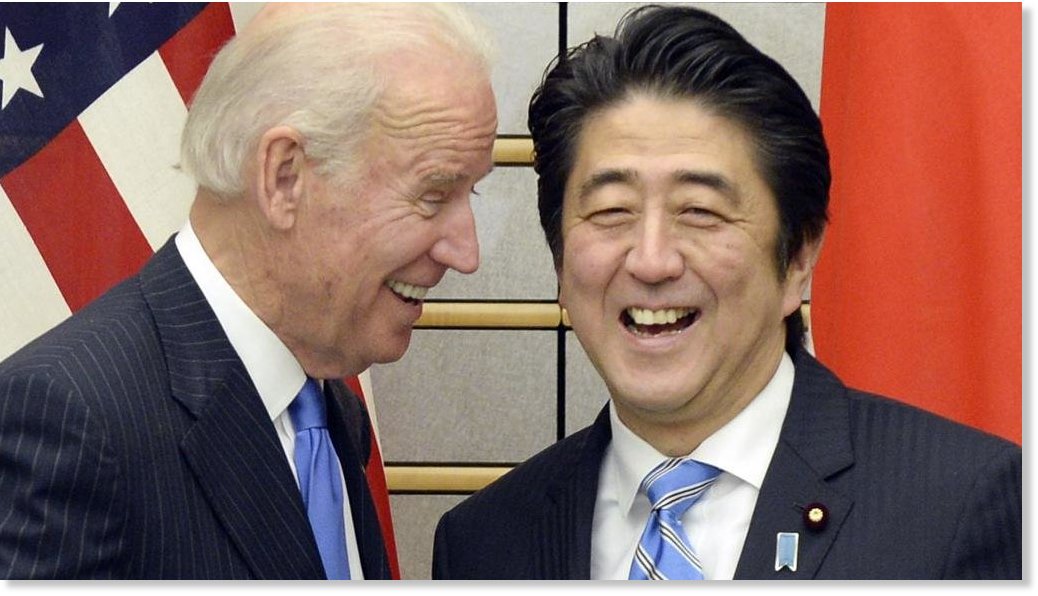
Washington's pathocratic troublemaker-in-chief: Vice President Joe Biden

biden abe
Barack Obama may be the nominal Commander-in-chief of the United States' Armed Forces. However, it's becoming clear that Vice President Joe Biden is far more than your ordinary passive Vice President. Indeed, a close look at his agenda internationally in recent months gives the clear impression that 'ol Smilin' Joe is in fact Washington Troublemaker-in-Chief.

I've mentioned in an earlier piece, in passing, that Biden seems to play a role similar to that of Vice President Dick Cheney in the George W. Bush White House - running the show in key global policy decisions under a passive and largely clueless President. Or the role that G.H.W. Bush, former CIA Director played during the eight years of the Reagan Presidency. The latest example is Biden's nasty meddling into the highly-sensitive geopolitics of the South China Sea and East China Sea disputes with China.

During the ongoing annual opening of the UN General Assembly in New York, Joe Biden held a private talk with Japanese conservative Prime Minister, Shinzo Abe in which, according to the official statement from Biden's office, "The Vice President reiterated the United States' ironclad commitment to Japan's security. Both leaders agreed to increase coordination on East China Sea and South China Sea issues."

For those who have bothered to look closely at the Washington role in giving the Japan Abe regime backbone in bolder, provocative moves against China in recent years, the Biden statement about US' "ironclad commitment to Japan's security" and his statement about agreeing to "increase coordination on East China Sea and South China Sea issues," can only be seen as a dramatic escalation of future military tensions against China—one completely ignored by mainstream Western media.

Comment: Who would believe that behind all the plagiarized speeches, public gaffs, hair plugs and meaningless public appearances that Joe Biden is such an effective agent of the US pathocracy?! Just a reminder that incredibly destructive individuals for Empire can sometimes appear to be complete doofuses.

Biden exemplifies the pathocracy.
Definition of Pathocracy

Definition: pathocracy (n). A system of government created by a small pathological minority that takes control over a society of normal people (from Political Ponerology: A Science on the Nature of Evil Adjusted for Political Purposes, by Andrew Lobaczewski)

Pathocracy

from Greek pathos, "feeling, pain, suffering"; and kratos, "rule"

A totalitarian form of government in which absolute political power is held by a psychopathic elite, and their effect on the people is such that the entire society is ruled and motivated by purely pathological values.

A pathocracy can take many forms and can insinuate itself covertly into any seemingly just system or ideology. As such it can masquerade under the guise of a democracy or theocracy as well as more openly oppressive regimes.

Characteristics

1. suppression of individualism and creativity.
2. impoverishment of artistic values.
3. impoverishment of moral values; a social structure based on self-interest and one-upmanship, rather than altruism.
4. fanatical ideology; often a corrupted form of a valid viable 'trojan' ideology which is perverted into a pathological form, bearing little resemblance to the substance of the original.
5. intolerance and suspicion of anyone who is different, or who disagrees with the state.
6. centralized control.
7. widespread corruption.
8. secret activities within government, but surveillance of the general population. (In contrast, a healthy society would have transparent government processes, and respect for privacy of the individual citizen).
9. paranoid and reactionary government.
10. excessive, arbitrary, unfair and inflexible legislation; the power of decision making is reduced/removed from the citizens' everyday lives.
11. an attitude of hypocrisy and contempt demonstrated by the actions of the ruling class, towards the ideals they claim to follow, and towards the citizens they claim to represent.
12. controlled media, dominated by propaganda.
13. extreme inequality between the richest and poorest.
14. endemic use of corrupted psychological reasoning such as paramoralisms, conversive thinking and doubletalk.
15. rule by force and/or fear of force.
16. people are considered as a 'resource' to be exploited (hence the term "human resources"), rather than as individuals with intrinsic human worth.
17. spiritual life is restricted to inflexible and indoctrinare schemes. Anyone attempting to go beyond these boundaries is considered a heretic or insane, and therefore dangerous.
18. arbitrary divisions in the population (class, ethnicity, creed) are inflamed into conflict with one another.
19. suppression of free speech - public debate, demonstration, protest.
20. violation of basic human rights, for example: restriction or denial of basic life necessities such as food, water, shelter; detainment without charge; torture and abuse; slave labour.


USA

Best of the Web: The presidential debate - Mother superior vs ranting schoolboy

Presidential debate
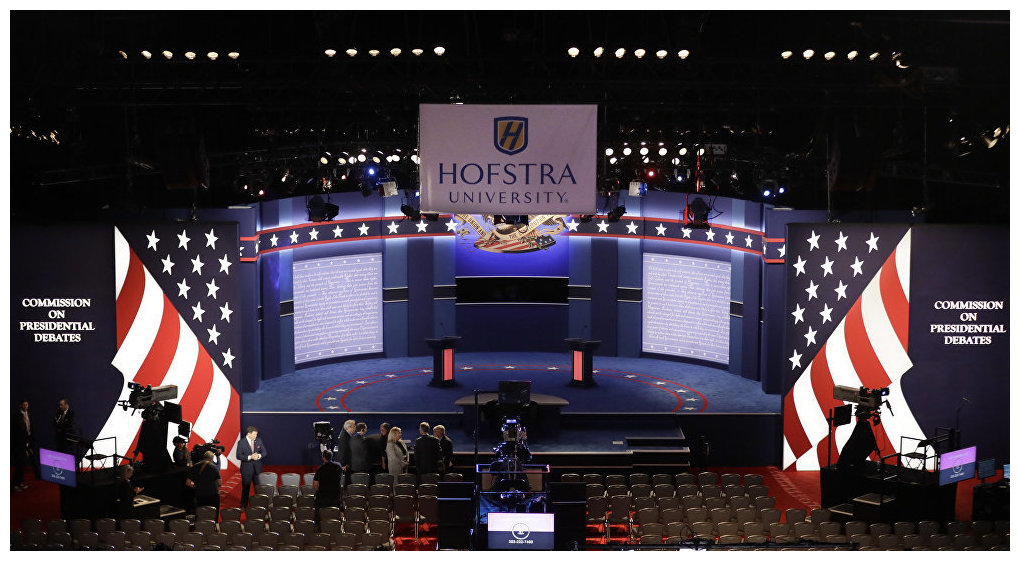
© AP Photo/David GoldmanPeople wait in the hall for the presidential debate between Democratic presidential candidate Hillary Clinton and Republican presidential candidate Donald Trump.
The temptation is irresistible to conceptualize the Clinton Machine's strategy going into the first US presidential debate; let Donald Trump metastasize into a pretzel. Mission not impossible; in fact, accomplished.

Sniffin' and slidin', beepin' and sippin', angrily chokin', even swoopin' on the mike to choreograph a blow, "Donald" (as addressed by "Secretary Clinton") fell for every shape and size of bait thrown by a canny, relentlessly focused and rehearsed-to-death, Yale-trained, Lawyerly Mother Superior. Freud, Jung and Lacan must have shed tears of joy in their heavenly pad watching the Ego-unraveling show.

While Secretary Clinton controlled the debate, Donald could not even control his temper; but this being The Donald, it did not prevent him from launching an out of left field self-elegy to his "temperament".

The latest installment of the longest job interview on the planet, played out in a deep blue stage with white stars featuring an American eagle with an - out of place — olive branch, may have qualified as wild, wacky TV at its apex.

Yet on the Donald front it was mostly painful to watch. Stream of consciousness non-sequiturs ruled, as in, "I have a son who's 10, he's so good with computers" — running commentary on US cyber-security vulnerability.

But then, from a global public opinion point of view, there's geopolitics - something that vastly infantilized swathes of Americans consider at best a big, meaningless word. Yet Secretary Clinton herself was keen to emphasize, "words matter".

So let's see how (and if) geopolitical words made sense at the Trump/Hillary cage match.