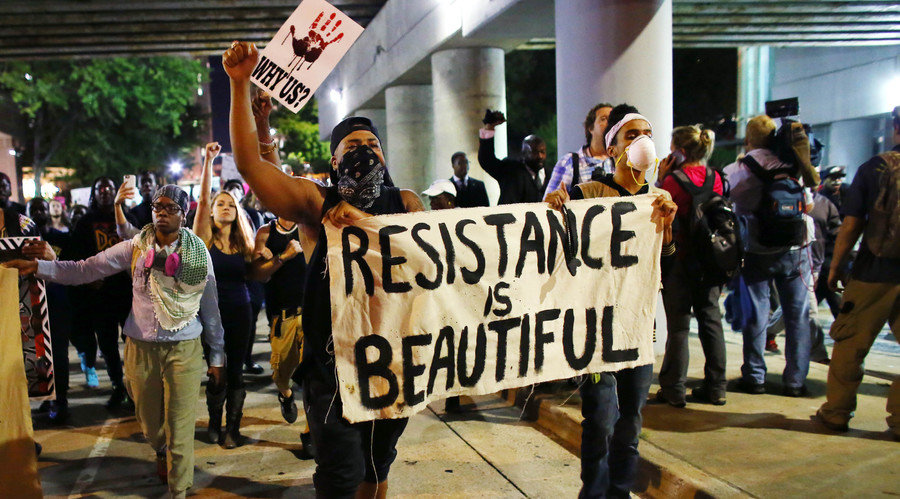
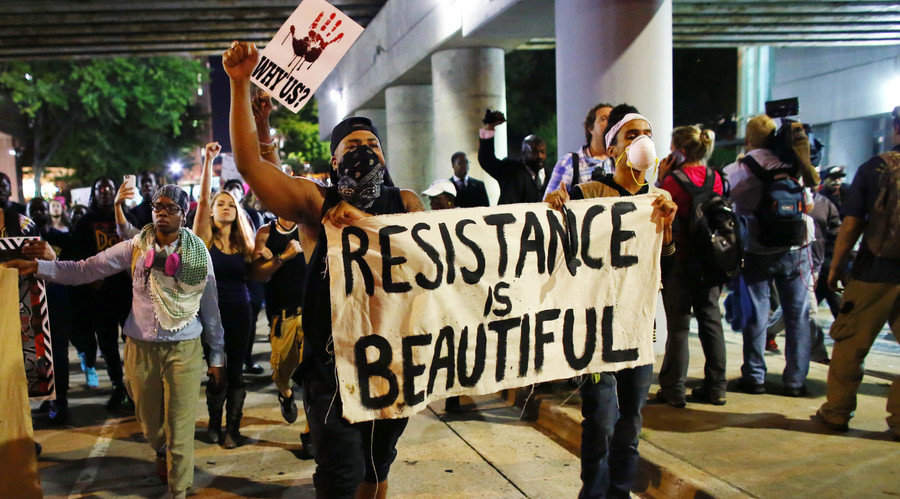
© Mike Blake / Reuter Protesters walk in the streets downtown during another night of protests over the police shooting of Keith Scott in Charlotte, North Carolina, U.S. September 22, 2016.
Police accountability is increasingly a hot button issue, and the Justice Department's lack of data on police shootings has been an object of scrutiny. The DOJ now says that it will start collecting nationwide data on violent encounters next year.
Attorney General Loretta Lynch released a plan from the Department of Justice (DOJ) to further police accountability Thursday evening. Currently, the most accurate databases on police shootings are operated by news outlets and other private initiatives, such as the
Washington Post's database and Fatal Encounters.
The DOJ has kept no comprehensive database or record of police shootings and only used voluntarily reported numbers provided by local law enforcement agencies.
Only two states are required to report officer-involved deaths. The reports from these states have been found to be inaccurate, further frustrating activists.
"I can't believe two years into this crisis that we're still having conversations about data," Kanya Bennett, a lawyer in Washington for the American Civil Liberties Union,
told the
New York Times.
Bennett is not the only one who has expressed her frustration with the void of information. Last year, FBI Director James B. Comey called the lack of data "
embarrassing" and said, "We can't have an informed discussion because we don't have data."
"People have data about who went to a movie last weekend, or how many books were sold," Comey said, "and
I cannot tell you how many people were shot by police in the United States last month, last year, or anything about the demographic. And that's a very bad place to be."













Comment: Also the North-South transit corridor: India's geopolitical hate for Pakistan is being used by the US to sabotage the North-South Transport Corridor