Puppet MastersS


Evil Rays

UK move on RT 'part of EU policy of harassment against Russia-linked organizations' - European thinktank

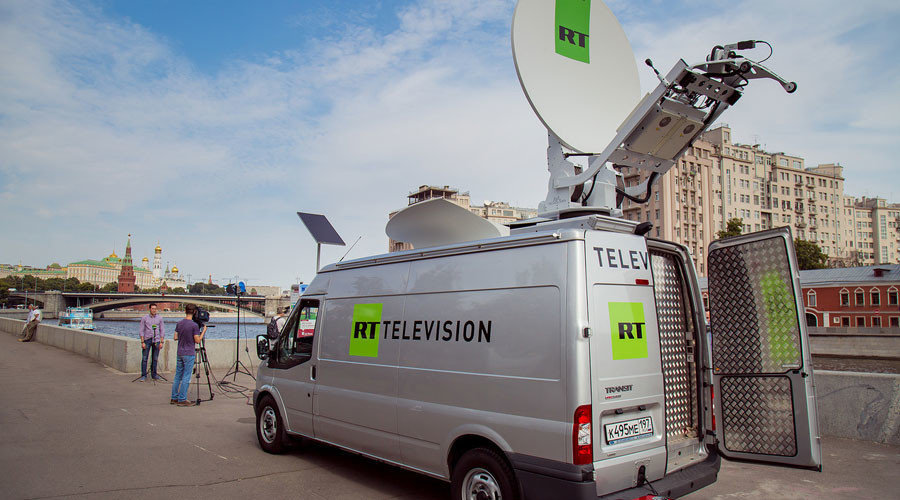
RT broadcast van
© RT
The announcement that RT's UK bank accounts will be frozen is part of a coordinated EU policy aimed against Russian-linked organizations, John Laughland, Director of Studies at the Institute of Democracy and Cooperation in Paris, told RT.

Laughland noted that the British government took over the Royal Bank of Scotland Group in 2008, at the time of the financial crisis, and still owns approximately 75 percent of its shares. He believes Monday's disturbing announcement to be "politically inspired."

"My suspicion is that it's part of a coordinated and Europe-wide policy of harassment against organizations of that are associated with Russia," Laughland told RT from Paris. "We must understand this policy of harassment and hostility within the context of the decision taken about six months ago at a European Union summit, at which it was decided on the EU-level to combat 'Russian propaganda and disinformation,'" as it's being called.

People

Russian & Syrian military to begin 8-hour humanitarian pause in Aleppo on Oct. 20

aleppo al qaterji
© Reuters
Russia is ready to cease operations in Aleppo at any moment to allow medics access to the Syrian city and ensure the evacuation of injured civilians, the General Staff said, adding that it has scheduled a humanitarian pause for Thursday.

"We are prepared to cease fire and ensure the unhampered access of medical personnel to the city and ensure the evacuation of the injured and sick as soon as we get a request from humanitarian organizations," Sergey Rudskoy, chief of the main operations directorate of Russia's General Staff, told the media.


According to Rudskoy, Moscow is ready "to discuss any initiatives and proposals for a settlement in Aleppo."

Russia and Syria will start carrying out a 'humanitarian pause' in Aleppo on Thursday, October 20, to allow passage to civilians and the withdrawal of militants from the city, he said.

Comment: So you have US & UK screaming "war crimes" at Russia and Syria, but the reality is that the only ones interested in doing anything to help the civilian population are Russian and Syria.


Stock Up

UK funding for Syria: Humanitarian crimes, 'moderate armed opposition', 'White Helmets', media propaganda

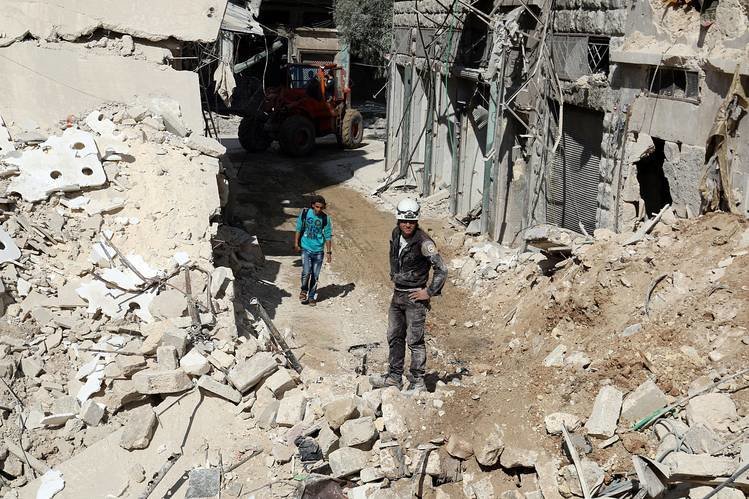
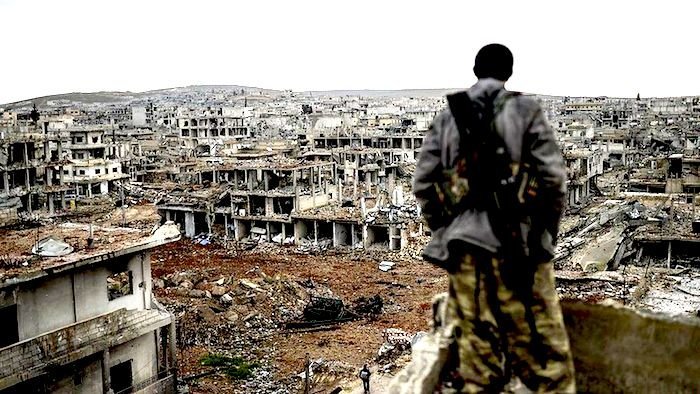
bombed out Syrian city
© Getty images"Syrian people: We did this for you."
A document produced last December by the UK Foreign and Commonwealth Office, headed: UK Humanitarian Aid in Response to The Syria Conflict, makes interesting reading. The British government it states, has spent "over £100 million" since 2012, "working closely with a range of actors" to "find a political solution to the conflict and prepare to rebuild the country in the post Assad era." (Emphasis added.)
"Our efforts ... include providing more than £67 million of support to the Syrian opposition."
One of the "actors" to benefit from hefty chunks of British taxpayers moneys is the Syrian National Coalition whose website states, under Mission Statement and Goals: "The coalition will do everything in its power to reach the goal of overthrowing the Assad regime ..." and to "Establish a transitional government ..." (Emphasis added.) Thus the UK government is overtly supporting the illegal overthrow of yet another sovereign government.

Th[is] all reads like a re-run of Ahmed Chalabi's Iraq National Congress and Iyad Allawi's Iraq National Accord, backed by the British and US governments to equally criminally overthrow Saddam Hussein.

Comment: Validation for Western actions is always an easy sell when 'unbiased' monitoring agencies are completely biased, serving false pretenses and are well-funded to do so. The UK is expending its wealth on a platform that has no legitimacy, nor higher purpose worthy of the cost.

Cost to Syria:
More than 250,000 Syrians have been killed, including nearly 12,000 children, according to the United Nations.
More than half of the county's population have had to leave their homes.
Four million are living as refugees in other countries.
And more than 80% of Syria's children have been impacted by the conflict.
...and the tolls keep mounting

See also:


Windsock

Duterte to raise arbitration case with China, won't bargain

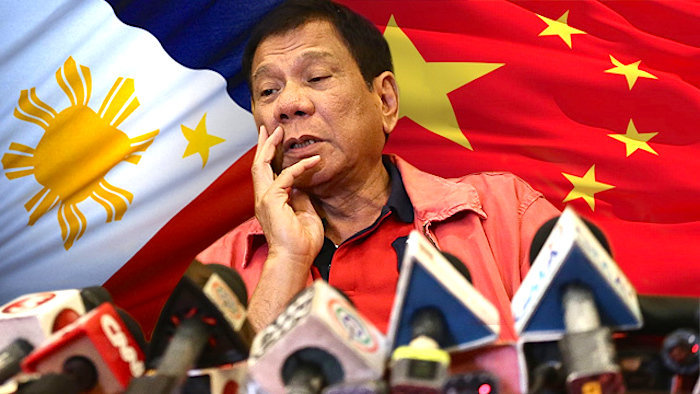
Duterte w flags
© Rappler
Philippine President Rodrigo Duterte said on Sunday he would raise a controversial arbitral ruling on the South China Sea with China's leaders, and vowed not to surrender any sovereignty or deviate from the July award by the tribunal in The Hague. Duterte said his trip to China this week represented a turning point in bilateral ties, but he acknowledged there was some public concern about his rapid rapprochement moves and reassured Filipinos that would not impact on the country's maritime sovereignty.

In comments that will not sit comfortably with the Chinese leadership, Duterte said the decision by the Permanent Court of Arbitration would be talked about and the parameters of the award would be discussed, but there would be no "hard imposition" of it.

The ruling dealt a blow to China's extensive claims in the South China Sea. Beijing has refused to recognize the case and has chided any country telling it to abide by the ruling.

"I will not bargain anywhere, we will continue to insist that is ours," he told a news conference in his home city of Davao. "The international tribunal decision will be taken up." The unpredictable president's moves to strongly engage China, just a few months after an arbitral award that sparked fears in the region of a backlash by Beijing in the South China Sea, mark a striking reversal in Philippine foreign policy since he took office on June 30.

Duterte goes to China on Tuesday with at least 200 members of the Philippine business elite to pave the way for what he calls a new commercial alliance. Among the areas expected to be prioritized are financing for Philippine businesses, farm exports, major infrastructure investments and tourism.

Comment: Duterte is a surprising "unknown." How will China prepare for this guy?!!


Target

Why is the demise of Thailand's king such a big deal?

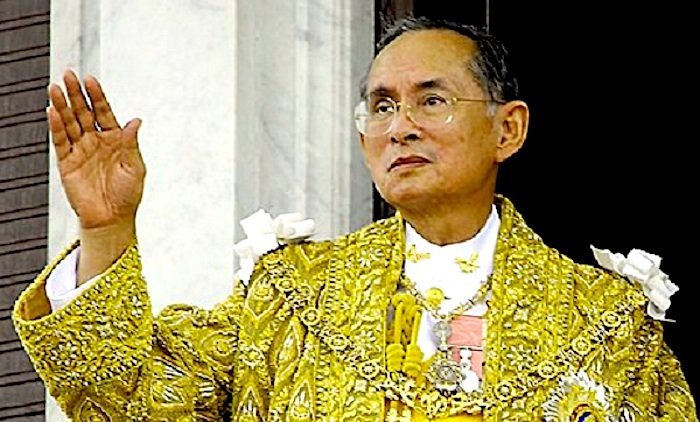
Thai king Bhumibol Adulyadej
© HNGN.comThailand's former monarch, King Bhumibol Adulyadej
The passing of Thailand's head of state, the 88 year old King Bhumibol Adulyadej, marks a historically significant event in Thailand's history. For most Thais, they have known only one king their entire life - King Bhumibol Adulyadej.

The significance of Thailand's monarchy to Thai people is difficult for Westerners to understand. Unlike Western monarchies who rule from above, Thailand's monarchy has historically ruled through service to the people. It is in recognition of this service that drives hundreds of thousands of Thais into the streets of Bangkok to participate in the beginning of funeral rites this week.

The depth and scope of this service includes not only the political boundaries and stability the monarchy provided when politicians and political parties clashed within the nation, but also service in driving long-term infrastructure projects regarding irrigation, energy, and agriculture shortsighted politicians refused to pursue.

Many aspects of Thai agriculture, from the introduction of new crops to the concept of cooperatives and localizing rice mills, were introduced through initiatives promoted and funded by the Royal Family itself. King Bhumibol Adulyadej's royal palace in Bangkok was many years ago converted into a demonstration and training center where today, foreigners and Thais alike can augment their skills and diversify their economic activity.

Politically, the monarchy's ability to reside above contests of political power and the deep respect Thais hold for the institution, creates a set of boundaries that have prevented dangerous - even violent political struggles - from expanding into the sort of destructive conflicts seen previously in neighboring Cambodia or currently expanding across the Middle East.

For Thailand's enemies who seek to undermine political stability or overthrow Thailand's political order, their primary obstacle and thus target has always been the nation's revered, powerful monarchy. The passing of Thailand's Bhumibol Adulyadej presents a perceived vulnerability Thailand's enemies will undoubtedly seek to exploit to weaken Thailand and thus by doing so, disrupt regional stability.

Comment: While Russia may be wiser, expect the US to overplay its hand to destabilize Thailand for self-purposes, dumbly unaware everyone 'can see the man behind the curtain.' Resistance is (hopefully) not futile.

See also:


Eye 1

"Why do they hate us so?" A Western scholar's reply

Russian sailor
© unknown
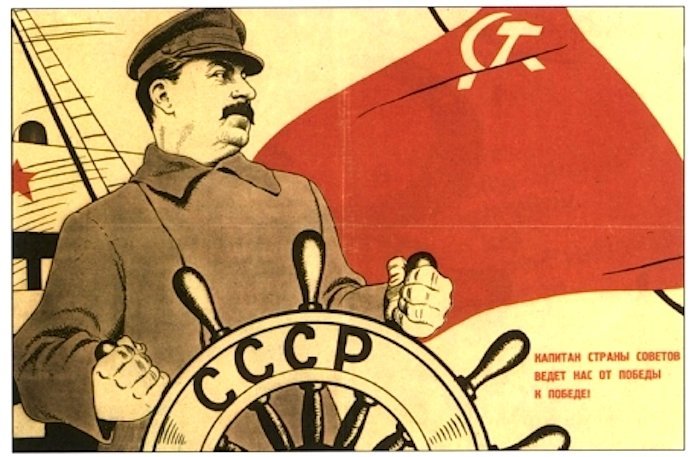
I gave a lecture in Moscow during the spring about western-Soviet relations over the last century. With the partial exception of World War II, it is a narrative of unrelenting hostility. After I had finished, a student asked, "why do they hate us so?" The answer is not complicated. You cannot cross "da man" in the United States, that is, the powerful, wealthy US "deep state", which sets the rules for everyone else and enforces its worldwide hegemony against disobedient states and leaders.

You could not get more disobedient than the Bolsheviks. In November 1917, or October according to Julian calendar, they seized power in Russia and declared their intention to make a world socialist revolution. You can imagine the indignation and anger of the western powers, all at war with Imperial Germany, looking over their shoulders to see that revolution had erupted in Russia. It's a complicated story but not everyone in the west reacted blindly to the Bolshevik seizure of power; none other than the British Prime Minister David Lloyd George thought the Entente should back the Bolsheviks against the Germans. His idea was an early prototype of the eventual Grand Alliance.

In 1918 there were few takers for that eccentric idea especially when the Bolsheviks annulled the tsarist state debt and nationalised banks and industries in which foreigners held billions in investments. In the west these actions struck at the heart of the capitalist world order, and for the next three years, the Entente sent money, arms and troops to overthrow the Soviet government.

SOTT Logo S

SOTT Focus: Iraq Launches Major Op to Retake Daesh-held Mosul - Baghdadi Escapes in Nick of Time! - Suicide Attack Kills 70+ Iraqi Troops

isis
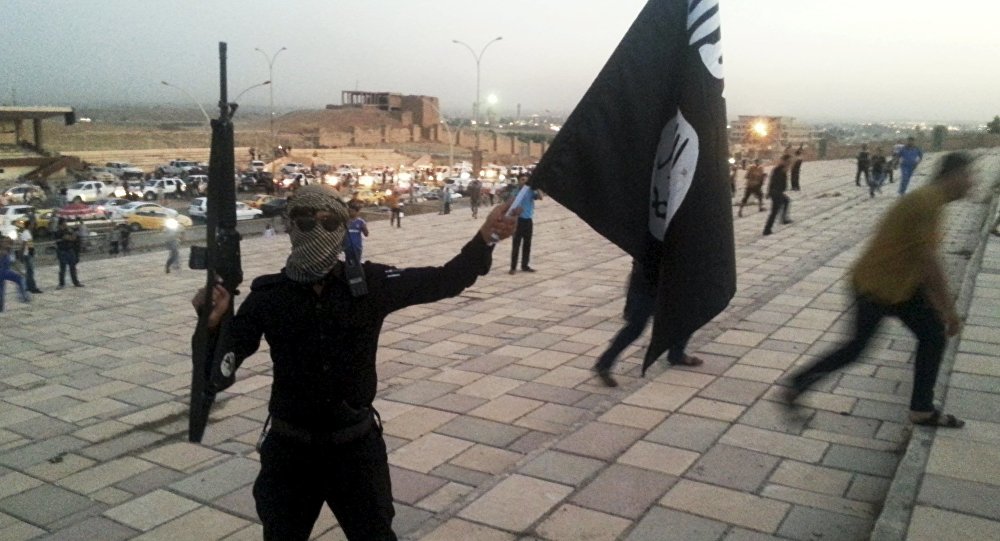
© REUTERS/ Stringer/FilesThe U.S.'s most successful export.
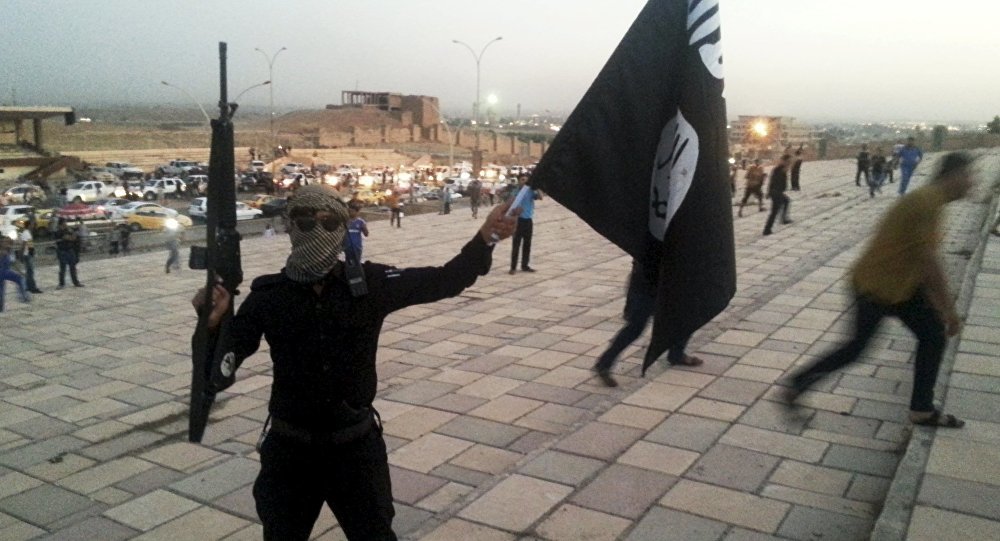
The operation to retake northern Iraq's city of Mosul from the Islamic State terrorist organization began this morning. Anti-Daesh "coalition" commander Lt. Gen. Stephen Townsend said the battle could last for weeks, "possibly longer", and "may prove to be a long and tough battle." An Iraqi military source says it could be completed in two weeks (just in time for the U.S. elections!). CENTCOM says 19 nations are participating, which basically means Iraq, the U.S., and a bunch of hangers-on to cheer lead and maybe ride shotgun during an airstrike or two.

Daesh overtook and occupied the city in June 2014, causing half its population to flee and leaving 1.3 million civilians. The number of estimated anti-Daesh forces ranges anywhere from 30,000 to 65,000 to 80,000, with 4,000 Kurdish Peshmerga and 24,000 militiamen, not to mention around 6,000 U.S. troops. (The Kurds have agreed with the Iraqi government not to enter the city, however.) They are set to battle an estimated 3,000-4,500 Daesh militants (according to U.S. military estimates).

Back in February 2015, there were rumors that as many as 30,000 Daesh fighters were in Mosul - a number dismissed by one Iraqi officer as Daesh propaganda, the real number being closer to 12,000 fighters. In March 2016, CNN reported an estimate of "up to 10,000 ISIS fighters" there. And just four months ago, in June, Osama al-Nujaifi, head of United Coalition in Iraq, confirmed that there were 12,000 militants in the city and its suburbs. At the same time, U.S. coalition Col. Christopher Garver said ISIS had "less than 10,000" fighters in Mosul.

In other words, for a year and a half, the number of Daesh militants in Mosul has been estimated by Iraqi and American sources at around 10,000-12,000. Now the Americans are saying there are only 3,000-4500. (And that probably includes the various local Baathists and Sufist Naqshbandi Army insurgents.) By those numbers, that means that anywhere from 5,500 to 9,000 Daesh fighters are MIA. Where did they go?

Chess

US media hyped Trump to help Hillary - tactic backfired according to Russian AI expert's analysis

trump
© The Economist
Clinton supporters wanted to knock out her arch-rival Jeb Bush from the presidential race

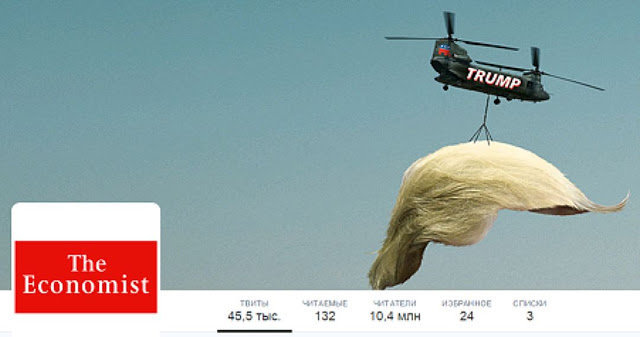
The eccentric billionaire popped up last year into the presidential elections like a jack-in-the-box, and messed up all Republican plans for the White House, having crept into their ranks. Trump became a headache for the Democrat Hillary Clinton and her entire party.

Donkey Ears

Analysts, political scientists, and other experts have been scratching their heads for several months over his phenomenon. Many on both sides of the ocean call Trump "the shame of America", awarding other bad adjectives, constantly predicting his demise. But he is still trying to force his way into the White house. And where did he come from?

Where - where from? You know, from the camel [Russian idiom -FR]. Sorry, from the donkey. This animal is the symbol of the Democratic party of the United States. The experts might point the journalist mixed up the animals. Say, the symbol of his native Republican party is the elephant.

The fact of the matter is, dear citizens, that donkey ears actually are sticking out behind the extravagant hairstyle of the Republican Donald, says Russian scientist Vladimir Shalack, although Trump had nothing to do with it.

Chess

U.S. begs Russia for 'mercy', gives up on Aleppo and admits Syrians will win

U.S. Secretary of State John Kerry and Russian Foreign Minister Sergey Lavrov
© Kevin Lamarque / Reuters
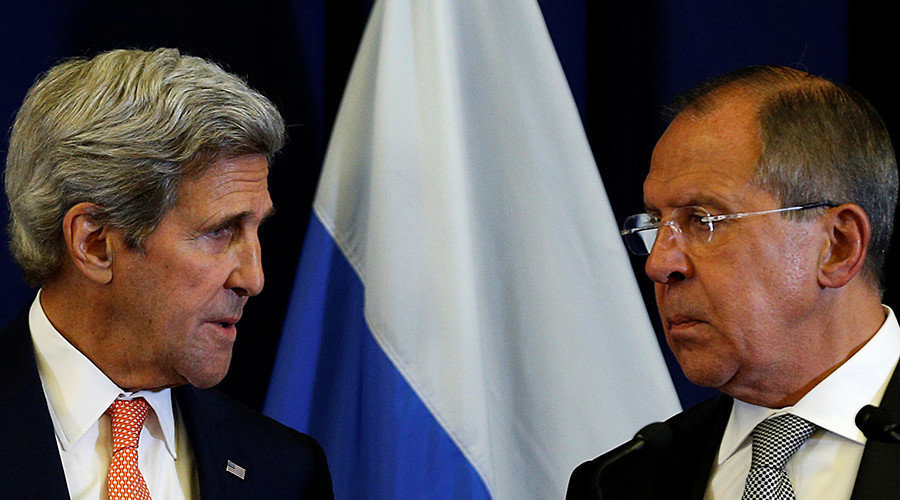
Press conferences by John Kerry and Boris Johnson following Western foreign ministers' meeting in London confirms military options to save Jihadi fighters have been abandoned and that the Western powers have accepted that the Syrian government with Russian support will recapture eastern Aleppo

As might be expected, the West's public acceptance of defeat in Aleppo came quietly, but it has now come.

The events of the last few week can be summed up quickly.

Following the US climbdown in the first week of October after the Russian warning of Russia's readiness to shoot down US aircraft carrying out bombing strikes against Syrian bases, a final attempt was made to scare and embarrass the Russians into getting the Syrians to call the Aleppo offensive off.

This centred on a failed and actually farcical attempt to isolate and embarrass the Russians at the UN Security Council (discussed in detail here), combined with empty threats to bring war crimes prosecutions against the Russians, and more empty threats of further sanctions against individual Russian officials (additional sectoral sanctions are out of the question).

Bad Guys

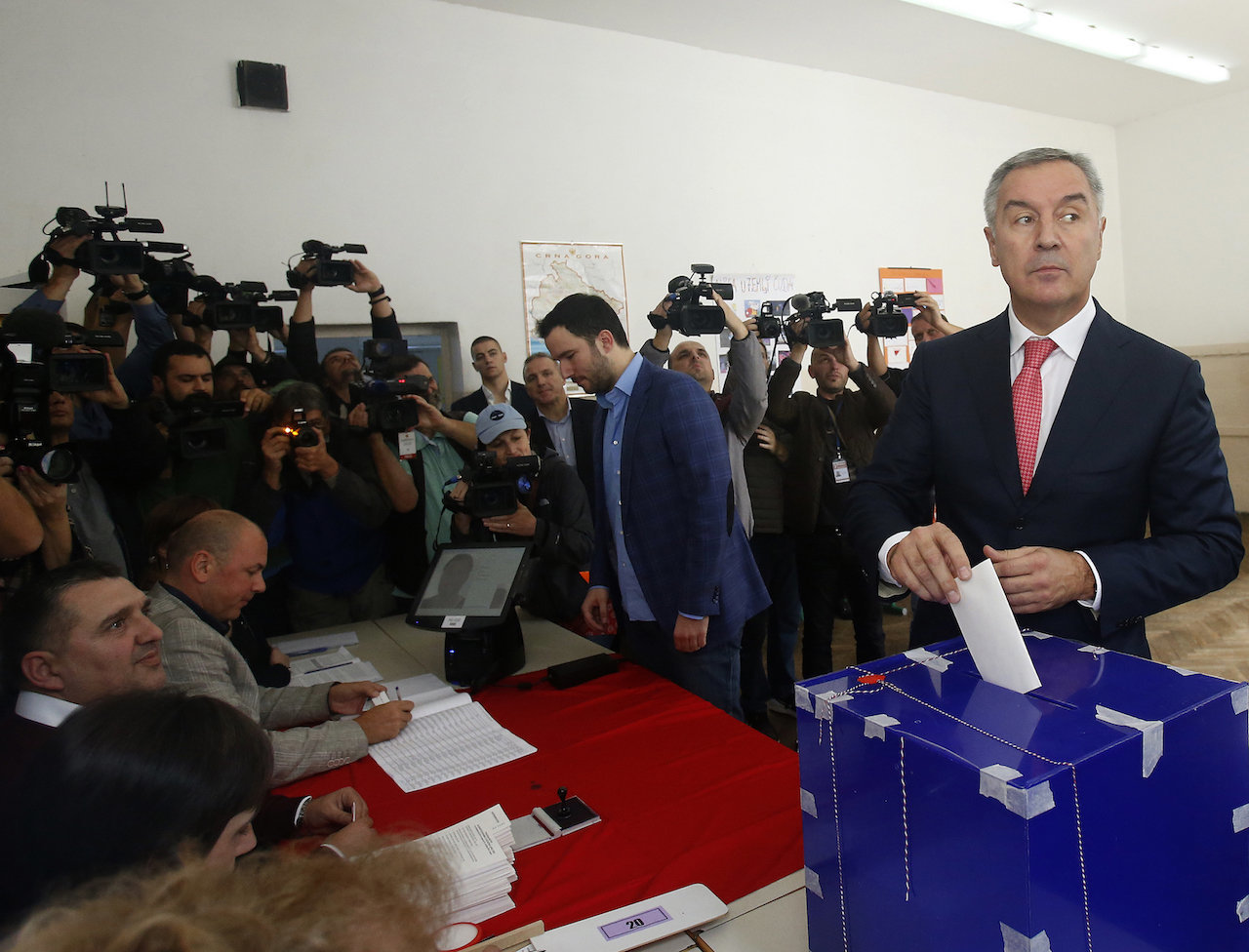
Montenegro elections: Pro-Western gangster wins most votes amid mass arrests, signal jamming and rumors of ballot-stuffing

Milo Djukanovic
© Beta/AP/Darko VojinovicMontenegro's PM Milo Djukanovic casts his ballot at the polling station in Podgorica.
During the parliamentary elections in Montenegro, people chose a life without NATO and the EU

Results

Despite the fact that the official results must be declared by the morning, they are still not known; however, parties, public organizations and the media have given an idea of ​​what the results look like.

The party of Prime Minister Milo Djukanovic, with well-known ties to criminal gangs, smugglers and Washington, received approximately 40% of the vote, more than 10% less than in the previous election. His bitter opponents from the "Democratic Front" are gaining more than 20%, and their colleagues from the opposition coalition government "grand coalition - key" - about 11%. 10% was won by the Democrats, led by Alex Becic.

The electoral census was passed by the Social Democrats of Ranko Krivokapic and the Social Democrats of Montenegro. Four seats in parliament are likely to be had by the representatives of national minorities: the BosniaK party passed through the "general" electoral threshold from 3.3% of the votes, and the coalitions "Albanians are determined" and "Albanian coalition", and "the Croatian civil initiative" to pass the census for minority parties, needed only 0.35% of the vote.

Thus the opposition in favor of solving the issue of NATO membership through a referendum was united, receiving a majority in parliament.

Comment: Fair and free elections? Or just another case of the US/NATO trying to gain more power in the Balkans?

See also: