Puppet MastersS


Eye 2

Flashback America the Borg: "We kill people based on metadata", says former director of NSA and CIA

Image
© Timeglassjournal.wordpress
Supporters of the National Security Agency inevitably defend its sweeping collection of phone and Internet records on the ground that it is only collecting so-called "metadata" - who you call, when you call, how long you talk. Since this does not include the actual content of the communications, the threat to privacy is said to be negligible. That argument is profoundly misleading.

Of course knowing the content of a call can be crucial to establishing a particular threat. But metadata alone can provide an extremely detailed picture of a person's most intimate associations and interests, and it's actually much easier as a technological matter to search huge amounts of metadata than to listen to millions of phone calls. As NSA General Counsel Stewart Baker has said, "metadata absolutely tells you everything about somebody's life. If you have enough metadata, you don't really need content." When I quoted Baker at a recent debate at Johns Hopkins University, my opponent, General Michael Hayden, former director of the NSA and the CIA, called Baker's comment "absolutely correct," and raised him one, asserting, "We kill people based on metadata."

Comment: General Michael Hayden, former director of both the NSA and the CIA, has just admitted that people are killed based on metadata. With such a logic prevailing in these agencies, does anyone believe that they will moderate their spying practices simply because a bunch of lawmakers say so?


Map

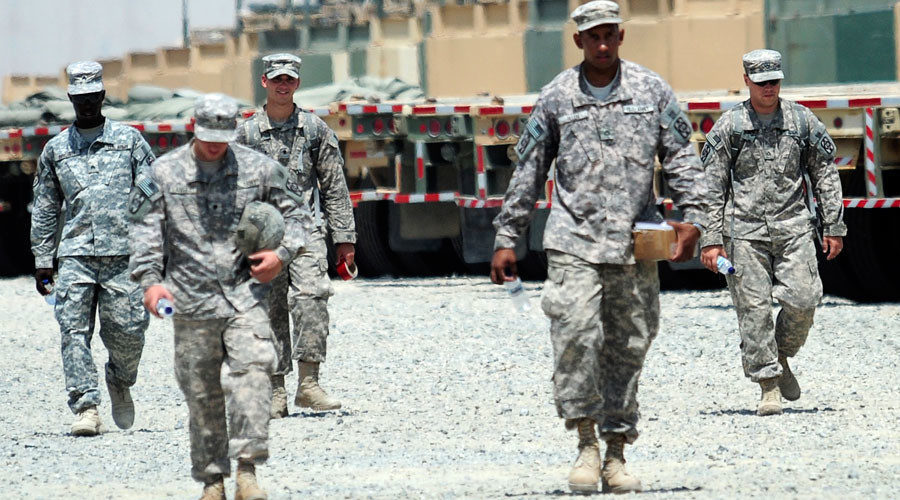
US mulls sending 'reserve' troops to Kuwait to fight ISIS

U.S. soldiers
© Stephanie McGehee / Reuters
The US is considering sending up to 1,000 more soldiers to Kuwait to provide a reserve force in the fight against Islamic State (IS, formerly ISIS/ISIL) in Syria and Iraq, Reuters reports.

The potential move to create a more rapidly deployable Kuwait-based force may become a part of the ongoing review of the US strategy to defeat IS, the news agency says, citing US officials.

Up to 6,000 US troops are currently deployed in Iraq and Syria, mostly as advisers.

"This is about providing options," an official, who spoke on condition of anonymity, told the news agency regarding the reported plan. Officials told Reuters the new deployment would provide US commanders on the ground with more flexibility to respond immediately to unforeseen challenges on the battlefield.

Eye 1

Time for British elite to get off their high horse on Russia

Boris Johnson
© Adrian Dennis/Agence France-Presse
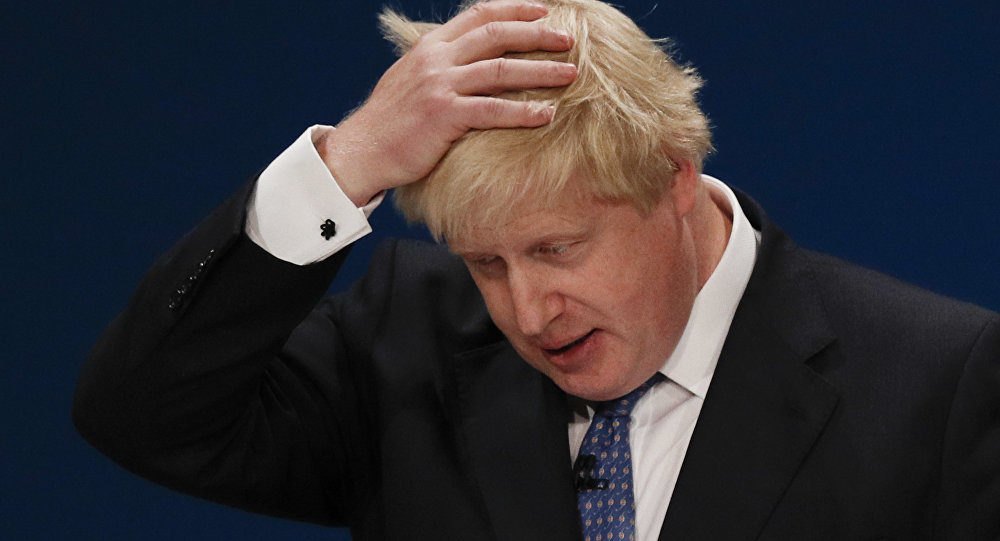
For a small nation with a has-been imperial past, British rulers appear to still suffer from the delusion of strutting around the globe as if on a high horse.

Now less of a splendid steed and more like a broken-down hobby horse rocking on its overblown pretensions.

Senior British government figures are reportedly due to visit Moscow in coming weeks, supposedly to normalize relations between the two states. But given the haughty attitude expressed this week by the British government towards Russia it does not bode well for an improvement in diplomatic ties.

Question

Is it time for NEW Europe?

disintegrated Europe
© Unknown
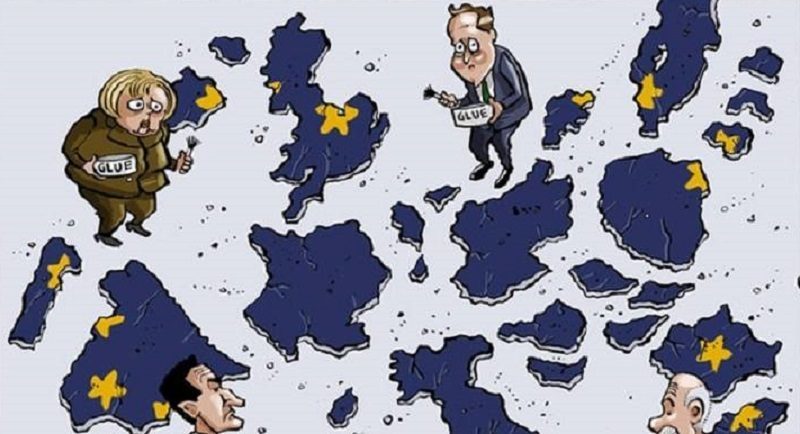
Today, more than ever, the European nations need a new Europe. A new form of union must be established, with new union treaty which respects nation's sovereignty. This is probably the best solution in response to the big European division. Junker's plans for 'Europe on several speeds' are nothing but farce. If we don't realize it - that's bad. If we continue to believe that the people who brought the crisis would be Europe's saviors - that's worse.

This year, 2017 is perhaps the most important one for the continent. Europe has reached its boiling point and there is no way back. The enormous political, economic and social division is not a result of random events although. Today's European crisis proved that the European elite don't know how to handle big crisis. Their response was late, weak and inadequate. The European leadership failed in every part of the risk management. Pre-crisis measures didn't exist and the reactive response to evens like refugee crisis were a mess. The truth is that European leaders didn't feel the pulse of their own people. They have preferred to protect their old doctrines and that's how the idea of 'Europe on different speeds' was born.

Comment: See also:


Info

FBI Director Comey reminds us 'no such thing as absolute privacy in America'

James Comey
© Brian Snyder / Reuters
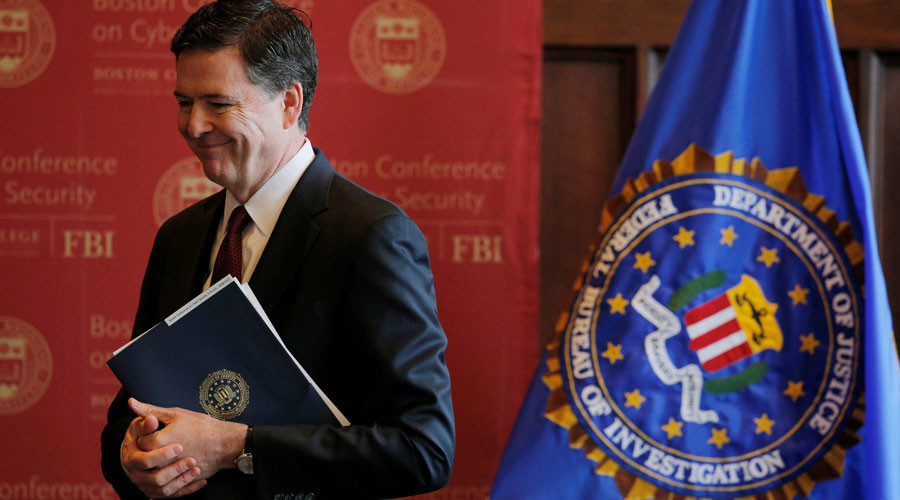
FBI Director James Comey has warned that absolute privacy does not exist in the US, noting that a judge can compel anyone to testify about their communications - and even their memories.

"There is no such thing as absolute privacy in America," Comey told a cybersecurity conference in Boston on Wednesday, while speaking about the rise of encryption since whistleblower Edward Snowden revealed National Security Agency (NSA) spy practices in 2013.

"There is no place in America outside of judicial reach," he added.

"Even our communications with our spouses, with our clergy members, with our attorneys are not absolutely private in America," Comey said. "In appropriate circumstances, a judge can compel anyone of us to testify in court about those very private communications."

Stock Down

US meddling takes its toll as Venezuelan cash reserves reach 'catastrophic low'

Venezuela Central Bank
© AP/Ariana CubillosA cleaning woman walks by replicas of Venezuela’s currency bills, hung in a hallway at the Central bank office building in Caracas, Venezuela.
Years of efforts to destabilize and weaken Venezuela's leftist government have taken their toll, with the South American nation now down to its last 10 billion dollars in cash reserves.

Despite having the world's largest oil reserves, Venezuela's economy has struggled to stay afloat in recent years. The Venezuelan government, led by Nicolás Maduro, has been forced to take out loans from China and Russia to avoid an economic collapse.

Unsurprisingly, Western media has continually blamed Venezuela's economic difficulties - and the resulting civil unrest - entirely on the nation's government, accusing it of gross mismanagement of its resources and wealth. But these dominant narratives consistently fail to consider the U.S.' long-standing efforts to remove Venezuela's leftist governmentfrom power, beginning first with former President Hugo Chávez and now his successor Nicolas Maduro. Venezuela's leadership may have changed, but U.S. tactics like the imposition of sanctions and the manipulation of global oil prices largely remain the same.

Bad Guys

EU60 and the failure of the European Union

Banca Centrale Europea
The 60th anniversary of the formation of the European Economic Union is coming up. However momentous this occasion is though, the Treaty of Rome has clearly favored some European nations over others. A pall shadow now looms over the experiment that was supposed to bring peace and prosperity to hundreds of millions. Here's a look at a stopgap initiative called EU60, an attempt to rescue what remains of a once powerful idea for Europeans.

The European Union has failed most of its citizens. The parliamentarians in Brussels, harnessed to the fragmented national players and institutions, are now tattered threads holding together a frayed idea. Those who questioned the union's efficacy from the start are now being proven right. Euroscepticism in the UK has caught fire in countries from Latvia to France. This reality is obvious by both the level of protest and activism against Brussels policies, and in the context of "nationalism" rekindled across much of Europe and the western hemisphere. Donald Trump's win in America, the Brexit vote, the emergence and popularity of right wing candidates like France's Marine Le Pen all reveal the weakness of the Eurozone today. What's more, today's acute problems really only validate the original skeptism critics had. But the desperate measures EU leaders like Jean-Claude Juncker are undertaking shows the real danger of an EU breakup soon.

Arrow Up

POST-ISIS ERA: Balance of power in Middle East

Post-ISIS MiddleEast
© South Front
In March, Moscow became the center of the diplomatic activity of global and regional powers involved in a number of the ongoing crises in the Middle East. Turkish President Recep Tayyip Erdogan is due in Moscow March 9 for a two-day visit. He will meet his Russian counterpart Vladimir Putin and will participate in a session of the Council on High-Level Cooperation between Russia and Turkey. At the same time, Israeli Prime Minister Benjamin Netanyahu will visit Moscow and to meet Putin. The two leaders will discuss the current situation in the Middle East and aspects of the Palestinian-Israeli settlement, according to the Kremlin press service. UK Foreign Secretary Boris Johnson will meet Russian Foreign Minister Sergey Lavrov in Moscow in the coming weeks. It will be the first UK foreign secretary visit to the country since 2012. High profile Swiss diplomats involved in the so-called "Geneva format" aimed on "resolving the Syrian conflict" and some military and political officials of the Islamic Republic of Iran will also visit Moscow, according to available information. On March 8-9, Germany's Foreign Minister Siegmar Gabriel will make a visit to Moscow to meet with his Russian counterpart.

Comment: While the US establishment fights with Donald Trump, the Middle East and EU is increasingly looking towards Russia for a possible solution to the complex regional crisis. With the Syrian government victory in Aleppo, Palmyra under Russian supervision and steady advance of Iraqi army in Mosul, the world is very close to pushing ISIS out of power in Syria. Though lot more needs to be done before ISIS is completely defeated, this is a clear indication of change in power balance away from the uni-polar world controlled by United State. Don't expect this news to be found in Western mainstream #fakenews media.


Info

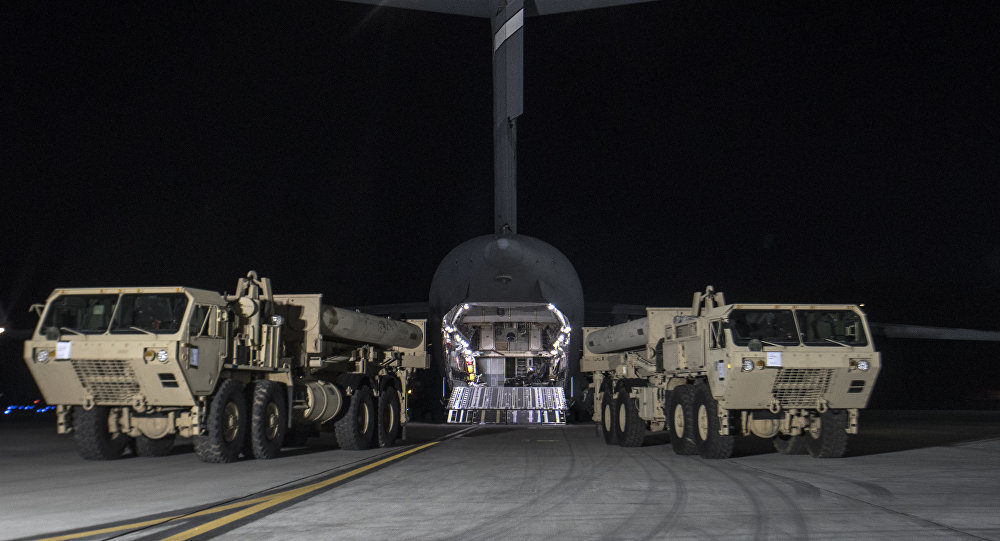
The Korean Crisis: US' next phase of Pan-Eurasian containment

Korean trucks carrying US missile launchers
© AP Photo/ U.S. Force Korea
The security situation has markedly deteriorated on the Korean Peninsula in recent days following the North's latest missile test, which Pyongyang antagonistically said was a drill for striking US bases in Japan in response to the latest US-South Korean military exercises that it rightly views as a sign of hostility.

These surprise launches prompted the Pentagon to speed up its planned deployment of the THAAD anti-missile system to South Korea, which has drawn the immediate ire of Russia and China who previously warned that it would set the precedent for undercutting their nuclear second-strike deterrent and spy on their territories.

North Korea's latest moves have also led to talk in Japan for a "first-strike option" to complement Tokyo's militant reinterpretation of its post-war (supposedly) pacifist constitution. Not to be outdone, the Trump Administration ominously reiterated that "all options are on the table", which Reuters reports could include "a return of U.S. nuclear weapons to South Korea, and even pre-emptive air strikes on North Korean missile installations." China has frantically sought to cool down the dangerously rising temperatures on the peninsula and kick start a new round of negotiations by wisely calling for the dual suspension of the North's nuclear and missile tests in exchange for the US and South Korea putting their joint military exercises on hold.


Comment: Update: The U.S. is reportedly planning to send B-52 bombers to South Korea after the North's missile launches.


Airplane

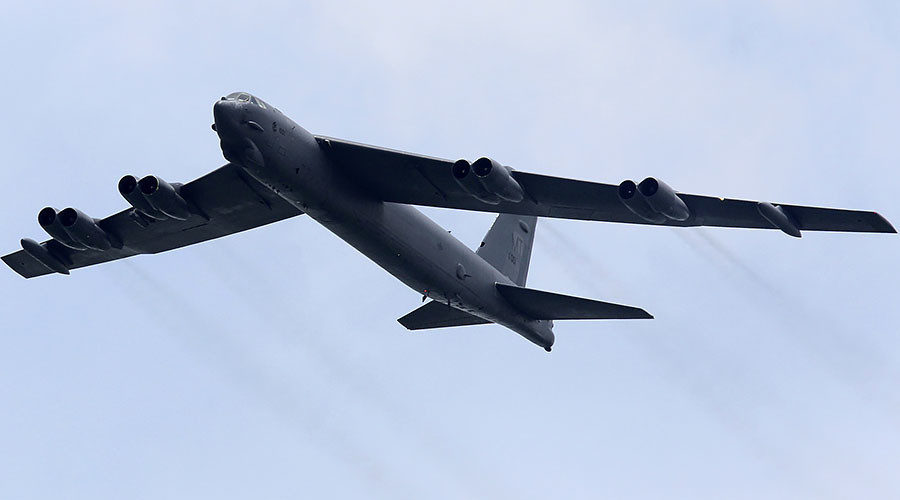
Pentagon's trillion-dollar pitch: US nuclear triad too old to fight Russians

US Air Force Boeing B-52 Stratofortress strategic bomber
© Tim Chong / Reuters
The US military urgently needs to modernize all three legs of the "nuclear triad" because its existing weapons are getting old and won't be able to breach Russian air defenses in the very near future, senior Air Force and Navy officers told Congress.

There are "scheduled realities" to the US nuclear weapon systems, US Air Force General Paul Selva, Vice Chairman of the Joint Chiefs of Staff, told the House Armed Services Committee on Wednesday. Ohio-class submarines, Minuteman III ballistic missiles and B-52 strategic bombers are all rapidly approaching the end of their useful lifespan, according to Selva and three other senior officers testifying.

"Our nuclear deterrent is nearing a crossroads," Selva said. "We are now at a point where we must concurrently modernize the entire nuclear triad and the infrastructure that enables its effectiveness."