Puppet MastersS


Book 2

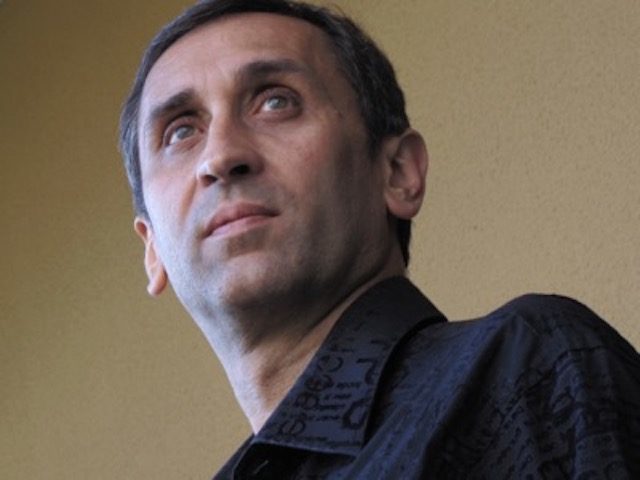
Thierry Meyssan interview on his new book: 'Right Under Our Eyes: From September 11 to Donald Trump'

Thierry Meyssan
© voltaire.netAuthor, Thierry Meyssan
On the occasion of the publication of his book, "Right Under Our Eyes. From September 11 to Donald Trump", Thierry Meyssan granted this interview via the Internet.

Voltaire Network: Thierry Meyssan, your new book "Sous nos yeux" (Right Under Our Eyes) has just been released, 10 years after the previous one. What is the subject, and why have you waited so long?

Thierry Meyssan: Sixteen years ago, I denounced the September 11th coup d'état. What I was anticipating at the time did happen: those responsible for this operation established a permanent state of emergency in the United States and embarked on a series of imperialist wars. Many people have retained from this book only the short passage on the Pentagon bombing, but it is a book of political science that should have been taken more seriously.

I do not understand when I am asked if I still "believe" what I wrote in 2002: I see it, I see it every day. Political science is an empirical science; one can only distinguish between hypotheses, those which are true from those which are false, through their consequences. And time has proven me right.

France has been under a state of emergency for more than a year, while the wars have devastated the enlarged Middle East and already killed more than 3 million people. They are in the process of overflowing into Europe with migratory flows and terrorist attacks.

In "Sous nos yeux", I wanted to revisit their planning. Explain who decided, why and how. Westerners approach this phenomenon sequentially. For them, in general, there would be no connection between what happened in Afghanistan, Iraq, Tunisia, Egypt, Libya, Yemen and Syria. All these peoples would have aspired to democracy, but none would be able to establish it.

Attention

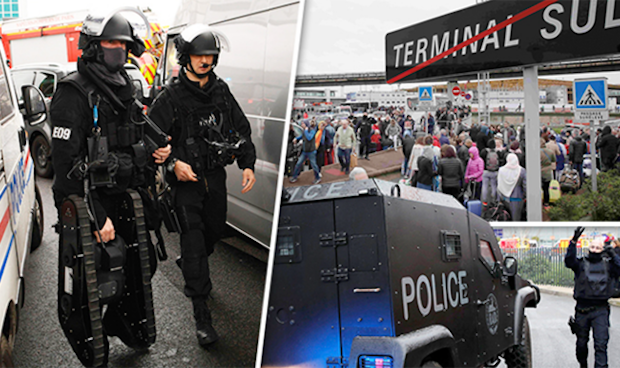
Man known to police and intelligence services as 'radicalized Muslim' shot dead after stealing weapon from soldier at Paris Orly Airport (Update)

Orly airport shooting
French soldiers have shot dead a man at Paris Orly Airport after he tried to seize a weapon from one of them. An evacuation of the terminal was ordered after the incident.

An unidentified man tried to seize a firearm from a French soldier at the airport and shots were fired by the French military in the ensuing altercation.

"The man succeeded in seizing the weapon of a soldier. He was quickly neutralized by the security forces," Interior Ministry spokesman Pierre-Henry Brandet told Reuters.

"We confirm that the man, who tried to seize a weapon from a soldier, has been neutralized," the national police also told RT, adding that it would not disclose any detail immediately.

Aside from the attacker, no other deaths or injuries are reported at the airport.

The man is said to have acted alone. Police sources told Reuters he was known to intelligence services as a radicalized Muslim.


Comment: What is known about the attacker so far:
France 24 are reporting that the man was a 39-year-old French citizen who lived in Garges-les-Gonesse just north of Paris. He was 1.8 meters tall (5' 11") and of average build. He was wearing dark grey pants and a white top.

Le Roux said the attacker, identified in French media as Ziyed B., is also suspected of shooting and injuring a police officer in another part of Paris earlier on Saturday morning.

The suspect had been pulled over for an identification check when he opened fire on police, the minister said, as cited by Reuters. Paris police later confirmed he used a pellet gun.

Le Roux also said the man is suspected of stealing a woman's car at gunpoint after shooting the officer.

A police source told the news agency that the man was on a police watch list for radical Islamic activity.

"This same man - a radicalized Muslim known to intelligence services and the justice system - then took a Famas (assault weapon) from a soldier at Orly's southern terminal... before being shot dead by a soldier," the source said.

The Paris prosecutor's office told France 24 that the assailant had been known to police for robbery and drug offenses. The news outlet also noted that he had "nine unspecified infractions"on his criminal record.

However, Le Monde is reporting that he was not subject to a Fiche 'S' flag, which would single him out as "a serious risk to national security." The Fiche 'S' category is the highest threat level France designates to an individual.
France's Interior Ministry has now confirmed that the assailant at Paris Orly Airport was the same man involved in an incident that had taken place north of Paris earlier:
French Interior Minister Bruno le Roux told reporters that the assailant at Paris Orly Airport was the same man involved in an incident that had taken place north of Paris earlier, which left one police officer injured, according to AP.

Le Roux added that the perpetrator, who was not identified, had hijacked a car and held the driver at gunpoint before being stopped by the patrol in Stains because he was driving too fast.

"His identity is known to police and intelligence services," the minister added.

"This same man - a radicalized Muslim known to intelligence services and the justice system - then took a Famas [assault weapon] from a soldier at Orly's southern terminal ... before being shot dead by a soldier," a police source also told Reuters.

The incident in Stains took place early on Saturday morning, when the car was pulled over for an ID check at around 7am local time, BFM TV reports. The driver showed his license before pulling out a weapon and opening fire on the officers.

The police officer's injuries are not life threatening.

Authorities initially did not link it to the incident at Paris Orly Airport, where a man was shot dead after trying to seize a weapon from a soldier on duty.
Updates March 19

French authorities are treating the attack as a terrorist incident, and have placed three people in custody. The Paris prosecutor says that the attacker, Ziyed Ben Belgacem, shouted Islamic slogans, before being fatally shot by security staff.
Paris prosecutor Francois Molins, said that Ben Belgacem, who had a string of theft and drug-related convictions, had been radicalized in prison - a fact that had been noted by the authorities at the time - and was on probation prior to the attack.

The prosecutor said that Ben Belgacem, who had been born in Paris, had been sentenced to five years for robbery with a weapon, for offenses beginning in 1998, and was given a three and a five-year term for drug trafficking.

His house was searched in the aftermath of the Paris attacks in 2015, but he was not placed on the priority File S, reserved for the most dangerous suspects.
Most French politicians praised the soldiers who foiled the attack, however Marine Le Pen, confronted the government over its "laxness" in allowing the incident to happen.
"I salute the courage and efficiency of police and military officers who faced the violence of a particularly dangerous individual," tweeted President Francois Hollande, after Ziyed Ben Belgacem, a 39-year-old French citizen with a string of criminal convictions, who assaulted a police officer and then attempted to grab the gun of a soldier inside the airport, was shot dead.

Emmanuel Macron, commended the "professionalism" of the soldiers, and used the opportunity to announce that he would return some form of compulsory military service to the country, "to make our democracy more united and increase our collective resilience."

While National Front leader Marine Le Pen also paid tribute to those who confronted Ben Belgacem — who reportedly pointed the gun he grabbed at the soldiers who faced him — but was scathing on the center-left government.

"France is overwhelmed by violence, the consequence of the laxity of successive governments," tweeted the politician, who, according to the polls, is expected to win the first round in April's election, before losing to a more centrist candidate in the run-off.

Observers noted that while unsuccessful, the incident fits into the wider pattern of attacks, most notorious of them being the armed assault on the satirical magazine Charlie Hebdo in January 2015, and the deadly truck attack in Nice last year.
France's Europe 1 radio station says it interviewed Ziyed Ben Belgacem's father after he was released from police detention. The father said his son had never been a religious radical:
"He called me at seven, eight in the morning," the father, whose name is not provided, said. "He was extremely distressed, even his mother couldn't understand it."

"He told me, 'I ask for your forgiveness. I've screwed up with a cop,'" he added.

Belgacem's father also said that his son had never been a religious radical or a terrorist, but could have instead carried out the attack at the Paris Orly Airport under the influence of alcohol or drugs.

"My son was never a terrorist. He would never pray. He drank. And under the effects of alcohol and cannabis, this is where one ends up," he said. French officials said that an autopsy is to be conducted to determine whether the attacker was drunk or high on drugs at the moment of the attack.
UPDATE March 20 from RT: A surveillance video was released showing the attacker dropping a shopping bag - which authorities say contained a flask of gasoline - before grabbing the soldier around the shoulders, pulling her backward while holding a revolver loaded with birdshot. He can be seen trying to wrestle away the soldier's assault rifle.


Snakes in Suits

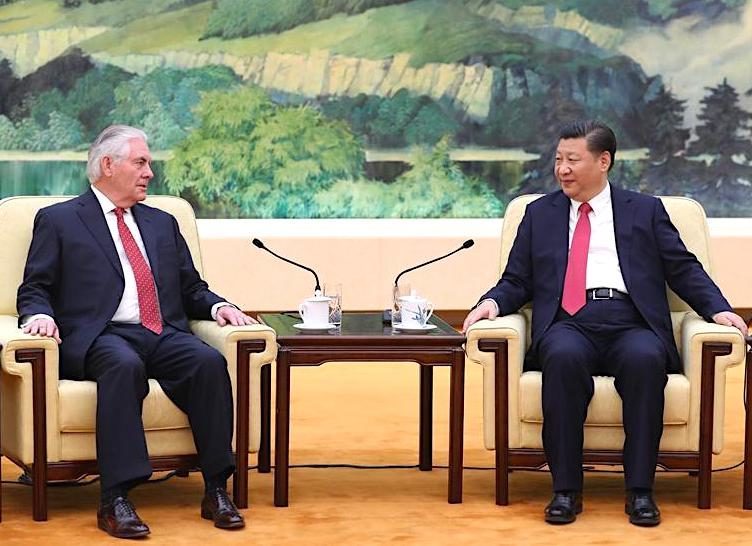
President Xi meets US Secretary of State Rex Tillerson

Tillerson and Xi
© Xinhua/Ju PengEast meets West
President Xi Jinping met here Sunday with visiting U.S. Secretary of State Rex Tillerson, saying that cooperation is the only correct choice for both countries. There are important development opportunities resulting from China-U.S. relations, said Xi during the meeting in the Great Hall of People in Beijing.

Xi said he had maintained sound communications with his U.S. counterpart Donald Trump through telephone calls and messages, and that they had agreed that the two countries could be good cooperative partners.

To advance China-U.S. ties in a healthy and steady manner, both sides, Xi expressed, could enhance exchanges at high level and various levels; expand cooperation in bilateral, regional and global fields; and properly address and manage sensitive issues. The two sides should grasp the general direction for the development of China-U.S. relations in an attitude responsible for history and future generations, said Xi.

Xi suggested that the two countries increase strategic trust and mutual understanding, review bilateral ties from long-term and strategic perspectives and expand fields of cooperation for win-win outcomes. The two countries should also enhance coordination on regional hotspot issues, respect each other's core interests and major concerns and encourage friendly exchanges between the two peoples, said Xi.

Xi also extended welcome to President Trump for a visit to China. Tillerson said President Trump valued communication with President Xi, and looked forward to meeting Xi and the opportunity for a visit to China.

The U.S. side is ready to develop relations with China based on the principle of no conflict, no confrontation, mutual respect and win-win cooperation, said Tillerson.

Comment: Chinese President Xi Jinping and US Secretary of State Rex Tillerson were all smiles as the American official wrapped up his first visit to Asia, despite lingering tensions over North Korea, Taiwan, and Donald Trump's past statements on China.
...

Tillerson himself said the US was open to the possibility of a pre-emptive military strike on North Korea, before touching down in China.

But at least out in the open, Washington and Beijing decided to hold their fire. "We should properly handle and manage sensitive issues to promote the healthy and stable development of the Sino-US relationship," said Xi.

Tillerson also spoke of "mutual respect" between the two nations, a phrase considered to be the cornerstone of proposed relations between Beijing and Washington in which the two powers would respect each other's interests.

While some analysts said the repetition of China's own vocabulary represented acquiescence to its aims, it is possible that Tillerson was merely softening the ground ahead of what are likely to be more decisive talks between the two countries' leaders.

It is also possible that the US emissary may have been more forthright away from the cameras, as he had been throughout the rest of his Asian tour, in which he reassured America's allies in their alarm over growing Chinese influence.

The US and China still do not see eye-to-eye on multiple issues, including the One China policy — that denies international recognition to Taiwan as an independent state, political freedom in Hong Kong, and the rights of the country's Tibetan minority.


Brick Wall

Could China's newly launched 'Great Wall of Iron' become a roadblock to the One Road One Belt initiative?

Xi China Great Wall of Iron
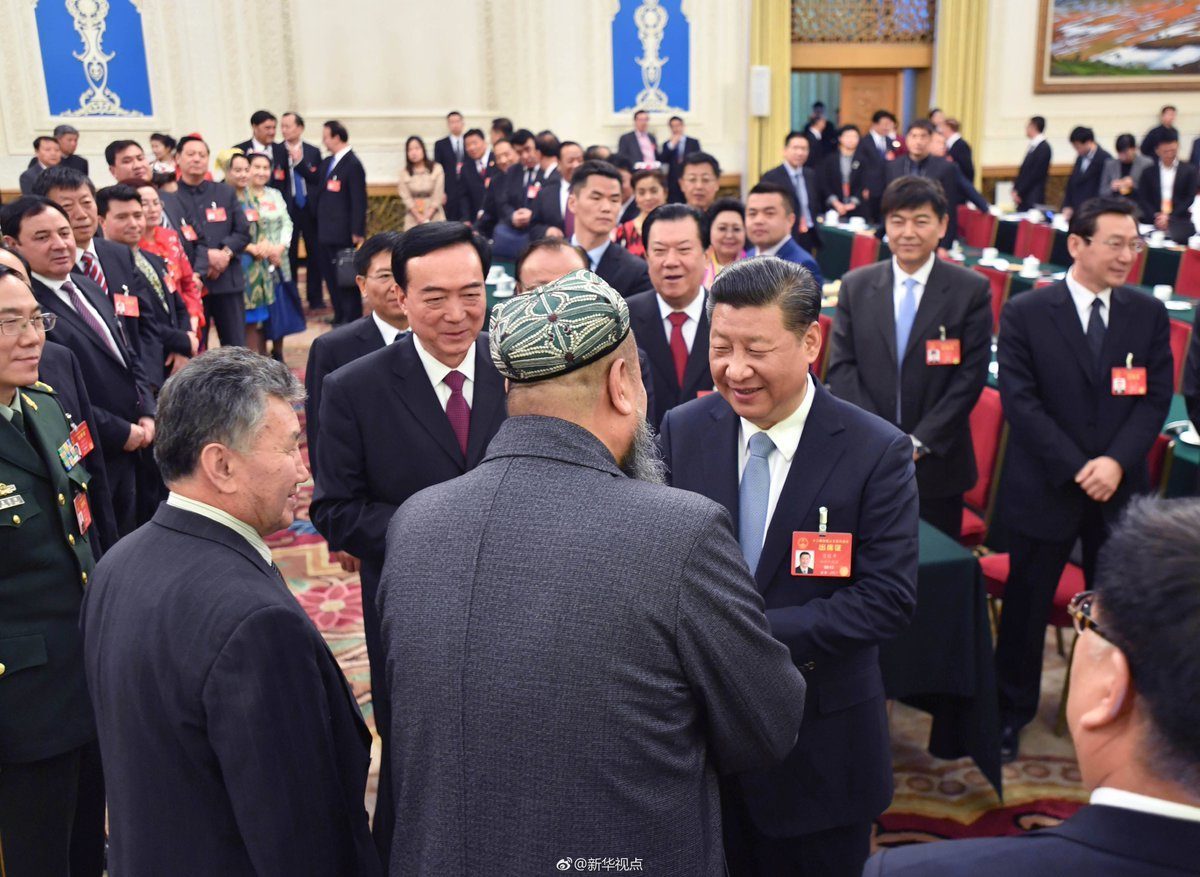
Xi: Great wall of iron should be built in Xinjiang to safeguard national unity, ethnic solidarity, social stability
Taking extreme measures to fight Islamic influences in Xinjiang province could hurt the One Road, One Belt initiative

When the hype surrounding the Trump-Xi summit turns into a Mar-a-Lago fact on the ground next month, both presidents are bound to agree fully on at least one issue: "radical Islamic terror" - as per Trump terminology.

Donald Trump has relied on a controversial Muslim "no-ban" ban that - in theory - would restrict the inflow of potential radical Islamists to US territory; his Chinese counterpart, Xi Jinping, meeting Xinjiang lawmakers on the sidelines of the annual session of the National People's Congress in Beijing, has launched a "Great Wall of Iron" to protect China's Far West.

The matter primarily concerns the East Turkestan Independence Movement (ETIM), active in Xinjiang, which Cheng Guoping, State Commissioner for counterterrorism and security matters, describes as "the most prominent challenge to China's social stability, economic development and national security."

ETIM is an Islamic extremist separatist organization, which according to Cheng is seeking "Xinjiang independence."

Top Secret

FBI confirms probe into Trump's imaginary ties with Moscow during 2016 election campaign

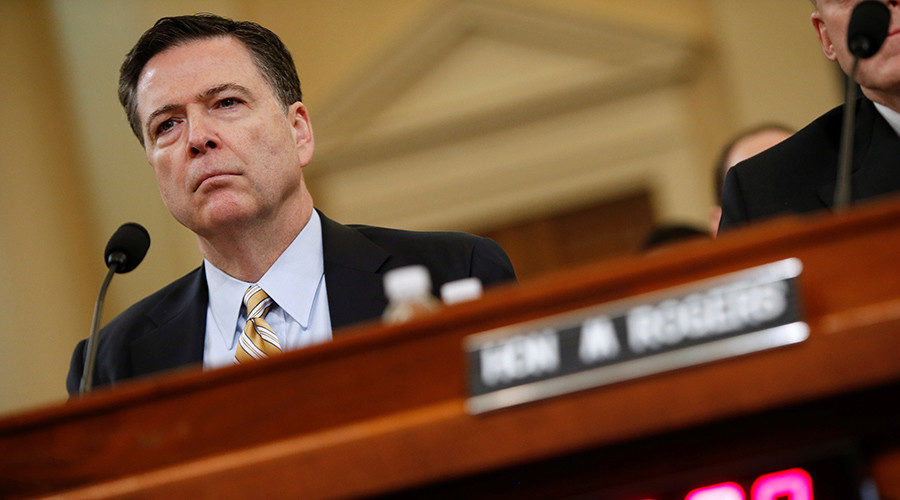
James Comey
© Joshua Roberts/ReutersFBI Director James Comey
FBI Director James Comey has confirmed that the bureau is investigating possible Russian interference in the 2016 presidential election, including alleged links between Moscow and Donald Trump's campaign.

Testifying before the House Select Committee on Intelligence, Comey said the probe is part of the FBI's counter-intelligence mission, and "includes investigating the nature of any links between individuals associated with the Trump campaign and the Russian government and whether there was any coordination between the campaign and Russia's efforts."

He declined to elaborate, citing an "open ongoing investigation" which is "classified."

Comey said he is authorized by the Justice Department to make the disclosure, although the FBI does not typically discuss or confirm the existence of ongoing investigations.

The US government previously accused Russia of hacking the Democratic Party's computer networks during the 2016 election, alleging that Moscow was attempting to "interfere" with the results - an allegation which the Kremlin has vehemently denied as untrue and baseless.

For his part, Trump has also said he has no knowledge of his associates coordinating with Russia during the election.

Info

Russia says has no plans to establish military base in Kurdish-controlled region of Syria

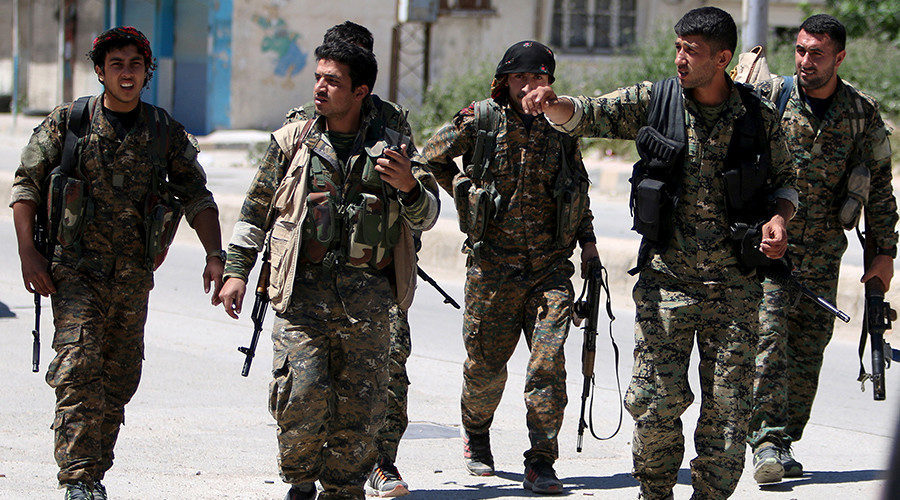
 Kurdish fighters from the People's Protection Units (YPG) in Qamishli city, Syria, April 22, 2016
© Rodi Said / ReutersKurdish fighters from the People's Protection Units (YPG) in Qamishli city, Syria, April 22, 2016
Moscow has staunchly denied a Reuters report claiming that it is constructing a military base in Afrin, northeast Syria, in alliance with the YPG, the Kurdish militia that controls the area.

"There are no plans to establish new Russian bases on the territory of the Syrian Arab Republic," said a statement from the Russian Defense Ministry.

Instead, Moscow says it will use the location to monitor ceasefire compliance.

"In accordance with the Russian-Turkish agreement signed on December 30, 2016, the Russian Center of Reconciliation carries out round-the-clock ceasefire monitoring. To prevent the violation of the ceasefire, one of the branches of the Center has been set up near Afrin, in a spot bordering the territory held by the Kurdish militias, and that under the command of the Turkish-controlled Free Syrian Army."

The Reuters report cited YPG spokesman Redur Xelil, who claimed that Moscow would be deploying its own troops and providing military assistance in Afrin, which is a part of Rojava, an autonomous but unrecognized Kurdish province.

Comment: See also: Russia has no plans to build airbase in Syria


2 + 2 = 4

Lukashenko calls for 'transparency', consents to NATO observing Belarus-Russia drills

If NATO representatives wish to be present during the joint drills, they are welcome to do so, Alexander Lukashenko stated

Belarusian-Russian drills
© Viktor Vetkin/TASS
The Zapad-2017 joint Belarusian-Russian drills will be solely defensive in nature and NATO representatives will be able to observe them, President of Belarus Alexander Lukashenko said on Monday.

Георгиевская ленточка

Putin to Israel: "The 'game' in Syria is over" - UN envoy

russia missile syria
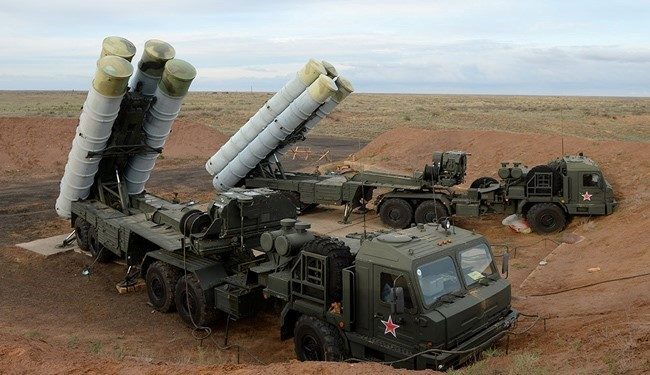
Russian S-300 missile system in Syria
Ambassador Bashar Jaafari says Syria's use of anti-aircraft missiles against Israeli fighter jets was a "message" from Putin

In a recent television appearance, Syria's U.N. envoy Bashar Jaafari made it clear that Damascus believes Moscow is firmly backing Syria's right to defend itself against Israeli airstrikes.

According to Haaretz:
Russia has sent a clear message to Israel that the rules of the game have changed in Syria and its freedom to act in Syrian skies is over, Syria's ambassador to the United Nations said on Sunday night.

"Putin sent a clear message," said Bashar Jaafari, speaking on Syrian television. "The fact is that the Israeli ambassador [to Russia] was summoned for a conversation only a day after he submitted his credentials [to the Russian Foreign Ministry last Thursday], and was told categorically that this game is over."

Syria's use of anti-aircraft fire against Israel last Thursday night has changed the rules of the game, too, Jaafari said, adding that Syria will not stand idly by in the face of an Israeli threat.
This would certainly explain the full-blown meltdown currently taking place in Israeli media.

Comment: Israeli Media Blames 'Friendly Russia' For Syria's Decision to Defend Itself Against Israeli Airstrikes


Bomb

Car bomb kills at least 23, injures dozens in Baghdad

Baghdad
© Ahmed Saad / Reuters
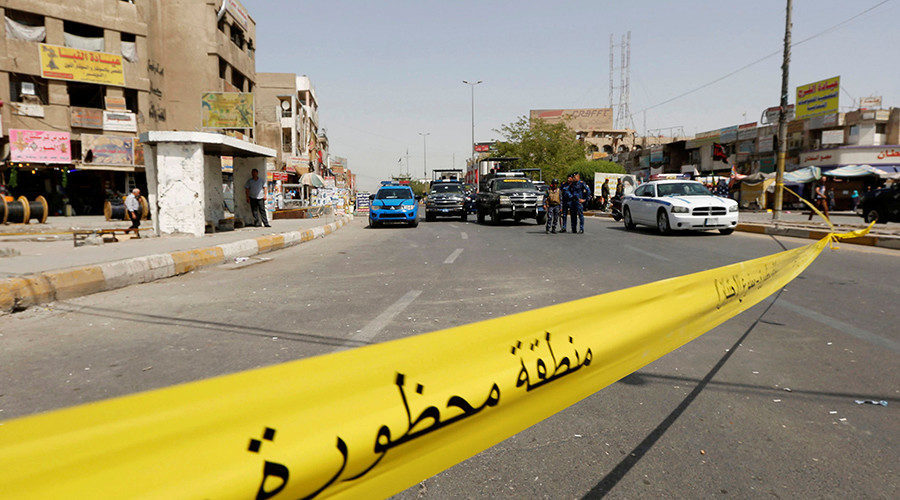
At least 23 people have been killed and dozens injured in a car bomb explosion that hit a southern Baghdad district, Reuters reports, citing police and medical sources.

The blast rocked a busy commercial street in the mainly Shia Amil neighborhood, leaving more than 45 people injured, the news agency said, citing its sources.

The Iraqi capital is frequently targeted by jihadists from various extremist groups, including Islamic State (IS, formerly ISIS/ISIL), which is now being pushed by the US-assisted Iraqi Army from the city of Mosul.

Briefcase

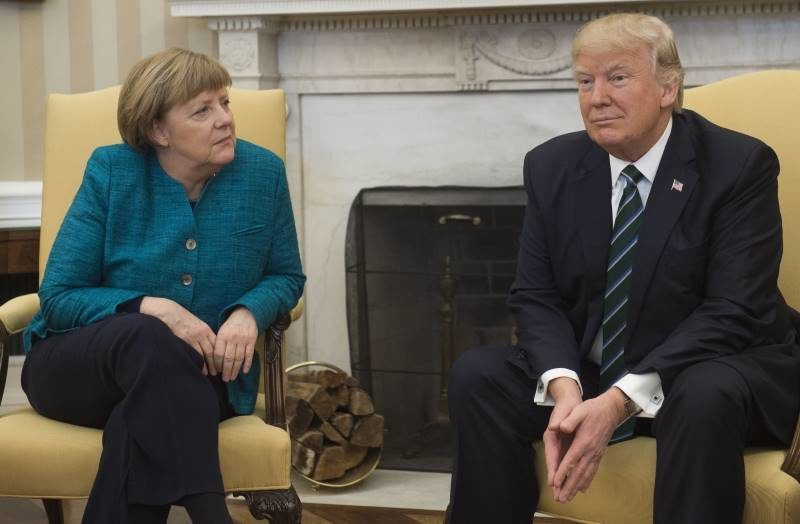
Donald Trump and Angela Merkel: An unhappy summit, a fraught future relationship

trump merkel
A summit meeting intended to create bridges between the leaders of the US and Germany merely highlighted their differences.

As she gears up to meet Vladimir Putin in Moscow in May, German Chancellor Angela Merkel - the self-styled "Queen of Europe' - has concluded a trip to Washington where she had her first meeting with US President Donald Trump.

Merkel previously had a very close relationship with Donald Trump's predecessor, Barack Obama, and was widely seen as Obama's most important foreign policy ally. Given the critical importance of relations with the US for Germany, there is no doubt this close relationship with Obama gave Merkel considerable political standing in Germany and played a key role in securing her position. The political and perhaps psychological importance of this relationship for Merkel is shown by the way Merkel repeatedly sacrificed other relationships and policy positions in order to preserve it.

Thus in 2014 Merkel reversed the longstanding German policy of maintaining close political and commercial relations with Russia by imposing sanctions on Russia during the Ukrainian crisis that year, and in 2015 she backed away from a plan proposed by her Finance Minister Wolfgang Schäuble to eject Greece from the eurozone to which she had previously appeared to lend support. On both occasions she did this in order to fall into line with Obama's wishes.

Angela Merkel undoubtedly anticipated that she would be able to forge a similarly strong relationship with Hillary Clinton - a personal friend - once Hillary Clinton had been elected US President.

The election as US President of Donald Trump instead of Hillary Clinton therefore came as a shock, and Merkel has struggled to come up with a coherent response.