
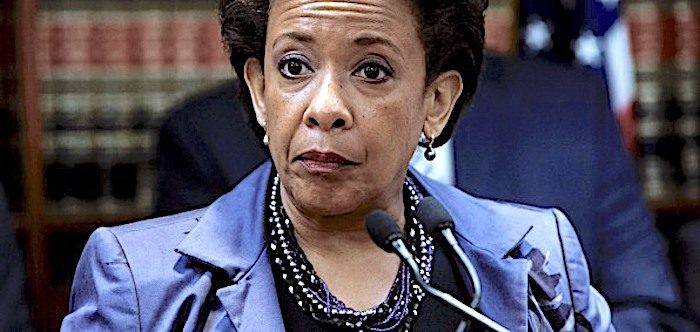
© WNDFormer Attorney General Loretta Lynch
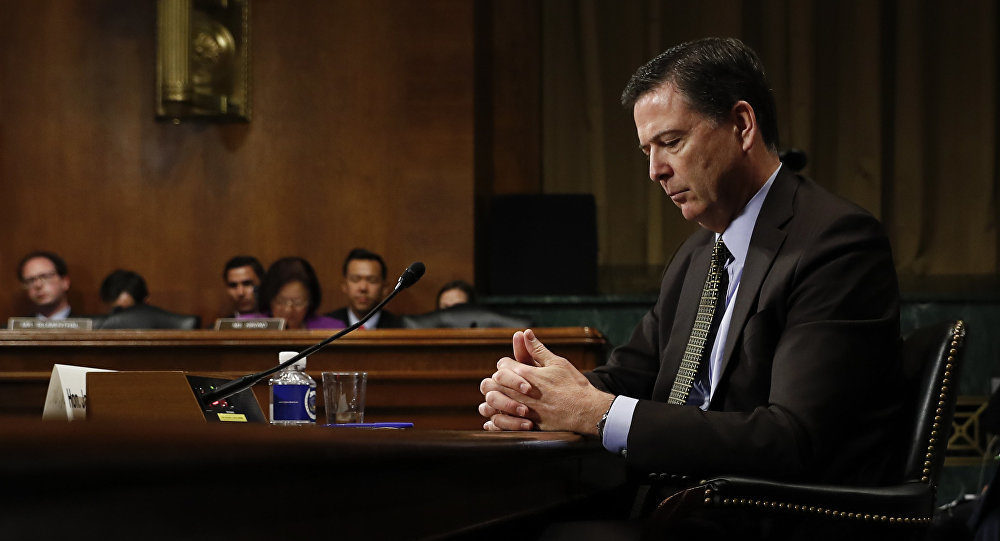
Comey met with the committee multiple times over the last couple months and detailed an encounter with Lynch, who served as former President Barack Obama's attorney general, shortly before Clinton's email probe was shut down, Circa reported.
Comey told lawmakers in the close door session that he raised his concern with the attorney general that she had created a conflict of interest by meeting with Clinton's husband, the former President Bill Clinton, on an airport tarmac while the investigation was ongoing.
During the conversation, Comey told lawmakers he confronted Lynch with a highly sensitive piece of evidence, a communication between two political figures that suggested Lynch had agreed to put the kibosh on any prosecution of Clinton. [...]
The sources also said that Comey's testimony in private conflicted with recent reports in the news media suggesting the FBI had intercepted an email between Congresswoman Debbie Wasserman Schultz, who at the time was the Democratic Party chairwoman, and a third party. Those media reports suggested that the information about the email was more than likely fake and a ruse possibly planted by the Russians.
The Washington Post story suggested the dubious email is what motivated Comey, who still was not sure of the intelligence, to come forward with his findings in the Clinton investigation and shut down the case.
Comment: The 'fake outs' by fake news. Any testimony must be suspect if it conflicts with reports in the news media (the Russians did it; the email was faked).
'...a communication between two political figures that suggested Lynch had agreed to put the kibosh on any prosecution of Clinton.' If there was nothing to it, Lynch would have flatly said there are no grounds for prosecution.















Comment: It is 'briefed' sources' hearsay and media interpretation as to Comey's thinking and subsequent action with this encounter. Lynch's body language and reaction, however, can tell the story and leave a lasting perception that is often more revealing than words.