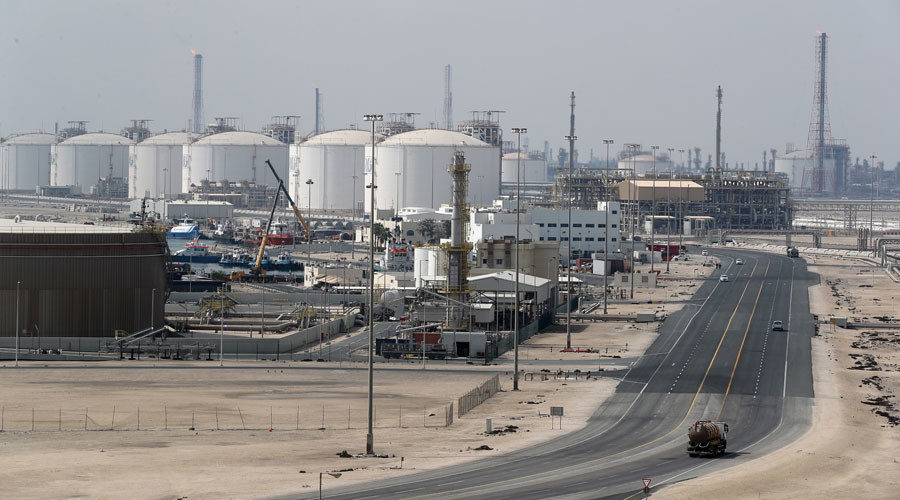
© Karim Jaafar / AFPThe Ras Laffan Industrial City, Qatar's principal site for production of liquefied natural gas and gas-to-liquid, administrated by Qatar Petroleum, some 80 kilometers (50 miles) north of the capital Doha.
Qatar hasn't been playing ball with the US-approved, Saudi-led 'isolate Iran' program. Partly because Doha has made independence from Riyadh a hallmark of its foreign policy, but mostly because Qatar and Iran share the world's largest natural gas field.
US President Donald Trump's
speech to the assembled Gulf leaders in Saudi Arabia on May 21 is worth reading in full. It is deeply disturbing.
Having praised himself for his $110 billion
arms deal with the Saudis, he goes on to talk about the threat posed by terrorism, and what a wonderful job the US and the Gulfies - that is, the leading state sponsor of the region's supremacist death squads and its assembled proxies - are doing in combating it. He then goes on to claim that at the root of the region's terrorism lurks... guess who? The power leading the regional pushback against Islamic State (IS, formerly ISIS) and Al-Qaeda: Iran.
"Starving terrorists of their territory, their funding, and the false allure of their craven ideology, will be the basis for defeating them," he says. "But no discussion of stamping out this threat would be complete without mentioning the government that gives terrorists all three — safe harbor, financial backing and the social standing needed for recruitment."






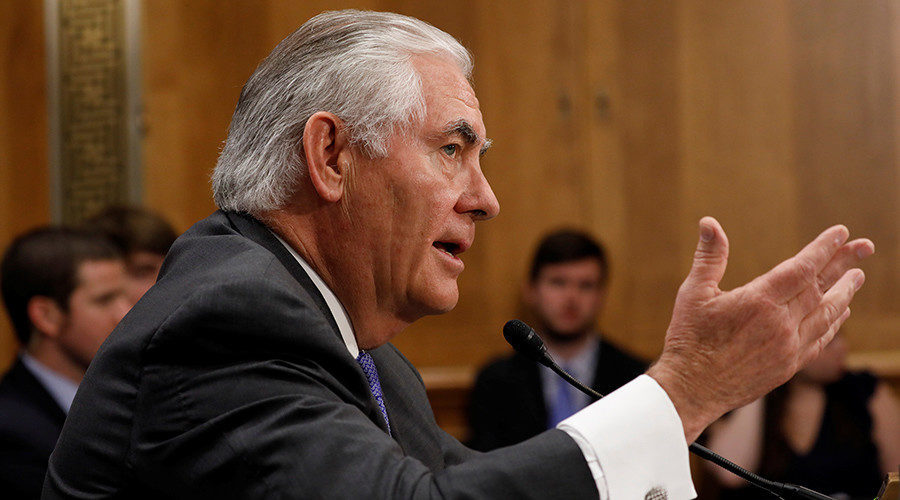




Comment: Finally some refreshing comments from Tillerson asking Washington to look at the world a little differently. Hopefully it might sink in.