Puppet MastersS


Headphones

NSA spying powers comes from Section 702 of FISA Act, due to expire this year

wiretapping
As former NSA contractor Edward Snowden revealed to the world in 2013, the U.S. government routinely spies on its own citizens.

"I, sitting at my desk, could wiretap anyone, from you or your accountant, to a federal judge or even the president," Snowden told the journalists crowded into his hotel room before the publication of his leaked documents.

The leaks exposed lies from government officials about the mass surveillance of American citizens, with former Director of National Intelligence James Clapper testifying before Congress that the NSA didn't "wittingly" collect any data on millions of Americans.

Four years after the Snowden leaks, the government is still collecting Americans' private information. Though the NSA claims it ended bulk collection of domestic phone calls, the agency is still operating several other far-reaching domestic spying programs.


Info

Merkel welcomes Putin's initiative of sending UN peacekeepers to Eastern Ukraine

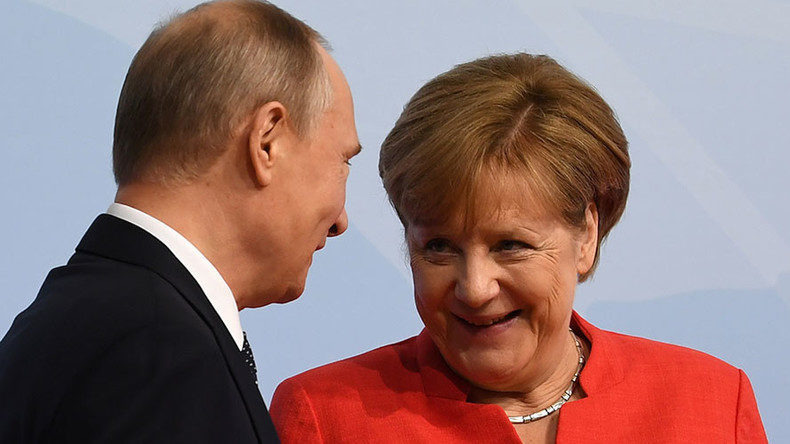
Vladimir Putin and Angela Merkel
© Bernd Von Jutrczenka / Reuters
German Chancellor Angela Merkel has expressed support for President Vladimir Putin's proposal to deploy a UN peacekeeping contingent to the Eastern Ukraine to protect the OSCE monitoring mission there.

Merkel "generally welcomed Putin's initiative" during a phone conversation with the Russian president, the German government's press service said in a statement. The two leaders also agreed on the extension of the UN mission's mandate.

Chancellor Merkel added that the peacekeeping mission should not be limited only to the contact line separating Kiev's forces from the Donbass rebels, but that they should be empowered to accompany members of the Organization for Security and Cooperation in Europe (OSCE) monitoring mission to every region in which they operate.

Putin "reacted positively" to Merkel's suggestions and said Moscow would consider removing these restrictions from the text of the resolution that Russia submitted to the UN Security Council, a statement from the Kremlin said.

Brick Wall

Killary's book conveniently skips over one of her campaign's biggest scandals

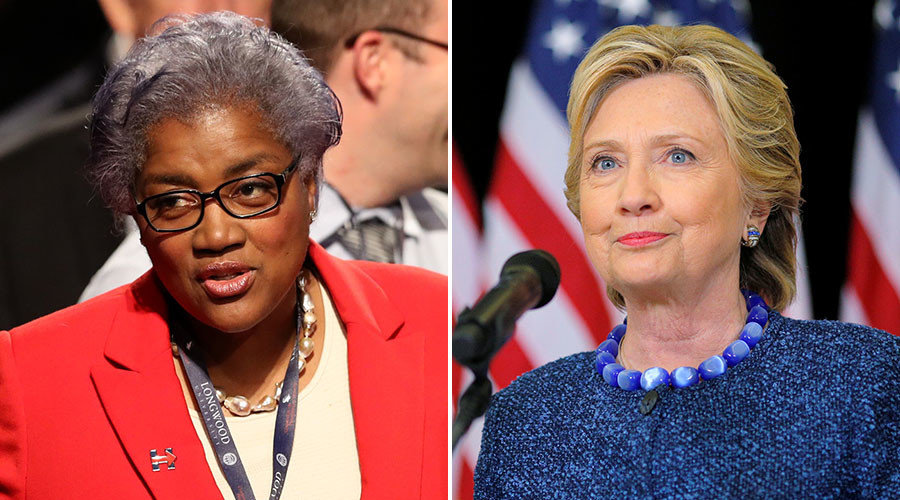
Donna Brazile Clinton
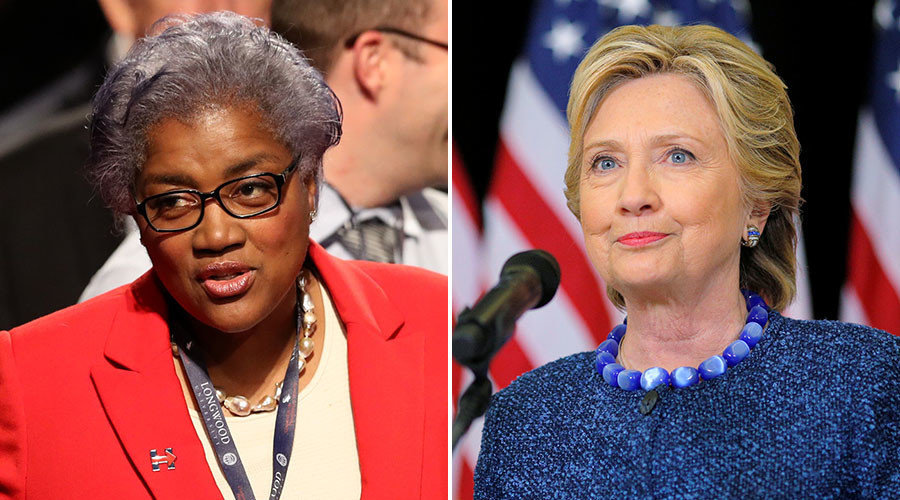
© ReutersDemocratic National Committee Chair Donna Brazile and U.S. Democratic presidential nominee Hillary Clinton.
Hillary Clinton's 450-page book attempting to excuse her failed 2016 presidential campaign, What Happened, conveniently ignores one of the election's biggest scandals: then-Democratic National Committee chair Donna Brazile's leaking of debate questions to Clinton during the Democratic primary - a clear-cut example of DNC officials rigging the primary in favor of Clinton.

The fact that Brazile leaked questions to Clinton before two different primary debates only came out when WikiLeaks published stolen emails from Clinton campaign chair John Podesta in October. But Clinton writes that revelation out of history in her book, which was reviewed by The Daily Caller. She dismisses reporting about the leaked emails as the media inventing a story out of nothing.

"In the end, though, most of John's emails were . . . boring," she claims. "They revealed the nuts and bolts of a campaign at work, with staffers debating policies, editing speeches, and kibitzing about the daily ups and downs of the election."

"No single day was that bad, but it added up, and we could never get past it. Wikileaks played into people's fascination with 'pulling back the curtain.' Anything said behind closed doors is automatically considered more interesting, important, and honest than things said in public. It's even better if you have to do a little legwork and google around for the information," Clinton writes, before taking a clear shot at the press over their coverage of the Podesta emails.

"We sometimes joked that if we wanted the press to pay attention to our jobs plan, which I talked about endlessly to little avail, we should leak a private email about it. Only then would it be news worth covering."

But the truth is far different from Clinton portrays it.

Comment:


Propaganda

Has the New York Times organization gone collectively mad?

new york times
Crossing a line from recklessness into madness, The New York Times published a front-page opus suggesting that Russia was behind social media criticism of Hillary Clinton

For those of us who have taught journalism or worked as editors, a sign that an article is the product of sloppy or dishonest journalism is that a key point will be declared as flat fact when it is unproven or a point in serious dispute - and it then becomes the foundation for other claims, building a story like a high-rise constructed on sand.

This use of speculation as fact is something to guard against particularly in the work of inexperienced or opinionated reporters. But what happens when this sort of unprofessional work tops page one of The New York Times one day as a major "investigative" article and reemerges the next day in even more strident form as a major Times editorial? Are we dealing then with an inept journalist who got carried away with his thesis or are we facing institutional corruption or even a collective madness driven by ideological fervor?

What is stunning about the lede story in last Friday's print edition of The New York Times is that it offers no real evidence to support its provocative claim that - as the headline states - "To Sway Vote, Russia Used Army of Fake Americans" or its subhead: "Flooding Twitter and Facebook, Impostors Helped Fuel Anger in Polarized U.S."

Info

Euro-sense! German Die Linke party leader calls for replacing NATO with new security organization that includes Russia

Sahra Wagenknecht
Translated from German (source: Ostexperte.de) by Tom Winter

Germany's Die Linke ('The Left' party) lead-candidate Sahra Wagenknecht set new impulses for Russia policy shortly before the Bundestag elections. In the interview with Ostexperte.de, the politician pleads for an end to the Russian sanctions, the dissolution of NATO and a diplomatic solution to the Ukraine crisis.

Q: You call the Russia sanctions "counterproductive." How can the conflict in the Eastern Ukraine be solved otherwise?

Sahra Wagenknecht: The conflict in the Eastern Ukraine can only be solved diplomatically. The Minsk agreement is undermined by both sides. The parties to the conflict parties urgently need to return to the negotiating table. It is necessary to create new trust,* which is the basic prerequisite for the implementation of Minsk.

Comment: Common sense is rare in European politics, but this woman has it.


Map

Syrian Democratic Forces vow to avoid conflict with government troops in Deir ez-Zor

SDF fighters
© REUTERS/ Rodi Said
Units of the Syrian Democratic Forces (SDF) opposition alliance, manned mainly by Kurdish militias, promise not to attack the Syrian government forces in Deir ez-Zor, SDF spokesman Talal Silo told Sputnik on Monday.

Earlier reports indicated that SDF units began their own operation against the Daesh terrorist group (banned in Russia) in the Syrian province of Deir ez-Zor, where the Syrian government forces are already conducting a successful operation with the support of the Russian combat planes.

"We have clear instructions that after Daesh is eliminated, we should not act against the forces of the [Bashar Assad] regime or against the Russian, Iranian forces or the Hezbollah movement, which are allied with it," Silo said.

The news comes after the SDF announced a launch of an operation to kick Daesh (banned in Russia) terrorists out from the areas east of the Euphrates river and the eastern borders of the city of Deir ez-Zor days after it had been unblocked by the Syrian army.

Treasure Chest

World Bank assigns $8 billion for Silk Road projects

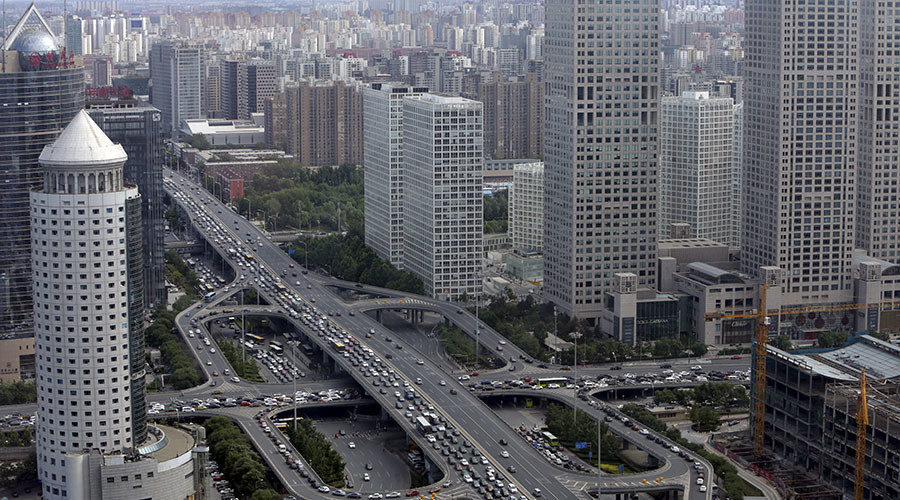
Beijing, China
© Jason Lee / Reuters
Billions of dollars have been allocated by the World Bank for infrastructure projects in the Chinese Silk Road Economic Belt, according to the bank's president Jim Yong Kim at the 1+6 roundtable meeting in Beijing.

"Investments, particularly in infrastructure, are extremely important. The Chinese initiative of the economic belt of the Silk Road catalyzes infrastructure investments," he told the heads of major international organizations.

"The World Bank will help the countries within the initiative to take maximum advantage of the opportunities provided, in accordance with their own development strategies," he added.

According to the World Bank's International Finance Corporation (IFC), an extra $1 billion is expected to be raised within a year as part of a planned $5 billion infrastructure investment fund for China's Road and Belt program.

"We have raised the first $1.1 billion, we are going to raise the next billion probably within the next year, that's my guess," IFC Chief Investment Officer for infrastructure and natural resources Ram Mahidhara told Reuters.

Attention

Rand Paul threatens to hold up defense bill unless Congress votes to end wars in Afghanistan and Iraq

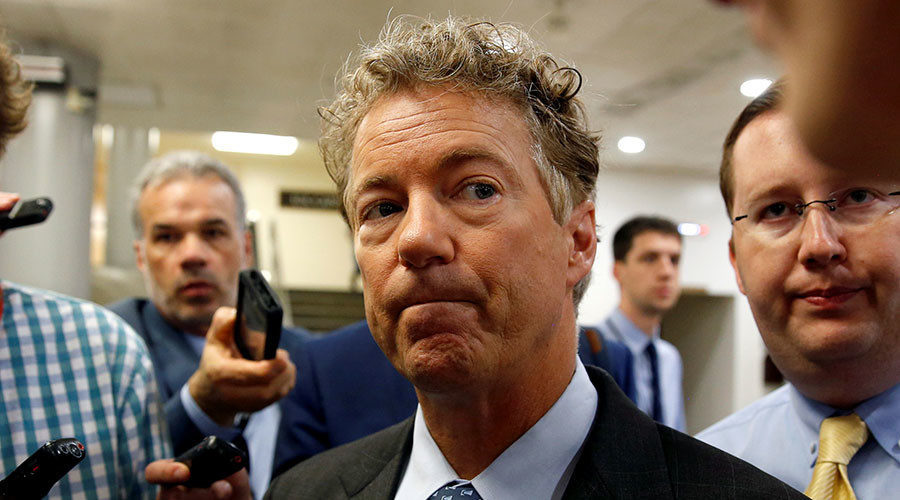
Rand Paul
© Joshua Roberts / Reuters
Republican Senator Rand Paul of Kentucky has vowed to delay a $700 billion defense bill until he is promised a vote on amending the use of military force in Afghanistan and Iraq, aiming to end the wars in the two countries.

The Senate on Monday took up the National Defense Authorization Act (NDAA), passing a motion in an 89-3 vote which allowed the legislation to proceed. That action essentially limits the procedural debate on the legislation and moves the NDAA to a full vote as early as Wednesday morning.

However, Paul made clear on his Twitter account that he had every intention of slowing down the passage of the NDAA - which sets forth the Pentagon's budget and major programs for the next fiscal year beginning October 1 - until he was guaranteed a vote on amending the AUMF in Afghanistan in Iraq.

Stock Up

US debt surpasses historical $20 trillion mark

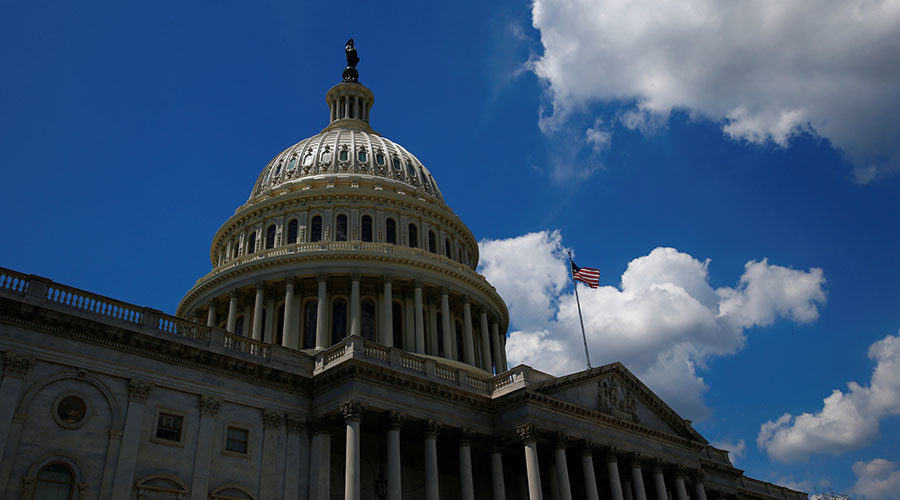
US Congress building
© Eric Thayer / Reuters
The United States has now officially accumulated a $20 trillion debt. The ceiling was broken after the White House allowed the Treasury to borrow more money.

As of Tuesday, the American national debt stood at $20.16 trillion, according to the US Debt Clock website. This is almost $62,000 per person and over $167,000 per tax payer.

The debt number had been stagnant since March due to the debt ceiling, as the US Treasury faced a temporary ban on further borrowing.

Magnify

Former Sputnik correspondent questioned by FBI in election-meddling probe

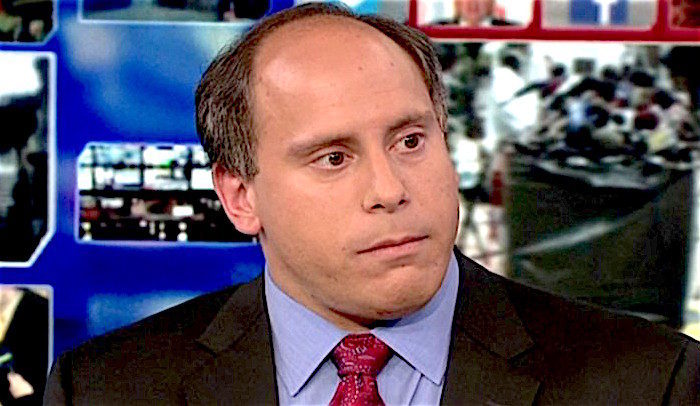
Andrew Feinberg
© The DiplomatAndrew Feinberg
The FBI recently questioned a former White House correspondent for the Russian state-funded Sputnik news agency about the organization's editorial operations in what appears to be part of its probe into an alleged Russian campaign to influence the 2016 U.S. presidential election.

Andrew Feinberg, who was fired from Sputnik in May, told RFE/RL on September 11 that he met with a lawyer from the Justice Department and an FBI agent for more than two hours on September 1. During that meeting, he said he turned over a thumb drive containing thousands of internal e-mails from his five months at Sputnik. He described the interview, which took place at the bureau's Washington field office, as voluntary and said the questions concerned Sputnik's internal operations.

News of Feinberg's questioning and of the possible probe into whether Sputnik violated U.S. laws on foreign agents was first reported by Yahoo News.

The Justice Department refused to comment on the interview or to confirm whether there was an investigation into Sputnik's operations.

Set up in 2014 as part of a restructuring of Russian-government-funded news operations in the Rossiya Segodnya news group, Sputnik runs radio broadcasts and news websites in 30 languages.

Feinberg told RFE/RL that, during his FBI interview, he was asked about how editorial decisions were made at Sputnik. He was also asked about U.S. operations at RIA Novosti, another Russian-funded news agency that was subsumed by Rossiya Segodnya during its 2014 restructuring.

Comment: "Both Sputnik and Russian Today 'contributed to the influence campaign by serving as a platform for Kremlin messaging to Russian and international audiences,'" This is ridiculous. They both reported the news, good or bad...and in most cases reporting was more accurate and non-biased than US news. To find corrupt and biased news, the US Intel has to look no farther than homegrown MSM -- that is if they can still recognize the difference.