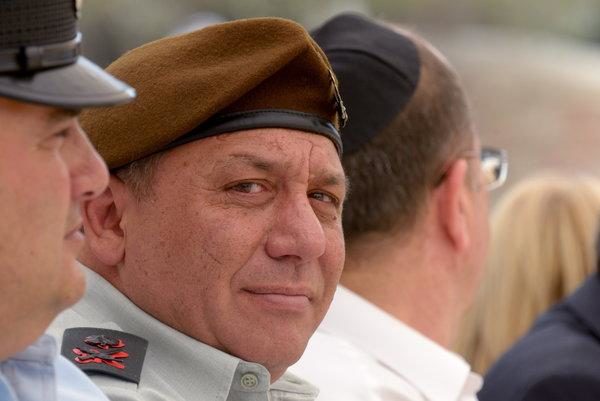
© Gili Yaari/NurPhoto, via Getty ImagesGadi Eisenkot in 2014.
"We struck thousands of targets without claiming responsibility or asking for credit."
So says Gadi Eisenkot about the Jewish state's undeclared and unfinished military campaign against Iran and its proxies in Syria and Lebanon. For his final interview as chief of staff of the Israel Defense Forces before he retires next week, the general has decided to claim responsibility and take at least some of the credit.
Eisenkot's central intellectual contribution in fighting that campaign is the concept of "the campaign between wars" - the idea that
continuous, kinetic efforts to degrade the enemy's capabilities both lengthens the time between wars and improves the chances of winning them when they come. He also believes that Israel needed to focus its efforts on its deadliest enemy, Iran,
as opposed to secondary foes such as Hamas in Gaza.
"When you fight for many years against a weak enemy," he says, "it also weakens you."
This thinking is what led Eisenkot to become the first Israeli general to take Iran head on, in addition to fighting its proxies in Lebanon and elsewhere. And it's how he succeeded in humbling, at least for the now, Qassim Suleimani, the wily commander of Iran's elite Quds Force, which has spearheaded Tehran's ambitions to make itself a regional hegemon.
















Comment: See also: