Puppet MastersS


Volcano

The Great Consternation

Protesters
© Unknown
"Due process is when only one side has to follow the law and if you point out that this is a suicidal standard you're a fascist"
— Auron MacIntyre
A great consternation boils and bubbles across the land as the sinister forces of Jacobin lawfare keep up their legalistic battery against the nation. You better believe that the country will not stand for much more of this lunatic judicial coup aimed at wrecking the authority of law itself, and with that, any chance for sane management of our affairs.

On Saturday, the activist org Indivisible, sponsored by Linked-In billionaire Reid Hoffman and dark money "pass through" funder the Tides Foundation (Bill Gates and others), sent its "protest" troops into the streets to pretend that there is public support for national suicide. It was a pitiful showing, after all. There are only so many mind-fucked Boomers out there who can be marshaled to militate for the psychopathocracy behind these monied actors.

Easter weekend looked like a turning point in this struggle for sanity over the public interest. On Saturday night, the SCOTUS shot its wad staying the deportation of Venezuelan gang-bangers rounded-up by ICE in Texas. Do you suppose that means the executive branch is powerless now to remove anyone who entered the USA illegally? It's alleged that the illegal aliens have a right to some due process beyond their deportation orders — which themselves entail sufficient due process to execute their removal, since entering the country illegally is an actionable violation.

Attention

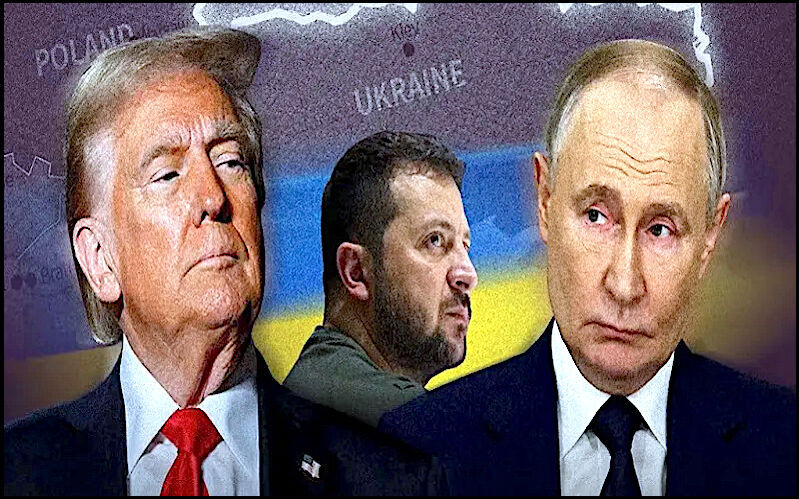
How might the US' relations with Ukraine and Russia change if it abandons its peace efforts?

TrumpPutinZel
© Courtesy ImageUS President Donald Trump • Volodymyr Zelensky • Russian President Vladimir Putin
The US might cut off military aid to Ukraine while suspending its strategic resource talks with Russia.

Secretary of State Marco Rubio said on Friday that the US might stop mediating an end to the Ukrainian Conflict if it concludes within "a matter of days" that no peace deal is doable. That coincided with the Wall Street Journal reporting that Trump's envoy Steve Witkoff told them that "Putin had been fixated on Ukrainian land in their discussions. He said that "Russia might get some of the regions, but not all." This analysis here explained why it's so important for Russia to obtain full control over the disputed lands.

If no breakthrough is achieved, such as the US coercing Ukraine into withdrawing from those regions or Russia agreeing to freeze this dimension of the conflict, then the US might indeed abandon its peace efforts. The question therefore arises of how that could change its relations with Ukraine and Russia. Beginning with the first, Trump and his team's explicitly expressed exhaustion with this conflict bodes ill for the scenario of the US continuing military support for Ukraine, which would please Russia.

Comment: Korybko offers a smorgasbord of possibilities and subsequent outcomes, with some resembling a negotiation Gordian Knot. No one said it would be easy. Bet is Trump has his druthers.


Gavel

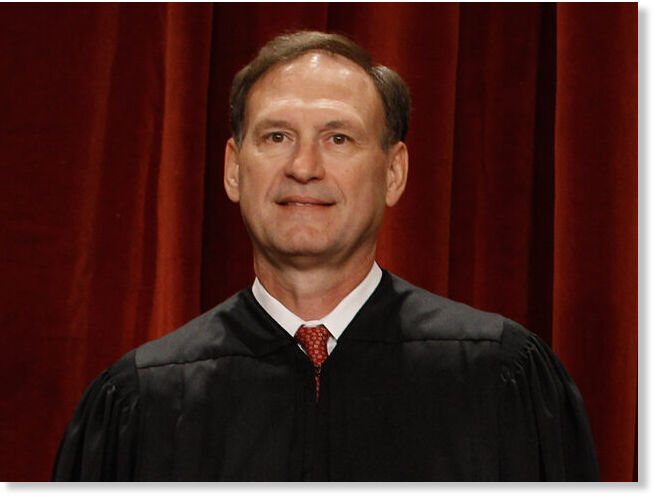
Dissenting Alito calls Supreme Court block of Venezuelan gang deportations "legally questionable"

Supreme Justice Alito
Supreme Court Justice Samuel Alito
Supreme Court Justice Samuel Alito filed a strongly worded dissent from the court's order issued early April 19 that temporarily blocked the Trump administration from deporting alleged members of the Venezuelan criminal gang Tren de Aragua.

The dissenting opinion, which was joined by Justice Clarence Thomas, was posted on the court's website early on April 20.

"In sum, literally in the middle of the night, the Court issued unprecedented and legally questionable relief without giving the lower courts a chance to rule, without hearing from the opposing party, within eight hours of receiving the application, with dubious factual support for its order, and without providing any explanation for its order," Alito wrote.

"I refused to join the Court's order because we had no good reason to think that, under the circumstances, issuing an order at midnight was necessary or appropriate."

"Both the Executive and the Judiciary have an obligation to follow the law. The Executive must proceed under the terms of our order in Trump v. J.G.G., and this Court should follow established procedures," Alito wrote.

Comment:


Star of David

US senator says there are plans for new 9/11 investigation

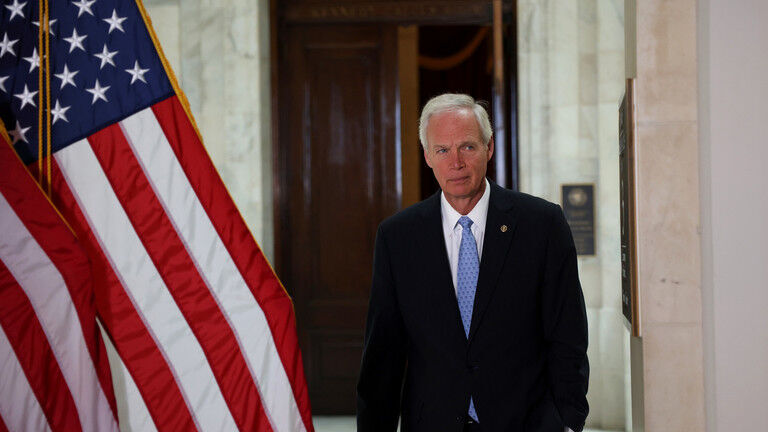
Republican US Senator Ron Johnson
© Anna Moneymaker / Getty ImagesRepublican US Senator Ron Johnson
Republican US Senator Ron Johnson has suggested that new congressional hearings into the September 11 attacks may be forthcoming, citing unanswered questions surrounding the official narrative and the handling of evidence.

On September 11, 2001, al-Qaeda terrorists hijacked four passenger airliners, crashing two into the World Trade Center towers in Manhattan. A third plane struck the Pentagon, while the fourth crashed into a field in Pennsylvania. According to the National Institute of Standards and Technology (NIST), World Trade Center Building 7 collapsed due to fires ignited by debris from one of the nearby towers.

During an interview with conservative commentator Benny Johnson which was published on Monday, Senator Johnson questioned several aspects of the 9/11 investigation, including the collapse of Building 7.

Attention

Gods of finance & gods of war

How high-level banking interests determined the most momentous events in our recent history.
Forever Wars
© havokjournal
Last March I published an article titled, "The power behind the throne and the forever wars" in which I explored the ultimate, systemic causes behind the West's insatiable appetite for war. Forever wars have become normalized, part of our everyday reality. In an article in the American Journal of Public Health, a group of American researchers made the following claim:
"Since the end of World War II, there have been 248 armed conflicts in 153 locations around the world. The United States launched 201 overseas military operations between the end of World War II and 2001, and since then, others, including Afghanistan and Iraq."
In other words, the US started more than 80% of all wars between 1946 and today. For a democratic society, one would have to conclude that the American people are irredeemably bellicose and consistently demand more wars. But as we know, that's exactly contrary to the truth. With the exception of George W. Bush's second term, Americans invariably voted for anti-war candidates. And yet, they always ended up getting more wars. Given that all these wars impoverish Americans and kill millions of people around the world, it should be important for us to understand where exactly this insatiable appetite for war originates and how it becomes policy.

The hardwired pursuit of war

Each new war is heavily marketed and duly justified to the voting public: we had to fight the Communists, then the terrorists or some dangerous new Hitler like Slobodan Milošević, Saddam Hussein, Moammar Ghaddafi, Bashar al Assad or Vladimir Putin. Tomorrow it'll be someone else's turn, always for one good reason or another. But the wars never end, and the propaganda only conceals the true incentives for war that must be systemic. Somehow, it's become hardwired in the Western systems of governance. These questions have been the motivating drive behind my research for decades now. In last year's article, I wrote as follows:
"In untangling the causal factors behind the many crises we face today, the trail of breadcrumbs always leads to the international banking cartel which appears to have the determining influence shaping the system of governance under which our societies operate. ... In particular, the banking interests appear to be the key movers behind the perpetual warfare we are witnessing today. The better we understand the way the systems work, the more the saying, "all wars are bankers' wars" rings true. ... it has never been about democracy nor about freedom. It is strictly about banking and about the collateral. ... Truly, the only group in society to whom the control of collateral makes any difference are the bankers, making them the main group with the incentive to foment forever wars for control of resources."
I recently came across an important and concrete corroboration of all this. In an article titled "How stolen Alberta oil keeps creating $9 trillion in fraudulent collateral," political economist Regan Boychuk revealed important insights into the way incentives for war become policy. He made the case that the US invasion of Iraq in 2003 was about keeping Iraqi oil off the world market in order to maximize the value of 175 billion barrels of newly 'proven' Alberta oil resource.

At the time of the Iraq invasion, I worked as an oil market analyst and followed the events very closely, which is why I found Boychuk's case very surprising. As he meticulously traces the events in the US and Canadian oil politics and connects them to the Iraq invasion, Boychuk arrives at conclusions that are staggering, yet compelling and entirely credible. Before we dive in, I wanted to acknowledge the reader who brought this article to my attention, only I meanwhile lost track of who it was: thank you, this was very valuable to my research!


MAGA

White House reveals COVID lab leak theory as 'true origins' of pandemic in flashy new website that blasts Biden, Fauci and Cuomo

Wuhan Institute of Virology
© AFP via Getty ImagesWuhan Institute of Virology
The White House revamped its COVID-19 information website on Friday, unveiling a sleek new landing page dedicated to the "true origins" of the pandemic.

COVID.gov, which previously contained information about testing, treatment and vaccination against the coronavirus, now redirects to a website that reads, "Lab Leak: True Origins of COVID-19."

The webpage slams both the Biden administration and former Democratic New York Gov. Andrew Cuomo's handling of the pandemic — and indicates that the Trump administration is fully onboard with the theory that COVID-19 leaked out of a laboratory in Wuhan, China.

Warning

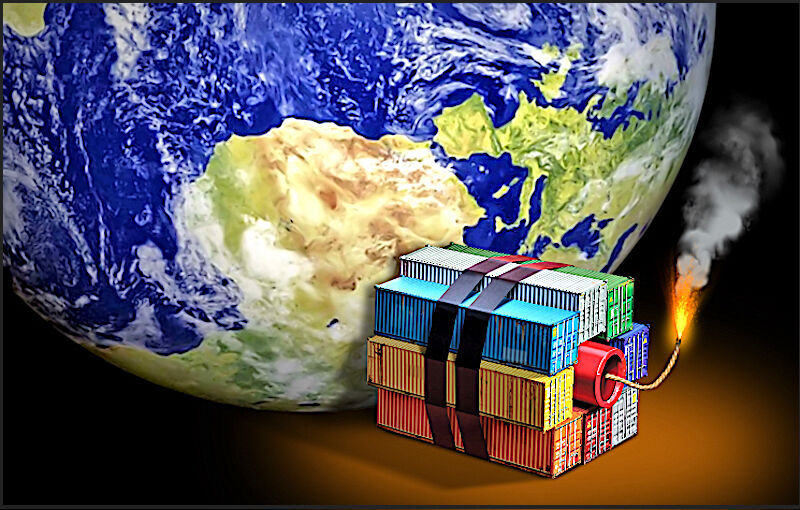
The Western paradox of inefficiency: The more crises we fund, the more crises we face

dynamite trade cars and globe
© SCF
Our only "crisis" is this: we've nurtured the monster of systemic inefficiency that now suffocates us.

The imposition of protectionist policies by the U.S. and, to some extent, by the EU, ostensibly motivated by legitimate geoeconomic objectives (such as reindustrialization), is responsible for a paradox of investment inefficiency. This paradox reveals, once again, the true nature hidden behind Western agendas: pouring money into the economy and funneling available economic resources toward an unprecedented accumulation of wealth in human history while promoting an increasingly inefficient system. Addicted to easy profits, this system consistently opts for the most expensive — and consequently, most disastrous — strategies for our collective future. These are not my words, but those of Goldman Sachs in their report "Carbonomics: Tariffs, Deglobalization, and the Cost of Decarbonization".

This behavior, which became apparent in the early 21st century, accelerated with the Subprime crisis. Instead of holding the true culprits of reckless speculation accountable, the powers entrenched in Washington and their servants in the EU, IMF, ECB, and World Bank chose to shift the blame onto the people of the South, particularly those in Southern Europe. They planted the prejudice that these nations had been "living beyond their means," while shock austerity policies not only plundered national resources (public companies and fiscal reserves) to appease the urgency of "creditors" but also flooded Western economies with trillions of euros, feeding the voracious beast behind the gangsterized casino economy.

Comment: Eye opener: Author utilizes the 'green' transition's financial example. To know the structure is to know the outcome, who benefits/who loses locally and globally. Other than a handful of oligarchs, the West is not winning this one...not even close.


Calendar

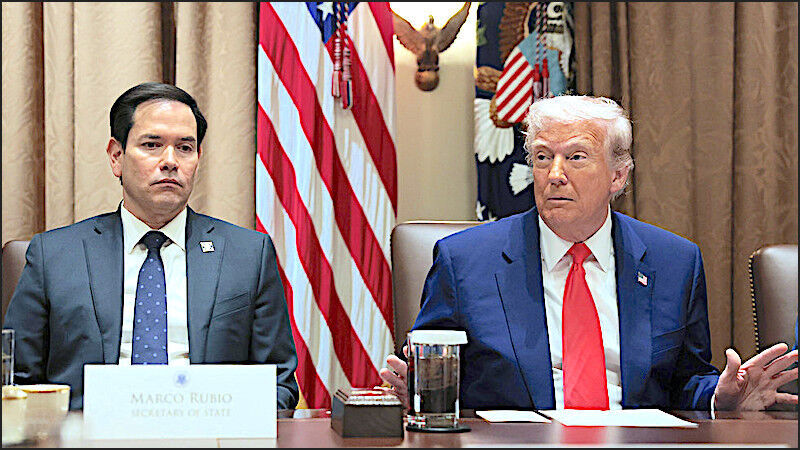
US sets timeline for Kiev to agree to ceasefire

RubioTrump
© Anna Moneymaker/Getty ImagesUS President Donald Trump • US Secretary of State Marco Rubio
The White House indicated earlier that it would wash its hands of the Ukraine conflict if either side is obstinate.

US President Donald Trump reportedly expects to "make a determination for a full and comprehensive ceasefire" between Ukraine and Russia as early as next week. Both are to be presented with the final offer, the New York Post has claimed, citing an anonymous senior administration official.

Trump has stated on multiple occasions that he wants to put an end to the Ukraine conflict as soon as possible. Since he assumed office in January, Washington and Moscow have been engaged in active diplomacy, holding several rounds of high-level talks.

The newspaper quoted a source on Friday as saying that "this coming week in London, we want to make a determination for a full and comprehensive cease-fire." The unnamed US official added that the "intent then is to have [discussions] with the Russians" and determine where Moscow and Kiev stand on this "final offer."

According to the publication, Ukrainian Defense Minister Rustem Umerov told US Secretary of State Marco Rubio and President Trump's envoy Steve Witkoff during their meeting in Paris on Thursday that Kiev is "90%" on board with Washington's peace framework, which has yet to be made public.

Comment: To be or not to be?


Russian Flag

Time's up: Russia's next move against Ukraine could be decisive

Montage
Russia-Ukraine war montage
As the pause at the front drags on, what lies ahead for the spring-summer campaign?

As the front lines in Ukraine settle into a temporary stalemate, attention turns to what the Kremlin may be planning next. With no major offensives currently underway, all signs point to a spring-summer campaign that could echo the dynamics of last year: Russia pressing forward across multiple axes, Ukraine holding the line with dwindling resources. But beneath the surface of this familiar pattern, critical shifts in strategy, manpower, and battlefield technology suggest that the coming months may bring far more than just a repeat of 2024.

On objectives

It's worth remembering that for both the Russian and Ukrainian militaries, holding or capturing territory isn't the ultimate goal.In a war of attrition, the primary objective is to wear down the enemy - to inflict greater losses than you take. Ukraine, however, hasn't always adhered to this logic. Over the past three years, there have been numerous instances where political imperatives overrode military ones. The Armed Forces of Ukraine (AFU), reluctant to withdraw from certain positions, ended up suffering costly local defeats. We saw this in Bakhmut and Avdeevka, in Ugledar and Velikaya Novoselka, at the Krynki and Kurakhovo bridgeheads, and most recently in Sudzha.

Comment: Without Western backers there would have been no war. Without Western influence there would be no advanced tactics. Without Western manipulation there could be thousands of Ukrainians still alive and contributing to their country's well-being. There are no 'winners' in war.


Warning

Germany wants the UK to hold its hand while it starts WWIII

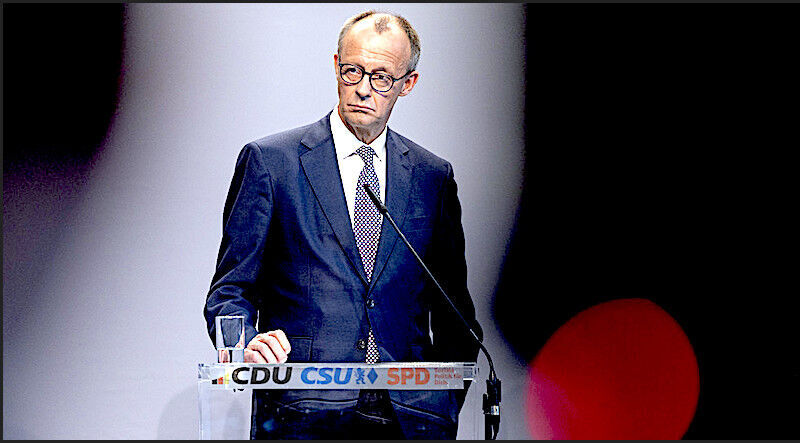
Merz
© Maja Hitij/Getty ImagesGermany’s Chancellor-in-Waiting Friedrich Merz
The chancellor-in-waiting says he would commit to giving Kiev long-range missiles if London backs him.

Germany's chancellor-in-waiting Friedrich Merz doesn't officially take office until May 6, but that hasn't stopped him from hitting the press circuit like it's demolition day. Apparently, he's got some lost time - and infrastructure - to make up for.

In a chat with Germany's public broadcaster, ARD, he floated the idea that Kiev, which seems to rank higher than Berlin on his priority list, needs to "get ahead of the situation" on the battlefield and "shape events" instead of playing defense. The event he seems most eager to shape? Oh, just the Third World War, apparently. Because he pivoted straight to the Kerch Bridge - mainland Russia's lifeline to the Crimean peninsula - like it's been living on borrowed time.

Merz said:
"If for example, the most important land connection between Russia and Crimea is destroyed, or if something happens on Crimea itself, where most of the Russian military logistics are located, then that would be an opportunity to bring this country strategically back into the picture finally."
Cool, cool. Which picture would that be, exactly? The one labeled "Catastrophic Misjudgments of the 21st Century"?