Puppet MastersS


Attention

Snap details Facebook's hardball tactics to thwart competition in 'Project Voldemort' dossier

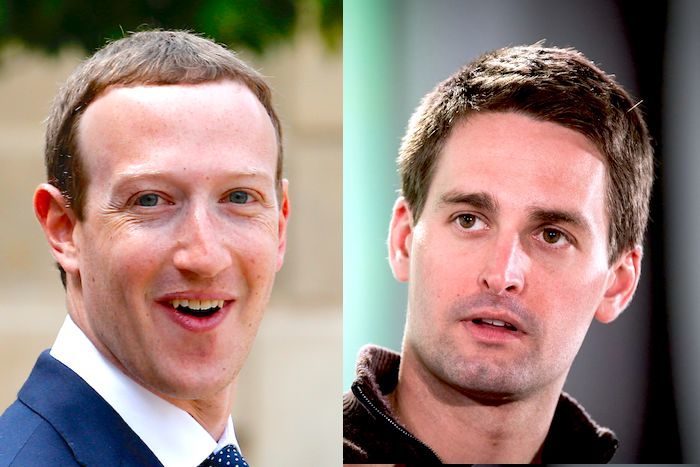
ZuckerbergSpiegel
© Getty Images/David Paul Morris/Bloomberg NewsFacebook CEO Mark Zuckerberg • Snap CEO Evan Spiegel
Facebook Inc. for most of the past decade was Silicon Valley's 800-pound gorilla, squashing rivals, ripping off their best ideas or buying them outright as it cemented its dominance of social media.

Now the knives are coming out.

A number of Facebook's current and former competitors are talking about the company's hardball tactics to investigators from the Federal Trade Commission, as part of its broader antitrust investigation into the social-media giant's business practices, according to people familiar with the matter.

One of them is Snap Inc., where the legal team for years kept a dossier of ways that the company felt Facebook was trying to thwart competition from the buzzy upstart, according to some of those people. The title of the documents: Project Voldemort.

X

Russian Prosecutor General's office: 'We don't use private lawyers' to interface with the US

Flags
© Maxim Shemetov/Reuters/KJN
The Russian Prosecutor General's Office has explained to RT how an "efficient mechanism" of information sharing with the US works. No private lawyers are involved in the process, the agency official said, denying allegations that it has played a part in any meeting between Donald Trump Jr. with lawyer Natalia Veselnitskaya.

RT: Some foreign media wrote about the meeting between Donald Trump Jr. and Russian lawyer Natalia Veselnitskaya which reportedly took place last June, and possible involvement of the Russian Prosecutor General's Office in brokering the meeting. How would you comment on this information?

Denis Grunis, head of the International Cooperation Department for Major Cases at the Office of International Legal Cooperation of Russia's Prosecutor General's Office: I would not want to comment on something that is totally untrue. You have to understand that the Office of the Prosecutor General does not share information with individuals in the US. Such contacts can only happen through official channels - as stipulated by international agreements - and after a formal query is submitted by a prosecution agency.

This is exactly what we told your foreign colleagues - and we had about a dozen major Western media outlets asking us to comment. Interestingly enough, they did not publish any of our comments.

Pirates

Pakistan has reactivated its Balakot terrorist camp after destruction in February airstrikes

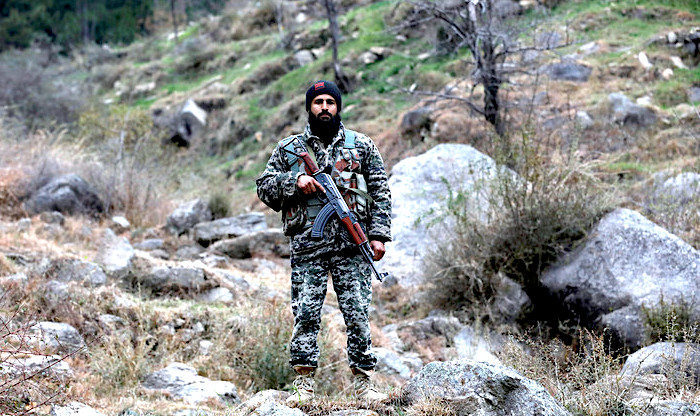
Pakistani soldier
© Akhtar Soomro/ReutersA Pakistani soldier guards the area where Indian jets struck on February 26, according to Pakistan, in Jaba village, near Balakot, Pakistan.
Hundreds of militants are ready to cross into India from Pakistan after Islamabad relaunched a terrorist camp in Balakot, the Indian Army said. An air raid on Balakot brought the two nations to the brink of war in February.

"Balakot has been reactivated by Pakistan very recently," Army Chief of Staff General Bipin Rawat told reporters on Monday.

The general said the camp in northeastern Pakistan was destroyed by Indian jets in February, but "now they have got the people back there. These numbers keep fluctuating but I would say, yes - there are at least 500 people who are waiting to infiltrate [India]."

Additional troops were deployed along the Line of Control (LoC) in disputed Kashmir "to ensure that the infiltration is curbed to the maximum extent," he said.

Comment: See also:


Bad Guys

Magnier: Why Iraq didn't retaliate against Israel

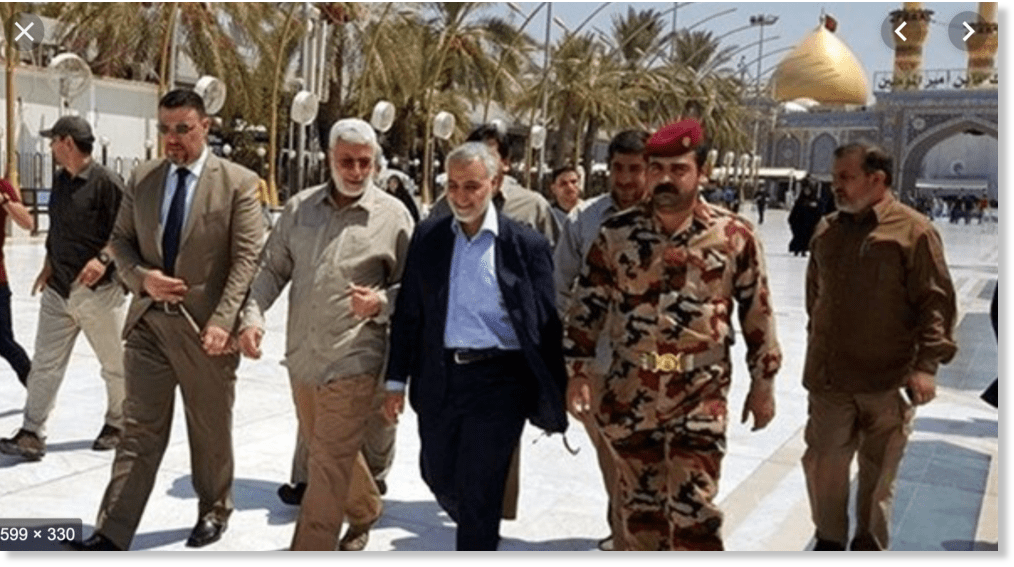
iran iraq suleimani
Iraq and Syria have decided to re-open the border-crossing between the two countries at albu Kamal - al Qaem, a vital move for the economic interests of both countries, with considerable benefits for the "Axis of the Resistance" (Iran, Iraq, Syria and Hezbollah in Lebanon). Twenty-four hours before the opening was due, an attack occurred against Iraqi militants positioned on the Syrian side of the border, causing casualties. Hashd al-Shaabi, the Iraqi Security Forces, or the "Popular Mobilisation forces", accused Israel of the attack, and claim it has sent several drones from military facilities based in US occupied north-east Syria. The US maintains a static position a few kilometres from al-Qaem bordering the city. Its diplomats in Baghdad have been pressuring the Iraqi government to keep the borders closed in order to force Syrian President Bashar al-Assad to step down. Baghdad seems now less determined to re-open the crossing and Prime Minister Adel Abdel Mahdi doesn't have enough domestic political support to take his own decisions, nor to protect his security forces from attacks, nor even to warn the US forces against using Israel to do its work. The other important factor that endangers Hashd al-Shaabi in the country is the sharp internal division between politicians and the religious leadership in Iraqi.

In the last month, Israel has violated Iraqi airspace and its sovereignty, targeting its security forces, warehouses and even its military commander. The reason why Israel feels free to attack is simply because it can count on many friends and has common enemies and joint political opponents among Iraqi politicians and in the Arab world: Hashd is the common enemy.

Indeed, Bahrein's Foreign Minister hailed the Israeli attack on Hashd, brandishing the identical narrative adopted by Israel when attacking an enemy country or a potential threat, i.e. "self-defence". It is, after all, an essential strategic component of Israel's deterrence policy adopted by Moshe Dayan since 1955.

Boat

Iran says seized UK-flagged tanker Stena Impero is now free to leave

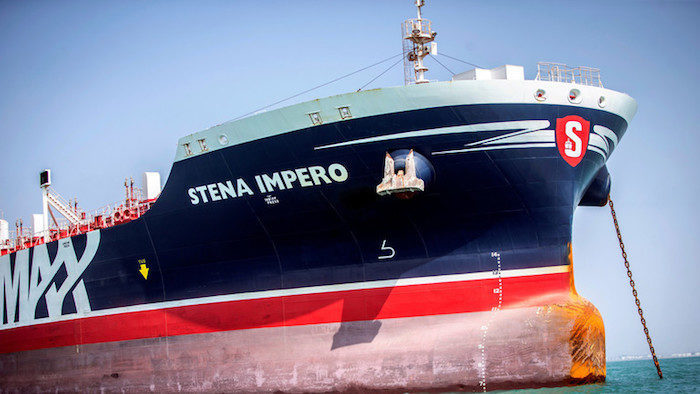
Stena Impero
© File Photo/Reuters/WANAStena Impero
An Iranian official has confirmed that all legal steps to facilitate the release of the UK-flagged oil tanker Stena Impero have been completed and the vessel is free to leave.

"The legal work and administrative procedures for the release of the English tanker have been completed, but I have no information on the time of the release," government spokesman Ali Rabiei said, according to Iranian news agency ILNA.

Officials said on Sunday that the tanker, which is owned by Swedish shipping firm Stena Bulk, would be released soon after 65 days of detention.

Comment: See previous updates on the tanker saga below:


Pirates

Russian Security Agency accuses US special services of transferring ISIS militants to Afghanistan

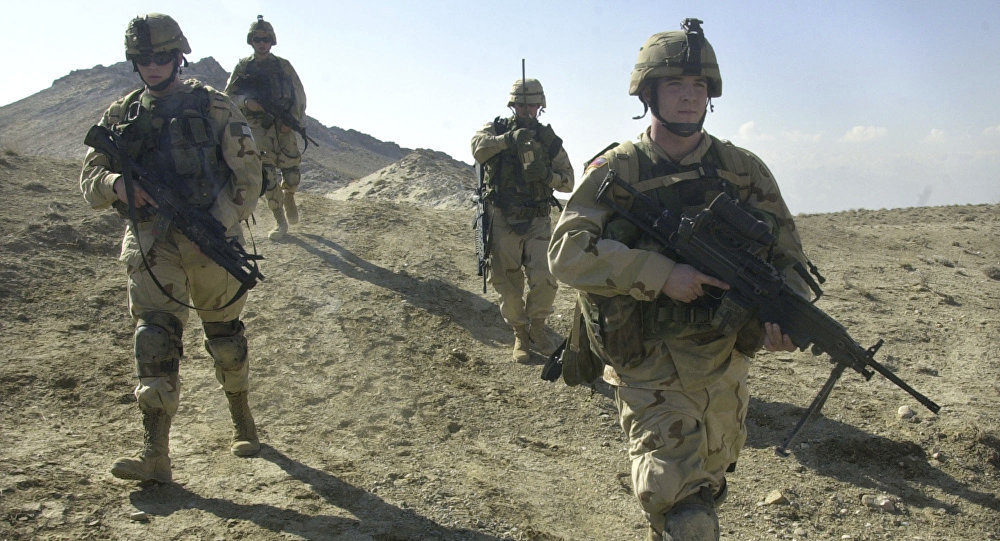
us soldiers afghanistan
© AP Photo / Aaron Favila
On Monday, the Russian city of Kazan is hosting the 16th meeting of the leadership of intelligence services under the chairmanship of Russian Foreign Intelligence Service (SVR) head Sergey Naryshkin. The participants are set to discuss points related to counter external forces that attempt to influence the situation in the CIS.

US special services are involved in transferring Daesh militants to northern regions of Afghanistan with the aim of destabilising the situation on the borders with the Commonwealth of Independent States (CIS), Sergey Beseda, the head of the Russian Federal Security Service's international relations department, said on Monday.

"We have received information about the US special services' involvement in the transferring of Daesh fighters to Afghan northern regions to destabilise the situation on the CIS southern borders and later in Central Asia," Beseda said at the meeting.

According to an official, the security agencies and intelligence services of the CIS countries must identify threats at an early stage to provide security to the CIS states.

The US has been accused numerous times of providing various forms of support to Daesh and other terrorist groups operating in the region.

Comment: The U.S. always denies such accusations as "absurd", but it's not so crazy, especially when they've been caught shipping weapons to al-Qaeda and ISIS:


Green Light

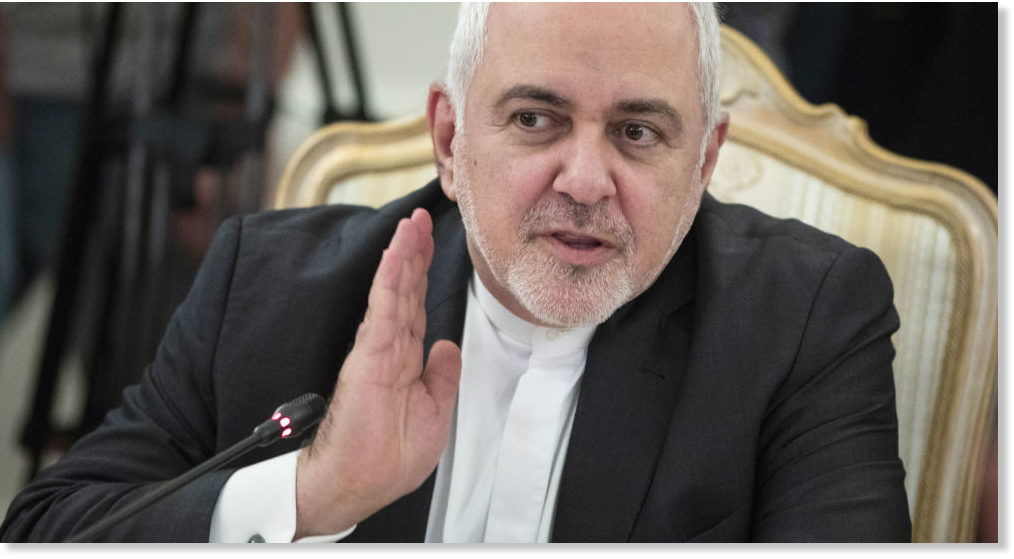
Zarif: Iran is open to talks on permanent nuclear deal with US

Foreign Minister Javad Zarif
© AP Photo / Pavel Golovkin
Iran is open to talks with the United States on a lasting nuclear deal but the place for them is at the negotiating table of signatories to the existing pact, Foreign Minister Javad Zarif said Sunday.

"We're ready to talk. We're ready to talk but talk in terms of something that is not going to be valid only for the next one and a half year or five and a half years. We need to talk about something that is permanent," he said in an interview with CBS.

The next opportunity will be Wednesday on the sidelines of the UN General Assembly where top diplomats of six signatories — the United Kingdom, France, China, Russia, Germany, Iran — and the European Union will discuss future of the 2015 deal.

Pyramid

Brazilian government wary as Pope prepares 'Synod of the Amazon' to 'save trees, minorities and whole planet'

pope francis amazon
A special three-week synod focused on the Amazon region due to be held at the Vatican in Rome, Italy this October has antagonized the Bolsonaro government, who regard it as an interference in Brazil's national sovereignty.

The Synod has a seemingly innocuous sounding name: "Amazonia: new paths for the church and for an integral ecology." However, for the Brazilian president's National Security Adviser General Augusto Heleno, head of the Internal Security Cabinet, the GSI, "it's worrying and we want to neutralize it."

General Heleno worries that the progressive clergy will use the Synod to criticize the government's Amazon policies, which though still taking shape, are likely to include a ban on all further demarcation of indigenous reserves, the opening of indigenous lands to mining concessions, and the building of numerous infrastructure mega-projects, including roads, railways and dams - policies that could heavily impact conservation areas and indigenous reserves, and cause a big uptick in deforestation, putting Brazil's 2015 Paris Climate Agreement carbon reduction targets at risk.


Comment: ...and policies that would lift millions of Brazilians out of poverty. But the church today falls into line with the internationalists' anti-development mentality and dismisses the spread of civilization as 'injustice'.


The synod arose out of Pope Francis' 2015 encyclical Laudato Si, "Caring for our common house" which called for action on global warming and pinpointed the pan-American Amazon region as an area of concern ­- the document caused considerable controversy in Latin America. Taking part in the Synod will be bishops and priests (and one nun) from the nine countries encompassing the Amazon rainforest, along with representatives of NGOs that work in the region. However, the right-wing government of Jair Bolsonaro appears to consider the themes to be discussed, including climate change and indigenous peoples, to be part of a leftist agenda.

Comment: Francis really is a loon.

He's the culmination, however, of decades of ideological onslaught that occurred in the church as much as it did through schools, universities, the media, etc. The church, for all its dogma about sin and evil, had zero defenses against actual ideological/spiritual infection, a.k.a. ponerization.

What a mind-job! Between this and its support of Muslim mass migration into the West, the church is now ardently proseltyzing on behalf of the interests of anyone-but-christians-or-christianity.


Blackbox

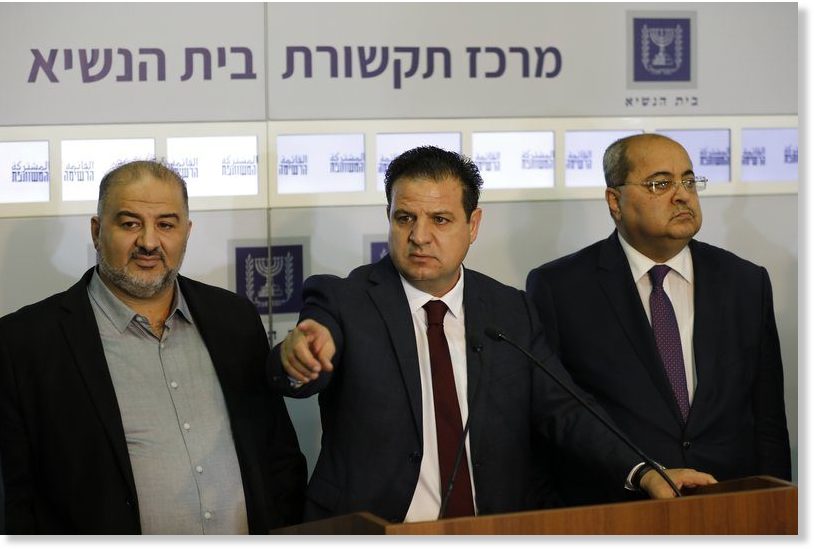
Nothing to lose? Arab lawmakers in Israel endorse Gantz for prime minister

Arab lawmakers in Israel
The Arab bloc in Israel's parliament abandoned its usual hands-off stance Sunday and endorsed former military chief Benny Gantz for prime minister, potentially giving him the edge over hard-line incumbent Benjamin Netanyahu.

The historic move marked the first time in nearly three decades that the Arab parties backed a candidate for prime minster, reflecting their contempt for Netanyahu, who was accused of fomenting hatred of the Arabs during his re-election campaign.

"Benny Gantz is not our cup of tea," said Arab lawmaker Ahmad Tibi. "But we promised our constituents that we would do everything to topple Netanyahu, and the default here is recommending Benny Gantz."

It will be up to Israeli President Reuven Rivlin to decide which candidate should be given the chance to form a coalition government and serve as prime minister — a usually pro forma task made difficult this time by last week's deadlocked parliamentary elections.

Neither Gantz, the leader of the centrist Blue and White party, nor Netanyahu, head of the conservative Likud movement, has a majority in the 120-seat Knesset, or 61 members. But with the backing of the Arab parties, Gantz gained a slight advantage. He could have as many as 57 backers, compared with Netanyahu's 55.

Star of David

Israeli TV station says Netanyahu won enough votes to head new government

israel election skulls 300px
© Al Jazeera
On Sunday, Israeli President Reuven Rivlin began two-day consultations with elected parties to pick a politician with the best chance of forming a coalition government.

Fifty-five members of the Knesset parliament called on Israeli Prime Minister Benjamin Netanyahu, the head of Likud party, to form the next government, compared to fifty-four votes for the opposition Blue and White political alliance, media reported on Monday.

According to the Israeli Channel 13, the round of consultations at the president's headquarters ended with Benjamin Netanyahu's mandate to form the government.

Comment: Associated Press reports:
The Arab bloc in Israel's parliament abandoned its usual hands-off stance Sunday and endorsed former military chief Benny Gantz for prime minister, potentially giving him the edge over hard-line incumbent Benjamin Netanyahu.

The historic move marked the first time in nearly three decades that the Arab parties backed a candidate for prime minster, reflecting their contempt for Netanyahu, who was accused of fomenting hatred of the Arabs during his re-election campaign.

"Benny Gantz is not our cup of tea," said Arab lawmaker Ahmad Tibi. "But we promised our constituents that we would do everything to topple Netanyahu, and the default here is recommending Benny Gantz."

It will be up to Israeli President Reuven Rivlin to decide which candidate should be given the chance to form a coalition government and serve as prime minister — a usually pro forma task made difficult this time by last week's deadlocked parliamentary elections.

The endorsement by the Joint List, a bloc of four small Arab parties that controls 13 seats, marked a turning point in Israeli politics. Arab parties have traditionally refrained from endorsing a candidate for prime minister, and they have never sat in a coalition government, not wanting to be seen as legitimizing Israeli policies.

Although many Israeli Arabs remain angry at Gantz for leading the military's devastating war against Gaza militants in 2014, their fury toward Netanyahu runs much deeper. Netanyahu's campaign repeatedly accused the Arabs of trying to "steal" the election, drawing accusations of racism and incitement.

There is also deep-seated anger over a law passed by Netanyahu's government in 2018 that declared Israel to be the nation-state of the Jewish people. Arabs believe the law codifies discrimination.

Though the Arab parties are still expected to stay out of Gantz's future government, their endorsement reflects a growing desire of Israel's large Arab minority to take a more active role in shaping the country.

In an op-ed piece in The New York Times, Ayman Odeh, the leader of the Joint List, argued that his move should end Netanyahu's political career and provide a watershed moment for Israel's Arab minority.

"If the center-left parties of Israel believe that Arab Palestinian citizens have a place in this country, they must accept that we have a place in its politics," he wrote. "There is no shared future without the full and equal participation of Arab Palestinian citizens."

The deciding factor looks to be Lieberman, who is demanding a broad unity government with the two major parties that will be secular and exclude the ultra-Orthodox Jewish parties and Arabs. That appears to be the compromise emerging between Blue and White and Likud, though both are insisting upon leading it.

Complicating matters is Blue and White's refusal to sit with Netanyahu because he faces a likely indictment on corruption charges.

In calling a new election, Netanyahu had hoped to secure a narrow majority of hard-line and religious parties that would grant him immunity from prosecution on charges that could include bribery, breach of trust and fraud. But now that possibility appears to be off the table.

Israeli law does not require a sitting premier to resign if indicted. But if he is charged, as is widely expected, he will come under heavy pressure to step down.
'Kingmaker' Avigdor Lieberman doesn't want to make a choice. It's bad either way:
Avigdor Lieberman, Netanyahu's one-time right-hand man, is refusing to back either the prime minister or his rival, Benny Gantz, after an inconclusive general election left the Israeli premiership up in the air.

Lieberman, who leads the right-wing Yisrael Beytenu (Israel Our Home) party, said in a statement on Sunday that Netanyahu and Gantz should drop their "childish argument" and form a national unity government. He called on them to "flip a coin" to decide who serves as prime minister first.

The nearly-final general election results showed a deadlock between Gantz's Blue and White (33 provisional seats out of parliament's 120) and Netanyahu's Likud (31 seats) - well below the 61 needed to secure a majority in parliament. So the future of the Israeli government is in the hands of smaller players.

In a landmark move, the Joint List, a cluster of primarily Arab Israeli parties that is set to become the third-biggest power with 13 votes, has decided to back Benny Gantz in a bid to block Netanyahu from securing another term. Its demands for Gantz are said to include halting home demolitions in unrecognised Arab communities, cancelling the law that enshrines Israel as the exclusive nation-state of the Jewish people, and resuming a peace process with the Palestinian Authority in the West Bank.

While Gantz has yet to comment on a potential deal, siding with the Joint List would still not grant him the much-coveted Knesset majority, and Avigdor Lieberman, with his 10 projected seats, could become the game-changer.

Netanyahu, for his part, has formed an alliance with ultra-Orthodox parties which would see him at some 55 seats in parliament. The incumbent prime minister has offered Gantz a rotating premiership as a compromise, but the latter feels he is in a stronger position and refuses to join a Netanyahu-led government.

Lieberman - the former defence chief who quit Netanyahu's cabinet due to his displeasure with a truce with Gaza's Hamas - said that he would only support a "broad, liberal" national unity government comprising Likud, Blue and White, and his own Yisrael Beytenu. That government, in his vision, should include neither the ultra-Orthodox parties that back Netanyahu nor Gantz's potential Arab allies.

"The Haredim [ultra-Orthodox] are political rivals, but not enemies. The Joint List are our enemies," he said on Sunday. "Wherever they are, we will be on the other side."

Lieberman is set to meet with Benny Gantz on Monday afternoon for talks.

Israel's President Reuven Rivlin earlier said that both Likud and Blue and White should be included in the future government as the two largest parties. Rivlin has invited Netanyahu and Gantz to meet at his residence on Monday to discuss the formation of a new government.

If no candidate is able to form a government, Israel would have to call another snap election, which would become its third this year.