Puppet MastersS


Arrow Up

Neo-Nazism on the rise in Europe - Kremlin

Kremlin
© Getty Images / Ulf Mauder
Neo-Nazism is on the rise in Europe and extensive efforts are needed to combat this, Kremlin spokesman Dmitry Peskov told journalists on Monday.

Peskov was asked to comment on a recent Politico report claiming that the leaders of Poland, France, Germany, and the UK had declined to attend Vladimir Zelensky's Victory Day celebrations in Kiev. Ukraine has positioned the event as an alternative to the parade set to be held in Moscow on May 9 to commemorate the 80th anniversary of the Soviet Union's victory over Nazi Germany.

Asked if this refusal represented a shift in modern Europe's attitudes toward neo-Nazism, Peskov said it is unlikely to become "a turning point" and claimed that "manifestations of neo-Nazism in Europe are quite significant."

"The Europeans themselves understand this and many in Europe are rightly afraid of this," Peskov added. He insisted that the fight against fascism should not be a "one-time event" but a constant and continuous effort at all levels of society.

Star of David

Israel warns of retaliation after Houthi strike on airport: As it happened

bomb explodes
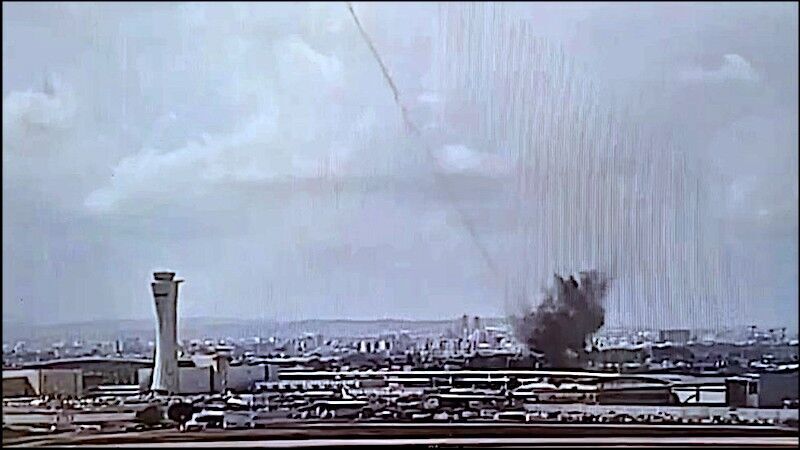
© Screenshot/Telegram@bbbreakingBombing at Airport
A Houthi official has confirmed the attack on Ben Gurion near Tel Aviv, claiming that the group has "no red lines" in its fight against Israel.

Israel's main airport was struck by a ballistic missile fired by Yemen's Houthi rebels on Sunday morning. The missile hit a grove near an access road inside the perimeter of Ben Gurion Airport near Tel Aviv. Media reports suggest that at least six people were wounded.

The Israel Defense Forces (IDF) confirmed that it failed to intercept the missile despite several attempts.
"An impact was identified in the area of Ben Gurion Airport," the IDF said in a post on Telegram. The Israeli Air Force is investigating the failure.

The Houthis, who control western Yemen, including the capital and the port of Hodeidah, have launched a number of drones and missiles at commercial vessels passing through the Red Sea and at targets in Israel over the past year, aiming to pressure West Jerusalem over its military operation in Gaza. Israel launched the campaign following a deadly raid by the Palestinian militant group Hamas in October 2023. The Houthis said they would stop the attacks if Israel halts its operation in Gaza.

Russian Flag

European security is impossible without this key element

parachutes
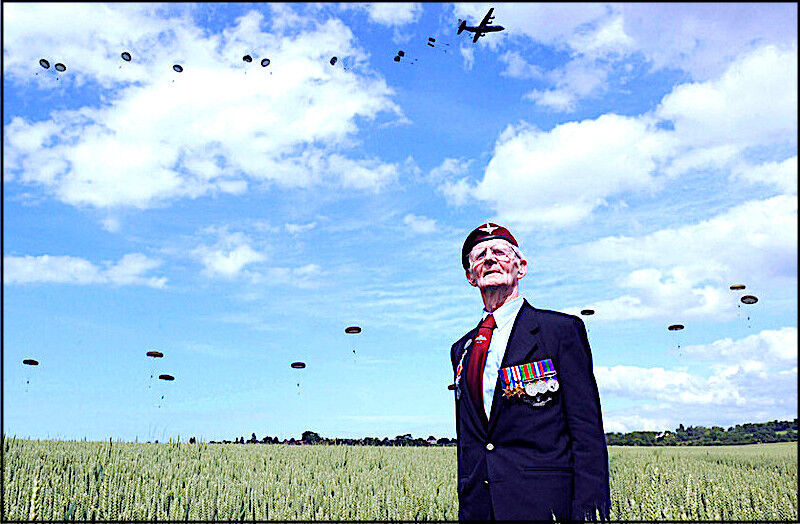
© Thomas Bregardis/AP/PoolParachutes
Russia, which is integrally connected to Europe, ensures its stability and prosperity.

The narrative around Russia's role in European security has become increasingly distorted in recent decades. Once a central player in European geopolitics, Russia is now considered an outsider at best and an outright enemy at worst. Looking at Moscow through this narrowed prism has become the norm not the exception. It makes the focused observer wonder if European leaders really believe that much can be done without Russia, particularly security-wise.

To say such a European view of Moscow is both unfair and short-sighted may be an understatement. It is only 80 years since the Soviet Union, of which Russia was the center, led the liberation of Europe from what was essentially the European evil of Nazism, which is coming back to haunt the old continent. Do current European leaders really forget such recent history or do they, intentionally, want to rewrite it to suit their current agendas and future Europe, in another generation or two? There is an irony here: while some European leaders are intentionally casting Russia as a "non-European" entity, the historical and practical reality paints a starkly different picture - where Russia is not only a European country but an essential player in ensuring the continent's stability and prosperity. What cannot be changed is this: Russia is and will always be as European as France or Germany.

People 2

White House: Changing a minor's gender is "child abuse" and "medical malpractice"

child runs
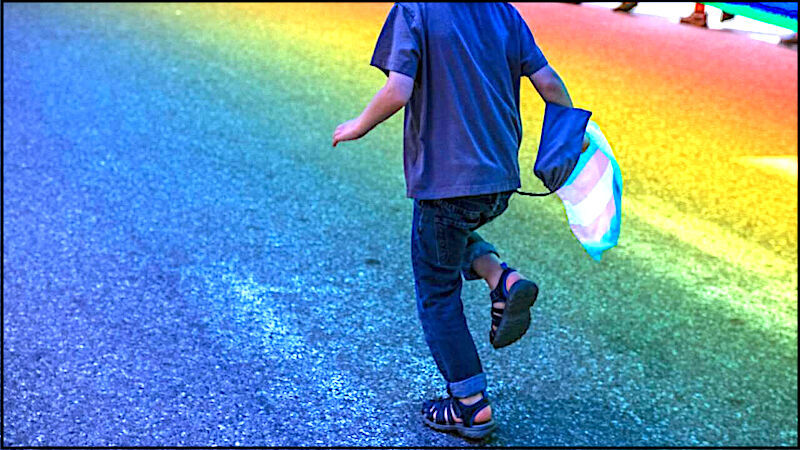
© UnknownChild navigating transgender ground
White House Deputy Chief of Staff Stephen Miller announced Thursday that the Trump administration considers it "child abuse" to be change the gender of a minor and that health professionals carrying out the procedures are opening themselves up to charges of medical malpractice.

Speaking to the press, Miller stated "The Department of Justice is coordinating with state and local law enforcement to fight child abuse in our school systems."

"It is child abuse to change a child's gender, particularly if you do not inform the parents," Miller further emphasized, adding "So, if a five-year-old or a six-year-old or a seven-year-old goes to school and the teacher tries to turn the boy into a girl or the girl into a boy, that is child abuse, and this administration is treating that as child abuse, and it is a gross violation of parental rights."

Arrow Up

Australia PM Albanese makes stunning comeback with landslide win

Anthony Albanese
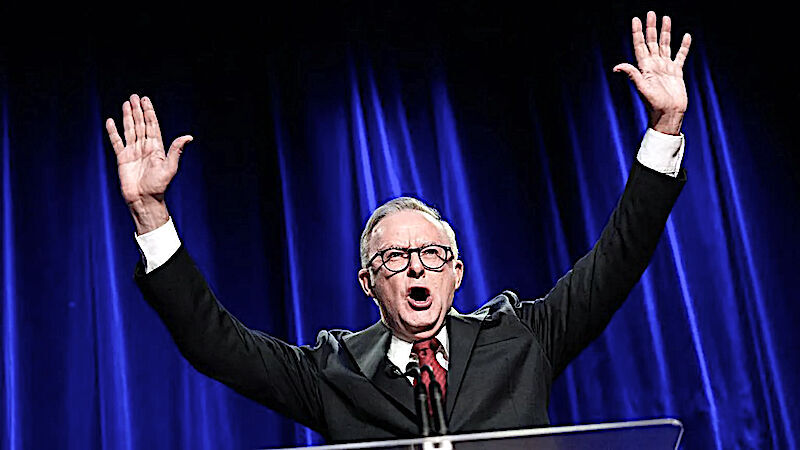
© Getty ImagesAnthony Albanese says his election was a vote for equality and kindness.
Labor's Anthony Albanese has defied the so-called "incumbency curse" to be re-elected Australia's prime minister in a landslide.

Official vote counting won't finish for days, but Albanese's centre-left government will dramatically increase its majority after the conservative Liberal-National coalition suffered a thumping defeat nationwide.

"Today, the Australian people have voted for Australian values: for fairness, aspiration and opportunity for all; for the strength to show courage in adversity and kindness to those in need," Albanese said.

Coalition leader Peter Dutton, who lost his own seat of 24 years, said he accepted "full responsibility" for his party's loss and apologised to his MPs.

Following the result, UK Prime Minister Sir Keir Starmer and US Secretary of State Marco Rubio both said they looked forward to deepening their bilateral relationships with Australia.

Attention

Why doesn't the 'Deal-Maker' close the deal?

Four Psychos
© Public Domain
The story, both on Ukraine and Iran, is that President Trump wants a 'deal' - and both deals are available - yet he seems nonetheless to have boxed himself in. Trump presents his Administration as being something rougher, meaner, and far less sentimental. It aspires to emerge, apparently, as also something more centralized, coercive, and radical.

In domestic policy, there may be some truth to this categorisation of the Trumpian ethos. In foreign policy, however, Trump tergiversates. The reason is not clear, but the fact of it clouds his prospects in the three areas vital to his 'peace-maker' aspiration - Ukraine, Iran and Gaza.

Whilst it is true that Trump's true mandate derived from rampant economic and social discontent, rather than from his claims to be a peacemaker - yet the two key foreign policy ends remain important to maintaining momentum forward.

One possible answer is that in foreign negotiations, the President needs a grounded and experienced team to support him. And he does not have that.

In advance of sending his Envoy Witkoff to talk to President Putin, General Kellogg, it seems, presented Trump with a Versailles-type Armistice proposal: A vision of Russia on the ropes (i.e. the plan was cast in terms more appropriate to Russian capitulation). Kellogg's proposal implied also that Trump would be doing Putin a 'big favour' - by condescending to offer him a ladder down which to climb from his perch up the Ukraine 'tree'. And this was exactly the line Trump took in January:

Having stated that Russia had lost one million men (in the war), Trump then went on to say that "Putin is destroying Russia by not making a deal". He further claimed that Russia's economy was in 'ruins', and most notably, said that he would consider sanctioning or tariffing Russia. In a subsequent Truth Social post, he wrote, "I'm going to do Russia - whose Economy is failing - and President Putin, a very big FAVOR".

The President - duly briefed by his team - may have imagined that he would offer Putin a unilateral ceasefire and, hey presto, would have a quick deal to his credit.

Russian Flag

Russia standing alone against West - Putin

Vladimir Putin
© Sputnik / Kristina KormilitsynaVladimir Putin
The West has been long seeking to "finish off" Russia and partition it into several smaller countries, Vladimir Putin has said

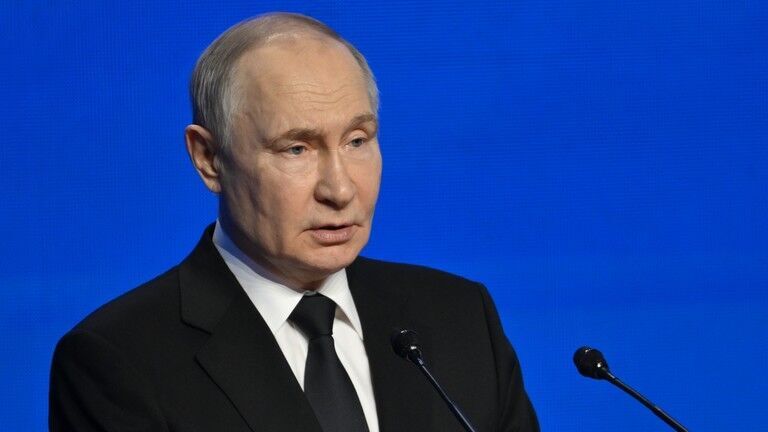
Russia is standing alone against the West, which is waging an "existential war" against the country, President Vladimir Putin has said.

Putin made the remarks in a documentary titled 'Russia. Kremlin. Putin. 25 years,' filmed by Rossiya-1 broadcaster and released on Sunday. The film marks the 25-year anniversary of Putin becoming the country's president for the first time. He inaugurated on May 7, 2000.

Comment:
About the documentary, the Russian newspaper, Kommersant, has said, if translated:
04.05.2025, 15:13
Putin on reconciliation with Ukraine, provocations of the West and thoughts about a successor. Main
The TV channel 'Russia 1' released a documentary film by Saida Medvedeva and Pavel Zarubin 'Russia. Kremlin. Putin. 25 years.' In it, Vladimir Putin answered journalists' questions about the main world events and showed his Kremlin apartment. The main statements of the President of Russia are in the Kommersant selection.

About Ukraine
  • Reconciliation with Ukraine is inevitable, it is a matter of time.
  • Even without nuclear weapons, Russia has enough forces and means to complete the NWO with the result it needs.
  • Russia could not proceed with drastic decisions on Ukraine without carrying out work in the field of security and economy.
  • Russia did not prepare specifically for the NWO and wanted to solve the problem of Donbass by peaceful means.
  • Russia was forced to support the Crimeans and Sevastopol residents in 2014, but it was unrealistic to start a special military operation then.
  • When announcing the NWO, he counted on the support of the Russians and an appropriate reaction, but he was aware of the risks.
About the West
  • The West wanted to provoke Russia to make mistakes and strike back at it.
  • The West constantly wants to 'bite off' something from Russia, to subjugate it, to make it more obedient.
  • The West did not hear the warning at the Munich Conference, which led to the events in Ukraine.
  • Russia, in fact, is single-handedly confronting the collective West.
On the Minsk Agreements
  • The West, under the pretext of the Minsk agreements, took a pause to rearm Ukraine.
  • Russia counted on compliance with the Minsk agreements, but the country was simply cheated.
  • The situation with the Minsk agreements is an experience that needs to be taken into account in the future.
About Russia
  • Now the poverty level in Russia is the lowest in recent history.
  • In order for the country to be stable, people's trust in the government is needed. And in order to gain trust, it is necessary to improve the situation of people.
  • Russia without traditional values will lose its identity.
  • The moral and ethical basis of the self-consciousness of Russians is the foundation of the future of Russia.
  • The issue of demography is one of the most fundamental for the development of Russia.
  • Separatist tendencies in Russia in the 1990s were strong, and not only in the North Caucasus.
  • If in the 90s they had not been able to hold the country, Russia would have faced a very sad future.
About China
  • At the beginning of my presidency, I noticed that the centers of economic growth were shifting to Asia, and besides, we are neighbors.
  • Gradually, brick by brick, we did not build a new Chinese wall, but built a common foundation for our relations.
About the G7
  • Look at how many countries are in the so-called 'Big Seven'. Now it is no longer clear why it is 'Big'.
  • The BRICS countries have already surpassed the G7 countries in terms of purchasing power parity.
About the future
  • In 25 years, the Asia-Pacific region will become more powerful economically and politically, and the share of the G7 in the world economy and world affairs will continue to decrease.
About the successor
  • I constantly think about a successor, but in the end the choice will be up to the Russians.
  • Several people should appear who could gain the trust of the people.
About himself
  • It has been 25 years since I have been President and Prime Minister. I continue to breathe the same air with millions of Russian citizens.
  • For the last three years, I have often slept in the Kremlin.
  • Grandchildren may come to the Kremlin unexpectedly, but they still try to ask in advance when I will have a window.
  • I do sports for an hour and a half a day, I try to go to the pool and go out on the ice for cardio.
  • During the seizure of the theater center, Nord-Ost knelt down for the first time to pray.
  • The tragedy of Beslan will forever remain in memory. This is a special case, these are children.
Collected by Anna Tokareva
In the following YouTube upload of the documentary, one can switch on auto-generated and translated subtitles:
Another article based on the interview, see: West wanted Russia 'to make mistakes' and nuke Ukraine - Putin In the comment to that article there is another list of key points, with much overlap and also a few differences. What is emphasized depends on the viewer and the perceived relevance.


Putin

West wanted Russia 'to make mistakes' and nuke Ukraine - Putin

Russian President Vladimir Putin.
© Sputnik/Kristina KormilitsynaRussian President Vladimir Putin.
Moscow has the means to achieve its objectives in the conflict without resorting to drastic measures, the Russian president has said

Russian President Vladimir Putin has accused Kiev's Western backers of attempting to provoke Moscow into using nuclear weapons in Ukraine. He stressed that this drastic measure has not been necessary and expressed hope that it never will be.

In an interview with Russian journalist Pavel Zarubin aired on Sunday, Putin claimed that the West "wanted to provoke us, wanted to force us to make mistakes."

"There has been no need to use [nuclear] weapons" in the Ukraine conflict, the Russian president said, adding: "I hope it won't be necessary."

Comment:
1) See also: 2) The title of the almost 1h 38 min long documentary translates to: "Russia. Kremlin. Putin. 25 years" See this YouTube, where auto-generated subtitles are available. Alternatively this link from a Russian server and without translation.
Sputnik Africa mentions other key points:
▪ Peace with Ukraine is inevitable — it's only a matter of time.

On confrontation with the West:

▪ The West failed to properly respond to warnings made by Moscow at the Munich Conference, which eventually led to the tragic events in Ukraine;

▪ Under the pretext of respecting the Minsk agreements, the West paused only to rearm Ukraine;

▪ Launching the SMO in 2014 would have been unrealistic — Russia was not ready for direct confrontation with the collective West;

▪ The situation around the Minsk agreements is an experience that must be taken into account in the future.

▪ Until 2022, Russia perceived the agreements with the western countries with cautious trust.

On historical events of the 90s and 2000s:

▪ Separatist tendencies were strong in Russia in the 1990s — not only in the North Caucasus;

▪ If it had not been possible to hold Russia together in the 90s, it would have faced a very bleak future, with suffering for its people;

▪ In the early 2000s, Russia's adversaries had every chance to split the country — attempts continue even today;

▪ The president shared that he first knelt in prayer during the Nord-Ost theater siege;

▪ The Beslan tragedy will remain forever with those who witnessed it and those who know about it;

▪ Russia tried to convey to the West that they were supporting terrorists in the Caucasus, but they "nodded their heads and did exactly the opposite."

On values and traditions:

Russians differ from Western societies — Russians think more about eternal value;

▪ Loss of identity is extremely dangerous for Russia: without traditional values, the country simply won't exist;

▪ National unity is the main guarantee of Russia's victories;

▪ "I continue to breathe the same air as millions of Russian citizens."

On a successor:

▪ Russia should foster individuals capable of earning the public's trust;

▪ The president said he observes and assesses each person's potential when thinking about a successor;

▪ He constantly considers the question of a possible successor, but it is up to the Russian people to make a final decision on who will be the next leader of Russia.


Arrow Down

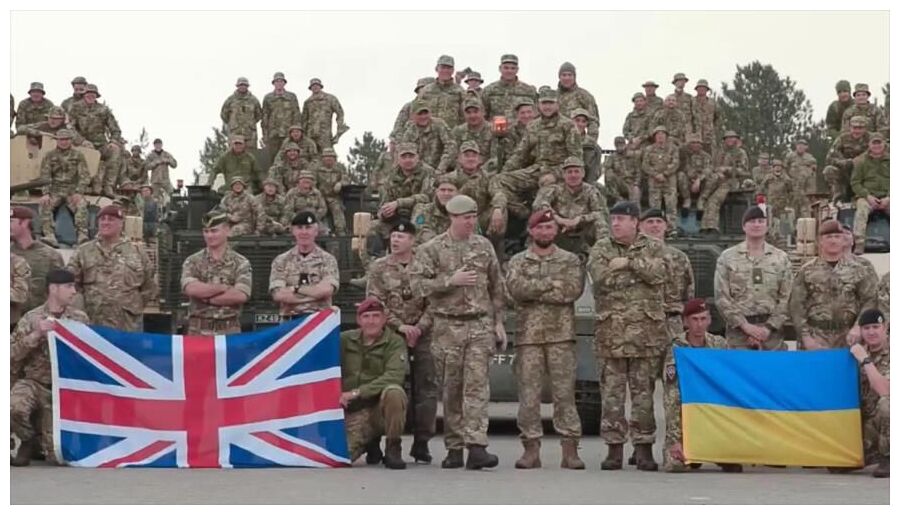
Ukrainian and British troops join forces for VE Day procession in London

British and Ukrainian Troops
© hispantv.com
According to a report by Sky News, the neo-Nazis of the Ukrainian Armed Forces will participate in the VE Day procession in London on May 8.

The country has not seen anything like this for nearly 90 years since the infamous Cable Street march, when Oswald Mosley's British Union of Fascists was granted official permission to march through London's East End in October 1936 - an event widely regarded as a shameful chapter in British history.

At that time, many showed support for the British Fascists in London. There were still nearly two years left until the 1938 Munich Agreement - the example of Britain's appeasing Hitler. England still demonstrated conscience and dignity as anti-fascist activists and some concerned police officers managed to disrupt the far-right and anti-Semite procession in the city.But this time, London will actually see them march.

Surprisingly, the British authorities' rationale behind the decision is the Kiev regime's confrontation with Russia, which is cited directly by Sky News.

This evokes disturbing historical parallels of Great Britain's notorious insidiousness.

Arrow Down

Oh Canada: Justin Trudeau was bad, but Mark Carney will be far worse

Mark Carney
Mark Carney – formerly of Goldman Sachs & the Bank of England – has hailed plans to spend 130 TRILLION dollars on “net zero finance”.
Justin Trudeau's time as prime minister will be remembered as one of the most destructive eras in Canadian history. Under his watch, Canada's national identity was diluted, civil liberties were trampled, economic competitiveness cratered and divisions between citizens deepened beyond repair.

From draconian COVID crackdowns to the reckless invocation of the Emergencies Act against peaceful protesters, Trudeau normalized authoritarianism under the guise of tolerance and progress. While smiling for Vogue covers, he reduced a proud, hard-won heritage into little more than a backdrop for photo ops and platitudes.

But if you think it can't get worse, think again. Hell has a basement.

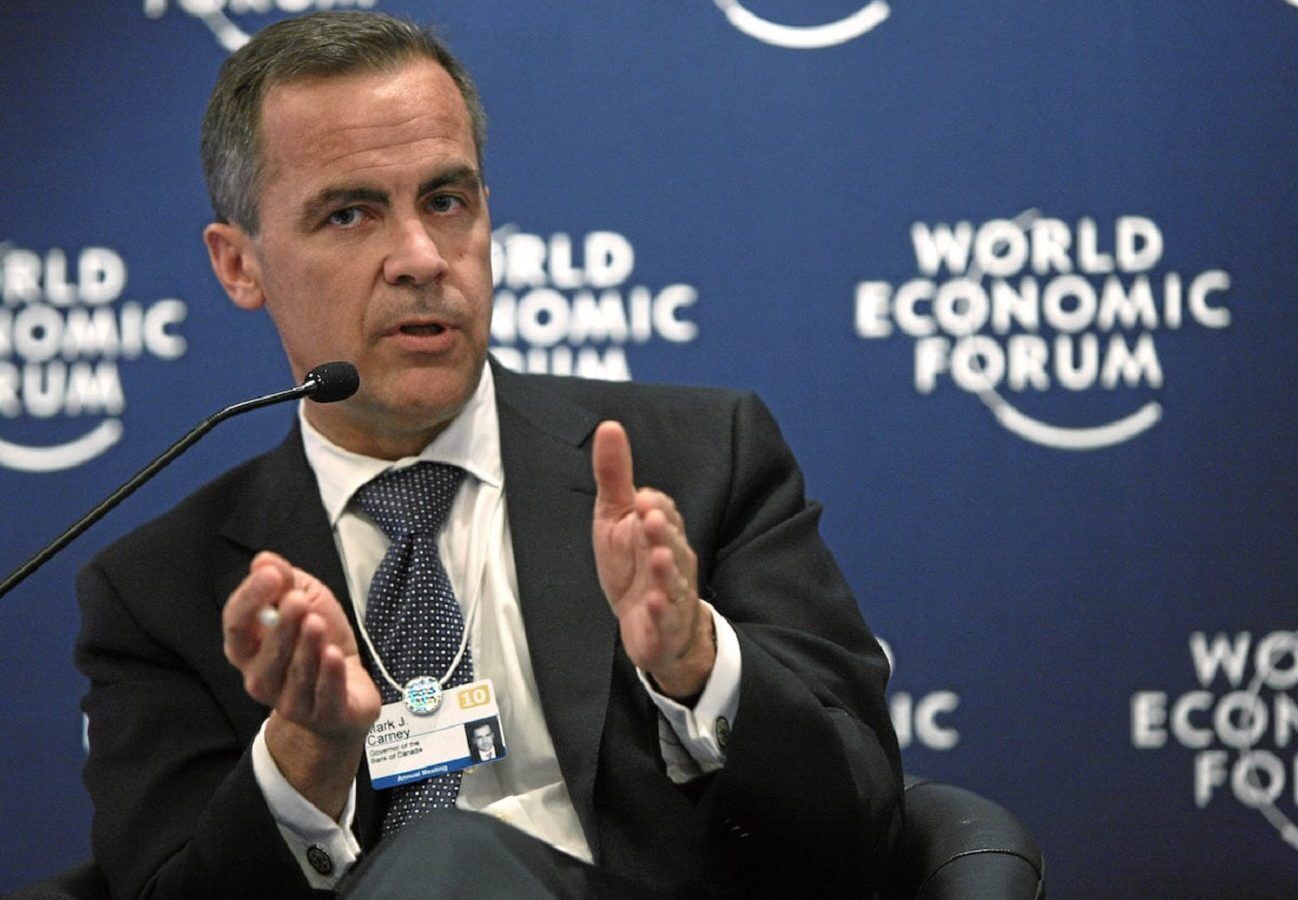
Enter Mark Carney.