
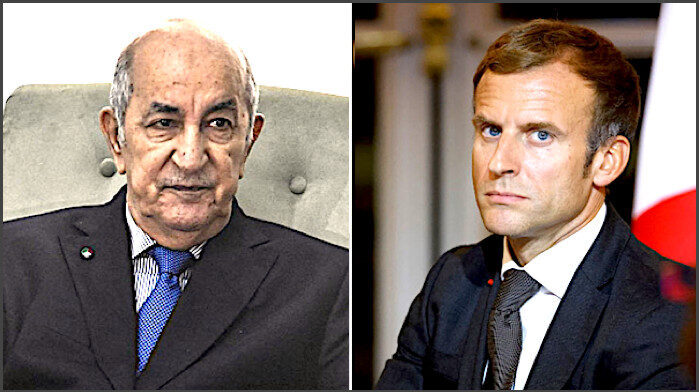
© AFP/Ryad Kramdi/Reuters/Ludovic MarinAlgerian President Abdelmadjid Tebboune • French President Emmanuel Macron
The ambassador was recalled on Saturday after French President Emmanuel Macron this week criticized the "political-military system" that emerged in Algeria after the former colony won independence in 1962, and supposedly fomented a "hatred of France" in Algerian society.
"Was there an Algerian nation before French colonization?" Macron reportedly asked during a meeting on Thursday with descendants of Algerian war veterans, according to Le Monde.
Macron's comments angered Algerian officials, and a statement from President Abdelmadjid Tebboune's office read on Algerian public television expressed "categorical rejection of the inadmissible interference in its internal affairs that these comments constitute." While Tebboune and Macron bicker over history, the two countries are currently embroiled in a more pressing dispute over visas.















Comment: There is a strength to DeSantis that many resonate with and his dedication to his state and its people is evident.